Semi-Hermetic vs Scroll vs Hermetic Compressors for Refrigeration and Air Conditioning
Compare semi-hermetic, scroll, and hermetic compressors by serviceability, efficiency, capacity, noise, cost, applications, and replacement requirements.
When selecting a replacement or specifying a new refrigeration system, compressor type affects far more than the initial purchase price. Service access, operating conditions, sound level, capacity control, efficiency, and parts availability all influence the right choice.
The practical question is often semi hermetic vs scroll compressor, but hermetic compressors also remain widely used in refrigeration and air-conditioning equipment. Each design has a different balance of repairability, operating efficiency, application range, and installation cost.
For distributors, service companies, and refrigeration contractors, the best compressor is the one that matches the system's refrigerant, capacity, temperature range, electrical supply, controls, and maintenance expectations. A direct replacement must also match key technical parameters rather than relying on horsepower alone.
The Main Differences at a Glance
A compressor's enclosure describes how the motor and compression mechanism are packaged and accessed.
- Semi-hermetic compressors have a bolted housing that can be opened for inspection and repair. Many are reciprocating designs, although other internal configurations are also available.
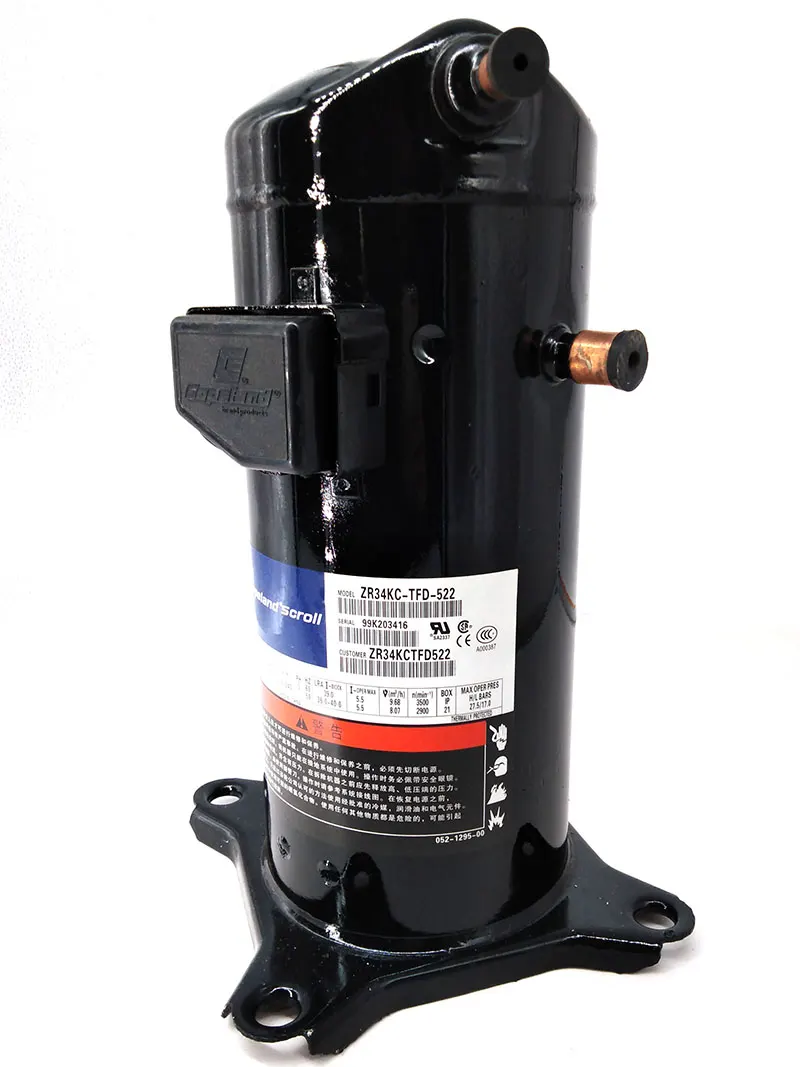
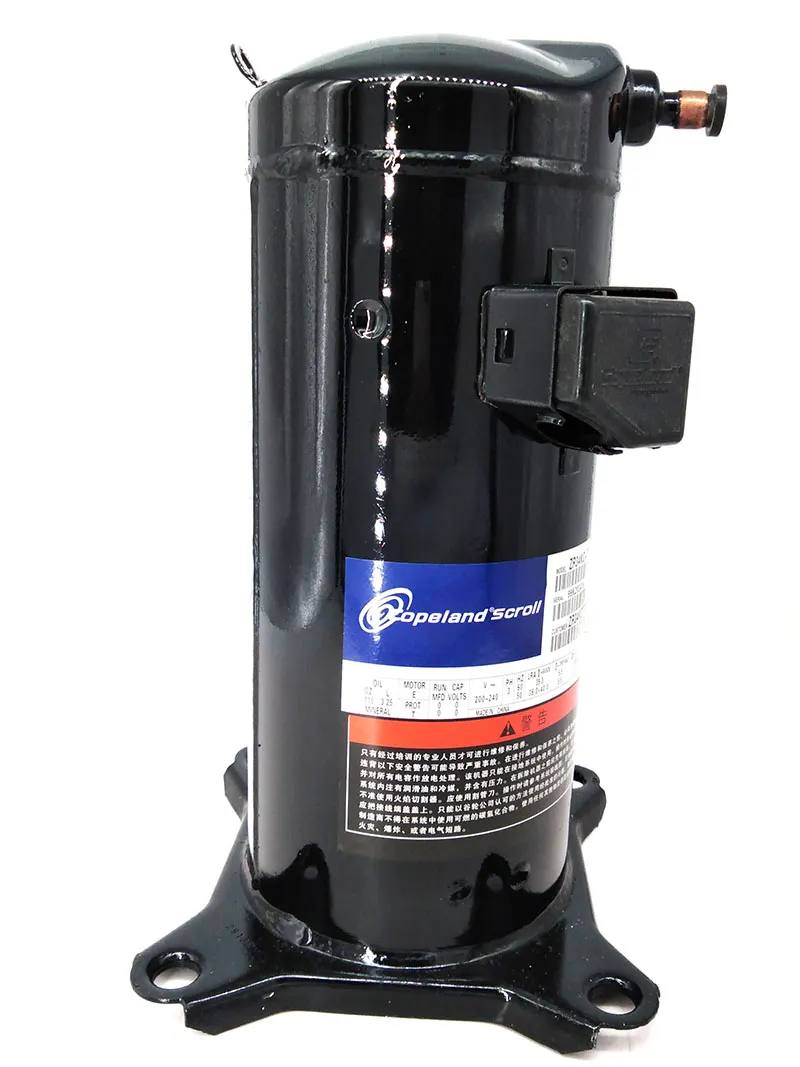
- Scroll compressors use two spiral elements to compress the refrigerant. They are commonly built as sealed or hermetic units and are widely used in air conditioning, heat pumps, and selected refrigeration applications.
- Hermetic compressors have the motor and compressor enclosed in a welded shell. The unit is generally replaced rather than opened for internal repair.
The comparison is not simply a choice between old and new technology. Semi-hermetic compressors can be attractive where serviceability and flexible capacity matter. Scroll compressors are often selected for smooth, efficient operation and low sound levels. Hermetic compressors suit many compact systems where low installation cost and straightforward replacement are priorities.
| Factor | Semi-hermetic compressor | Scroll compressor | Hermetic compressor |
|---|---|---|---|
| Serviceability | High; housing can usually be opened by a qualified technician | Limited internal service; often replaced as a complete unit | Limited internal service; normally replaced as a complete unit |
| Common mechanism | Often reciprocating | Scroll compression | Frequently reciprocating, rotary, or scroll depending on model |
| Capacity range | Broad, including many commercial and industrial applications | Common in small to medium air-conditioning and refrigeration systems | Broad in small and medium packaged equipment, depending on design |
| Sound and vibration | Can be higher, especially with reciprocating models | Generally smooth and quiet in suitable applications | Varies by internal design and mounting |
| Capacity control | May support unloading, multiple compressors, or other control options | Often fixed-capacity, with digital or variable-speed options on selected models | Usually fixed-capacity, with variable-speed options in some product ranges |
| Replacement approach | Repair or rebuild may be possible | Match the complete application and replace the unit | Match the complete application and replace the unit |
These are general design tendencies. Actual performance depends on compressor model, refrigerant, operating envelope, motor design, mounting, system controls, and application conditions.
Semi-Hermetic Compressors: Serviceable and Flexible
A semi-hermetic compressor uses a bolted shell with removable covers. The motor, valves, crankcase, and other internal parts can be accessed when the compressor is isolated, recovered, and opened by a qualified technician. This serviceable construction is one of its strongest advantages in commercial refrigeration.
Many semi-hermetic compressors use reciprocating compression. Depending on the model, they may be available in different cylinder configurations and capacity ranges. Multiple compressors can also be arranged in parallel systems to provide staged capacity and some degree of redundancy.
Where semi-hermetic compressors fit
Semi-hermetic units are common in applications where equipment operates continuously, repair downtime is costly, or the system is large enough to justify field service. Typical examples include:
- Cold rooms and low-temperature refrigeration systems
- Supermarket and food retail refrigeration
- Condensing units for commercial applications
- Process cooling equipment
- Larger air-conditioning and industrial refrigeration systems
A service team may be able to replace valves, gaskets, bearings, pistons, or other approved components rather than discarding the complete compressor. The actual repair options depend on the manufacturer, model, damage, available parts, and workshop capability.
Advantages and limitations
The main advantage is long-term serviceability. A distributor can support a customer with replacement components, overhaul parts, or a complete compressor, depending on the failure. This can be valuable in regions where importing a complete unit takes longer than sourcing repair parts.
Semi-hermetic compressors can also offer broad application flexibility and capacity control options. However, they are often heavier and more mechanically complex than compact hermetic alternatives. Installation may require more attention to vibration isolation, oil management, piping, electrical protection, and commissioning.
Noise and vibration can be more noticeable with reciprocating semi-hermetic designs, particularly when the compressor is poorly mounted, operating outside its intended envelope, or affected by liquid floodback. Correct system design and maintenance are essential to achieve reliable operation.
Scroll Compressors: Smooth Operation and Efficient Compression
A scroll compressor compresses refrigerant between two spiral elements. One scroll remains fixed while the other orbits, creating progressively smaller gas pockets. The process provides continuous compression with fewer reciprocating components than a traditional piston compressor.
Scroll compressors are widely associated with comfort air conditioning, heat pumps, rooftop equipment, and packaged systems. They are also used in some medium-temperature refrigeration equipment and condensing units when the compressor's application envelope supports the required conditions.
Why contractors choose scroll compressors
Scroll compression is known for smooth operation and relatively low vibration when the compressor is correctly selected and installed. This can make scroll units suitable for locations where sound levels matter, such as commercial buildings, offices, and light commercial premises.
The design can also provide good efficiency in its intended operating range. Some scroll product lines are available with digital modulation or variable-speed operation, but these features should never be assumed from the compressor type alone. The model specification must confirm the control method and compatibility with the system.
Scroll compressors often have fewer wear components than reciprocating designs, but that does not make them immune to system problems. Liquid refrigerant, contamination, inadequate lubrication, incorrect rotation on applicable models, and operation outside the approved envelope can cause serious damage.
Service and replacement considerations
Internal repair is usually limited compared with a semi-hermetic compressor. In many field situations, a failed scroll compressor is replaced as a complete unit. That makes model matching, delivery time, and replacement quality important commercial considerations for distributors and repair companies.
Before supplying a scroll replacement, verify:
- Refrigerant and oil compatibility
- Cooling capacity at the required evaporating and condensing conditions
- Voltage, phase, and frequency
- Displacement or model equivalence where relevant
- Suction and discharge connection sizes and positions
- Motor protection and control requirements
- Approved operating envelope and application temperature
- Whether the compressor is intended for air conditioning, medium-temperature, or low-temperature service
A scroll compressor should not be selected only because its nominal horsepower appears similar to the failed unit. Capacity changes significantly with operating conditions, refrigerant, and efficiency characteristics.
Hermetic Compressors: Compact and Cost-Conscious
A hermetic compressor encloses the motor and compression mechanism in a welded shell. The sealed construction reduces the number of external shaft seals and creates a compact package for factory-built equipment. When an internal failure occurs, the normal field solution is replacement of the complete compressor.
Hermetic compressors are used across domestic refrigeration, refrigerators and freezers, small cold rooms, display cases, residential air conditioning, and light commercial equipment. The internal mechanism may be reciprocating, rotary, or scroll, so “hermetic” describes the enclosure rather than one specific compression method.
Strengths of hermetic compressors
Hermetic units are often easy to integrate into compact equipment. Their sealed construction, relatively small footprint, and wide availability make them practical for high-volume replacement work. For a small refrigerator, freezer, or packaged air-conditioning unit, complete compressor replacement may be faster and more economical than an internal rebuild.
The purchase cost can also be lower than that of a serviceable semi-hermetic compressor, although the total cost depends on capacity, brand, refrigerant, efficiency, supply conditions, and installation labor.
Limitations for field service
The main limitation is limited repairability. A welded shell is not intended for routine workshop access. If the compressor has a winding failure, mechanical seizure, or internal wear, replacement is normally required.
A hermetic compressor can also be less suitable for applications that demand regular internal inspection, extensive capacity control, or long operating life under highly variable loads. The correct model may still perform reliably, but the system must remain within the manufacturer's specified operating conditions.
For replacement buyers, hermetic models require careful attention to electrical and physical compatibility. A compressor that fits the mounting points may still be unsuitable if its refrigerant, oil, starting device, overload protector, or capacity does not match the equipment.
Comparing Cost, Efficiency, Capacity, and Noise
Initial and lifetime cost
Hermetic compressors often have an attractive initial price in compact systems. Scroll compressors may cost more than basic hermetic reciprocating units but can offer operating and sound-level benefits in suitable applications. Semi-hermetic compressors commonly involve a higher equipment and installation investment, but their serviceable construction can reduce replacement waste and support repair over the equipment life.
A useful cost comparison includes:
- Compressor purchase price
- Freight and local availability
- Installation and commissioning labor
- Required electrical or control components
- Repair parts and workshop labor
- Refrigerant recovery and recharge
- Downtime and product loss risk
- Expected maintenance requirements
The cheapest compressor is not always the lowest-cost option for a commercial customer. A semi-hermetic compressor may be economical where a repair can restore operation, while a hermetic replacement may be more practical for a small packaged appliance.
Efficiency and operating conditions
Efficiency should be compared at the actual design points, not by compressor type alone. Evaporating temperature, condensing temperature, superheat, subcooling, refrigerant, return-gas temperature, and motor loading all affect performance.
Scroll compressors often perform well in their intended air-conditioning and medium-temperature ranges. Semi-hermetic and hermetic reciprocating compressors remain useful across many refrigeration conditions, including applications where serviceability or low-temperature operation is important. The data sheet and performance tables provide the reliable basis for comparison.
Capacity range and control
Semi-hermetic systems can be configured for larger capacities and staged operation. A rack or parallel-compressor arrangement can match changing loads more effectively than a single fixed-capacity unit.
Scroll and hermetic compressors are also available in different capacities, with some ranges offering fixed, digital, or variable-speed operation. The available control options depend on the specific manufacturer and model. Capacity should be checked in kilowatts, BTU/h, or another stated rating at the intended operating conditions rather than inferred from motor horsepower.
Noise and vibration
Scroll compressors generally provide smooth, low-vibration compression, which is useful where acoustic comfort matters. Reciprocating compressors can create more pulsation and vibration, although mounting, piping layout, crankcase condition, and system balance strongly influence the result.
Noise is a system issue as well as a compressor issue. Fan motors, refrigerant velocity, discharge pulsation, loose panels, and poor supports can all create sound. A quiet compressor will not eliminate noise caused by incorrect installation.
Replacement Checklist for Distributors and Contractors
A replacement compressor should be selected by application data and compatibility, not by appearance or nominal horsepower. Gather the following information before quoting or installing:
- Original compressor model and manufacturer
- Refrigerant type and approved oil
- Voltage, phase, and frequency
- Application temperature: high, medium, or low temperature
- Cooling capacity at the required operating conditions
- Compressor displacement or equivalent performance data
- Starting method, relay, capacitor, inverter, or controller
- Suction and discharge connection details
- Mounting dimensions and vibration isolators
- Thermal protection and system safety controls
- Required accessories, including crankcase heater or oil management components
- Reason for the original failure
The failure cause deserves particular attention. Replacing a compressor without correcting the underlying problem can lead to another failure. Common system checks include refrigerant charge, airflow or water flow, condenser cleanliness, filter-drier condition, evacuation quality, liquid floodback risk, electrical supply, phase sequence where applicable, and return-oil performance.
For distributors, keeping several compressor categories available can improve response to different customer needs. A service company may need a repairable semi-hermetic unit for a commercial cold room, a quiet scroll compressor for an air-conditioning replacement, or a compact hermetic compressor for a refrigerator or small freezer. Product records should clearly state application, refrigerant, capacity conditions, electrical data, dimensions, and replacement notes.
Which Compressor Type Is Right for the Job?
Choose a semi-hermetic compressor when internal serviceability, repair potential, capacity flexibility, or continuous commercial operation is a major priority.
Choose a scroll compressor when smooth operation, compact installation, and efficient performance in a suitable air-conditioning or medium-temperature application are important.
Choose a hermetic compressor when the equipment is compact, complete-unit replacement is acceptable, and purchase availability and installation simplicity are key considerations.
The right decision depends on the complete system. For a cold room, the required evaporating temperature, load profile, defrost method, refrigerant, and service strategy may matter more than the compressor label. For an air-conditioning system, sound level, seasonal efficiency, modulation, and electrical compatibility may carry greater weight.
A reliable selection process connects the compressor's mechanical design with the realities of maintenance, parts supply, operating conditions, and customer downtime. That approach helps distributors quote accurately and gives contractors a better chance of delivering a dependable replacement on the first visit.
FAQ
What is the main difference between a semi-hermetic and a scroll compressor?
A semi-hermetic compressor has a bolted housing that allows qualified technicians to access and repair internal parts. A scroll compressor uses two spiral elements and is commonly replaced as a complete sealed unit when it fails. The better choice depends on the application, operating conditions, service strategy, and required capacity.
Are hermetic compressors suitable for cold rooms?
Hermetic compressors can be suitable for small and light commercial cold rooms when their refrigerant, capacity, temperature range, oil, and electrical specifications match the system. Larger or continuously operating cold rooms may favor semi-hermetic or other serviceable configurations, especially where repairability and capacity control are important.
Which compressor type is the quietest?
Scroll compressors are generally known for smooth, low-vibration operation, but actual system noise also depends on mounting, piping, fans, refrigerant velocity, and panel vibration. A semi-hermetic or hermetic compressor can also operate acceptably when correctly selected and installed.
Can a scroll compressor replace a hermetic reciprocating compressor?
A scroll compressor may replace a hermetic reciprocating compressor only when the application and technical specifications are compatible. Check refrigerant, oil, cooling capacity at design conditions, voltage, phase, frequency, connection layout, starting or control method, operating envelope, and compressor protection before making the change.
What should be checked before buying a replacement refrigeration compressor?
Confirm the original model, refrigerant, oil, capacity at the required evaporating and condensing conditions, electrical supply, application temperature, connections, mounting dimensions, starting components, protection devices, and accessories. The cause of the original failure should also be corrected before commissioning the replacement.
Buyer Next Step
Move from research to sourcing with a category shortlist, relevant product examples, and a quote request channel.