Semi-Hermetic vs Scroll Compressor: Which Is Better for Cold Rooms and Commercial Refrigeration?
A practical comparison of semi-hermetic and scroll compressors for cold rooms, service work, replacement supply, and commercial refrigeration projects.
Choosing between a semi-hermetic compressor and a scroll compressor is not only a technical decision. For cold-room contractors, refrigeration service companies, and spare parts distributors, it affects maintenance cost, stock planning, replacement speed, refrigerant options, and long-term system reliability.
The short answer is simple: scroll compressors are often preferred for compact, quiet, and efficient packaged systems, while semi-hermetic compressors remain valuable where serviceability, wide application range, and heavy-duty refrigeration operation are priorities. The better choice depends on the temperature range, system size, site conditions, service strategy, and the buyer’s expectations for repair versus replacement.
This guide compares semi hermetic vs scroll compressor technology from a practical commercial refrigeration perspective, with a focus on cold rooms, display refrigeration, condensing units, and replacement compressor selection.
What Is the Main Difference Between a Semi-Hermetic and a Scroll Compressor?
A semi-hermetic compressor has a bolted shell that can be opened for service. The motor and compression mechanism are enclosed in the same housing, but technicians can access internal parts such as valves, gaskets, connecting rods, pistons, bearings, and sometimes motor components, depending on the model and damage level.
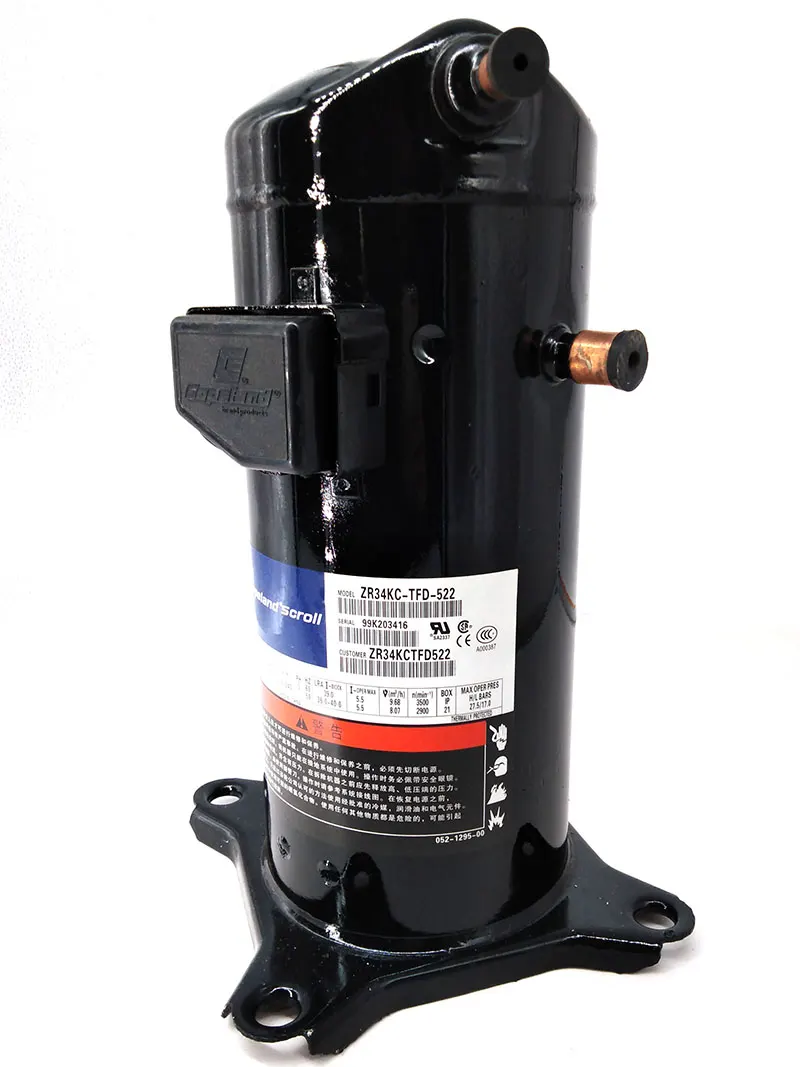
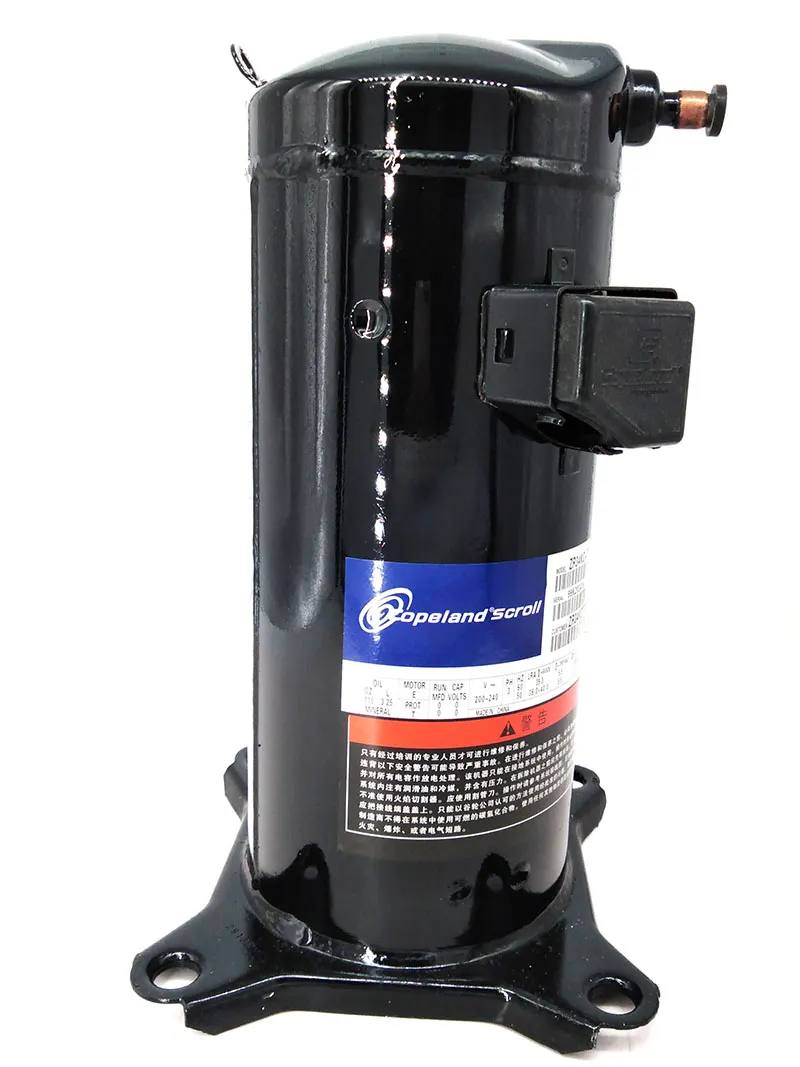
A scroll compressor is usually a fully hermetic, sealed compressor. It uses two spiral-shaped scrolls: one fixed and one orbiting. As the orbiting scroll moves, refrigerant gas is compressed in pockets that gradually decrease in volume. In most commercial applications, if the scroll compressor fails internally, the practical solution is replacement rather than internal repair.
The design difference creates several important trade-offs:
- Semi-hermetic compressors are serviceable, robust, and flexible across many commercial and industrial refrigeration applications.
- Scroll compressors are compact, quiet, and efficient in many air-conditioning and medium-temperature refrigeration systems.
- Semi-hermetic reciprocating compressors are commonly selected for systems where repairability and application flexibility matter.
- Scroll compressors are often selected for packaged equipment, smaller condensing units, and projects where low noise and simple replacement are preferred.
For engineers and wholesalers, the question is not whether one technology is universally better. The key is matching the compressor type to the system duty and the local service model.
Maintenance and Repairability: Serviceable Compressor vs Sealed Replacement
Maintenance strategy is one of the biggest differences in a commercial refrigeration compressor comparison.
Semi-hermetic compressor advantages for service teams
The most important semi-hermetic compressor advantage is repairability. Because the casing can be opened, a qualified refrigeration technician can inspect internal mechanical parts, diagnose wear, and replace selected components when conditions allow.
This can be useful in markets where:
- Compressor replacement lead times are long
- Skilled service technicians are available
- Customers prefer repair over full replacement
- Large refrigeration systems require minimum downtime
- Spare parts distributors can support gaskets, valves, oil pumps, terminal plates, and other service parts
For refrigeration repair companies, a serviceable compressor provides more options. If a compressor has valve damage, gasket leakage, oil system issues, or mechanical wear that has not destroyed the full unit, repair may be commercially reasonable. In larger cold-room and commercial systems, the compressor cost can be high enough that repair deserves consideration.
Semi-hermetic compressors also make failure analysis easier. Technicians can inspect oil condition, valve plates, pistons, and internal wear patterns. This helps identify whether the root cause was liquid slugging, poor oil return, high discharge temperature, contamination, or incorrect operating conditions.
Scroll compressor maintenance characteristics
Scroll compressors have fewer moving parts than many reciprocating designs and are generally not repaired internally in the field. Routine maintenance focuses on system-level conditions: refrigerant charge, superheat, oil return, electrical supply, contactors, protection devices, airflow, and condenser cleanliness.
When a scroll compressor fails internally, replacement is normally faster and more practical than repair. For wholesalers and service companies, this supports a different business model: stock complete replacement compressors rather than many internal service parts.
This can be an advantage when:
- The system is small or medium-sized
- Labor cost is high
- Fast replacement is more valuable than repair
- The compressor model is commonly stocked
- The customer wants predictable service time
However, a sealed compressor gives fewer internal repair options. If the failure is severe, the service company must replace the unit and also correct the system fault that caused the failure. Simply installing a new scroll compressor without addressing oil return, liquid floodback, electrical problems, or contamination can lead to repeated failure.
Practical maintenance takeaway
For service-driven markets, semi-hermetic compressors offer more repair paths and better internal diagnosis. For packaged systems and fast-turn replacement work, scroll compressors can simplify field service because the unit is replaced as a complete sealed component.
Distributors should consider both approaches in inventory planning: semi-hermetic models may require compressor stock plus service parts, while scroll models often require a broader range of complete replacement units.
Efficiency, Noise, and Operating Behavior
Compressor efficiency comparison is more complex than naming one technology as better. Actual energy performance depends on system design, evaporating temperature, condensing temperature, refrigerant, compressor model, load profile, and control method.
Scroll compressor efficiency and smooth operation
Scroll compressors are widely valued for smooth compression, low vibration, and good efficiency in many air-conditioning and medium-temperature refrigeration applications. Their continuous compression process reduces pulsation compared with reciprocating compressors, which can help lower noise and vibration.
For retail refrigeration, small cold rooms, convenience stores, restaurants, and packaged condensing units, scroll compressors may offer a strong balance of compact size, quiet operation, and energy performance. This is one reason they are common in commercial cooling equipment where installation space and sound level matter.
Scroll compressors can also perform well in systems with relatively stable operating conditions. When properly matched, they provide efficient operation with fewer mechanical components exposed to wear.
Semi-hermetic efficiency in refrigeration duty
Semi-hermetic compressors, especially reciprocating types, are often selected for demanding refrigeration duties because they are available in many capacities and configurations. They can be matched to low-temperature, medium-temperature, and larger commercial refrigeration systems.
Efficiency depends heavily on the compressor series, refrigerant, motor design, operating envelope, and system controls. Semi-hermetic compressors may be used with capacity control methods such as cylinder unloading or variable-speed solutions in certain system designs, depending on the compressor and equipment configuration.
In larger cold-room systems, rack systems, and applications with changing load, the ability to match capacity and service the compressor can be as important as nominal efficiency. A well-selected semi-hermetic compressor operating inside its approved envelope can be a reliable and efficient option for commercial refrigeration.
Noise and vibration comparison
Noise is often a practical concern for supermarkets, restaurants, hotels, and urban installations.
Scroll compressors generally have an advantage in smoothness and lower vibration. Their compression mechanism avoids the piston motion and valve pulsation associated with reciprocating designs. This can make installation easier in noise-sensitive areas.
Semi-hermetic reciprocating compressors can be noisier and may require good mounting, vibration absorbers, discharge mufflers, and correct piping design. In machine rooms or outdoor condensing unit installations, this may not be a major issue. In customer-facing areas or tight urban sites, noise should be evaluated more carefully.
Efficiency and noise takeaway
Scroll compressors often suit compact, quiet, medium-temperature systems. Semi-hermetic compressors remain highly relevant for broader commercial refrigeration duties, especially where repairability, capacity range, and application flexibility carry more weight than minimum sound level.
Refrigerant Flexibility and Application Range
Refrigerant compatibility is a major purchasing issue for international buyers. Different countries and regions follow different refrigerant regulations, and replacement demand often includes both older systems and newer equipment.
Semi-hermetic compressor flexibility
Semi-hermetic compressors are available in many models for different refrigerants and temperature ranges. This makes them useful for distributors serving mixed markets where customers may request compressors for older installations, newer systems, and various commercial refrigeration duties.
Common selection factors include:
- Refrigerant type approved by the compressor manufacturer
- Evaporating and condensing temperature range
- Motor voltage and frequency
- Oil type and lubrication requirements
- Cooling method and discharge temperature limits
- Capacity at the required operating point
- Application category: low temperature, medium temperature, or air-conditioning duty
Because semi-hermetic compressors are widely used in commercial refrigeration, they are often considered when the buyer needs a cold room compressor type for freezer rooms, chiller rooms, food processing areas, supermarkets, and larger condensing units.
The serviceable structure also supports long equipment life in markets where trained technicians can maintain and rebuild compressors. For wholesalers, this can create demand for both complete compressors and repair components.
Scroll compressor refrigerant and application considerations
Scroll compressors are also available for a range of refrigerants and are widely used in air-conditioning, heat pumps, and commercial refrigeration. They are especially common in medium-temperature applications and packaged systems.
However, application limits must be checked carefully. Not every scroll compressor is suitable for every evaporating temperature, refrigerant, or condensing condition. Low-temperature refrigeration may require specific models, injection technology, additional cooling measures, or other design considerations depending on the system.
For replacement buyers, it is important not to select a scroll compressor only by horsepower or displacement. The correct match requires checking capacity data, refrigerant, voltage, oil type, connection size, operating envelope, and any required protection accessories.
Cold room application range
For cold rooms, the choice depends strongly on room temperature and system scale.
Scroll compressors are often considered for:
- Small and medium chiller rooms
- Convenience store refrigeration
- Restaurant cold storage
- Compact condensing units
- Packaged commercial refrigeration systems
- Noise-sensitive installations
Semi-hermetic compressors are often considered for:
- Medium and large cold rooms
- Freezer rooms and low-temperature applications
- Supermarket systems
- Food processing refrigeration
- Multi-compressor systems
- Installations where repairability is important
- Projects requiring broader capacity and configuration options
There is overlap between the two technologies. Many systems can be designed with either type if the compressor model is correctly selected. The real difference is often the service philosophy, operating conditions, and total cost over the equipment life.
Selection Guide for Engineers, Contractors, and Wholesalers
A good compressor selection process starts with the refrigeration duty, not the compressor name. Before comparing semi hermetic vs scroll compressor options, buyers should confirm the operating requirements and commercial priorities.
Key questions before choosing
Engineers and installers should clarify:
- What is the required room temperature?
- Is the application medium temperature or low temperature?
- What refrigerant is used or planned?
- What is the required cooling capacity at actual evaporating and condensing conditions?
- Is the installation indoors, outdoors, or in a machine room?
- Are noise and vibration critical?
- Is skilled compressor repair available locally?
- Does the customer prefer repairability or fast complete replacement?
- Are spare parts and replacement compressors readily available?
- What electrical supply is available at the site?
These questions help avoid a common procurement mistake: replacing a compressor by approximate horsepower or physical size instead of matching the approved technical data.
When a semi-hermetic compressor may be the better choice
A semi-hermetic compressor may be more suitable when the system requires heavy-duty operation, broad service options, or long-term maintainability. It is often a practical choice for larger cold rooms, low-temperature systems, and commercial refrigeration projects where downtime is expensive and repair analysis matters.
Choose a semi-hermetic compressor when:
- The customer values repairability
- The system is large enough to justify compressor service
- Local technicians can perform mechanical diagnosis and repair
- The application has demanding refrigeration conditions
- The buyer needs wider capacity and configuration options
- A distributor can supply both compressors and service parts
For wholesalers, semi-hermetic compressors can be attractive because they serve many replacement scenarios across commercial refrigeration. The inventory strategy may include popular compressor models, compatible accessories, oil, gaskets, valve plates, and electrical components.
When a scroll compressor may be the better choice
A scroll compressor may be more suitable when compact size, low noise, and straightforward replacement are important. It is often a strong choice for smaller cold rooms, packaged refrigeration equipment, commercial air-conditioning, and medium-temperature applications.
Choose a scroll compressor when:
- The system is designed for a sealed compressor
- Low noise and low vibration are priorities
- Fast compressor replacement is preferred over repair
- The capacity range fits the application
- The operating conditions remain within the approved envelope
- The distributor can stock the exact replacement models needed
For repair companies, scroll replacements can be efficient service jobs if the correct model is available. The critical step is to find and correct the cause of failure before installing the new compressor.
Replacement purchasing tips
For distributors and replacement buyers, compressor interchange requires caution. Even if two compressors appear similar, technical details may differ.
Before confirming an order, verify:
- Compressor model and series
- Refrigerant compatibility
- Cooling capacity at required conditions
- Voltage, phase, and frequency
- Oil type and charge requirements
- Connection size and mounting dimensions
- Application range and operating envelope
- Starting method and protection requirements
- Required accessories such as crankcase heater, overload, oil pressure control, or injection components
In international trade, clear technical confirmation reduces returns, installation problems, and warranty disputes. Photos of nameplates, system operating conditions, and application details are often essential for accurate replacement selection.
Cost, Inventory, and After-Sales Considerations
The purchase price of a compressor is only one part of the decision. For commercial refrigeration, the real cost includes downtime, labor, repair parts, energy consumption, compatibility, and stock availability.
For distributors
Distributors serving overseas refrigeration markets should evaluate demand by application type. Scroll compressors may move quickly in standardized packaged systems and smaller commercial units. Semi-hermetic compressors may be needed for contractors, industrial customers, and service companies maintaining larger or older refrigeration systems.
A balanced stock plan may include:
- Fast-moving scroll compressor models for common systems
- Semi-hermetic compressors for commercial cold-room and supermarket demand
- Electrical components and protection devices
- Refrigeration oil and accessories
- Selected semi-hermetic service parts where repair demand exists
The best stock mix depends on the local installed base. Markets with many serviceable commercial systems may require stronger semi-hermetic support. Markets dominated by packaged equipment may demand more scroll replacements.
For contractors and installers
Contractors should consider who will maintain the system after installation. A scroll-based condensing unit may be simple and quiet, but future failure usually means complete compressor replacement. A semi-hermetic system may require more skilled service, but it can provide repair and diagnostic advantages.
For cold-room projects, the decision should also consider ambient temperature, usage pattern, door openings, product load, defrost strategy, and system controls. Compressor selection cannot compensate for poor system design, undersized condensers, bad piping, or incorrect refrigerant charging.
For service technicians
Technicians should treat compressor failure as a symptom, not only a component problem. Whether replacing a scroll compressor or repairing a semi-hermetic compressor, the root cause must be checked.
Common issues to investigate include:
- Liquid return or floodback
- Poor oil return
- Dirty condenser or high condensing pressure
- Incorrect superheat
- Refrigerant undercharge or overcharge
- Electrical imbalance or low voltage
- Contaminated system after motor burnout
- Blocked filter drier or moisture in the system
A new compressor installed into an unhealthy system is likely to fail again, regardless of compressor type.
Bottom Line: Which Compressor Is Better?
There is no single winner in the semi hermetic vs scroll compressor comparison. Scroll compressors are often better for compact, quiet, and standardized systems where replacement is expected to be simple. Semi-hermetic compressors are often better for serviceable commercial refrigeration systems where repairability, application flexibility, and long-term maintenance support are important.
For cold rooms and commercial refrigeration, the practical recommendation is:
- Use scroll compressors for smaller or packaged systems where noise, size, and fast replacement are key priorities.
- Use semi-hermetic compressors for larger, more demanding, or service-oriented refrigeration systems where internal repair and wider application coverage matter.
- Always select by refrigerant, capacity, operating envelope, electrical data, and system design rather than by compressor type alone.
For engineers, wholesalers, and service teams, the best compressor is the one that matches the refrigeration duty, can be supported locally, and keeps the customer’s system reliable over its working life.
FAQ
What is the main difference between a semi-hermetic and a scroll compressor?
A semi-hermetic compressor has a bolted casing that can be opened for inspection and repair, while most scroll compressors used in commercial systems are sealed units replaced as a complete compressor when they fail internally.
Which compressor is better for cold rooms?
For small and medium cold rooms, scroll compressors can be a good choice when low noise, compact size, and fast replacement are priorities. For larger cold rooms, freezer rooms, and serviceable commercial systems, semi-hermetic compressors are often preferred for their repairability and wider application range.
Are scroll compressors more efficient than semi-hermetic compressors?
Scroll compressors can be very efficient in many air-conditioning and medium-temperature refrigeration applications, but efficiency depends on the specific model, refrigerant, operating conditions, and system design. A correctly selected semi-hermetic compressor can also perform efficiently in commercial refrigeration duty.
Can a semi-hermetic compressor be repaired?
Yes. Semi-hermetic compressors are designed with service access, so qualified technicians can inspect and replace certain internal components when the damage and economics justify repair. The system fault that caused the failure must still be corrected.
What should buyers check before replacing a compressor?
Buyers should confirm the compressor model, refrigerant, cooling capacity at actual conditions, voltage, phase, frequency, oil type, connection size, mounting dimensions, application range, and required protection accessories before ordering a replacement.
Buyer Next Step
Move from research to sourcing with a category shortlist, relevant product examples, and a quote request channel.