Copeland vs Bitzer Compressors: Which Is Better for Refrigeration Projects?
A practical comparison of Copeland and Bitzer compressors for cold rooms, commercial refrigeration, service replacement, and parts planning.
Copeland vs Bitzer Compressor: The Practical Buyer’s Question
For many refrigeration projects, the choice between a Copeland compressor and a Bitzer compressor is not about finding one universally “better” brand. It is about matching the compressor type, operating conditions, service environment, spare parts access, and budget to the actual job.
Both brands are widely recognized in commercial refrigeration and air-conditioning markets. Both are used by contractors, service companies, cold-room builders, and spare parts distributors across many regions. The better choice depends on the system design and the priorities of the buyer: initial price, long-term serviceability, stock availability, technician familiarity, refrigerant compatibility, and the ease of future replacement.
For distributors and installers, the most useful comparison is operational. Which compressor is easier to source in your market? Which model family is already familiar to local service teams? Which spare parts can be delivered quickly? Which compressor type fits the system: scroll, semi-hermetic, reciprocating, or screw? Those questions usually matter more than brand reputation alone.
Where Copeland and Bitzer Are Commonly Used
Copeland and Bitzer compressors are both used in refrigeration, air-conditioning, and industrial cooling applications, but buyers often associate them with slightly different project patterns.
Copeland compressor application scenarios
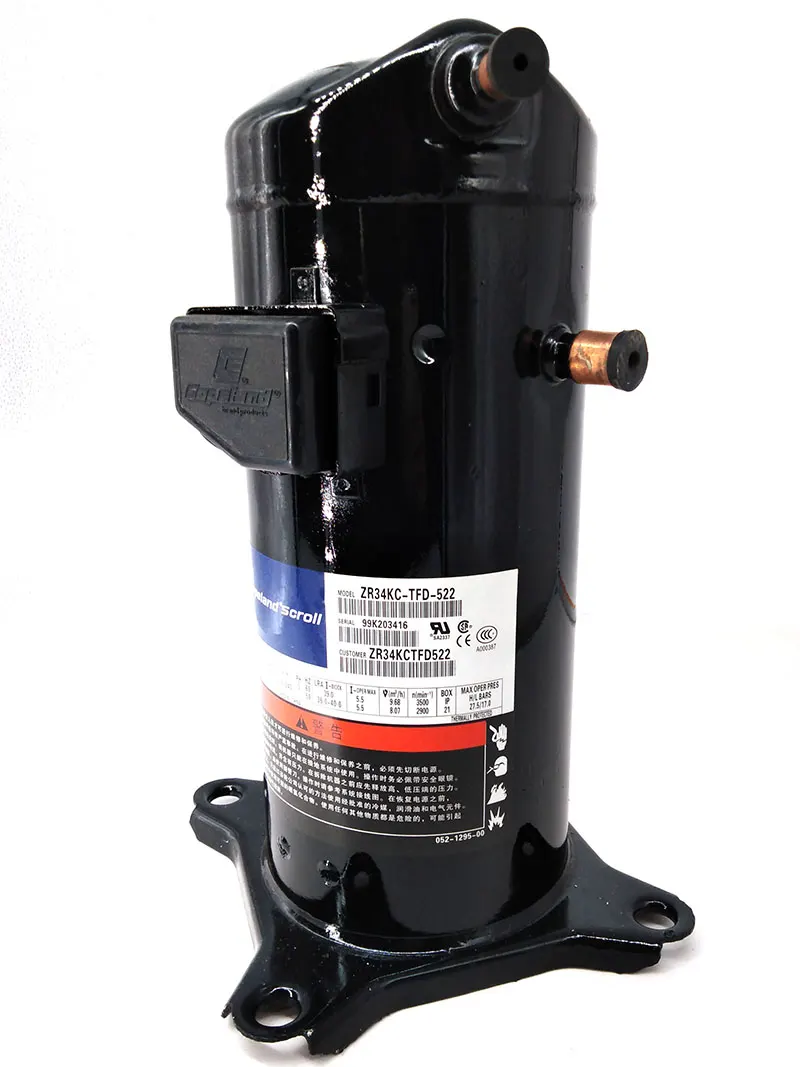
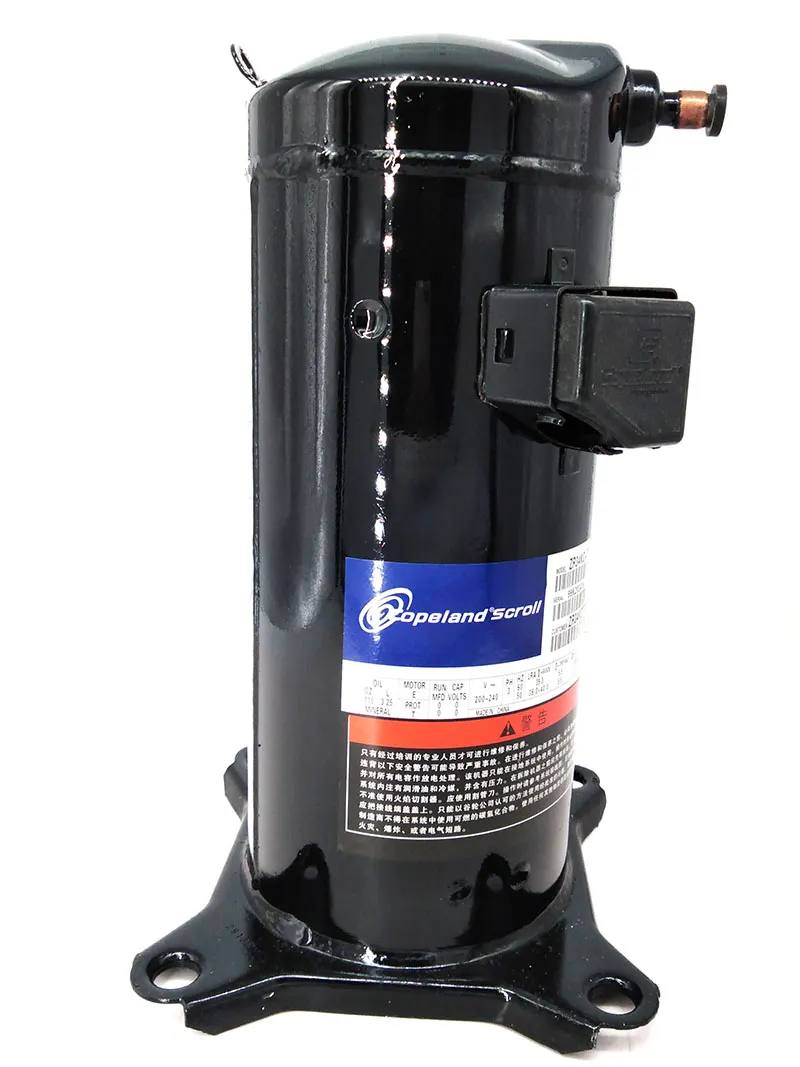
Copeland compressors are commonly selected for commercial refrigeration, light industrial cooling, air-conditioning, heat pump, and condensing unit applications. In many markets, Copeland scroll compressors are especially familiar to contractors working with packaged equipment, condensing units, supermarket-style systems, display refrigeration, and small to medium cold storage projects.
Typical use cases may include:
- Walk-in coolers and walk-in freezers
- Convenience store and supermarket refrigeration equipment
- Display cabinets and commercial kitchen refrigeration
- Air-conditioning and heat pump systems
- Small and medium condensing units
- Replacement work where the original system already uses a Copeland model
For service companies, one advantage of common Copeland models is technician familiarity. In many regions, repair teams frequently encounter Copeland compressors in installed equipment, which can simplify diagnosis, replacement selection, and basic troubleshooting.
Bitzer compressor application scenarios
Bitzer compressors are widely used in commercial refrigeration, industrial refrigeration, process cooling, transport-related cooling, and larger cold-room or refrigeration plant projects. Bitzer is often associated with semi-hermetic reciprocating compressors, screw compressors, and systems requiring robust serviceability and broad refrigeration application coverage.
Typical use cases may include:
- Medium and large cold rooms
- Food processing refrigeration
- Refrigeration racks and centralized systems
- Blast freezers and low-temperature applications
- Industrial process cooling
- Larger condensing units and compressor packs
For engineering contractors, Bitzer compressors are often considered when the project requires a serviceable compressor platform, broad capacity options, or a design that can support more demanding operating conditions. As with any compressor selection, final suitability depends on system design, refrigerant, temperature range, capacity, and controls.
Compressor Types: Scroll, Semi-Hermetic, Reciprocating, and Screw
A fair Copeland vs Bitzer compressor comparison must look at compressor type. Brand alone does not determine performance. A scroll compressor and a semi-hermetic compressor can serve very different roles, even if both are from respected manufacturers.
Scroll compressors
Scroll compressors are commonly used in commercial refrigeration, air-conditioning, heat pump, and condensing unit applications. They are valued for compact design, relatively quiet operation, fewer moving parts compared with some reciprocating designs, and ease of replacement as a complete unit.
Copeland is strongly associated with scroll compressor applications in many markets. Buyers looking for scroll compressors for commercial refrigeration or HVAC-related systems often include Copeland in their sourcing list.
Scroll compressors can be a practical option when the system design favors compact equipment, standard replacement, and relatively straightforward installation. However, they are typically replaced as complete compressors rather than repaired internally in the field.
Semi-hermetic reciprocating compressors
Semi-hermetic compressors are widely used in commercial and industrial refrigeration. Their design allows more service access than fully hermetic designs, and many models can be repaired or overhauled by trained technicians using suitable spare parts and tools.
Bitzer is strongly associated with semi-hermetic reciprocating compressors, especially in refrigeration projects where serviceability and long-term maintenance planning are important. Copeland also has semi-hermetic compressor offerings in many markets, so the final decision should be based on the exact model, application, and local support.
Semi-hermetic compressors are often selected for cold rooms, freezer rooms, food storage, and systems where contractors want better access for maintenance and parts replacement.
Screw compressors
Screw compressors are generally used in larger refrigeration and industrial cooling applications. They are relevant for higher-capacity systems, centralized plants, and projects where continuous operation and capacity control may be important.
Bitzer is frequently considered for screw compressor applications in commercial and industrial refrigeration. Buyers should evaluate capacity range, control method, oil management, refrigerant, service requirements, and local technical support before choosing any screw compressor.
Hermetic reciprocating compressors
Hermetic reciprocating compressors are common in smaller refrigeration systems and some commercial applications. They are sealed units and are generally replaced rather than repaired internally. When comparing brands for this type of compressor, availability and exact model matching are especially important.
Availability, Serviceability, and Spare Parts
For overseas buyers, compressor performance is only one part of the decision. A technically suitable compressor can still create problems if it is difficult to source, expensive to ship, or unsupported in the local service market.
Availability in the target market
Availability varies by country, distributor network, voltage standard, refrigerant preference, and installed equipment base. A Copeland compressor may be easier to find in one region, while a Bitzer compressor may be more common in another.
Distributors and repair companies should check:
- Which models are regularly stocked locally or regionally
- Whether the required voltage and frequency are available
- Whether the compressor is supplied as a bare compressor, complete unit, or service replacement
- Lead time for urgent replacement orders
- Packaging and freight risk for export shipments
- Whether accessories, oil, protection modules, valves, gaskets, and electrical parts are also available
For emergency repairs, the best compressor is often the one that matches the system correctly and can be delivered quickly.
Serviceability and field repair
Serviceability is one of the most important differences in real refrigeration work.
Scroll and hermetic compressors are generally replaced as complete sealed units. This can simplify replacement, but it also means internal repair is not normally part of field service.
Semi-hermetic compressors offer more service access. For contractors with trained technicians, this can support a repair strategy using replacement parts such as valves, gaskets, oil pumps, pistons, terminal plates, or other service components, depending on the model and failure mode.
This is one reason Bitzer semi-hermetic compressors are often considered for cold-room and industrial refrigeration projects where long-term maintenance is part of the project plan. However, serviceability only helps if genuine or reliable spare parts are available and the service team has the skills to perform the work correctly.
Spare parts planning
Spare parts planning is especially important for distributors and cold-room operators. A compressor failure can stop storage operations, damage goods, and create urgent replacement demand.
Common planning points include:
- Keep records of compressor model numbers and serial information
- Stock high-demand replacement models based on the installed base
- Identify compatible accessories and protection devices
- Confirm oil type and refrigerant compatibility
- Maintain a list of common service parts for semi-hermetic models
- Avoid assuming that a similar-looking compressor is a direct replacement
For distributors, stocking both fast-moving scroll compressor models and selected semi-hermetic compressor parts can improve response to different customer needs.
Price Range and Total Cost Considerations
A simple price comparison between Copeland and Bitzer can be misleading. Compressor cost depends on model, capacity, refrigerant, application temperature, voltage, origin, market supply, and whether accessories are included.
In many purchasing situations, scroll and hermetic compressor replacements are judged by unit price, lead time, and installation simplicity. Semi-hermetic and screw compressors are often evaluated with more attention to lifecycle service, spare parts, and project design.
Initial purchase price
The initial compressor price may vary significantly between equivalent capacity ranges and compressor types. A scroll compressor for a small cold room is not directly comparable with a semi-hermetic compressor for a low-temperature system or a screw compressor for an industrial plant.
Buyers should compare like with like:
- Same or suitable capacity range
- Same operating temperature category
- Same refrigerant or approved refrigerant option
- Same voltage and phase
- Similar application envelope
- Required accessories included or excluded
- Comparable warranty and supply terms
A low upfront price can become expensive if the compressor is not suitable for the operating conditions or if parts are difficult to obtain later.
Installation and conversion cost
Replacement work can add costs beyond the compressor price. Even if an alternative compressor can be used, installers may need to modify piping, mounting, wiring, oil management, controls, or protection devices.
Before switching from one brand to another, service teams should check:
- Suction and discharge connection sizes and positions
- Mounting dimensions
- Electrical ratings and starting method
- Refrigerant and oil compatibility
- Capacity match at the intended evaporating and condensing temperatures
- Compressor protection requirements
- System controls and pressure settings
A replacement that appears cheaper on a quotation may not be cheaper after installation labor, system modification, and commissioning time are included.
Downtime cost
For cold-room operators and food storage customers, downtime can matter more than the compressor purchase price. If a stocked replacement compressor can restore operation quickly, it may be the better commercial decision even if another option has a lower unit cost.
This is why distributors and repair companies often make decisions based on local demand and installed base. The compressor brand most commonly used in local equipment may deserve priority stocking because it supports faster emergency service.
Replacement Considerations: Can You Replace Copeland with Bitzer or Bitzer with Copeland?
In some projects, contractors may consider replacing a Copeland compressor with a Bitzer compressor, or a Bitzer compressor with a Copeland compressor. This is possible in certain system redesign or retrofit situations, but it should not be treated as a simple brand swap.
A compressor replacement must be based on technical matching, not only horsepower or nominal capacity.
Key checks before changing compressor brand
Before selecting an alternative compressor, confirm the following:
- Refrigeration capacity at the actual operating conditions
- Refrigerant approval and application envelope
- Evaporating and condensing temperature range
- Motor voltage, phase, frequency, and starting characteristics
- Oil type and oil return conditions
- Cooling method and operating limits
- Mechanical dimensions and pipe connection layout
- Compressor protection and control compatibility
- Receiver, expansion valve, condenser, evaporator, and system balance
For low-temperature freezer applications, blast freezing, long piping runs, or systems with uncertain oil return, replacement selection requires extra caution.
When same-brand replacement is usually safer
A same-brand, same-model replacement is often the simplest option when the original compressor is still available and the system has no design problems. It can reduce installation time, avoid piping modifications, and preserve the original equipment design.
This approach is common for repair companies handling urgent breakdowns. If the failed compressor model can be identified clearly and sourced quickly, direct replacement may be the lowest-risk option.
When cross-brand replacement may make sense
Cross-brand replacement may be considered when the original model is unavailable, lead time is too long, the system is being rebuilt, or the contractor wants to standardize future service around a different compressor platform.
In these cases, the installer should treat the job as a technical selection exercise. A qualified refrigeration engineer should verify the new compressor against the system load, temperature range, refrigerant, controls, and protection requirements.
Which Brand Should Different Buyers Consider?
The best choice depends on the buyer’s role and the project type.
For spare parts distributors
Distributors should focus on local demand, fast-moving models, and repair patterns. If the regional installed base includes many Copeland scroll compressors, stocking popular scroll replacements may improve turnover. If local contractors frequently service Bitzer semi-hermetic systems, spare parts and selected compressor models may be more important.
A balanced distributor inventory may include:
- Common Copeland compressor models for replacement demand
- Common Bitzer compressor models for cold-room and rack applications
- Service parts for semi-hermetic compressors
- Accessories such as contactors, protection modules, oil, valves, and gaskets
- Clear cross-reference support without treating every model as interchangeable
For refrigeration service and repair companies
Repair companies should choose compressors that their technicians can diagnose, install, and support confidently. Technician familiarity reduces mistakes and speeds up service.
For urgent replacements, the priority is correct model matching, safe installation, evacuation, charging, oil verification, and commissioning. Brand preference should not override application suitability.
For cold-room contractors and engineering installers
Installers should select compressors during the design stage based on load calculation, temperature requirement, refrigerant strategy, ambient conditions, and maintenance plan. For larger cold rooms or industrial refrigeration systems, serviceability and long-term parts supply may carry more weight than the lowest initial price.
For smaller commercial systems, compact design, availability, and straightforward replacement may be more important.
Bottom Line: Copeland or Bitzer?
There is no single winner in the Copeland vs Bitzer compressor comparison. Both brands are established choices in refrigeration, and both can be the right answer when matched to the correct application.
Copeland is often strongly considered for scroll compressor applications, commercial refrigeration equipment, air-conditioning-related systems, and replacement jobs where Copeland models are already installed. Bitzer is often strongly considered for semi-hermetic and larger refrigeration applications, cold rooms, compressor packs, and projects where serviceability is a major factor.
For professional buyers, the practical decision should come down to four questions:
- Does the compressor match the system’s refrigerant, temperature range, and capacity requirement?
- Can the model and related spare parts be sourced reliably in the target market?
- Can local technicians install and service it correctly?
- Does the total cost, including downtime and future maintenance, fit the project?
When those points are checked carefully, both Copeland and Bitzer can serve refrigeration projects successfully. The right compressor is the one that fits the system, the service environment, and the buyer’s operating priorities.
FAQ
Is Copeland or Bitzer better for refrigeration projects?
Neither brand is universally better. Copeland is often considered for scroll compressor and commercial refrigeration replacement applications, while Bitzer is often considered for semi-hermetic, screw, cold-room, and larger refrigeration systems. The best choice depends on capacity, refrigerant, temperature range, service support, parts availability, and project design.
Can a Copeland compressor be replaced with a Bitzer compressor?
It may be possible in some retrofit or redesign situations, but it should not be treated as a simple brand swap. The replacement must match the refrigeration capacity, refrigerant, voltage, operating envelope, oil requirements, mounting, pipe connections, controls, and protection devices. A qualified refrigeration technician or engineer should verify the selection.
Which is easier to repair, a scroll compressor or a semi-hermetic compressor?
Scroll compressors are usually replaced as complete sealed units, which can make replacement straightforward but limits internal repair. Semi-hermetic compressors provide more service access and may be repaired or overhauled with suitable parts and skilled technicians, depending on the model and failure.
What should distributors stock when selling Copeland and Bitzer compressors?
Distributors should stock based on the local installed base and common service demand. This may include fast-moving Copeland scroll models, selected Bitzer semi-hermetic models, and related service parts such as gaskets, valves, oil, electrical components, and protection accessories. Accurate model identification is essential.
Is compressor price the main difference between Copeland and Bitzer?
Price is only one factor. Buyers should also consider availability, installation cost, downtime risk, spare parts supply, technician familiarity, and long-term service requirements. A cheaper compressor may cost more overall if it requires system modifications or is difficult to support later.
Buyer Next Step
Move from research to sourcing with a category shortlist, relevant product examples, and a quote request channel.