Refrigerator Compressor Wholesale Guide: Small Hermetic Compressors for Repair and Resale
A practical wholesale guide to small hermetic refrigerator compressors, covering refrigerants, horsepower, voltage, starter parts, and replacement selection.
Why Refrigerator Compressor Wholesale Requires Careful Selection
Refrigerator compressor wholesale is a practical but detail-sensitive category for spare parts distributors, repair companies, and refrigeration installers. Small hermetic compressors may look similar from the outside, yet the correct replacement depends on refrigerant, cooling capacity, voltage, application temperature, starting components, mounting, and local service habits.
For overseas buyers, the challenge is not only finding stock. It is building a compressor range that repair technicians can trust for household refrigerators, bottle coolers, display cabinets, undercounter chillers, ice cream showcases, small freezers, and other light commercial equipment. A distributor that carries the right mix of R134a, R600a, and R290 compressor models can support faster repairs, reduce wrong-part returns, and serve both legacy equipment and newer systems using low-GWP refrigerants.
This guide explains the main purchasing points for small hermetic compressor wholesale, with emphasis on repair and resale decisions rather than factory design engineering.
Main Applications for Small Hermetic Refrigerator Compressors
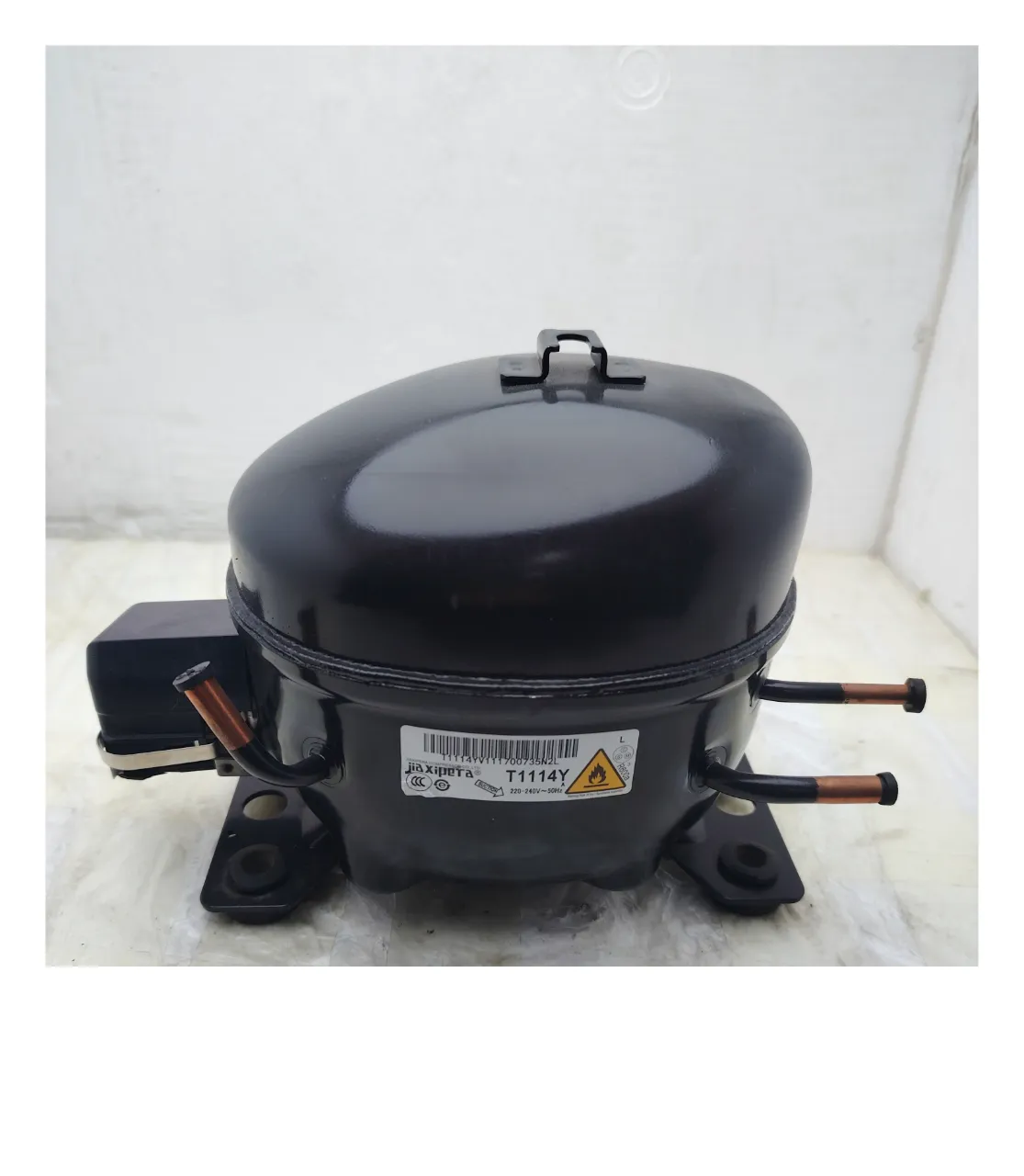
Small hermetic compressors are sealed motor-compressor units used in compact refrigeration systems. They are common in equipment where the compressor, condenser, capillary tube, evaporator, and controls are built as a closed circuit.
Typical wholesale demand comes from:
- Household refrigerators and freezers
- Beverage coolers and bottle coolers
- Glass-door display cabinets
- Small commercial refrigerators
- Undercounter chillers and freezers
- Ice makers and compact refrigeration appliances
- Laboratory and medical-style small refrigeration units, where approved replacements are required
For distributors, these applications create repeat demand because service technicians often need fast access to compatible replacement compressors and starter accessories. The same customer may need several options across different refrigerants, voltages, and cooling capacities.
Repair Market vs OEM Supply
The repair market is different from OEM manufacturing. In OEM supply, a compressor is selected during equipment design and tested with the complete refrigeration system. In the repair market, technicians must identify a failed compressor and choose a suitable replacement using the nameplate, original model, refrigerant, application, and system condition.
Wholesale buyers should therefore organize inventory around real field requirements:
- Popular refrigerants in the target market
- Common horsepower and displacement ranges
- Local voltage and frequency standards
- Availability of start relays, overload protectors, capacitors, and mounting kits
- Cross-reference options for discontinued or difficult-to-source models
A good refrigerator compressor supplier should be able to help match compressor alternatives, but the buyer still needs a clear specification process.
Key Specifications Buyers Should Check Before Ordering
Small hermetic compressors are not universal parts. A wrong match can cause poor cooling, high current, repeated overload trips, oil return problems, or early failure. Before placing a wholesale order, buyers should confirm the following points.
Refrigerant Type: R134a, R600a, and R290
The refrigerant is one of the most important selection factors. A compressor designed for one refrigerant should not be used casually with another unless the manufacturer approves the application.
R134a refrigerator compressor: R134a has been widely used in household and light commercial refrigeration. Many older refrigerators, beverage coolers, and small display cabinets still require R134a replacement compressors. Demand remains important in repair markets where existing equipment has not yet been replaced.
R600a compressor: R600a, or isobutane, is common in many modern household refrigerators and small appliances. It is a hydrocarbon refrigerant and is flammable, so service work must follow the correct safety practices, charging limits, tools, and ventilation procedures. R600a compressors are usually selected for low and medium back pressure applications depending on model design.
R290 compressor: R290, or propane, is used in a growing range of light commercial refrigeration equipment. It also requires hydrocarbon-safe service procedures. R290 compressors are often specified for commercial cabinets, bottle coolers, and other systems where manufacturers design around propane refrigerant.
For wholesale buying, separating inventory clearly by refrigerant helps avoid picking errors. Packaging labels, warehouse bins, and product listings should make the refrigerant obvious.
Horsepower, Displacement, and Cooling Capacity
Many buyers ask for compressors by horsepower, such as 1/8 HP, 1/6 HP, 1/5 HP, 1/4 HP, 1/3 HP, or 1/2 HP. Horsepower is useful for trade communication, but it is not enough by itself.
Cooling capacity depends on operating conditions, refrigerant, compressor design, motor efficiency, and application temperature. Two compressors with similar horsepower may not deliver the same performance in a refrigerator, freezer, or display cabinet.
When possible, buyers should compare:
- Original compressor model
- Refrigerant
- Rated voltage and frequency
- Cooling capacity at the relevant evaporating and condensing conditions
- Application range, such as low back pressure, medium back pressure, or high back pressure
- Displacement and motor type
For resale, product pages should include both the trade horsepower and the technical capacity information. This helps repair teams select more accurately and improves search visibility for long-tail queries.
Voltage and Frequency
Voltage mismatch is a common cause of wrong orders in export compressor business. Refrigerator compressors may be designed for different electrical standards depending on market.
Common points to verify include:
- 110-120 V or 220-240 V supply
- 50 Hz, 60 Hz, or dual-frequency suitability where available
- Single-phase operation for most small hermetic refrigerator compressors
- Correct start relay and overload protector for the compressor model
A compressor nameplate should always be checked before replacement. Distributors serving multiple regions may need separate stock lists for Latin America, the Middle East, Africa, Europe, Southeast Asia, and island markets because voltage and frequency expectations can differ.
Application Temperature Range
A small refrigerator compressor must match the intended application. A compressor for a fresh-food cabinet may not be suitable for a freezer application, and a freezer compressor may not be the best choice for a medium-temperature bottle cooler.
Common categories include:
- Low back pressure (LBP): typically used for freezers and low-temperature refrigeration
- Medium back pressure (MBP): used for chillers, coolers, and medium-temperature cabinets
- High back pressure (HBP): used in higher evaporating temperature applications, depending on system design
Some compressor series cover more than one range, but buyers should not assume interchangeability. The application range should be confirmed from the model data or supplier cross-reference.
Physical Fit and Connection Details
Even when electrical and refrigerant specifications match, the compressor must fit the equipment. Repair technicians often work in tight cabinet spaces, especially on household refrigerators and compact commercial units.
Important physical points include:
- Compressor footprint and mounting hole pattern
- Suction, discharge, and process tube orientation
- Tube diameter and brazing access
- Overall height and shell shape
- Rubber grommets, washers, clips, and mounting hardware
- Terminal cover size and electrical connection layout
For wholesalers, keeping photos, dimensional drawings, and packing details available can reduce pre-sale questions and after-sale disputes.
Starter Parts and Accessories Matter in Wholesale Supply
A compressor replacement is rarely just the compressor body. Starter parts and protection devices are essential for correct operation. A wholesale program should consider accessories as part of the compressor category, not as afterthoughts.
Common Starter Components
Small hermetic refrigerator compressors may use different starting arrangements depending on model and application. Common components include:
- PTC start relay
- Current relay
- Overload protector
- Start capacitor, where required
- Run capacitor, where required
- Terminal cover and clips
- Mounting rubber and sleeves
The correct relay and overload protector should match the compressor model. Using a wrong starter may cause hard starting, overheating, nuisance trips, or compressor damage.
For distributors, pre-matched compressor and starter kits can be easier for repair customers, especially in markets where technicians need quick service solutions. Where kits are not used, the catalog should state compatible starter parts clearly.
Why Overload Protection Should Not Be Ignored
The overload protector is a safety and protection device. It responds to abnormal temperature or current conditions and helps protect the compressor motor. Reusing an old overload protector from a failed compressor may be risky if its condition is unknown or if it does not match the replacement model.
Service companies usually prefer reliable matching accessories because repeat call-backs are expensive. Wholesale buyers should ask suppliers whether accessories are included, optional, or sold separately.
Packaging for Resale
Retail and distributor packaging affects resale efficiency. Compressors are heavy for their size and can be damaged by poor handling. Export buyers should pay attention to:
- Individual carton strength
- Pallet packing for sea or air shipment
- Protection for terminals and tubes
- Clear model and refrigerant labels
- Barcode or SKU labeling if needed
- Inclusion of starter parts and mounting accessories
A damaged suction or discharge tube can turn a good compressor into a warranty problem before installation. Packaging quality is therefore a commercial issue, not only a logistics detail.
Brand Alternatives and Cross-Reference Buying
The small hermetic compressor market includes international and domestic compressor brands, along with model families that serve similar applications. Buyers may ask for a specific brand such as Secop compressor alternatives, or they may need a compatible replacement when the original model is unavailable.
When Brand Matters
Brand preference matters when customers are repairing higher-value equipment, working under warranty conditions, or serving end users who request known names. Some technicians are loyal to familiar compressor brands because they know the starting behavior, noise level, and reliability history in local conditions.
For wholesalers, carrying recognized brands can support premium repair jobs and key accounts. It can also help with customer confidence when entering a new market.
When Alternatives Are Practical
Brand alternatives can be practical when the original compressor is discontinued, too expensive for the repair value of the equipment, or unavailable in time. In these cases, the replacement should be selected by technical compatibility rather than name similarity.
A proper cross-reference should compare:
- Refrigerant compatibility
- Voltage and frequency
- Application range
- Cooling capacity under comparable conditions
- Displacement and motor characteristics
- Oil type where relevant
- Starting device requirements
- Physical dimensions and tube positions
Distributors should avoid presenting substitutes as direct equivalents unless the match has been confirmed. A better approach is to state that a model is a replacement option for a defined application and provide the technical conditions for verification.
Building a Practical Wholesale Range
A balanced refrigerator compressor wholesale range usually includes fast-moving models rather than every possible option. For many distributors, the starting point is a matrix of refrigerant, horsepower, and voltage.
A practical stock plan may include:
- R134a models for legacy household and light commercial repair
- R600a models for modern household refrigerators and freezers
- R290 models for newer light commercial cabinets and coolers
- Several common horsepower ranges from small domestic units to larger display cabinet compressors
- 220-240 V / 50 Hz options for many international markets
- 110-120 V / 60 Hz options for markets that require them
- Matched start relays, overload protectors, capacitors, and mounting accessories
The exact mix depends on the buyer's customer base. A spare parts distributor serving household appliance repair shops will need a different range from a contractor supporting beverage coolers, convenience-store cabinets, and small freezer rooms.
What Distributors and Repair Buyers Should Ask Suppliers
Choosing a refrigerator compressor supplier is not only about unit price. For repair and resale markets, the supplier must support identification, substitution, packing, and repeat orders.
Useful questions include:
- Can you provide model cross-references for common original compressors?
- Are starter parts included or supplied separately?
- Which refrigerants and voltage options are available for each model?
- Can cartons and labels show the buyer's SKU or local language if required?
- What packing method is used for export shipments?
- Are product photos, nameplate details, and dimensional information available?
- What is the minimum order quantity by model or mixed models?
- How are warranty claims handled if the compressor is damaged in shipment or fails after installation?
Information to Prepare Before Requesting a Quote
Buyers can get more accurate recommendations by sending complete technical details. For each compressor request, prepare:
- Original compressor brand and model
- Equipment type, such as refrigerator, freezer, bottle cooler, or display cabinet
- Refrigerant shown on the equipment nameplate
- Voltage and frequency
- Application temperature if known
- Photos of compressor nameplate and piping layout
- Required quantity and destination market
- Whether starter parts and accessories are needed
This information helps the supplier offer a matching compressor instead of guessing from horsepower alone.
Safety Notes for Hydrocarbon Refrigerants
R600a and R290 are efficient refrigerants but require correct handling because they are flammable. Wholesale buyers should make sure their customers understand local safety regulations, charge limits, labeling requirements, and service procedures.
Repair teams should use suitable tools, avoid ignition sources, ventilate the work area, and follow equipment manufacturer instructions. Distributors should also avoid mixing hydrocarbon compressors with non-hydrocarbon parts in a way that creates confusion during picking or installation.
Practical Takeaways for Refrigerator Compressor Wholesale
For distributors, repair companies, and installers, the best refrigerator compressor wholesale strategy is built around compatibility and availability. Price matters, but wrong specification costs more through returns, failed repairs, and customer complaints.
Key points to remember:
- Match the compressor by refrigerant, voltage, frequency, application range, and capacity, not only horsepower.
- Keep R134a, R600a, and R290 compressors clearly separated in stock and product listings.
- Confirm starter parts, overload protectors, capacitors, and mounting accessories before shipment.
- Use cross-references carefully and verify technical conditions before offering alternatives.
- Build inventory around the equipment types your customers actually repair.
- Request photos, dimensional information, packing details, and model labels for export orders.
A strong wholesale compressor program helps service technicians finish jobs faster and gives spare parts distributors a more reliable product category. For global buyers, the right supplier relationship should combine stock availability, brand options, technical matching, and consistent export packing.
FAQ
What should buyers check before ordering refrigerator compressors wholesale?
Buyers should confirm refrigerant, voltage, frequency, application range, cooling capacity, horsepower, physical dimensions, tube layout, and required starter parts. The original compressor model and equipment nameplate are the best starting points for accurate matching.
Can an R134a refrigerator compressor be replaced with an R600a or R290 compressor?
A compressor should not be changed to another refrigerant type unless the complete system is designed or properly converted for that refrigerant and all safety requirements are met. R600a and R290 are flammable hydrocarbon refrigerants and require compatible components, correct charging practices, and trained service handling.
Is horsepower enough to select a small hermetic compressor?
Horsepower is useful for trade communication, but it is not enough for precise selection. Buyers should also compare refrigerant, cooling capacity at relevant conditions, displacement, voltage, frequency, application range, and starter device requirements.
Are starter relays and overload protectors usually included with wholesale compressors?
It depends on the supplier and model. Some compressors are sold with matched starter parts, while others are supplied as compressor bodies only. Wholesale buyers should confirm whether the PTC relay, overload protector, capacitors, terminal cover, and mounting accessories are included or sold separately.
How can distributors choose between original brands and compressor alternatives?
Original brands are useful when customers request a known model or when warranty and performance confidence are important. Alternatives can work when the technical match is verified, including refrigerant, voltage, capacity, application range, starting components, and physical fit.
Buyer Next Step
Move from research to sourcing with a category shortlist, relevant product examples, and a quote request channel.