Refrigerator Compressor Replacement Guide for Repair Technicians
A practical guide to refrigerator compressor replacement, covering refrigerant matching, capacity checks, relays, installation risks, and buying tips.
Refrigerator compressor replacement is one of the most important repair decisions a technician can make. A correct match can return a domestic refrigerator, display cabinet, freezer, or small commercial unit to reliable service. A poor match can create repeat failures, high energy use, noise complaints, overheating, or refrigerant-side problems that are difficult to diagnose later.
For repair shops, spare parts distributors, and refrigeration contractors, the goal is not simply to find a compressor that looks similar. The replacement compressor must suit the appliance design, refrigerant, cooling capacity, voltage, start components, mounting arrangement, and operating conditions. This guide focuses on practical selection points for household and light commercial refrigerator compressors, especially hermetic compressors used in refrigerators, freezers, bottle coolers, display cabinets, and similar equipment.
What Must Match Before Replacing a Refrigerator Compressor
A refrigerator compressor is part of a matched refrigeration system. The evaporator, condenser, capillary tube or expansion device, refrigerant charge, thermostat or controller, and cabinet insulation all influence how the compressor operates. When choosing a fridge compressor replacement, technicians should confirm several details before ordering or installing a new unit.
Compressor type and application
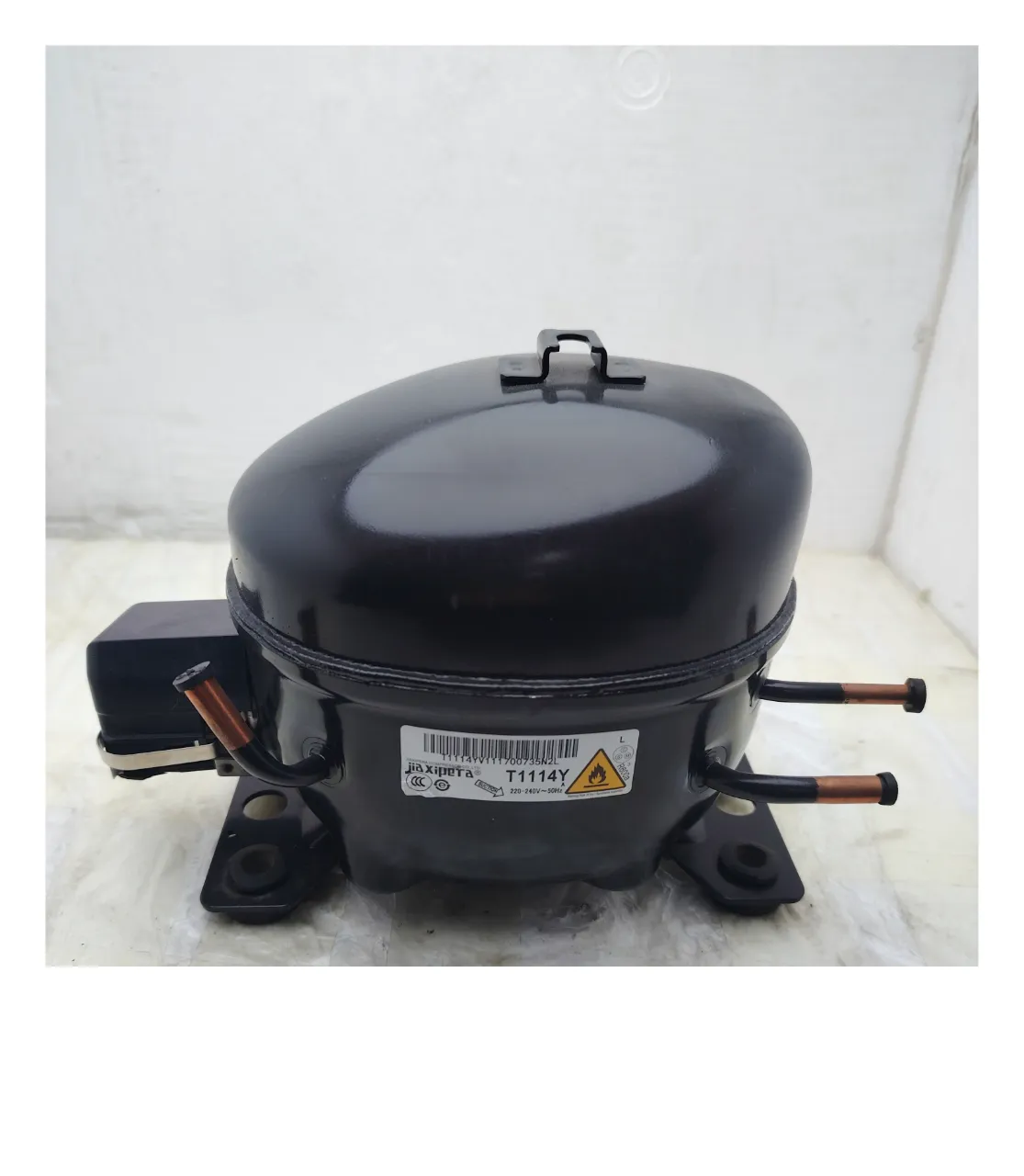
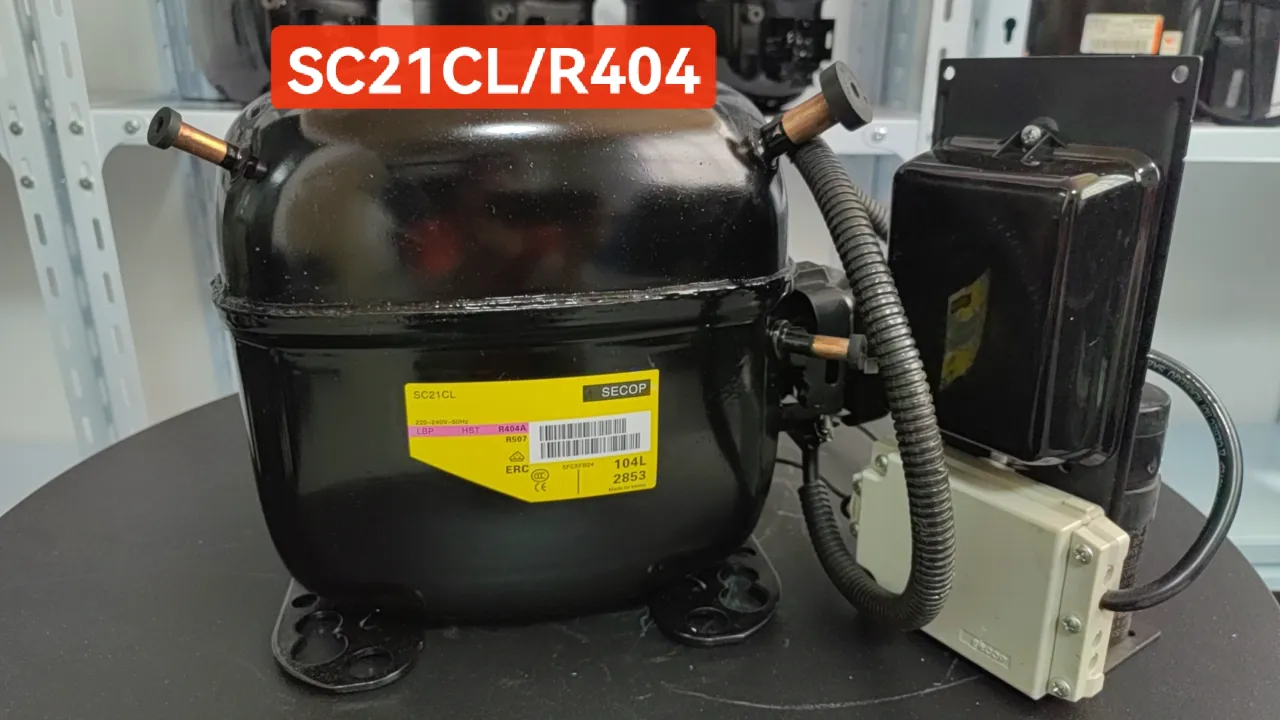
Most household refrigerators and many small commercial refrigerators use hermetic compressors. In a hermetic compressor, the motor and compression mechanism are sealed inside a welded shell. These compressors are compact, quiet, and widely used, but they are not designed for internal mechanical repair in the field.
Before selecting a replacement, confirm the application:
- Domestic refrigerator or freezer
- Beverage cooler or bottle cooler
- Commercial display cabinet
- Under-counter refrigerator
- Ice cream freezer or low-temperature cabinet
- Medical, laboratory, or specialty storage equipment
Medium-temperature and low-temperature applications can require different compressor performance even when the physical size appears similar. A compressor suitable for a household refrigerator may not be suitable for a freezer or commercial cabinet with long running hours.
Refrigerant compatibility
Refrigerant matching is critical. A compressor designed for one refrigerant should not be assumed compatible with another. The compressor motor, oil type, displacement, operating pressures, and cooling performance are selected around the intended refrigerant.
Common refrigerator refrigerants vary by market and equipment age. The replacement compressor should be selected for the same refrigerant shown on the appliance nameplate, compressor label, or service documentation. If the system is being converted to another refrigerant, the conversion must be handled according to accepted service practice and local regulations.
Pay special attention to oil compatibility. Some refrigerants require specific lubricant types. Mixing incompatible oil and refrigerant can reduce lubrication, cause poor oil return, or shorten compressor life.
Cooling capacity and operating temperature
Cooling capacity must be close to the original compressor rating under the relevant test condition. Capacity is often shown in watts, BTU/h, kcal/h, or horsepower class, but technicians should avoid relying only on horsepower. Horsepower is a broad commercial description and does not always represent actual capacity.
A replacement compressor should be checked against:
- Evaporating temperature range
- Condensing temperature range
- Refrigerant type
- Rated cooling capacity
- Power supply and frequency
- Application temperature class
An undersized compressor may run continuously and fail to reach cabinet temperature. An oversized compressor can short-cycle, create temperature instability, and place stress on electrical and refrigeration components.
Voltage, frequency, and phase
Electrical compatibility is non-negotiable. Confirm the supply voltage, frequency, and phase before selecting the replacement. Many domestic refrigerator compressors are single-phase, but voltage and frequency vary between markets. A compressor designed for one electrical supply may overheat, start poorly, or fail when installed on another.
Check the appliance rating plate and the original compressor label. For export spare parts supply, buyers should clearly specify destination market voltage and frequency, not only the compressor model number.
How to Identify the Original Compressor Correctly
Accurate identification saves time and reduces returns. When a repair technician or parts buyer requests a replacement, the most useful information usually comes from the original compressor nameplate and the appliance data plate.
Information to collect from the compressor label
A clear photo of the compressor label is often the fastest way to identify a replacement. Record or photograph:
- Compressor brand and model number
- Refrigerant
- Voltage and frequency
- Starting method or electrical specification
- Capacity or displacement, if shown
- Application information, if shown
- Any special codes or suffixes
Model suffixes matter. A small difference in the final letters or numbers can indicate a different refrigerant, voltage, motor type, or start component package.
Information to collect from the appliance
The appliance data plate can confirm details that the compressor label may not show clearly. It may include refrigerant type, refrigerant charge, rated current, climate class, and cabinet model. For commercial equipment, the appliance model helps determine whether the compressor is working in a medium-temperature or low-temperature system.
For distributors and repair companies, a standard request form can prevent wrong orders. At minimum, ask customers for compressor model, refrigerant, voltage, appliance type, and photos of the old compressor and cabinet data plate.
When the original model is unavailable
Sometimes the original compressor model is obsolete, damaged, or not available in the local market. In that case, the replacement should be cross-matched by specification, not by appearance alone.
A practical cross-match should consider:
- Same refrigerant or approved equivalent application
- Similar cooling capacity at comparable rating conditions
- Correct evaporating temperature range
- Same voltage, frequency, and phase
- Suitable starting torque for the system design
- Compatible oil type
- Similar mounting footprint and connection layout where possible
Connection tube sizes and positions may differ between brands. A trained technician can adapt tubing where appropriate, but the refrigeration and electrical specification must remain correct.
Start Components: Relay, Overload, Capacitor, and PTC Relay
Many refrigerator compressor replacement problems are not caused by the compressor body itself. Faulty or mismatched start components can prevent the compressor from starting, cause overload trips, or damage the new unit. For this reason, start components should be checked whenever a hermetic compressor is replaced.
Starting relay and overload protector
The starting relay connects the start winding during compressor start-up and then removes it after the motor reaches operating speed. The overload protector opens the circuit if the compressor draws excessive current or overheats.
A replacement starting relay should match the compressor motor design. Using the wrong relay can create hard starting, buzzing, repeated clicking, or locked-rotor conditions. The overload protector must also match the compressor current and thermal requirements.
PTC relay in domestic refrigerators
Many domestic refrigerator compressors use a PTC relay. A PTC relay increases resistance as it heats, removing the start winding from the circuit after start-up. These components are simple and common, but they must still be matched correctly.
When diagnosing a no-start refrigerator, technicians should test the PTC relay, overload protector, supply voltage, and compressor windings before condemning the compressor. Replacing a compressor when only the PTC relay has failed wastes cost and may not solve the real problem.
Capacitors and high starting torque needs
Some systems use run capacitors or start capacitors depending on compressor design and application. A commercial refrigerator that restarts against pressure imbalance may require higher starting torque than a simple domestic refrigerator. If the new compressor requires a specific capacitor or relay package, use the specified components rather than reusing old parts automatically.
For spare parts distributors, it is often useful to supply the compressor together with the correct electrical accessories when available. This reduces field errors and helps repair teams complete the job in one visit.
Installation Practices That Protect the New Compressor
A correct compressor model can still fail early if the system is not cleaned, evacuated, charged, and tested properly. Compressor replacement should be treated as a system repair, not only a component swap.
Find the cause of the original failure
Before installing a new compressor, identify why the old one failed. Common causes include poor ventilation around the condenser, dirty condenser coils, fan failure, refrigerant leakage, moisture or non-condensables in the system, incorrect charge, electrical supply problems, and blocked capillary tubes or filter driers.
If the root cause remains, the new compressor may fail under the same conditions. This is especially important for commercial display cabinets and coolers that operate for long hours in warm shop environments.
Replace the filter drier and control contamination
When a sealed refrigeration system is opened, moisture and contaminants can enter. A new filter drier is commonly installed during compressor replacement to help protect the capillary tube and compressor. If there are signs of compressor burnout, acid and contamination control become more important, and the service procedure must be handled carefully.
Keep tubing open time as short as possible. Use proper brazing practice and avoid overheating compressor connections. Where nitrogen purging is part of the technician's standard procedure, it helps reduce internal oxidation during brazing.
Evacuation and charging
Proper evacuation removes air and moisture from the sealed system. Charging should follow the appliance specification, especially for small capillary tube systems where charge accuracy matters. Overcharging or undercharging can cause high discharge temperature, poor cooling, frost pattern problems, high current, or liquid return.
For many small refrigerators, the refrigerant charge is small, so accurate weighing is better than charging by pressure alone. Pressures must be interpreted with ambient temperature, cabinet load, evaporator condition, and refrigerant type in mind.
Post-installation checks
After replacement, run the equipment long enough to confirm stable operation. Check:
- Starting and running current
- Suction and discharge line behavior
- Condenser fan and airflow
- Evaporator frost pattern where visible
- Cabinet temperature pull-down
- Compressor shell temperature trend
- Abnormal vibration or noise
- Relay or overload cycling
Documenting these checks helps repair companies manage warranty discussions and gives distributors better information if a technical issue is reported.
Buying and Stocking Refrigerator Replacement Compressors
For overseas spare parts distributors and repair companies, refrigerator compressor replacement is also a stock management issue. The best inventory is not always the widest inventory. It is the range that matches the most common equipment in the service area with reliable technical identification.
What distributors should keep organized
A compressor stock program should be organized by refrigerant, application temperature, voltage, and capacity range. Brand and model are important, but they should not be the only structure. A technician often needs a replacement by specification when the original brand is not available.
Useful catalog fields include:
- Compressor model and brand
- Refrigerant
- Application range, such as medium or low temperature
- Cooling capacity rating condition
- Voltage and frequency
- Motor type and start components
- Oil type where available
- Mounting and tube connection details
- Equivalent or alternative models where properly verified
Clear cross-reference data reduces wrong shipments and speeds up quotations. It also helps sales teams ask the right technical questions before confirming an order.
What repair technicians should ask before ordering
A fast replacement depends on complete information. Before ordering, technicians should confirm the original compressor model, refrigerant, voltage, appliance type, and whether the compressor failed electrically or mechanically. If the compressor label is unreadable, provide appliance model details and photos of the installation area.
For commercial refrigerator compressors, include the operating temperature requirement. A beverage cooler, deli display case, and frozen food cabinet may look similar to a non-specialist buyer, but their compressor selection can be different.
Avoid appearance-based matching
Physical size and tube location can help with installation planning, but they are not enough for compressor selection. Two compressors with similar shells may have different displacement, refrigerant compatibility, motor design, or application range. Appearance-based matching is one of the easiest ways to create a repeat service call.
The safest path is specification-based matching supported by label data, appliance information, and a verified replacement table when available.
Practical Takeaways for Reliable Compressor Replacement
Refrigerator compressor replacement works best when the technician treats the compressor as part of a complete system. The replacement must match the refrigerant, capacity, application temperature, electrical supply, starting components, and installation conditions.
For domestic refrigerator compressor repairs, do not overlook the PTC relay, overload protector, thermostat, wiring, and condenser condition. For commercial refrigerator compressor replacement, pay closer attention to duty cycle, ambient conditions, condenser airflow, and correct application range.
The most useful habit is disciplined identification. A clear compressor label, appliance data plate, refrigerant information, and operating application will prevent most selection mistakes. For distributors, organizing stock and quotations around technical specifications makes it easier to serve repair shops and installers across different markets.
FAQ
How do I choose the right refrigerator compressor replacement?
Match the replacement by refrigerant, cooling capacity, application temperature, voltage, frequency, motor type, start components, and oil compatibility. Do not select a compressor only by physical size or horsepower description.
Can I replace a refrigerator compressor with a different brand?
Yes, a different brand can be used if the technical specifications match the appliance requirements. The replacement must be suitable for the same refrigerant, temperature range, capacity, power supply, and starting method.
Should the starting relay or PTC relay be replaced with the compressor?
The relay, PTC relay, overload protector, and capacitors should be tested and matched to the new compressor. In many cases, using the correct new electrical accessories reduces starting problems and repeat failures.
What information should a technician provide when ordering a fridge compressor replacement?
Provide the original compressor model, refrigerant, voltage and frequency, appliance type, cabinet model if available, photos of the compressor label and appliance data plate, and details of the failure symptoms.
Why is refrigerant matching important when replacing a hermetic compressor?
The compressor motor, oil, displacement, pressure range, and cooling performance are designed around specific refrigerants. An incorrect refrigerant match can cause poor cooling, lubrication problems, overheating, or early compressor failure.
Buyer Next Step
Move from research to sourcing with a category shortlist, relevant product examples, and a quote request channel.