Refrigeration Compressor Replacement Guide: How to Match Model Number, Refrigerant, Voltage, and Application
A practical guide for matching replacement refrigeration compressors by model number, refrigerant, voltage, capacity, and application across major brands.
Refrigeration Compressor Replacement Guide: How to Match Model Number, Refrigerant, Voltage, and Application
Replacing a refrigeration compressor is not simply a matter of finding a unit that “looks the same” or has similar horsepower. For distributors, service companies, and cold-room installers, the correct replacement depends on a combination of model number, refrigerant, voltage, capacity, application temperature, oil type, mechanical layout, and control compatibility.
This refrigeration compressor replacement guide explains how to approach replacement selection across major brands such as Copeland, Danfoss, Bitzer, Tecumseh, Embraco/Secop, Panasonic, LG, Hitachi, and other manufacturers. The goal is to reduce ordering mistakes, avoid repeat failures, and help overseas buyers communicate clearly when sourcing replacement compressors from multi-brand suppliers.
Why Compressor Matching Matters
A refrigeration compressor operates inside a system, not as an isolated component. If the replacement is not suitable for the system conditions, the result may be poor cooling, nuisance trips, high discharge temperature, oil return problems, or early compressor failure.
For replacement buyers, the most common risks include:
- Ordering a compressor with the wrong refrigerant compatibility
- Selecting the wrong voltage, phase, or frequency
- Confusing low-temperature and medium-temperature applications
- Using a compressor with incompatible oil
- Matching only by horsepower instead of cooling capacity and operating envelope
- Ignoring starting components, protection devices, or inverter control requirements
- Receiving a physically incompatible compressor with different mounting, piping, or terminal layout
In many markets, replacement demand is urgent. A supermarket cabinet, restaurant freezer, cold room, or process chiller cannot wait for multiple rounds of trial and error. A structured matching process helps technicians, distributors, and purchasing teams make faster and safer decisions.
Step 1: Identify the Original Compressor Model Number
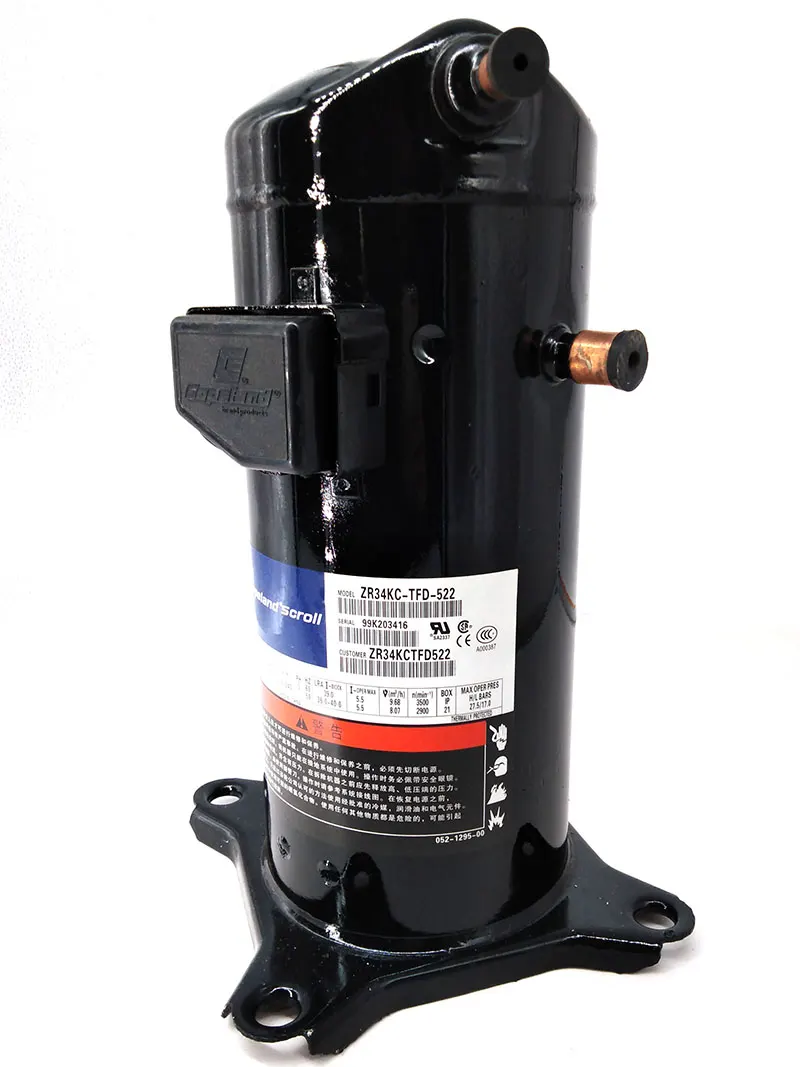
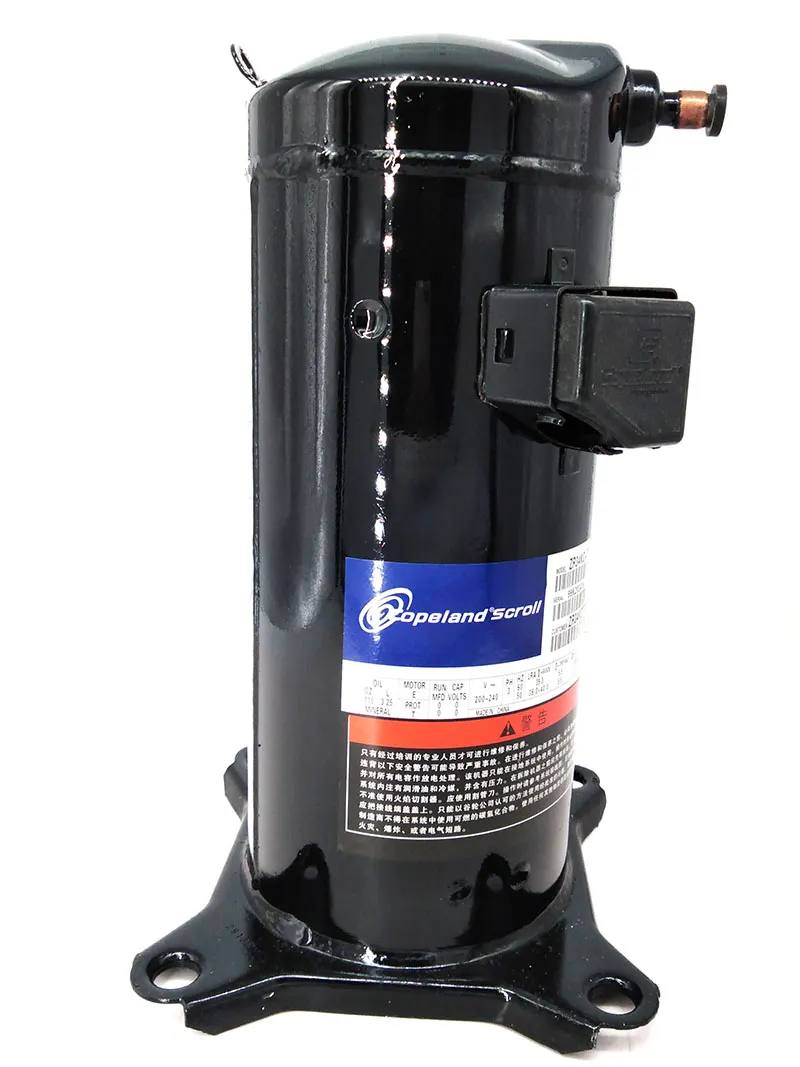
The model number is the starting point for any replacement refrigeration compressor. It normally appears on the compressor nameplate, label, or stamped plate. Depending on the brand, the model code may indicate compressor family, displacement, motor type, refrigerant range, application temperature, voltage, and generation.
Where to find the model information
Check the following locations before removing the compressor:
- Compressor nameplate or barcode label
- Equipment data plate on the condensing unit, cabinet, or chiller
- Installation or service manual
- Purchase records or previous repair invoices
- Photos taken before removal
- Controller or spare parts list from the equipment manufacturer
If the original label is damaged, collect all visible information, including brand, partial model code, serial number, refrigerant, voltage, and system application. Clear photos are often enough for an experienced supplier to narrow down a compatible replacement.
Do not match by horsepower alone
Horsepower is widely used in informal compressor buying, but it is not a precise replacement standard. Two compressors labeled as 1 HP may have different displacement, refrigerant compatibility, cooling capacity, motor design, and application envelope.
For example, a medium-temperature compressor used for a display chiller may not be suitable for a low-temperature freezer, even if the nominal horsepower appears similar. Always use the model number and operating conditions as the main reference.
Use cross-reference carefully
A compressor cross reference can be helpful when the original model is obsolete, unavailable, or too expensive. However, cross-reference results should be verified against system requirements. A valid replacement should match not only capacity, but also refrigerant, voltage, application range, oil, and physical installation constraints.
When requesting a cross-reference, provide the supplier with:
- Original compressor brand and full model number
- Refrigerant used in the system
- Power supply voltage, phase, and frequency
- Application type, such as freezer, chiller, cold room, ice machine, or air-conditioning unit
- Evaporating and condensing temperature if available
- Photos of the compressor and system nameplate
- Required quantity and destination market
Step 2: Match Refrigerant and Oil Type
Refrigerant compatibility is one of the most important checks in commercial fridge compressor replacement. Compressors are designed and approved for specific refrigerants or refrigerant groups. Using an incompatible refrigerant can cause lubrication problems, overheating, poor capacity, or safety issues.
Common refrigerant considerations
Replacement selection should confirm whether the system uses refrigerants such as R134a, R404A, R507, R407C, R410A, R22, R290, R600a, CO₂, or other alternatives. Availability and regulations vary by market, so overseas buyers should also consider local service practices and import requirements.
Some compressors support more than one refrigerant, but this does not mean every refrigerant can be used under the same conditions. Capacity, operating pressure, discharge temperature, and oil requirements may change.
Oil compatibility matters
The oil inside the compressor must be compatible with the refrigerant and system design. Common oil types include mineral oil, alkylbenzene oil, and POE oil. Small hermetic compressors and commercial semi-hermetic compressors may have different lubrication requirements.
When replacing a compressor, confirm:
- The oil type required by the replacement compressor
- Whether the system has been converted from an older refrigerant
- Whether oil return conditions are suitable
- Whether the system needs flushing or filter drier replacement after burnout
A compressor burnout requires special attention. Acid, carbon deposits, and contaminated oil can damage the new compressor quickly if the system is not properly cleaned and dehydrated.
Natural refrigerants require extra caution
Hydrocarbon refrigerants such as R290 and R600a are used in many light commercial and domestic refrigeration systems. CO₂ systems are also common in some commercial applications. Replacement compressors for these refrigerants must be selected and handled according to applicable safety requirements, charge limits, pressure ratings, and service procedures. Do not substitute a non-approved compressor into a flammable or high-pressure refrigerant system.
Step 3: Confirm Voltage, Phase, Frequency, and Motor Design
Electrical mismatch is a common cause of wrong orders. A compressor may have the correct capacity and refrigerant rating but still be unusable if the electrical specification does not match the installation.
Key electrical details to verify
Always confirm:
- Voltage, such as 115 V, 220–240 V, 380–420 V, or 460 V
- Phase, single-phase or three-phase
- Frequency, 50 Hz, 60 Hz, or dual-rated operation
- Starting method, such as CSR, CSIR, PSC, direct-on-line, star-delta, or inverter drive
- Motor protection requirements
- Starting capacitor, running capacitor, relay, contactor, or overload compatibility
For international sourcing, frequency is especially important. A compressor used in a 60 Hz market may not deliver the same capacity or performance in a 50 Hz market. Some models are dual-rated, while others are not.
Single-phase compressors need correct accessories
Many small hermetic compressors depend on matched electrical accessories. The wrong relay, overload, capacitor, or start kit can prevent starting or damage the motor. When sourcing replacements for brands such as Tecumseh, Embraco/Secop, Panasonic, LG, Hitachi, and similar light commercial compressor families, ask whether the replacement is supplied with electrical components or whether they must be ordered separately.
Inverter compressors are not universal replacements
Variable-speed and inverter compressors require compatible drive electronics and control signals. They cannot usually replace a fixed-speed compressor without system-level changes. Likewise, a fixed-speed compressor cannot simply replace an inverter compressor unless the equipment design allows it.
For inverter applications, provide the full equipment model, controller information, and compressor model before confirming a replacement.
Step 4: Match Application Temperature and Capacity
Refrigeration applications are typically divided into low-temperature, medium-temperature, high-temperature, and air-conditioning or heat pump conditions. The same compressor family may have different models for different operating envelopes.
Application examples
Common application categories include:
- Low temperature: freezers, frozen food rooms, ice cream storage
- Medium temperature: beverage coolers, supermarket chillers, cold rooms for fresh goods
- High temperature: process cooling, some dehumidification or air-conditioning-related uses
- Air conditioning: comfort cooling, packaged units, split systems, rooftops
- Special applications: ice machines, transport refrigeration, medical storage, cascade systems
A low-temperature freezer compressor must operate at lower suction pressures and may require different motor cooling and displacement characteristics. A medium-temperature compressor may run outside its safe envelope if used in a freezer system.
Capacity must be compared at the right conditions
Cooling capacity is not a fixed number. It depends on evaporating temperature, condensing temperature, suction gas return, liquid subcooling, refrigerant, and frequency. When comparing replacement options, capacity should be evaluated at conditions close to the actual system.
If exact design data is unavailable, provide practical application information:
- Cabinet or cold-room temperature
- Ambient temperature range
- Condenser type, air-cooled or water-cooled
- Approximate room size or equipment size
- Original compressor model and refrigerant
- Expansion device type, such as capillary tube, thermostatic expansion valve, or electronic expansion valve
This information helps avoid over-sizing or under-sizing. An oversized compressor may short-cycle and return oil poorly. An undersized compressor may run continuously and fail to maintain temperature.
Consider compressor type and construction
Different replacement situations may involve different compressor types:
- Hermetic reciprocating compressors for domestic and light commercial refrigeration
- Hermetic rotary compressors for air-conditioning and some refrigeration applications
- Scroll compressors for air-conditioning, chillers, and commercial refrigeration
- Semi-hermetic reciprocating compressors for larger commercial systems and serviceable applications
- Screw compressors for industrial and large commercial refrigeration
In most direct replacement jobs, the compressor type should remain the same unless a qualified engineer approves a redesign.
Step 5: Check Mechanical Fit, Piping, and System Condition
Even when technical specifications match, the compressor must physically fit the equipment. This is especially important for compact cabinets, condensing units, and replacement projects where piping modifications are difficult.
Physical details to compare
Before ordering, check:
- Mounting foot pattern and base dimensions
- Overall height, width, and depth
- Suction and discharge connection size
- Connection type, such as copper stub, rotolock, flange, or threaded fitting
- Terminal box or electrical cover position
- Service valve requirements
- Oil sight glass or oil equalization connection for semi-hermetic models
- Net weight and installation clearance
For distributors handling multiple brands, photos and dimensional drawings are valuable. If a direct original model is no longer available, a near-equivalent unit may still require piping changes, brackets, or electrical modifications.
Do not ignore the cause of failure
A compressor replacement should include diagnosis of why the original unit failed. Replacing the compressor without solving the root cause often leads to another failure.
Common causes include:
- Refrigerant leak and low suction cooling
- Dirty condenser and high discharge pressure
- Poor airflow
- Incorrect refrigerant charge
- Liquid floodback or liquid slugging
- Blocked capillary tube, expansion valve, or filter drier
- Electrical imbalance or voltage drop
- Contaminated system after burnout
- Poor oil return due to piping or operating conditions
Service teams should replace filter driers, evacuate the system properly, confirm superheat and subcooling, and test electrical supply before commissioning the new compressor.
How Distributors and Repair Companies Should Request a Replacement Quote
A clear inquiry reduces delays and improves replacement accuracy. Instead of sending only a partial model or horsepower, provide a complete compressor sourcing request.
A practical inquiry format includes:
- Original brand: Copeland, Danfoss, Bitzer, Tecumseh, Embraco/Secop, Panasonic, LG, Hitachi, or other
- Full model number and serial number if available
- Refrigerant and oil type if known
- Voltage, phase, and frequency
- Application: freezer, chiller, cold room, display cabinet, ice machine, AC unit, etc.
- Required capacity or equipment model
- Photos of compressor label, terminal box, mounting, and piping
- Quantity required
- Destination country and preferred shipping method
- Need for original model, compatible replacement, or lower-cost alternative
For multi-brand sourcing, it is useful to state whether the buyer accepts an equivalent compressor from another brand. In many repair markets, buyers may request original-brand replacement for warranty or customer preference. In other cases, an approved cross-reference may be acceptable if it meets the technical requirements.
Brand-to-Brand Replacement: What to Watch For
Major compressor brands have different model coding systems, product families, and application strengths. A Copeland scroll, Danfoss commercial compressor, Bitzer semi-hermetic unit, Tecumseh hermetic compressor, or Embraco/Secop light commercial compressor cannot be compared by appearance alone.
When considering brand-to-brand alternatives, focus on engineering equivalence:
- Refrigerant approval
- Application envelope
- Cooling capacity at comparable conditions
- Displacement and motor rating
- Voltage and frequency
- Oil type and oil charge
- Starting and protection components
- Physical dimensions and connections
- Serviceability and spare parts availability
For cold-room contractors and engineering installers, long-term availability also matters. A replacement compressor should not only solve the immediate repair but also allow future service support in the local market.
Practical Replacement Checklist
Use this checklist before confirming a replacement order:
- Full original compressor model number has been identified
- Refrigerant type is confirmed
- Voltage, phase, and frequency match the site power supply
- Application temperature range is confirmed
- Capacity is checked at relevant operating conditions
- Oil type is compatible with the refrigerant and system
- Starting components and protection devices are confirmed
- Mechanical dimensions and pipe connections are acceptable
- System failure cause has been diagnosed
- Filter drier, evacuation, charging, and commissioning procedures are planned
- Cross-reference option has been reviewed by a qualified supplier or technician
A careful replacement process protects both the buyer and the end user. For distributors, it reduces returns and customer complaints. For repair companies, it improves reliability and protects service reputation. For installers, it ensures the new compressor works within the complete refrigeration system, not just on paper.
FAQ
How do I identify the correct replacement refrigeration compressor?
Start with the full model number on the original compressor nameplate. Then confirm refrigerant, voltage, phase, frequency, application temperature, capacity, oil type, and physical dimensions. Photos of the compressor label, piping, and terminal box help suppliers verify the correct replacement.
Can I replace a compressor with another brand?
Yes, in many cases a compressor can be cross-referenced to another brand, but the alternative must match the refrigerant, voltage, application range, capacity, oil type, starting method, and mechanical fit. Brand-to-brand replacement should be checked by a qualified supplier or technician.
Is horsepower enough to choose a replacement compressor?
No. Horsepower is only a rough description and does not confirm cooling capacity, refrigerant compatibility, voltage, or application envelope. A correct replacement should be selected by model number and operating conditions, not horsepower alone.
What happens if the refrigerant does not match the compressor?
Using a compressor with the wrong refrigerant can cause poor cooling, high discharge temperature, lubrication failure, unsafe operation, or early compressor damage. Always confirm that the compressor is approved for the system refrigerant and oil type.
What information should I send when requesting a compressor cross reference?
Send the original brand and model number, refrigerant, voltage, phase, frequency, application, equipment type, photos of the nameplate and piping, required quantity, and destination country. If available, include evaporating and condensing temperature or the equipment model.
Buyer Next Step
Move from research to sourcing with a category shortlist, relevant product examples, and a quote request channel.