Refrigeration Compressor Replacement Guide for Overseas Buyers
A practical refrigeration compressor replacement guide for distributors, repair teams, and cold-room installers ordering compatible compressors.
Why compressor replacement needs a structured check
A failed refrigeration compressor can stop a supermarket cabinet, cold room, ice machine, display freezer, process chiller, or air-conditioning system immediately. For overseas buyers, the challenge is not only finding a compressor in stock. The bigger risk is ordering a unit that looks similar but does not match the refrigerant, voltage, oil, capacity range, application temperature, or mounting layout.
This refrigeration compressor replacement guide is written for spare parts distributors, refrigeration service companies, and engineering installers who need a practical workflow before placing an order. It applies to common commercial refrigeration compressor replacement projects, including replacement compressor selection for cold rooms, condensing units, display cabinets, and other medium- and low-temperature systems.
A correct replacement protects the customer’s equipment, reduces installation delays, and avoids unnecessary warranty disputes. A wrong replacement may lead to poor cooling, high discharge temperature, oil return problems, nuisance trips, or early compressor failure.
Step 1: Confirm that the compressor has actually failed
Before ordering a new compressor, the service team should confirm that the compressor is the failed component, not simply the visible symptom of another system problem. Many compressors are replaced after damage caused by electrical faults, refrigerant floodback, blocked condensers, poor airflow, low charge, contaminated oil, or incorrect controls. If the root cause remains, the replacement compressor may fail again.
Common signs of compressor failure
Typical symptoms that may indicate compressor failure include:
- Compressor does not start although voltage is present
- Repeated overload or breaker trips
- Locked rotor condition or very high starting current
- Abnormal mechanical noise or vibration
- No pressure difference between suction and discharge when running
- Excessive discharge temperature
- Burnt smell at terminals or contaminated oil
- Poor cooling capacity despite correct system conditions
These signs should be checked together with system pressure, electrical readings, refrigerant charge condition, and control operation. A compressor that is off on a safety control may not be defective. For example, a high-pressure trip may be caused by a dirty condenser, failed condenser fan, non-condensable gas, or overcharge.
Electrical checks before replacement
For hermetic and semi-hermetic compressors, technicians should measure winding resistance, insulation resistance to ground, supply voltage, phase balance, contactor condition, and overload status. For three-phase compressors, phase loss or voltage imbalance can damage the motor. For single-phase compressors, the start capacitor, run capacitor, relay, PTC, or potential relay should be checked before condemning the compressor.
If there is evidence of motor burnout, the replacement order should not be treated as a simple compressor swap. The system may require filter drier replacement, oil and acid inspection, line cleaning where appropriate, and careful evacuation before the new compressor is started.
Step 2: Read the compressor nameplate correctly
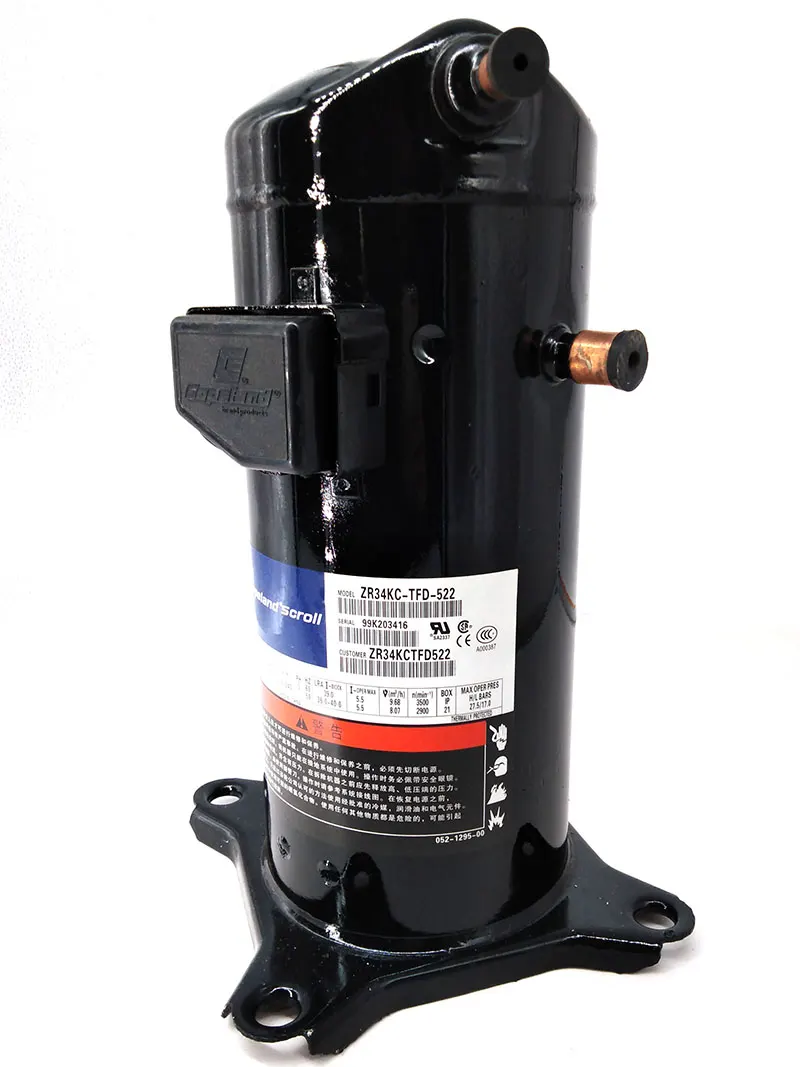
The compressor nameplate is the most important starting point for a compressor cross reference. It normally contains the model number and key electrical or application data. Even if the original compressor brand is no longer available, the nameplate helps suppliers identify a compatible Copeland compressor replacement, Bitzer compressor replacement, Danfoss compressor replacement, or equivalent model from another suitable brand.
Information to record from the nameplate
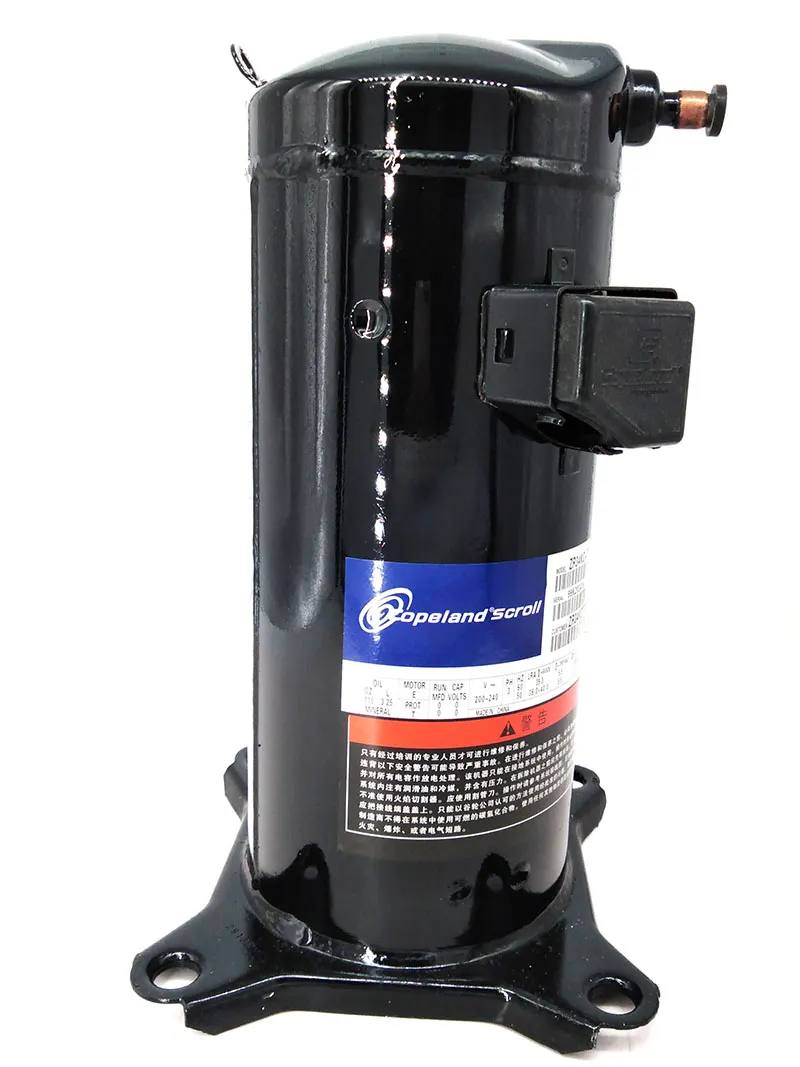
Before contacting a supplier, take clear photos of the compressor nameplate, terminal box label, and full compressor body. Also record the system type and operating conditions. The most useful details include:
- Brand and full model number
- Compressor type: hermetic, semi-hermetic, scroll, reciprocating, rotary, or screw
- Refrigerant shown on the system or compressor documentation
- Nominal voltage, phase, and frequency
- Locked rotor and rated current data if available
- Application range, if stated
- Oil type or oil charge information, if available
- Serial number or production code, if useful for identification
- Connection sizes and connection type
- Mounting feet or base dimensions
- Accessories fitted to the original compressor
Model numbers should be copied exactly. A small difference in suffix may indicate voltage, refrigerant compatibility, oil type, motor protection, connection style, or application range. Sending only a partial model number can lead to the wrong selection.
When the nameplate is missing or unreadable
If the nameplate is damaged, identification is still possible, but the buyer must provide more system information. Useful details include the equipment brand and model, refrigerant, cold-room temperature, evaporating and condensing conditions if known, compressor photos from several angles, electrical supply, suction and discharge line sizes, and mounting dimensions. A photo of the old condensing unit or electrical panel can also help.
For distributors managing urgent orders, it is better to request complete identification at the beginning than to ship a near match that cannot be installed at site.
Step 3: Match the technical requirements before ordering
Compressor replacement is not only a brand-to-brand exercise. A compressor cross reference must match the operating envelope and installation requirements. The replacement should be selected for the actual system duty, not only for a similar horsepower label.
Capacity and operating conditions
Cooling capacity depends on refrigerant, evaporating temperature, condensing temperature, superheat, subcooling, compressor speed, and application range. A compressor with the same nominal horsepower may produce different capacity under different conditions.
For a replacement compressor for a cold room, the buyer should identify whether the system is designed for medium temperature, low temperature, or another application. A medium-temperature compressor should not be used in a low-temperature freezer application unless its operating envelope confirms suitability. Low-temperature systems usually require careful attention to compression ratio, discharge temperature, oil return, and motor cooling.
When requesting a match, provide:
- Required room or product temperature
- Refrigerant type
- Approximate evaporating temperature, if known
- Approximate condensing temperature or ambient condition
- Cooling capacity requirement, if available
- Application type: chiller, cold room, freezer room, display cabinet, ice machine, or air conditioning
If exact capacity data is not available, the original compressor model remains the best reference. However, the supplier should still confirm the application temperature range and refrigerant compatibility.
Refrigerant compatibility
Refrigerant must be matched carefully. Compressors are designed and approved for specific refrigerants or refrigerant families. A compressor suitable for one refrigerant may not be suitable for another because of pressure level, mass flow, discharge temperature, lubricant compatibility, motor cooling, and safety classification.
Common replacement projects may involve systems using HFC, HFO blend, HC, CO2, ammonia, or legacy refrigerants depending on market and equipment type. Buyers should not assume that a compressor can be used with a refrigerant simply because the displacement or capacity appears similar. Always confirm the compressor’s refrigerant approval and the system’s current refrigerant.
If the system has been retrofitted to a different refrigerant in the past, the nameplate on the original compressor may not reflect the current field condition. In that case, the service company should verify the refrigerant label, service records, and actual refrigerant used before ordering.
Voltage, phase, and frequency
Electrical supply is one of the most common replacement errors in international procurement. Overseas buyers may operate in 50 Hz or 60 Hz markets, with different voltage standards and phase configurations. The replacement compressor must match the available power supply and control panel design.
Confirm:
- Supply voltage
- Single-phase or three-phase power
- Frequency: 50 Hz, 60 Hz, or dual-rated where applicable
- Starting method and control arrangement
- Motor protection type
- Contactor, overload, and breaker suitability
A compressor intended for one voltage range should not be installed on a different supply without proper approval. Three-phase compressors also require correct phase sequence where the compressor design requires it, especially for scroll compressors.
Oil type and lubricant compatibility
Oil compatibility is essential for compressor life and system reliability. Different compressor and refrigerant combinations may require mineral oil, alkylbenzene oil, POE oil, PAG oil, or other approved lubricants. The wrong oil can cause poor lubrication, wax formation, chemical incompatibility, oil return problems, or compressor damage.
When replacing a compressor, check whether the replacement is supplied with oil and whether the oil type matches the system refrigerant and manufacturer requirements. If the system has suffered burnout or contamination, additional service procedures may be required before starting the replacement compressor.
Application temperature range
A compressor must operate within its approved envelope. This includes evaporating temperature, condensing temperature, return gas temperature, discharge temperature, and motor load limits. Many compressor families have different versions for high, medium, and low temperature applications.
For cold-room installers, this is especially important. A freezer room replacement compressor must be selected for low-temperature operation, not only for similar physical size. Medium-temperature and low-temperature systems place different thermal and mechanical demands on the compressor.
Mounting dimensions and pipe connections
A technically correct compressor still needs to fit the site. Before ordering, verify the physical installation details:
- Mounting foot pattern and base dimensions
- Overall height, width, and length
- Suction and discharge connection size
- Brazed, rotalock, threaded, flange, or service valve connection type
- Terminal box position
- Oil sight glass, oil equalization, or oil return connection requirements
- Space for service access and vibration absorbers
For semi-hermetic compressors, also confirm the service valve arrangement and mounting rails. For scroll and hermetic compressors, check shell size, bracket position, and piping direction. Small dimensional differences can create expensive site modifications.
Step 4: Use compressor cross reference carefully
A compressor cross reference is useful when the original model is unavailable, discontinued, too expensive, or subject to long lead time. However, cross reference should be treated as technical matching, not only model substitution.
Brand replacement is not always one-to-one
Buyers often search for terms such as Copeland compressor replacement, Bitzer compressor replacement, or Danfoss compressor replacement when they need an equivalent unit. In many cases, an alternative can be identified, but the final selection should confirm capacity, refrigerant, voltage, oil, application range, protection, and dimensions.
Different manufacturers may rate compressors under different standard conditions. A model that appears close in nominal capacity may not perform the same at the actual evaporating and condensing conditions. This is why application data is more reliable than horsepower alone.
What buyers should send for a faster quotation
For distributors and repair companies, a complete inquiry reduces back-and-forth communication and improves quotation accuracy. A practical inquiry should include:
- Original compressor brand and full model number
- Clear nameplate photo
- Refrigerant
- Voltage, phase, and frequency
- Application: medium-temperature, low-temperature, air-conditioning, chiller, or freezer
- Required capacity or original equipment model
- Photos of compressor, connections, and mounting
- Quantity required
- Destination country and preferred delivery timing
- Any preference for original brand or acceptable alternative brands
For urgent repair jobs, include whether the compressor is needed as a direct replacement or whether some pipe and mounting modification is acceptable.
Step 5: Plan installation and commissioning to protect the new compressor
Correct ordering is only part of the replacement job. Many replacement failures happen because the system was not properly prepared before startup.
Site checks before installing the new compressor
Before installation, the service team should inspect the system for the cause of the original failure. Important checks include condenser condition, evaporator airflow, expansion valve operation, refrigerant charge history, oil return, electrical components, pressure controls, defrost controls, and system cleanliness.
If the old compressor failed electrically, the system may contain acid and debris. If it failed mechanically, there may be oil contamination or metal particles. The correct cleanup method depends on the system design and severity of failure.
Commissioning checks after replacement
After installation, the technician should evacuate the system correctly, charge with the approved refrigerant, and verify operation under stable load. Commissioning records should include suction pressure, discharge pressure, superheat, subcooling, compressor current, voltage, discharge temperature, oil level where applicable, and control cut-in/cut-out settings.
For overseas buyers, these records are also valuable for warranty support. They show whether the compressor was installed within normal operating conditions and can help diagnose any later problem.
Practical buying checklist for compressor replacement
Before confirming an order, review this checklist:
- Has the compressor failure been confirmed, not only assumed?
- Has the root cause been checked to avoid repeat failure?
- Is the full original model number available?
- Does the replacement match refrigerant approval?
- Does it match voltage, phase, and frequency?
- Is the capacity suitable for the actual evaporating and condensing conditions?
- Is the compressor approved for the application temperature range?
- Is the correct oil type supplied or specified?
- Do the mounting dimensions and pipe connections fit the site?
- Are accessories, protection devices, and service valves considered?
- Are installation and commissioning procedures planned?
A reliable refrigeration compressor replacement is a technical match between the old unit, the system duty, and the site conditions. For distributors, repair companies, and cold-room contractors, the best results come from collecting complete data before ordering and verifying compatibility before shipment. This approach reduces downtime, avoids installation surprises, and helps ensure that the replacement compressor performs as expected in the field.
FAQ
How do I choose the right replacement refrigeration compressor?
Start with the full model number and nameplate photo of the original compressor. Then confirm refrigerant, voltage, phase, frequency, application temperature range, capacity requirement, oil type, mounting dimensions, and connection sizes. The replacement should match the system operating conditions, not only the brand or horsepower.
Can I replace a Copeland, Bitzer, or Danfoss compressor with another brand?
In many cases an alternative brand can be selected, but it must be technically matched. A proper compressor cross reference should confirm capacity at the required conditions, refrigerant approval, oil compatibility, electrical data, application range, motor protection, mounting, and piping connections.
What information should I send to a supplier for a compressor quotation?
Send the original compressor brand and full model number, clear nameplate photo, refrigerant, voltage, phase, frequency, application type, capacity if known, cold-room or equipment temperature, photos of mounting and pipe connections, quantity, and destination country. This helps the supplier identify a compatible replacement faster.
Is horsepower enough to select a replacement compressor?
No. Horsepower is not a reliable standalone selection method. Compressors with similar horsepower can have different cooling capacities, refrigerant approvals, operating envelopes, oil requirements, and electrical specifications. Use model data and actual operating conditions whenever possible.
What should be checked after installing a replacement compressor?
After installation, verify evacuation, refrigerant charge, suction and discharge pressure, superheat, subcooling, voltage, running current, discharge temperature, oil level where applicable, and control settings. The technician should also confirm that the original cause of failure has been corrected.
Buyer Next Step
Move from research to sourcing with a category shortlist, relevant product examples, and a quote request channel.