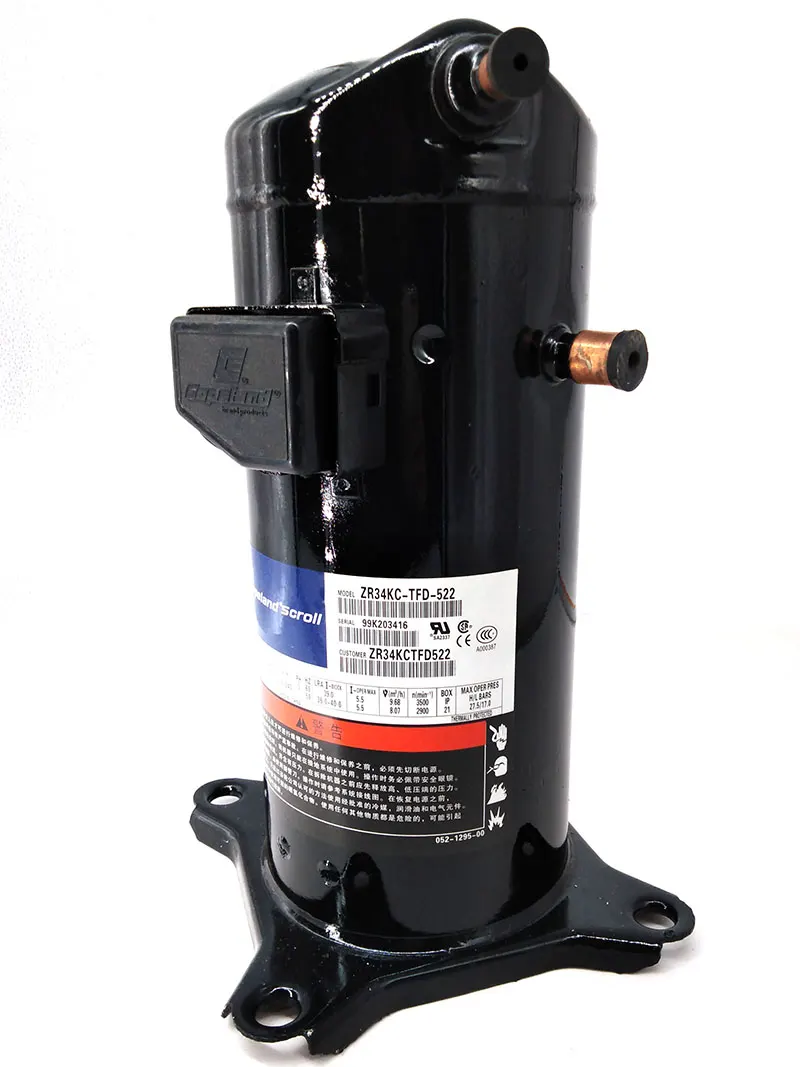
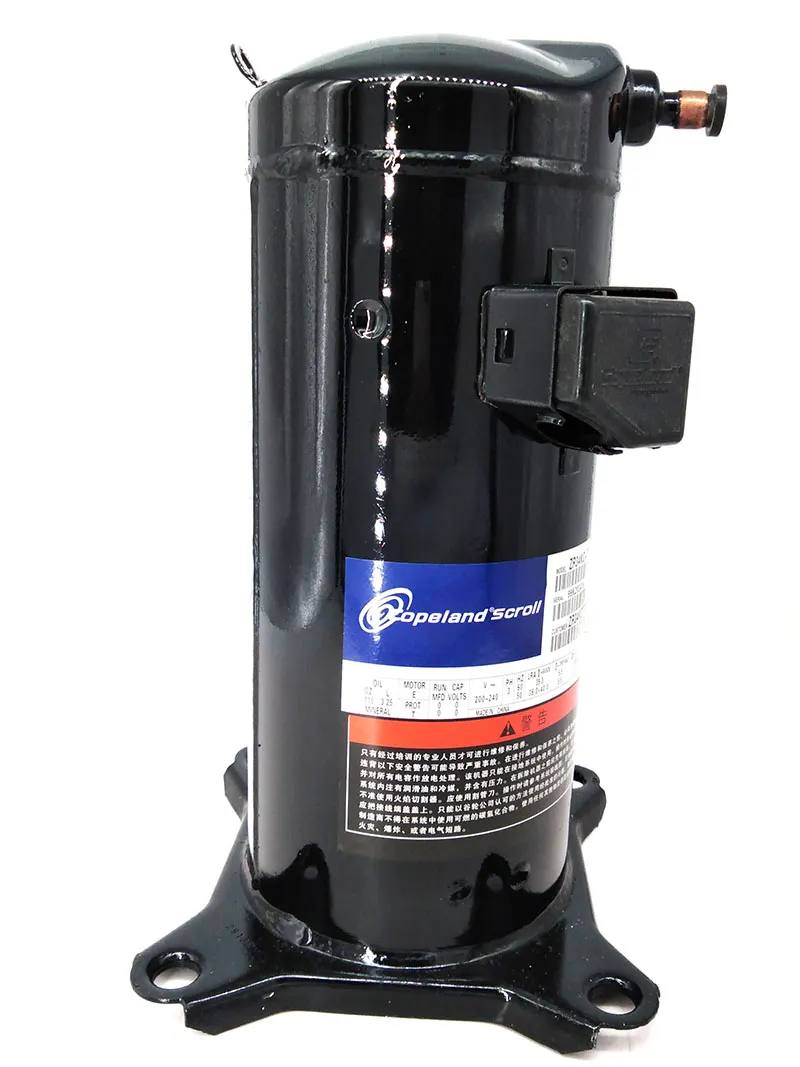
CO2 Compressor for Refrigeration: When Overseas Buyers Should Choose R744 Solutions
A practical guide to CO2 compressors for supermarkets, cold rooms, and commercial refrigeration projects, covering R744 use cases and buying considerations.
Why CO2 Compressors Are Back in the Refrigeration Conversation
The CO2 compressor for refrigeration is no longer a niche product used only in highly specialized projects. As refrigerant regulations tighten and more end users ask for lower-GWP systems, R744 compressors are becoming a serious option for supermarkets, cold rooms, food retail chains, and commercial refrigeration contractors.
For overseas buyers, the key question is not simply whether CO2 is a “green” refrigerant. The more important question is whether an R744 system is technically suitable, commercially viable, and supportable in the local market.
CO2, also known as R744, is a natural refrigerant with very low global warming potential. It can deliver strong cooling performance, especially in low-temperature and medium-temperature applications. However, CO2 refrigeration works at much higher pressures than many traditional HFC and HFO systems. That means compressor selection, system design, piping, safety components, commissioning, and after-sales service must all be treated carefully.
For distributors, repair companies, and cold-room installers, understanding where CO2 compressors fit can help avoid two common mistakes: rejecting R744 too early because it seems unfamiliar, or choosing it for the wrong application without enough technical preparation.
Where CO2 Compressors Are Used in Refrigeration Projects
A CO2 refrigeration compressor can be used in several types of commercial and industrial cooling systems. The best application depends on temperature level, climate, system architecture, service capability, and total project cost.
Supermarket refrigeration systems
Supermarkets are one of the most visible application areas for R744 technology. A single store may need medium-temperature display cases, low-temperature freezer cabinets, cold storage rooms, and heat recovery. CO2 systems can be designed to serve multiple temperature levels from one centralized plant.
In modern food retail projects, CO2 is often considered when the owner wants to reduce dependence on high-GWP refrigerants or prepare for stricter refrigerant rules. Supermarkets also tend to have enough cooling demand to justify a more engineered system, making the economics more practical than for very small applications.
For overseas buyers supplying supermarket projects, the main points to confirm include:
- Required medium-temperature and low-temperature capacity
- Ambient temperature range at the installation location
- Whether the project needs a transcritical or subcritical system
- Availability of trained commissioning and service technicians
- Compatibility of valves, controls, heat exchangers, and pressure protection devices
- Local approval requirements for high-pressure refrigeration equipment
A CO2 compressor should not be treated as a direct drop-in replacement for a conventional commercial refrigeration compressor. It must match the complete system concept.
Cold rooms and food storage facilities
Cold rooms are another practical area for R744 compressors, especially in food distribution, processing, and retail back-of-house storage. CO2 can be used for chilled rooms, frozen rooms, blast freezing support, and cascade systems where another refrigerant or fluid is used on the high side.
For small and medium cold-room projects, the decision often depends on the contractor’s ability to install and service CO2 equipment. In markets where technicians are already familiar with R744, CO2 cold-room systems may be a strong long-term option. In markets where service experience is limited, a subcritical CO2 design or a carefully supported packaged solution may be easier to manage than a fully customized installation.
Cold-room contractors should pay attention to load calculation, evaporating temperature, defrost method, oil return, pressure rating, and control logic. CO2 systems react quickly, so stable controls and correct commissioning are important.
Commercial refrigeration and light industrial applications
R744 compressors are also used in convenience stores, food service refrigeration, beverage cooling, processing rooms, logistics hubs, and some light industrial cooling applications. The commercial case becomes stronger when the system operates for long hours, when refrigerant compliance is a priority, or when the owner wants to standardize around natural refrigerants.
For smaller commercial projects, the challenge is usually not whether CO2 can work technically. It often can. The challenge is whether the total installed cost, spare parts availability, and service network make sense compared with other refrigerant options.
This is where distributors and repair companies play an important role. Buyers need more than a compressor model. They need guidance on matching the compressor with valves, controllers, safety devices, oil, accessories, and replacement parts.
Transcritical vs. Subcritical CO2 Compressors
The most important technical distinction for overseas buyers is the difference between transcritical CO2 compressor applications and subcritical CO2 compressor applications. Both use R744, but they are not the same system type.
What is a transcritical CO2 system?
In a transcritical CO2 system, the refrigerant rejects heat above its critical point under certain operating conditions. Instead of a conventional condenser working fully below the critical point, the system uses a gas cooler when operating transcritically.
Transcritical CO2 is common in supermarket rack systems and other commercial refrigeration projects where CO2 is used as the main refrigerant across the system. These systems can be highly effective when properly designed, especially with suitable controls and heat rejection strategies.
Transcritical systems may be attractive when:
- The project requires a low-GWP refrigerant solution
- The cooling load is large enough to support engineered system design
- The local market has CO2-trained technicians
- The end user wants to reduce long-term refrigerant compliance risk
- Heat recovery or integrated system design may improve overall value
However, performance and cost can be sensitive to climate and design quality. In warmer regions, system efficiency may require additional technologies or careful optimization. Buyers should evaluate the full system, not only the compressor price.
What is a subcritical CO2 system?
In a subcritical CO2 system, R744 operates below its critical point. Subcritical CO2 is often used in cascade systems, where CO2 serves the low-temperature side and another refrigerant or secondary system handles heat rejection on the high side.
This approach can be useful for freezer rooms, low-temperature storage, and applications where CO2 is desired on the cold side but a fully transcritical system is not the best fit. In some markets, subcritical systems may be easier for contractors to adopt because they can limit the CO2 portion to specific low-temperature circuits.
Subcritical CO2 may be attractive when:
- The project is mainly low-temperature refrigeration
- A cascade design is preferred
- The buyer wants to reduce the CO2 system scope
- Local climate makes a simple transcritical design less attractive
- The contractor has partial CO2 experience but is not ready for a full CO2 rack system
The trade-off is that the system still needs another heat rejection stage or refrigerant circuit. This can add complexity, but it may also make the project more manageable in certain markets.
Practical comparison for buyers
A transcritical CO2 compressor is usually considered when CO2 will be the main refrigerant for a complete commercial refrigeration plant. A subcritical CO2 compressor is usually considered when CO2 is used within a lower-temperature stage, often as part of a cascade arrangement.
For procurement teams, the right question is not “Which CO2 compressor is better?” The better question is “Which CO2 system architecture matches the project conditions?”
Important comparison points include:
- Ambient climate: Higher outdoor temperatures can affect transcritical system efficiency and design requirements.
- Cooling load profile: Supermarkets and large cold stores may justify more advanced CO2 systems.
- Temperature requirement: Low-temperature loads often fit well with CO2, including cascade designs.
- Installation skill level: CO2 requires technicians who understand high-pressure refrigeration practice.
- Serviceability: Spare compressors, valves, sensors, controllers, and safety parts must be available.
- Total project cost: Compressor price is only one part of the investment.
Efficiency, Regulation, and Commercial Viability
R744 is often discussed because of environmental regulation, but buyers should also evaluate energy use, maintenance capability, and lifecycle cost. A natural refrigerant compressor can support long-term compliance goals, but the complete system must still make commercial sense.
Regulation is pushing the market toward lower-GWP options
Many countries and regions are reducing the use of high-GWP refrigerants in new refrigeration equipment. The pace and details vary by market, but the direction is clear: buyers are paying more attention to refrigerant choice, leak management, and long-term availability.
CO2 has a very low GWP and is not an HFC. This makes it attractive for end users who want to avoid future refrigerant transition risks. For distributors, offering R744 compressor options can help serve customers who are already planning new stores, cold rooms, or refrigeration upgrades around lower-GWP requirements.
Still, regulation alone should not decide the project. A system that is difficult to service locally can create operating risk. Buyers should balance compliance benefits with contractor readiness and spare parts support.
Efficiency depends on system design and operating conditions
CO2 can be efficient, but efficiency is not guaranteed by the refrigerant name. It depends on compressor selection, suction and discharge conditions, gas cooler or condenser performance, controls, expansion devices, piping layout, and maintenance.
For supermarket projects, advanced controls and correct commissioning can make a significant difference. For cold-room projects, stable load conditions and correct evaporator design can support reliable operation. For warmer climates, buyers should ask how the system will manage high ambient conditions.
Useful questions include:
- What evaporating and condensing or gas cooler conditions were used for compressor selection?
- Is the compressor rated for the required pressure range?
- How will the system control high-side pressure?
- What oil type and oil management components are required?
- Are the valves and heat exchangers rated for CO2 operation?
- What happens during power failure or system shutdown?
These questions are practical, not theoretical. CO2 systems can reach high standstill pressures, and pressure management must be part of the design.
Commercial viability is about more than compressor price
A CO2 compressor may cost more than a conventional compressor for some applications, and the surrounding components may also be more specialized. However, buyers should avoid comparing only unit price. A realistic comparison should include compliance risk, refrigerant availability, expected operating cost, system life, service access, and customer requirements.
R744 becomes more commercially viable when:
- The end user values low-GWP refrigeration
- The project has medium or large cooling demand
- The system will operate for long hours
- Local technicians can install and service CO2 systems
- Spare parts can be supplied reliably
- The contractor can design the full system, not just replace a compressor
It may be less suitable when:
- The project is very small and highly price-sensitive
- No local service team understands CO2 systems
- The buyer expects a simple drop-in compressor replacement
- The project site has no clear plan for high-pressure safety management
- The contractor cannot verify component compatibility
For replacement buyers, this distinction is especially important. If the existing system was not designed for R744, replacing a traditional compressor with a CO2 compressor is not a normal retrofit path. CO2 usually requires a dedicated system design.
Buying Checklist for R744 Compressor Projects
Overseas buyers often source compressors from multiple brands and supply channels. That can work well, but only if the technical specification is clear. A CO2 compressor should be selected with complete operating data, not only horsepower or nominal capacity.
Key information to confirm before quotation
Before requesting a quote for an R744 compressor, prepare the following details:
- Application: supermarket, cold room, freezer room, display cabinet, rack system, or cascade system
- System type: transcritical, subcritical, booster, or cascade
- Refrigeration capacity required at design conditions
- Evaporating temperature and return gas condition
- Ambient temperature or gas cooler design condition
- Power supply voltage, phase, and frequency
- Compressor type and brand preference, if any
- Oil requirement and oil management arrangement
- Controller and protection requirements
- Required approvals or documentation for the destination market
For replacement orders, also provide the existing compressor model, nameplate photos, refrigerant, oil type, application temperature, failure symptoms, and system condition. This helps reduce the risk of supplying an incompatible compressor.
What distributors should stock or prepare
Distributors that want to serve CO2 projects should think beyond compressors. A reliable R744 offering may also require compatible accessories and service parts.
Commonly required items include:
- Pressure-rated valves and fittings for CO2 systems
- Pressure sensors, safety valves, and relief components
- Controllers suitable for transcritical or subcritical operation
- Filter driers and service tools compatible with R744
- Oil management components
- Replacement electrical parts and protection modules
- Technical documentation and cross-reference support
Stock planning should reflect the local installed base. In new CO2 markets, project-based procurement may be safer than holding large inventory. In mature markets, faster compressor replacement availability can be a competitive advantage for service companies.
What service technicians should pay attention to
CO2 refrigeration is serviceable, but it requires discipline. The high operating pressures and fast system response mean technicians must follow proper procedures and use rated tools.
Important service points include:
- Never assume components for HFC systems are suitable for R744.
- Verify pressure ratings before replacing valves, gauges, hoses, or fittings.
- Understand the system’s pressure relief and standstill pressure strategy.
- Check oil return and compressor protection settings carefully.
- Use correct charging and evacuation procedures.
- Confirm controller parameters after compressor replacement.
A compressor failure in a CO2 system should also trigger a system diagnosis. Replacing the compressor without identifying the cause of failure can lead to repeated damage, especially if oil return, liquid floodback, high discharge temperature, or control instability is present.
When Overseas Buyers Should Choose a CO2 Compressor
A CO2 compressor is a strong candidate when the project owner needs a low-GWP refrigeration solution and the local service environment can support R744 technology. It is especially relevant for supermarkets, cold rooms, freezer applications, and commercial refrigeration systems where long operating hours and regulatory pressure make refrigerant choice important.
Choose R744 more confidently when the project has:
- A clear new-system design rather than a simple compressor swap
- Medium-temperature and/or low-temperature commercial refrigeration loads
- A contractor experienced with CO2 or supported by qualified technical partners
- A realistic budget for pressure-rated components and controls
- A long-term view of refrigerant compliance and service availability
Be cautious when the project is extremely price-driven, when technicians are not trained for CO2, or when the buyer has only partial system data. In those cases, a conventional refrigerant system or a staged transition plan may be more practical.
For distributors and installers, the commercial opportunity is not only selling a compressor. It is helping customers choose the right system architecture, avoid compatibility errors, and plan for reliable operation. As more refrigeration markets evaluate natural refrigerants, the buyers who understand R744 applications will be better prepared to serve supermarket, cold-room, and commercial refrigeration customers with confidence.
FAQ
What is a CO2 compressor for refrigeration?
A CO2 compressor for refrigeration is a compressor designed to operate with R744 refrigerant. It is used in commercial refrigeration systems such as supermarkets, cold rooms, freezer rooms, and cascade or transcritical CO2 systems. Because CO2 operates at higher pressures than many traditional refrigerants, the compressor and all connected components must be specifically rated for R744 use.
When should buyers choose a transcritical CO2 compressor?
A transcritical CO2 compressor is usually suitable when CO2 is used as the main refrigerant in a complete commercial refrigeration system, such as a supermarket rack or larger food retail project. It is most attractive when the end user needs a low-GWP solution, the cooling load is significant, and trained technicians are available for installation and service.
What is the difference between transcritical and subcritical CO2 refrigeration?
In a transcritical CO2 system, the refrigerant may reject heat above its critical point and the system uses a gas cooler. In a subcritical CO2 system, R744 operates below its critical point and is often used as the low-temperature stage in a cascade system. Transcritical systems are common in full CO2 supermarket designs, while subcritical systems are often used for freezer and low-temperature applications.
Can a CO2 compressor replace an HFC compressor directly?
No. A CO2 compressor is not a direct drop-in replacement for an HFC compressor. R744 systems require different pressure ratings, controls, valves, safety devices, oil management, and system design. If an existing system was not designed for CO2, it normally cannot be converted by changing only the compressor.
What should overseas buyers confirm before ordering an R744 compressor?
Buyers should confirm the system type, application, required capacity, evaporating temperature, gas cooler or condensing conditions, power supply, oil requirement, pressure ratings, control method, and required market approvals. For replacement orders, the existing compressor model, nameplate details, refrigerant, oil type, and failure symptoms should also be checked.
Buyer Next Step
Move from research to sourcing with a category shortlist, relevant product examples, and a quote request channel.