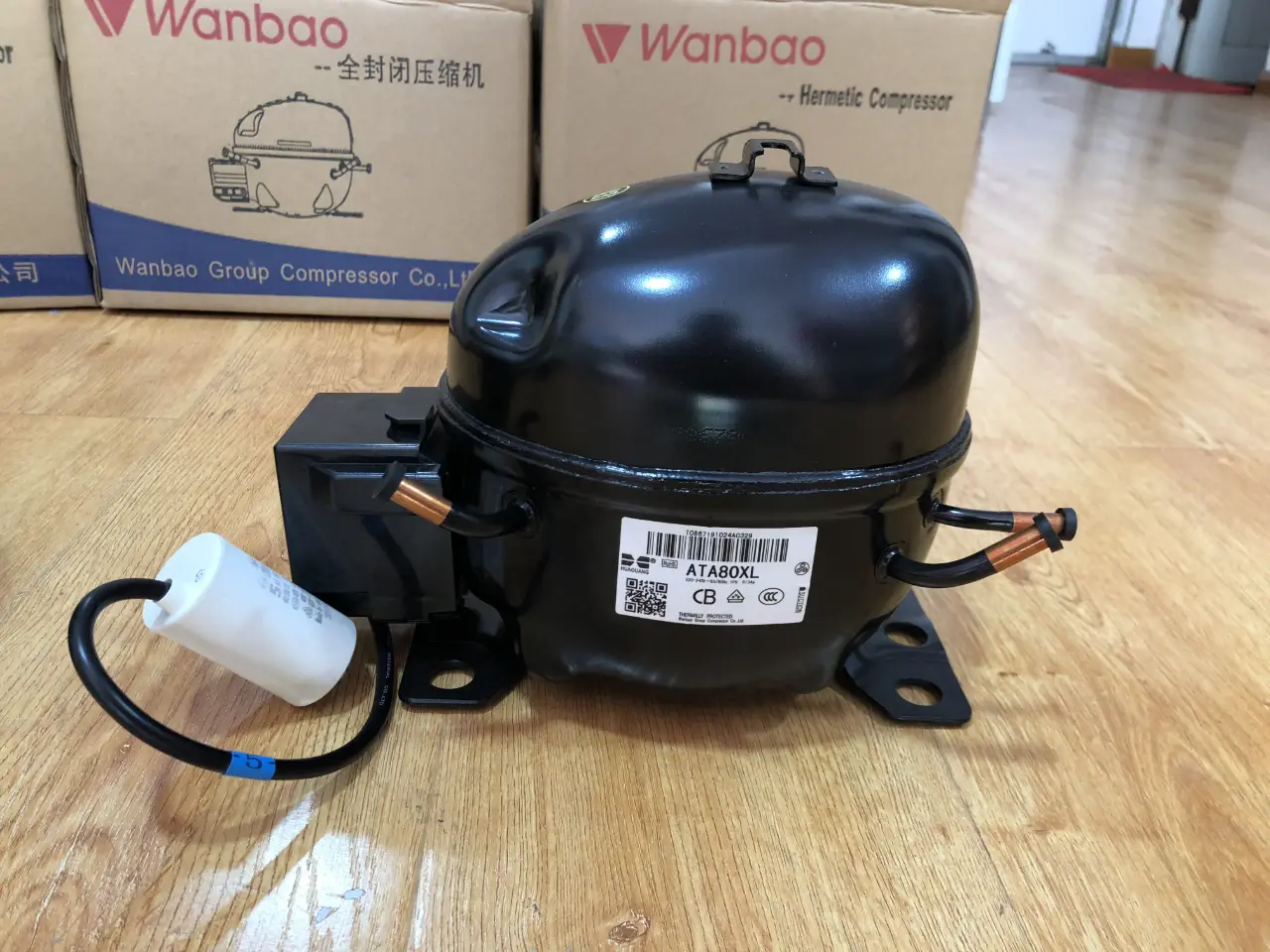
R290 vs R134a Compressors: What Distributors and Repair Technicians Need to Know
A practical guide to R290 and R134a compressor compatibility, safety, replacement risks, and sourcing questions for refrigeration buyers and service teams.
Why the R290 Compressor vs R134a Compressor Question Matters
The comparison between an R290 compressor vs R134a compressor is no longer a niche technical discussion. It affects refrigerator spare parts distributors, service companies, repair technicians, and light commercial refrigeration installers who need to identify the correct compressor quickly and avoid unsafe replacements.
R134a has been widely used in domestic refrigerators, beverage coolers, display cabinets, and many small refrigeration systems. R290, also known as propane refrigerant, is increasingly common in refrigerators and light commercial equipment because of its low environmental impact and good thermodynamic performance. However, R290 is a hydrocarbon refrigerant and is flammable. That single difference changes the way compressors are selected, installed, serviced, stored, and transported.
For buyers, the key point is simple: a compressor is not selected only by horsepower, voltage, or cooling capacity. It must match the refrigerant, application temperature range, electrical configuration, oil type, displacement, mounting dimensions, and safety requirements of the equipment. Using the wrong replacement compressor can lead to poor performance, oil return problems, electrical failure, leakage risks, or serious safety hazards.
This guide explains the practical differences between R290 and R134a compressors, where each type is used, why direct substitution is risky, and what distributors and repair teams should check before sourcing replacement units.
R290 and R134a: Key Refrigerant Differences That Affect Compressor Selection
R290 and R134a are both used in refrigeration, but they are not interchangeable. Their operating characteristics, safety classification, and system design requirements are different.
What Is an R134a Compressor?
An R134a compressor is designed for refrigeration systems charged with R134a refrigerant. R134a is a hydrofluorocarbon refrigerant that has been used for many years in domestic and commercial refrigeration applications. It is non-flammable under normal classification and has been common in:
- Household refrigerators and freezers
- Beverage coolers
- Small display cabinets
- Water dispensers
- Some light commercial refrigeration equipment
- Replacement and repair markets for older appliances
R134a systems typically use compressor oils and components selected specifically for R134a operation. When replacing an R134a compressor, technicians should match the compressor model or equivalent technical specifications rather than choosing by appearance or nominal power alone.
What Is an R290 Compressor?
An R290 compressor is designed for systems using R290 refrigerant, which is high-purity propane used as a refrigerant. R290 is a hydrocarbon refrigerant and is flammable, so compressor and system design must account for ignition risk. R290 compressors are commonly found in:
- Modern domestic refrigerators
- Commercial bottle coolers
- Ice cream freezers and display freezers
- Small plug-in cabinets
- Light commercial refrigeration equipment
- Energy-conscious refrigeration designs using small refrigerant charges
R290 systems often use a lower refrigerant charge than many older refrigerant systems, but that does not make service casual or risk-free. Proper tools, training, ventilation, leak detection, and ignition-source control are essential.
The Most Important Difference: Flammability
The biggest operational difference is safety. R134a is generally treated as non-flammable in normal refrigeration service. R290 is flammable and requires hydrocarbon-safe procedures. This affects:
- Compressor electrical design and component selection
- Relay, overload, capacitor, and terminal protection requirements
- Leak detection methods
- Recovery and charging practices
- Workshop ventilation and service environment
- Storage and transportation procedures
- Technician training and local regulatory compliance
A compressor marked for R134a should not be assumed safe for R290 use. Likewise, a system originally designed for R134a should not be converted to R290 without full engineering review and compliance with applicable standards.
Can You Replace an R134a Compressor with an R290 Compressor?
In normal spare parts replacement, the answer is no: an R134a compressor should be replaced with an R134a-compatible compressor, and an R290 compressor should be replaced with an R290-compatible compressor. A compressor replacement is not a refrigerant conversion project.
Why Direct Substitution Is Risky
R290 and R134a systems are designed differently. Even if two compressors look similar and have comparable displacement or capacity, they may not be suitable for the same refrigeration circuit. Directly installing an R290 compressor into an R134a system, or installing an R134a compressor into an R290 system, can create several risks:
- Refrigerant incompatibility: The compressor design must match refrigerant pressure, mass flow, and operating conditions.
- Oil compatibility issues: Compressor oil must be suitable for the refrigerant and application. Incorrect oil can affect lubrication and oil return.
- Electrical safety concerns: R290 systems require components and wiring arrangements suitable for flammable refrigerant environments.
- Incorrect cooling capacity: The compressor may not provide the expected capacity at the target evaporating and condensing conditions.
- System imbalance: Capillary tube, condenser, evaporator, and refrigerant charge are designed as a system.
- Warranty and liability exposure: Incorrect replacement can void equipment warranty and create responsibility for failure or unsafe operation.
For distributors, this is a major reason to avoid selling compressors only by horsepower. A 1/5 HP compressor for R134a and a 1/5 HP compressor for R290 are not automatically equivalent.
When Refrigerant Conversion Is Involved
Changing a system from R134a to R290 is not the same as changing a failed compressor. A refrigerant conversion may require redesign of the refrigerant circuit, charge limitation review, electrical safety review, labeling, risk assessment, and compliance with local codes or product standards.
Repair companies should be cautious when customers ask for a “drop-in” replacement. R290 is not a universal drop-in replacement for R134a. A safe conversion depends on the equipment design, application, charge amount, component approval, and technician qualification.
In many service situations, the correct decision is to replace the compressor with the same refrigerant type and equivalent performance range rather than attempting refrigerant conversion in the field.
Application Differences: Refrigerator, Freezer, and Light Commercial Use
The right compressor depends on the application, not only the refrigerant. Distributors and repair teams should confirm the operating temperature category before quoting a replacement.
Domestic Refrigerators and Freezers
Both R134a and R290 compressors may be found in household refrigerators, depending on equipment age, market, and manufacturer design. Older units may use R134a, while many newer models use R290.
For a refrigerator compressor replacement, technicians should check the appliance nameplate and existing compressor label. Important data includes:
- Refrigerant type
- Compressor model
- Voltage and frequency
- Cooling capacity or displacement
- Starting device type
- Application range, such as low back pressure or medium back pressure
- Mounting layout and tube positions
A common mistake is assuming that a refrigerator using a small sealed compressor can accept any similar-sized unit. In practice, small differences in refrigerant, displacement, or starting components can cause weak cooling, high current, short cycling, or premature failure.
Beverage Coolers and Display Cabinets
Light commercial plug-in cabinets often run for long hours and experience frequent door openings. Many modern bottle coolers and display cabinets use R290 compressors, while older models may use R134a.
For distributors supplying this market, availability of R290 refrigerator compressor models is increasingly important. However, customers still need guidance because hydrocarbon compressor safety requirements are different from traditional non-flammable refrigerant systems.
Repair companies should pay attention to ventilation around the cabinet, condenser cleanliness, correct refrigerant charge, and leak-free brazing or connection quality. With R290, the small charge must be accurate. Overcharging or undercharging can quickly affect performance and reliability.
Freezers and Low-Temperature Equipment
Freezer applications require careful matching of compressor performance at low evaporating temperatures. R134a and R290 compressors can both be used in freezing applications when designed for the correct operating range, but the model must be selected for the required evaporating temperature and duty conditions.
The compressor label or datasheet should identify whether the model is suitable for low back pressure, medium back pressure, or another application category. Selecting a medium-temperature compressor for a low-temperature freezer may cause high discharge temperatures, insufficient capacity, or overload trips.
Small Cold Rooms and Commercial Installations
For cold-room contractors, the R290 vs R134a discussion is different from household refrigerator repair. Cold rooms may involve larger charge quantities, remote condensing units, multiple components, and stricter local rules. R134a is not the main refrigerant for every cold-room application, and R290 use in larger systems requires careful safety design.
Contractors should not select a compressor simply because R290 is efficient or because a customer asks for a lower environmental-impact refrigerant. The full system design must be reviewed, including charge amount, room size, ventilation, ignition sources, service access, controls, and applicable regulations.
Hydrocarbon Compressor Safety: What Service Teams Must Control
R290 compressor service requires a different safety mindset. Propane refrigerant can ignite when mixed with air and exposed to an ignition source. The risk can be controlled, but only with correct procedures and suitable equipment.
Basic Safety Practices for R290 Systems
Service technicians should follow local regulations and equipment manufacturer instructions. In practical terms, R290 service commonly requires attention to:
- Working in a well-ventilated area
- Keeping open flames, sparks, and hot surfaces away from the work area
- Using tools and equipment suitable for flammable refrigerants
- Checking for leaks with appropriate leak detection methods
- Avoiding uncontrolled venting where prohibited or unsafe
- Charging accurately according to the equipment nameplate
- Replacing electrical parts only with approved compatible components
- Applying correct warning labels after service when required
The compressor alone is only one part of hydrocarbon safety. Relays, overload protectors, thermostats, switches, fan motors, connectors, and wiring condition also matter. A repair that restores cooling but ignores damaged electrical insulation or loose terminals can create risk.
Brazing, Evacuation, and Charging Concerns
Before brazing on any refrigeration system, technicians must ensure that the circuit is properly evacuated and safe to work on. With R290, extra caution is required because residual refrigerant can create a flammable mixture. Safe service practice usually includes proper recovery or removal procedures, purging where appropriate, and verifying that no flammable concentration remains near the work area.
Charging should be done by weight using the specified charge. R290 systems often have a small refrigerant charge, so small errors can have a noticeable effect. “Charging by pressure only” is not reliable for final charge accuracy, especially in small capillary systems.
Parts Replacement in R290 Equipment
When replacing parts in an R290 system, technicians should avoid non-approved substitutions. Components that may be acceptable in an R134a system are not automatically suitable for R290 equipment. This includes:
- Compressor starting devices
- Overload protectors
- Thermostats and temperature controllers
- Switches and relays
- Fan motors
- Terminal covers and wiring parts
For distributors, this creates an opportunity to package compressors with correct matching electrical accessories and clear compatibility information. It also reduces the chance of customer complaints caused by mismatched parts.
Sourcing Checklist for Compressor Buyers and Distributors
A good compressor quotation should reduce uncertainty. Whether the request is for an R290 refrigerator compressor, an R134a compressor replacement, or a light commercial spare part, buyers should provide enough information for accurate selection.
Information to Confirm Before Ordering
Before purchasing, collect the following details from the existing compressor and equipment:
- Original compressor brand and model
- Refrigerant type shown on the compressor or equipment nameplate
- Application: refrigerator, freezer, display cooler, beverage cabinet, ice cream freezer, or cold room
- Voltage, phase, and frequency
- Cooling capacity or displacement, if available
- Evaporating temperature or application range
- Starting method and electrical accessories
- Oil type, where specified
- Tube sizes and tube orientation
- Mounting base dimensions
- Required approvals or market compliance needs
- Quantity, packing preference, and destination market requirements
Photos of the compressor label, equipment nameplate, and installation space are often helpful. For distributors managing mixed-brand inventories, accurate identification reduces returns and prevents unsafe substitutions.
Questions to Ask a Compressor Supplier
When sourcing across multiple compressor brands, buyers should ask practical compatibility questions, not only price questions. Useful questions include:
- Is this compressor designed for R290 or R134a?
- Is it suitable for the target application temperature range?
- What voltage and frequency options are available?
- Are starting components included or quoted separately?
- What is the recommended equivalent model for the original compressor?
- Are datasheets or performance tables available?
- What packing is used for export shipments?
- Can models be consolidated across brands for easier inventory planning?
For overseas distributors, brand availability can vary by market. A third-party compressor supplier that handles multiple domestic and international brands can help compare equivalent options, but technical matching should still be based on refrigerant and performance data.
Inventory Planning: Keep R290 and R134a Separate
Distributors should clearly separate R290 and R134a compressor inventory. Similar compressor sizes can be confused in busy warehouses or repair shops. Clear labeling helps prevent wrong shipments and installation mistakes.
Practical inventory controls include:
- Separate storage zones for R290 and R134a models
- Clear SKU names including refrigerant type
- Compressor labels visible on cartons where possible
- Sales system warnings for refrigerant compatibility
- Accessory kits matched to compressor model
- Training for sales staff who handle replacement inquiries
This is especially important when serving repair companies that need urgent replacements. A quick shipment is valuable only if the compressor is safe and compatible.
Practical Takeaways for Technicians, Installers, and Buyers
The choice between R290 and R134a compressors is not about which refrigerant is universally better. It is about matching the compressor to the equipment design and servicing the system safely.
For repair technicians, the priority is to identify the original refrigerant and compressor model before replacing any sealed unit. For distributors, the priority is to quote compatible compressors and avoid ambiguous substitutions. For installers and contractors, the priority is to evaluate the whole refrigeration system, not just the compressor.
Key points to remember:
- R290 and R134a compressors are not direct substitutes.
- R290 is flammable and requires hydrocarbon-safe service procedures.
- Compressor selection must match refrigerant, application temperature, voltage, capacity, oil, and accessories.
- Field conversion from R134a to R290 is not a simple compressor change.
- Accurate labels, datasheets, and replacement cross-references reduce risk.
- Distributors should maintain clear inventory separation between refrigerant types.
As refrigeration markets continue to include more hydrocarbon equipment, demand for clear compressor compatibility guidance will only grow. Buyers who ask the right technical questions can reduce returns, protect service quality, and support safer refrigeration repairs.
FAQ
Can an R290 compressor replace an R134a compressor?
In normal repair work, no. An R290 compressor should not be used as a direct replacement for an R134a compressor unless the entire system has been properly redesigned and approved for R290. The refrigerant, oil, safety requirements, electrical components, and system charge are different.
Is R290 better than R134a for refrigerator compressors?
R290 can offer strong refrigeration performance and is used in many modern refrigerators and light commercial cabinets, but it is flammable and requires specific system design and service procedures. R134a remains common in many existing appliances. The better choice is the refrigerant and compressor type the equipment was designed to use.
What makes R290 compressor service different?
R290 is a hydrocarbon refrigerant, so technicians must control ignition sources, ensure ventilation, use suitable tools, charge accurately by weight, and replace electrical parts only with compatible components. Service teams should follow local regulations and manufacturer instructions for flammable refrigerants.
How should distributors identify the correct R134a compressor replacement?
Distributors should confirm the original compressor model, refrigerant, voltage and frequency, application temperature range, cooling capacity or displacement, starting components, oil type, tube layout, and mounting dimensions. A replacement should be selected by technical compatibility, not by horsepower alone.
Are R290 and R134a compressor accessories interchangeable?
Not necessarily. Starting relays, overload protectors, terminal covers, thermostats, switches, and other electrical parts must be suitable for the compressor and refrigerant application. Components used in an R134a system should not be assumed safe for R290 equipment.
Buyer Next Step
Move from research to sourcing with a category shortlist, relevant product examples, and a quote request channel.