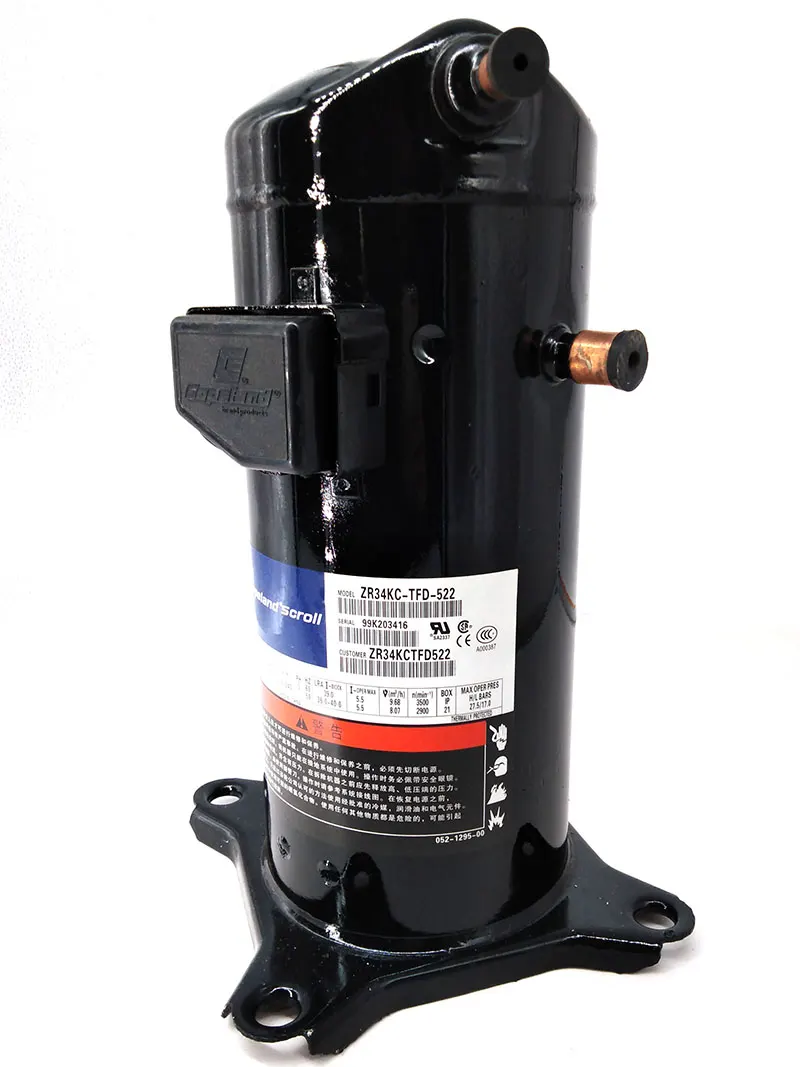
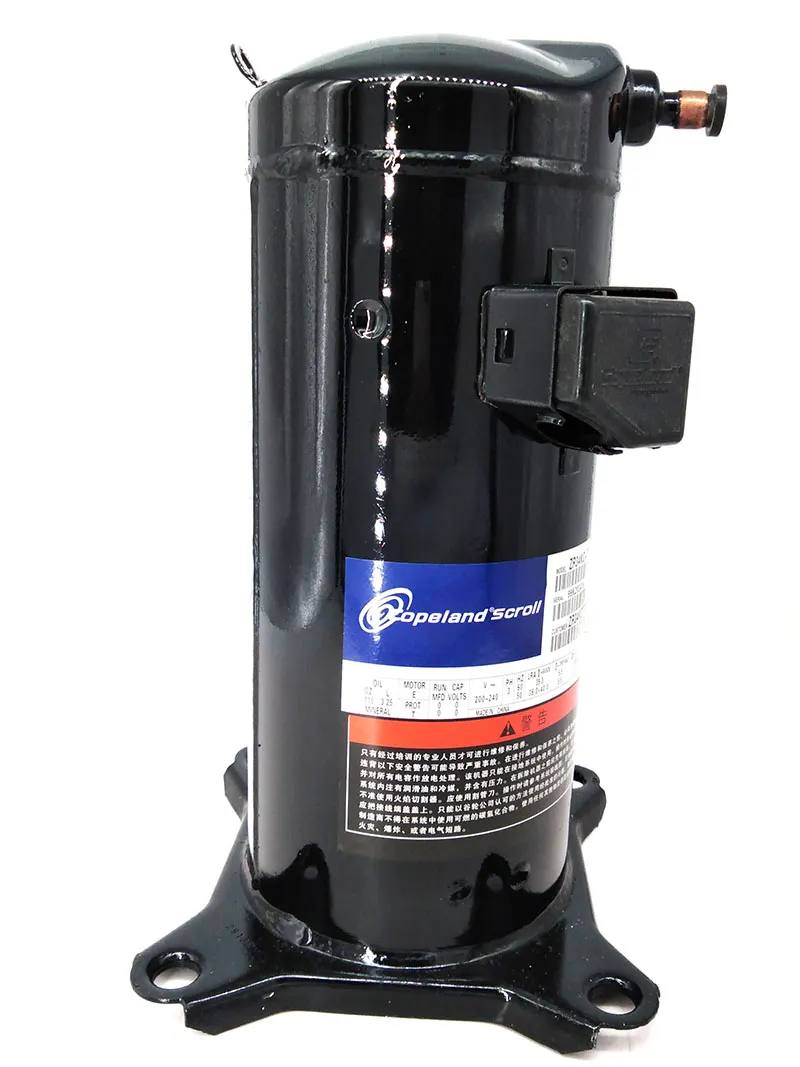
R290 Cold Room Compressor Buying Guide for Small Commercial Refrigeration Projects
A practical guide to choosing R290 compressors and condensing units for cold rooms, display cabinets, small freezers, and low-GWP refrigeration projects.
R290 Cold Room Compressor Buying Guide for Small Commercial Refrigeration Projects
R290, also known as propane refrigerant, has moved from a niche option to a serious choice for small commercial refrigeration. Contractors, service companies, and spare parts distributors are seeing more demand for low-GWP systems in cold rooms, display cabinets, plug-in freezers, and compact refrigeration installations. For many projects, an R290 cold room compressor or R290 condensing unit can offer efficient operation and a lower environmental impact than many legacy refrigerants.
The buying decision is not only about matching horsepower or cooling capacity. R290 is an A3 flammable refrigerant, so compressor selection must be connected to system design, charge limits, ventilation, electrical safety, installer training, and local regulations. A compressor that looks suitable on paper may not be appropriate if the cold room size, evaporator design, piping layout, or installation environment does not support safe propane use.
For refrigeration contractors and importers, the most important question is practical: when is R290 the right choice, and what should buyers check before ordering compressors or condensing units?
Why R290 Is Being Used in Small Commercial Refrigeration
R290 is a hydrocarbon refrigerant with a very low global warming potential. That makes it attractive in markets moving away from high-GWP HFC refrigerants and in projects where customers want equipment aligned with stricter environmental requirements. It is widely discussed for small-capacity commercial refrigeration because it can deliver good efficiency when used in systems designed specifically for propane.
Common applications include:
- Small cold rooms for restaurants, convenience stores, food service, and retail storage
- Commercial display cabinets and glass-door merchandisers
- Small freezers and frozen food cabinets
- Compact condensing units for food storage rooms
- Replacement or upgrade projects where low-GWP refrigerant is required
R290 is not a universal drop-in replacement. Compressors, controls, electrical components, evaporators, condensers, and safety measures must be compatible with propane refrigerant. In most cases, contractors should treat R290 as a system design choice, not simply a refrigerant change.
What makes R290 attractive to buyers?
For distributors and contractors, the commercial appeal of R290 comes from several market pressures:
- Low-GWP demand: End users increasingly ask for refrigerants with lower environmental impact.
- Efficiency potential: Properly designed R290 systems can perform efficiently in small and medium commercial applications.
- Compact equipment trends: Plug-in display cabinets and small refrigeration systems are often suitable for carefully controlled propane charge designs.
- Regulatory direction: Many markets are tightening rules around high-GWP refrigerants, pushing buyers to consider natural refrigerants.
- Service differentiation: Contractors familiar with low-GWP refrigerant systems can support customers who are upgrading their equipment standards.
The main limitation is safety management. R290 works well only when the project respects its flammability classification and applicable standards.
Where an R290 Cold Room Compressor Is Suitable
A propane refrigeration compressor is most commonly considered for small commercial systems where the refrigerant charge can be kept within the allowed limit and where the equipment is designed for safe operation. The best applications are usually compact, controlled, and professionally installed.
Small cold rooms
R290 can be suitable for small cold rooms used for chilled food storage, beverages, dairy, fresh produce, or frozen goods, depending on the required temperature range and system capacity. For contractors, the key is to calculate the refrigeration load correctly and confirm that the compressor and condensing unit can meet the room temperature requirement under local ambient conditions.
Important checks include:
- Cold room volume and insulation quality
- Door opening frequency
- Product loading temperature and pull-down requirement
- Evaporating and condensing temperature assumptions
- Ambient temperature around the condensing unit
- Defrost method and operating schedule
- Refrigerant charge limit under local rules
A small cold room with moderate load and short piping may be a better candidate than a larger room requiring long pipe runs and a higher refrigerant charge.
Display cabinets and merchandisers
R290 is widely associated with compact display refrigeration because the system can often be factory-designed with a controlled charge. For open or glass-door cabinets, installers should pay attention to the balance between cabinet load, compressor capacity, airflow, defrost control, and condenser ventilation.
For replacement buyers, it is important to identify whether the existing cabinet was originally designed for R290. If it was built for another refrigerant, simply changing the compressor and charging with propane may create serious safety and performance risks.
Small freezers
Low-temperature applications need careful compressor selection. A freezer requires lower evaporating temperatures than a chiller, so not every R290 compressor suitable for medium-temperature refrigeration will be appropriate. Buyers should confirm the rated application range, cooling capacity at the target evaporating temperature, motor design, starting method, and oil compatibility.
For small freezers, an R290 condensing unit can be practical when the unit is designed for low-temperature operation and installed with correct controls and safety precautions.
When R290 may not be the best option
R290 may be unsuitable or more difficult to apply in projects with:
- Large refrigerant charge requirements
- Long piping distances between evaporator and condensing unit
- Poor ventilation around equipment
- Installations near ignition sources that cannot be controlled
- Sites where local rules restrict hydrocarbon refrigerants
- Service teams without training for flammable refrigerants
- Retrofit requests where the existing equipment is not approved for R290
In these cases, contractors may need to consider alternative low-GWP refrigerants or a different system design.
Key Selection Factors for R290 Compressors and Condensing Units
Choosing an R290 cold room compressor starts with capacity, but a reliable buying decision should include application range, electrical specification, refrigerant approval, system layout, and spare parts support.
Match compressor capacity to the real load
Cold room compressor selection should begin with a refrigeration load calculation. Undersizing can cause long run time, poor pull-down, and temperature complaints. Oversizing can lead to short cycling, humidity problems, inefficient operation, and premature component stress.
For distributors handling overseas inquiries, it is helpful to request the following information before recommending a model:
- Application: chiller, freezer, display cabinet, or storage room
- Target room or cabinet temperature
- Ambient temperature around the condenser
- Cold room dimensions and insulation thickness
- Door type and door-opening frequency
- Product type and loading condition
- Power supply voltage, phase, and frequency
- Existing compressor model, if it is a replacement
- Required refrigerant and whether R290 is permitted locally
Capacity should be compared at the correct evaporating and condensing conditions, not only by nominal horsepower. Two compressors with similar horsepower may deliver different cooling performance at low-temperature or high-ambient conditions.
Confirm the compressor is approved for R290
An R290 compressor must be specifically designed and approved for propane refrigerant. Buyers should not assume that a compressor for R134a, R404A, R507, R22, or another refrigerant can be used with R290. Internal design, motor protection, oil, electrical terminals, labeling, and application envelope must be appropriate.
For procurement teams, useful documents to request include:
- Compressor model data sheet
- Refrigerant approval information
- Application envelope or operating range
- Cooling capacity tables
- Electrical data and wiring requirements
- Oil type and charge information
- Safety and installation instructions
For replacement work, the safest route is usually to match the original approved compressor type or consult technical documentation for an approved equivalent.
Decide between a bare compressor and an R290 condensing unit
A bare compressor may be suitable for OEM manufacturing, workshop repair, or projects where the contractor is building the condensing package. However, for small commercial cold rooms and freezers, an R290 condensing unit is often easier to manage because key components can be matched and assembled in a controlled design.
A condensing unit may include:
- R290 compressor
- Condenser coil and fan
- Receiver or refrigerant circuit components, where applicable and permitted
- Electrical box and controls
- Pressure protection devices
- Service valves or access points designed for the refrigerant
- Base frame and housing
The buying advantage is system consistency. The contractor still needs correct installation, but the unit can reduce uncertainty compared with selecting each component separately.
Check medium-temperature and low-temperature suitability
Commercial refrigeration compressors are not all rated for the same temperature range. A compressor used for a chilled room may not be suitable for a freezer. When buying an R290 compressor, confirm whether it is designed for:
- Medium-temperature refrigeration, such as chilled rooms and beverage cabinets
- Low-temperature refrigeration, such as freezers and frozen storage
- High ambient operation, if the condensing unit will be installed outdoors or in a hot plant area
Temperature range matters for compressor reliability. Operating outside the approved envelope can lead to high discharge temperature, poor oil return, motor overload, or reduced service life.
Consider voltage and market compatibility
For overseas buyers, electrical specification is a common source of ordering mistakes. Compressors and condensing units may be available in different voltage and frequency combinations, and not every model is suitable for every market.
Before confirming an order, check:
- Single-phase or three-phase supply
- Voltage and frequency
- Starting components and motor protection
- Local plug, wiring, and control panel requirements
- Compatibility with existing equipment controls
This is especially important for spare parts distributors who supply multiple countries. A compressor that fits mechanically may still be wrong electrically.
Safety and Installation Considerations for R290 Systems
The main difference between R290 and many older commercial refrigerants is flammability. R290 is classified as A3, meaning it has low toxicity but high flammability. Safe application depends on approved equipment, trained technicians, and compliance with local standards.
Follow local charge limits and safety rules
R290 systems must comply with applicable regulations and standards in the destination market. Charge limits vary by application, equipment type, room size, and installation conditions. Contractors should not rely on a general rule from another country or a different equipment category.
Before installation, confirm:
- Maximum allowable refrigerant charge for the application
- Whether the equipment is certified or accepted in the local market
- Ventilation requirements
- Distance from ignition sources
- Electrical component requirements
- Labeling and warning requirements
- Service access and emergency procedures
For distributors, this means product selection should be paired with documentation. Buyers often need data sheets, labels, certificates, or installation manuals to satisfy local import and installation requirements.
Use trained technicians and correct tools
R290 service work should be performed by technicians trained in flammable refrigerants. Standard refrigeration skills are still required, but propane adds extra safety steps. Work areas should be controlled, ignition sources removed, and suitable leak detection and ventilation practices used.
Technicians should pay attention to:
- Safe recovery or handling procedures allowed in the local market
- Proper evacuation and charging methods
- Accurate charging by weight
- Leak testing suitable for hydrocarbon refrigerants
- Avoiding open flames and sparks near the system
- Correct electrical isolation before service
- Clear labeling after installation or repair
Because R290 systems often use small refrigerant charges, charging accuracy is important. A small error can affect performance and safety.
Avoid unapproved retrofits
One of the biggest risks in the spare parts market is using R290 as a retrofit refrigerant in equipment that was not designed for it. Even if the cooling capacity seems similar, the system may have non-approved electrical components, unsuitable controls, different pressure characteristics, or unsafe refrigerant charge volume.
For repair companies, the safer approach is:
- Identify the original refrigerant and compressor model
- Check whether the equipment manufacturer approves R290 conversion
- Replace with an approved compressor and compatible components only when permitted
- Do not relabel or modify equipment without meeting local rules
- Choose an approved alternative refrigerant or complete unit replacement when needed
R290 can be an excellent refrigerant in the right system, but it should not be treated as a casual drop-in substitute.
Plan the installation layout carefully
A good R290 installation minimizes refrigerant charge and reduces risk. Contractors should consider short refrigerant lines, proper airflow, accessible service points, and stable mounting. The condensing unit should be installed where heat can be rejected effectively and where any potential leak will not accumulate near ignition sources.
Practical layout considerations include:
- Keeping pipe runs as short and simple as possible
- Protecting tubing from vibration and mechanical damage
- Ensuring condenser airflow is not blocked
- Installing the unit away from hot surfaces and spark-producing equipment
- Providing safe service access
- Following the manufacturer’s clearance and ventilation instructions
Poor installation can reduce the efficiency advantage of R290 and increase operating risk.
Buying Checklist for Distributors, Contractors, and Replacement Buyers
R290 compressor sourcing requires both technical and commercial discipline. The lowest price may not be the best value if documentation is incomplete, model availability is inconsistent, or after-sales support is weak.
Technical checklist
Before selecting a propane refrigeration compressor or R290 condensing unit, confirm:
- Required cooling capacity at the correct operating conditions
- Medium-temperature or low-temperature application range
- Approved use with R290 refrigerant
- Voltage, phase, and frequency
- Starting components and protection devices
- Oil type and service requirements
- Condensing unit configuration, if buying a complete unit
- Maximum refrigerant charge and compliance requirements
- Compatible evaporator, expansion device, and controls
- Installation environment and ventilation conditions
Commercial checklist
For importers and wholesalers, sourcing decisions also depend on supply reliability and product identification. Useful checks include:
- Clear model numbers and cross-reference information
- Stable availability for repeat orders
- Packaging suitable for export shipment
- Complete technical documentation
- Product labeling for refrigerant and safety class
- Support for mixed orders across different compressor brands or models
- Ability to match replacement demand for service companies
A distributor serving repair contractors may need a wider compressor range than an installer focused on new cold room projects. Stock planning should reflect local demand for chillers, freezers, cabinets, and condensing units.
Questions to ask before ordering
A buyer should be able to answer these questions before purchasing an R290 cold room compressor:
- Is the project a new installation, replacement, or retrofit request?
- Is R290 allowed for this application in the destination market?
- What is the required room temperature and cooling load?
- Is the system medium-temperature or low-temperature?
- What are the ambient conditions around the condensing unit?
- What is the maximum permitted refrigerant charge?
- Are the technicians trained for flammable refrigerants?
- Is a bare compressor enough, or is a complete R290 condensing unit safer and easier?
If several answers are unknown, the project needs more technical review before procurement.
Practical Takeaway: Use R290 Where the System Supports It
An R290 cold room compressor is a strong option for small commercial refrigeration projects where low-GWP performance, compact design, and efficient operation are priorities. It is especially relevant for small cold rooms, display cabinets, and small freezers when the equipment is designed for propane and the installation can meet safety requirements.
The key buying principle is simple: select R290 as part of a complete refrigeration design, not as an isolated compressor swap. Contractors should verify capacity, application range, charge limits, electrical compatibility, documentation, and technician readiness. Distributors should support buyers with accurate model information and avoid recommending R290 for unapproved retrofits.
For overseas refrigeration buyers, the best R290 projects are those where environmental goals, safe installation, correct compressor selection, and reliable sourcing all align.
FAQ
What is an R290 cold room compressor?
An R290 cold room compressor is a refrigeration compressor designed and approved to operate with R290, also known as propane refrigerant. It is used in suitable low-GWP commercial refrigeration systems such as small cold rooms, display cabinets, and small freezers.
Can R290 be used as a drop-in replacement for older refrigerants?
In most cases, R290 should not be used as a simple drop-in replacement. The compressor, electrical components, controls, refrigerant charge, labeling, and system design must be approved for propane refrigerant. Unapproved retrofits can create safety and compliance risks.
When should a contractor choose an R290 condensing unit instead of a bare compressor?
An R290 condensing unit is often a better choice for small commercial projects because the compressor, condenser, fan, controls, and safety components can be matched in one package. A bare compressor may be suitable for OEM production or skilled repair work, but it requires careful component selection.
Is R290 safe for commercial refrigeration?
R290 can be used safely when the equipment is designed for propane, the refrigerant charge is within local limits, the installation follows applicable standards, and technicians are trained to handle flammable refrigerants. It is classified as an A3 refrigerant, so ignition control and ventilation are important.
What information is needed to select the right R290 compressor?
Buyers should confirm the application, target temperature, cooling load, ambient temperature, voltage, frequency, medium- or low-temperature operation, refrigerant charge limit, installation layout, and whether the local market permits R290 for the intended system.
Buyer Next Step
Move from research to sourcing with a category shortlist, relevant product examples, and a quote request channel.