How to Choose a Compressor for a Cold Room: Capacity, Temperature, Refrigerant, and Brand Options
A practical guide to cold room compressor selection for walk-in coolers, freezers, and small cold storage projects.
How to Choose a Compressor for a Cold Room: Capacity, Temperature, Refrigerant, and Brand Options
Cold room compressor selection is one of the most important decisions in a walk-in cooler, walk-in freezer, or small cold storage project. The compressor must match the room temperature, refrigeration load, refrigerant, ambient conditions, and operating pattern. If it is undersized, the room may never reach set point. If it is oversized, the system may short-cycle, waste energy, and reduce component life.
For refrigeration contractors, distributors, service companies, and replacement buyers, the challenge is that customers often describe the application rather than the compressor model. They may ask for a compressor for a meat room, a fruit storage room, a frozen food chamber, or a walk-in cooler behind a restaurant. A good selection process turns that application information into a practical compressor specification.
This guide explains the key steps for choosing a cold storage refrigeration compressor, including temperature range, capacity, refrigerant, compressor type, electrical requirements, and brand options.
1. Define the Cold Room Application Before Selecting the Compressor
A compressor should not be selected only by horsepower or by matching the size of an old unit. The starting point is the cold room application. Different products, room temperatures, door opening patterns, and installation environments create very different refrigeration loads.
Identify the room type and storage temperature
Most small and medium cold rooms fall into two broad categories:
- Medium-temperature cold rooms: commonly used for chilled food, beverages, dairy, fresh produce, flowers, medicines, and general refrigerated storage.
- Low-temperature cold rooms: used for frozen food, ice cream, meat freezing, seafood storage, and other applications requiring sub-zero conditions.
A walk in cooler compressor is normally selected for medium-temperature operation, while a walk in freezer compressor must be suitable for low-temperature operation. The difference is not only the room set point. Low-temperature systems operate at lower evaporating temperatures and require compressors designed for that operating envelope.
Common examples include:
- Fresh produce room: chilled storage, often medium temperature
- Restaurant walk-in cooler: medium temperature
- Beverage storage room: medium temperature
- Meat processing holding room: medium or low temperature depending on product state
- Frozen food room: low temperature
- Ice cream storage: low temperature, usually more demanding than general frozen storage
Clarify whether the project is new installation or replacement
For a new cold room, the compressor is selected as part of a full refrigeration system design, including evaporator, condenser or condensing unit, expansion device, control system, and piping.
For a replacement job, the contractor must check the existing system carefully. A direct model replacement may be possible, but only if the original compressor was correctly selected and the operating conditions have not changed. Many compressor failures are linked to system issues such as poor airflow, dirty condensers, incorrect refrigerant charge, liquid floodback, or high ambient operation. Replacing the compressor without checking these conditions can lead to repeat failure.
For replacement buyers, useful information includes:
- Existing compressor model and brand
- Refrigerant type
- Power supply and voltage
- Application temperature range
- Condensing unit model, if available
- Evaporator model and fan condition
- Room size and product load
- Failure symptoms and operating pressures, if known
2. Calculate Compressor Capacity for the Cold Room
Compressor capacity for cold room applications should be based on the cooling load, not only on room volume. Room size is important, but it is only one part of the calculation. The refrigeration system must remove heat entering from walls, ceiling, floor, doors, lights, fans, people, product loading, and air infiltration.
Main factors affecting cold room compressor sizing
A proper cold room compressor sizing process normally considers:
- Room dimensions: length, width, and height determine storage volume and surface area.
- Insulation thickness and panel quality: better insulation reduces heat gain.
- Room temperature: lower set points require more refrigeration work.
- Ambient temperature: high outdoor or plant-room temperatures increase condensing pressure and reduce available capacity.
- Product type and loading temperature: warm product entering the room creates a significant cooling load.
- Pull-down time: faster cooling requires more capacity than simple holding storage.
- Door openings: frequent door traffic increases infiltration load.
- Internal heat sources: evaporator fans, lights, forklifts, people, and defrost heaters add heat.
- Operating hours: the system must have enough capacity within the expected run time.
Because these variables can change the required capacity substantially, two rooms with the same dimensions may need different compressors. A beverage cooler with frequent door openings may require a different selection than a sealed pharmaceutical storage room of similar size.
Holding load versus pull-down load
One of the most common sizing mistakes is confusing holding load with pull-down load.
- Holding load is the capacity required to maintain the room at the target temperature after the product is already cooled or frozen.
- Pull-down load is the capacity required to reduce the temperature of incoming product within a required time.
For a cold storage room used mainly for holding already chilled or frozen goods, the compressor can be selected closer to the holding load. For a room receiving warm product, fresh meat, produce from ambient conditions, or newly packed goods, the pull-down requirement may dominate the selection.
Contractors should ask the customer how much product enters the room per day, at what temperature, and how quickly it must reach storage temperature. This is especially important for food processing, distribution, and small agricultural storage rooms.
Match capacity at the correct evaporating and condensing conditions
Compressor capacity changes with evaporating temperature and condensing temperature. A model that provides enough capacity at one condition may be inadequate at another.
When comparing compressor performance data, check that the capacity is rated close to the actual operating condition:
- Evaporating temperature related to room set point and evaporator temperature difference
- Condensing temperature related to ambient temperature and condenser design
- Refrigerant type
- Return gas temperature and subcooling assumptions, where applicable
For example, a compressor used in a low-temperature freezer will have much lower capacity than the same compressor operating in a medium-temperature cooler. This is why selecting by nominal horsepower alone can be misleading.
Avoid both undersizing and oversizing
An undersized compressor can cause:
- Long run times without reaching set point
- High product temperature risk
- Poor pull-down performance
- Customer complaints after installation
An oversized compressor can cause:
- Short cycling
- Poor humidity control in coolers
- Higher starting current stress
- Reduced system stability
- Potential oil return problems in some installations
The correct selection provides enough capacity for peak design conditions while maintaining stable operation during normal load conditions.
3. Select the Right Temperature Range, Refrigerant, and Compressor Type
Once the cooling load is understood, the next step is to narrow the compressor choice by temperature application, refrigerant, and compressor construction.
Medium-temperature versus low-temperature compressors
Medium-temperature and low-temperature compressor applications are not interchangeable. A compressor intended for a walk-in cooler may not be suitable for a walk-in freezer, even if the capacity or horsepower looks similar.
For medium-temperature cold rooms, the evaporating temperature is higher, and the compressor typically works in a more moderate operating envelope. For low-temperature freezers, the evaporating temperature is much lower, compression ratio increases, and discharge temperature management becomes more important.
When selecting a compressor, always check the manufacturer operating envelope for the intended refrigerant and conditions. The compressor should be approved for the expected evaporating and condensing temperature range.
Refrigerant compatibility
Refrigerant choice affects compressor selection, oil type, pressure levels, capacity, efficiency, and service procedures. A compressor must be compatible with the refrigerant used in the system.
Common refrigerant considerations include:
- Whether the compressor is approved for the refrigerant
- Required oil type and oil management
- Pressure rating of system components
- Availability of service tools and replacement parts
- Local regulations and customer requirements
- Safety classification and installation requirements for the refrigerant
For replacement projects, do not assume a visually similar compressor is compatible. Confirm the refrigerant on the system nameplate and verify the compressor model data. If the system has been retrofitted to another refrigerant, the selection should be reviewed carefully.
Compressor types used in cold rooms
Cold room systems may use different compressor designs depending on capacity, budget, service preference, and application conditions.
Hermetic compressors
Hermetic compressors are common in smaller refrigeration systems and compact condensing units. The motor and compressor are sealed in one welded shell. They are compact and widely used, but internal repair is generally not practical. If the compressor fails, it is normally replaced as a complete unit.
Semi-hermetic compressors
Semi-hermetic compressors are widely used in commercial refrigeration and cold storage. The casing can be opened for certain service operations, depending on the design. They are often selected where serviceability, durability, and broader capacity ranges are important.
Scroll compressors
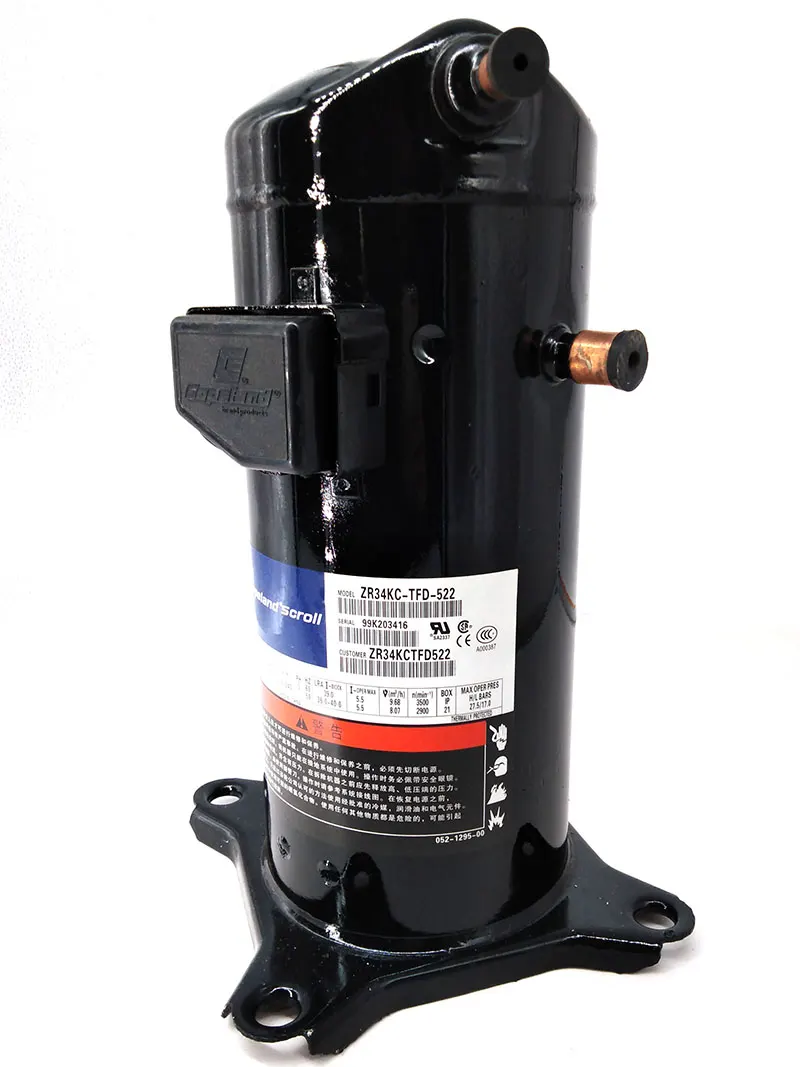
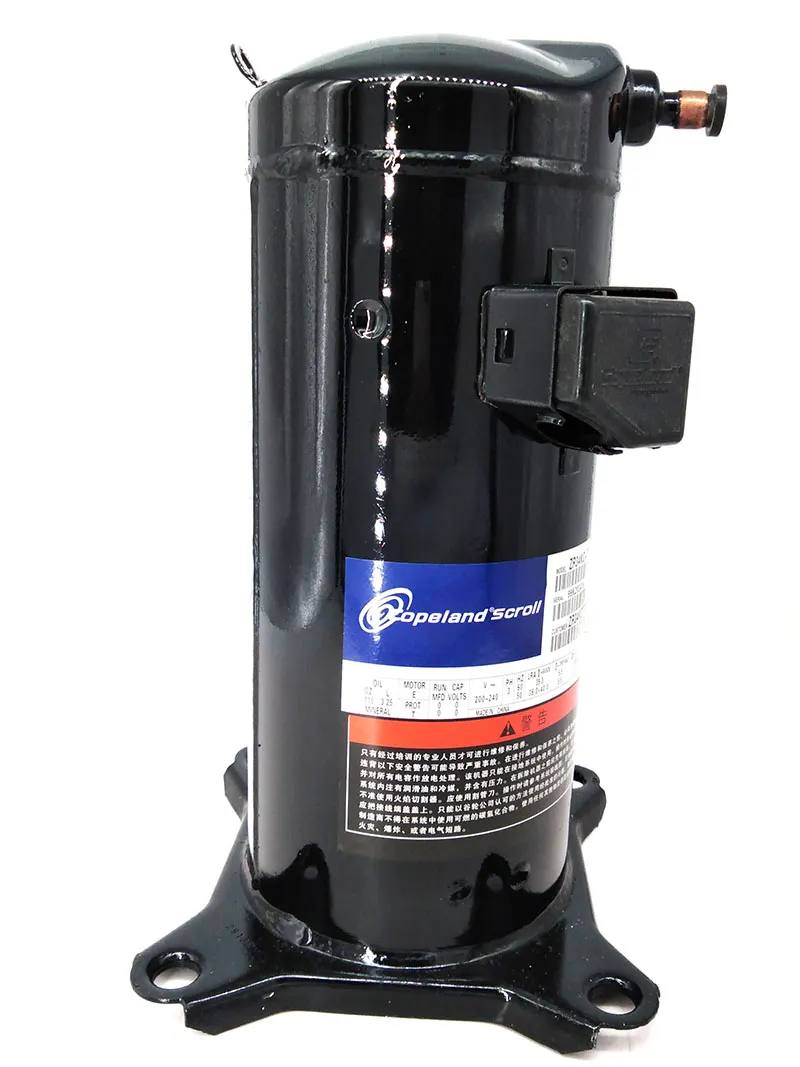
Scroll compressors are common in many commercial refrigeration applications. They are compact, have fewer moving parts than some reciprocating designs, and are often used in packaged condensing units. Application limits must still be checked, especially for low-temperature operation.
Reciprocating compressors
Reciprocating compressors remain common in many cold room applications. They are available in a wide range of capacities and configurations, including hermetic and semi-hermetic designs. They are often familiar to service technicians and can be suitable for both medium- and low-temperature applications when correctly selected.
The best compressor type depends on the project requirements, service environment, refrigerant, and available condensing unit design. For many contractors, the practical choice is often made at the condensing unit level rather than the bare compressor level.
4. Check Electrical, Installation, and Operating Conditions
A technically correct compressor can still create problems if electrical and installation details are ignored. For overseas buyers and distributors, these checks are especially important because voltage, frequency, ambient conditions, and service practices vary by market.
Power supply and starting requirements
Before confirming a compressor model, verify:
- Voltage and phase
- Frequency
- Allowed voltage range
- Starting method
- Locked rotor current and running current
- Electrical protection requirements
- Compatibility with the control panel
A compressor selected for the wrong power supply may not be usable on site. For distributors, stocking the right voltage and frequency options is as important as stocking the right capacity range.
Ambient temperature and condenser performance
High ambient temperature affects the entire refrigeration system. When the condenser operates in hot outdoor conditions or a poorly ventilated machinery space, condensing temperature rises. This can reduce compressor capacity, increase power consumption, raise discharge temperature, and increase the risk of high-pressure trips.
For cold rooms in tropical, desert, coastal, or poorly ventilated locations, contractors should be conservative when checking capacity at design ambient conditions. Condenser sizing, airflow clearance, coil cleanliness, and fan performance all matter.
Evaporator match and expansion device
The compressor must be matched with the evaporator and expansion device. If the evaporator is too small, airflow is poor, or the expansion valve is incorrectly selected, the system may not perform even with the correct compressor capacity.
Important checks include:
- Evaporator capacity at the target room temperature
- Airflow pattern and fan condition
- Defrost method for freezer applications
- Expansion valve or metering device compatibility
- Superheat setting
- Suction line sizing and oil return
- Liquid line sizing and pressure drop
A cold room is a system, not a single component. Compressor selection should be coordinated with the full refrigeration circuit.
Service access and spare parts availability
For contractors and repair companies, a compressor is not only a design choice but also a service decision. A unit installed in a remote island, mining camp, agricultural site, or small city may require different thinking from a system installed near a major service center.
Consider:
- Local technician familiarity with the compressor type
- Availability of start components, valves, gaskets, oil, and protection modules
- Lead time for replacement compressors
- Brand recognition in the local market
- Documentation and model cross-reference support
Distributors serving overseas markets often need to balance premium international brands, cost-effective alternatives, and fast-moving replacement models.
5. Compare Brand Options Without Selecting by Brand Alone
Brand matters in cold room compressor selection, but it should come after the technical requirements are clear. A well-known brand selected outside its operating envelope will not solve a design problem. A cost-effective alternative can work well when it matches the application, refrigerant, capacity, and electrical requirements.
What to compare when reviewing compressor brands
When choosing between compressor brands or equivalent models, compare:
- Capacity at the same evaporating and condensing conditions
- Approved refrigerants and application range
- Power supply options
- Compressor type and mounting dimensions
- Oil type and charge
- Starting components and protection requirements
- Noise and vibration considerations
- Availability of matching condensing units
- Spare parts and service support
- Documentation quality and cross-reference clarity
For replacement buyers, model interchange should be handled carefully. Similar displacement or horsepower does not automatically mean identical performance. Always compare performance tables and application envelopes.
When a condensing unit is the better selection route
Many walk-in cooler and freezer projects are specified by condensing unit rather than bare compressor. A condensing unit combines the compressor, condenser, fan, receiver, controls, and protection devices in a factory-assembled package or standard configuration.
Selecting a condensing unit can simplify procurement because the condenser and compressor are already paired. However, the same selection principles still apply: the unit must be rated for the room temperature, refrigerant, ambient temperature, and required capacity.
For installers, a cold-room condensing unit selection should also consider installation space, airflow clearance, weather protection, service access, and noise limitations.
Practical selection checklist
Before placing an order or quoting a compressor, collect and confirm the following information:
- Cold room application and stored product
- Room dimensions and insulation condition
- Target room temperature
- Ambient temperature at condenser location
- New installation or replacement job
- Required pull-down time, if any
- Daily product loading and product entry temperature
- Refrigerant type
- Existing compressor model, if replacing
- Power supply: voltage, phase, frequency
- Evaporator capacity and defrost type
- Condensing unit or system configuration
- Preferred brand options and budget range
- Required delivery time and spare parts expectations
This checklist helps avoid the most common errors in compressor capacity for cold room projects and gives suppliers enough information to recommend realistic options.
Key Takeaways for Cold Room Compressor Selection
Cold room compressor selection should begin with the application, not the brand name or horsepower. The contractor must identify whether the project is a walk-in cooler, walk-in freezer, or another cold storage room, then confirm the room temperature, load profile, refrigerant, ambient conditions, and electrical supply.
The most reliable selections are made by matching compressor capacity at the correct evaporating and condensing temperatures. For replacement work, the old model number is useful, but it should be checked against the actual system condition and customer requirements. For new projects, the compressor should be selected as part of a complete refrigeration system, including evaporator, condenser, expansion device, controls, and piping.
For distributors and service companies, keeping multiple brand options can be commercially useful, but technical compatibility must remain the priority. A suitable cold storage refrigeration compressor is the one that delivers the required capacity within its approved operating envelope, uses the correct refrigerant and power supply, and can be supported in the local service market.
FAQ
How do I choose the right compressor capacity for a cold room?
Compressor capacity should be based on the total refrigeration load, including room size, insulation, target temperature, ambient temperature, product loading, door openings, internal heat sources, and required pull-down time. Capacity must be checked at the correct evaporating and condensing conditions, not only by horsepower.
Can I use the same compressor for a walk-in cooler and a walk-in freezer?
Not usually. A walk-in cooler normally uses a medium-temperature compressor, while a walk-in freezer requires a compressor suitable for low-temperature operation. The compressor must be approved for the expected evaporating temperature, condensing temperature, and refrigerant.
What information is needed to replace a cold room compressor?
Useful information includes the existing compressor model, refrigerant, voltage, phase, frequency, room temperature, application type, condensing unit details, evaporator condition, and operating symptoms. It is also important to check why the old compressor failed before installing a replacement.
Is compressor horsepower enough for cold room compressor sizing?
No. Horsepower is only a rough reference and can be misleading. Compressors with similar horsepower may have different capacities depending on refrigerant, evaporating temperature, condensing temperature, and design. Performance data should be compared at the actual operating conditions.
Should I buy a bare compressor or a complete condensing unit for a cold room?
For many walk-in cooler and freezer projects, a complete condensing unit is easier to select and install because the compressor, condenser, fan, receiver, and controls are matched in one package. A bare compressor is common for repair work or custom systems, but it must be matched carefully with the existing refrigeration circuit.
Buyer Next Step
Move from research to sourcing with a category shortlist, relevant product examples, and a quote request channel.