How to Choose a Compressor for Cold Rooms: Capacity, Temperature and Refrigerant Checklist
A practical guide to selecting cold room compressors for walk-in coolers, freezers and storage rooms by temperature, capacity, refrigerant and power supply.
Choosing the right compressor is one of the most important decisions in a cold room project. The compressor must match the room temperature target, product load, evaporating condition, ambient temperature, refrigerant, electrical supply and installation environment. If it is undersized, the room may never pull down to setpoint during busy operation. If it is oversized, the system may short-cycle, waste energy and create unstable humidity or temperature control.
For distributors, service companies and refrigeration installers, compressor selection is also a commercial decision. A walk-in cooler compressor, walk-in freezer compressor or cold storage compressor must be technically correct, available in the right voltage and refrigerant, and suitable for future maintenance in the local market. The checklist below explains the main factors that should be confirmed before quoting, replacing or installing a commercial refrigeration compressor.
Start With the Cold Room Duty: Cooler, Freezer or Storage Room
The correct compressor choice begins with the application. A cold room for beverages, a meat processing room, a frozen food freezer and a pharmaceutical storage room can all require different operating conditions, even if their room volume looks similar.
Define the room temperature target
Room temperature is the first selection point because it determines the refrigeration duty and compressor operating range. Common application categories include:
- Walk-in coolers: typically used for chilled food, beverages, dairy, flowers or general fresh storage.
- Walk-in freezers: used for frozen food, ice cream, meat and products requiring below-freezing storage.
- Cold storage rooms: a broader category that may include chilled storage, frozen storage, process cooling or logistics holding rooms.
The compressor must be approved to operate at the required evaporating temperature range. A compressor designed mainly for medium-temperature work may not be suitable for low-temperature freezer operation. In the same way, a low-temperature compressor may not be the most efficient or economical choice for a chilled room.
Consider product temperature and pull-down load
A cold room that only holds pre-chilled products has a different load from a room that receives warm products every day. Product pull-down can become a major part of the cooling capacity requirement, especially for food service, distribution and processing applications.
Before selecting the compressor, confirm:
- Product type and quantity loaded per day
- Product entering temperature
- Required final product temperature
- Pull-down time expected by the customer
- Door opening frequency and loading schedule
A room that looks small on paper can require a much larger compressor if it is used for rapid cooling, frequent door traffic or warm product intake.
Match compressor type to duty range
Commercial cold rooms commonly use hermetic, semi-hermetic or scroll compressors, depending on capacity range, service requirements, refrigerant and market preference.
- Hermetic compressors are widely used in smaller commercial refrigeration systems and packaged condensing units. They are compact and cost-effective, but internal repair is limited.
- Semi-hermetic compressors are common in larger commercial refrigeration and cold storage systems. They are serviceable and suitable for many medium- and low-temperature applications.
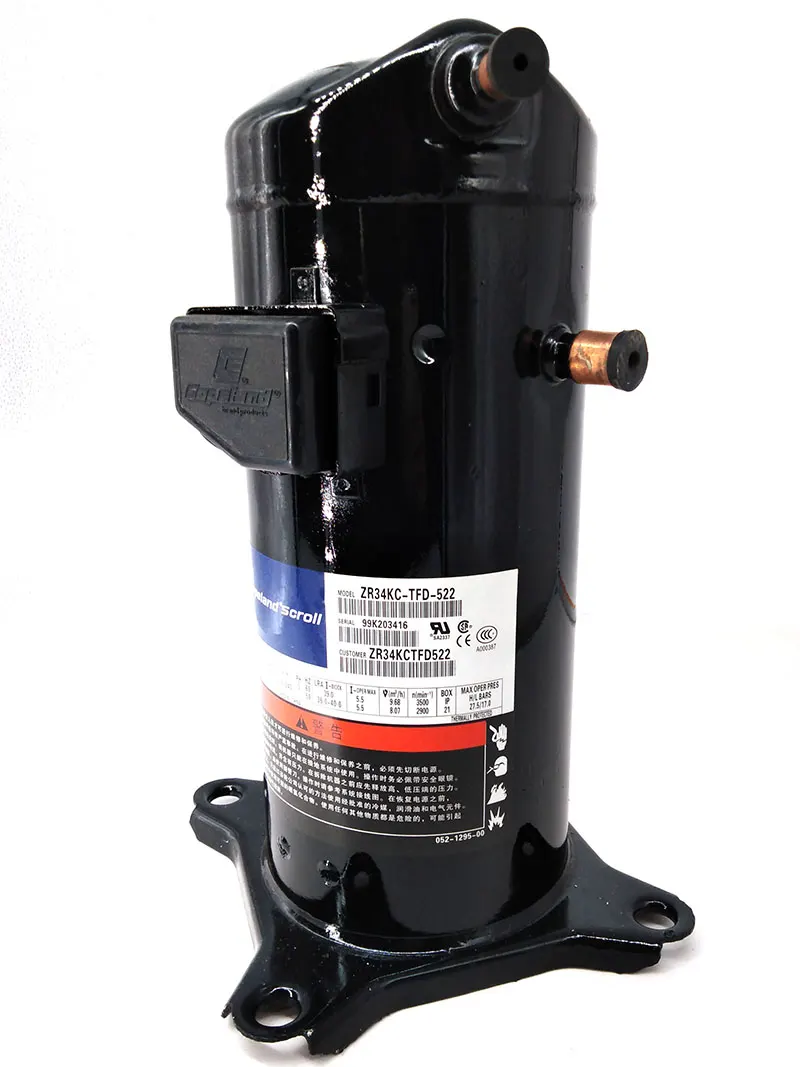
- Scroll compressors are used in many commercial refrigeration systems where quiet operation, compact design and good efficiency are required. Application limits should be checked carefully, especially for low-temperature conditions.
The best choice is not only the compressor model with the correct horsepower. It is the compressor that fits the required evaporating condition, condensing condition, refrigerant, oil type, cooling method and expected service approach.
Confirm Evaporating Temperature, Ambient Temperature and Condensing Conditions
A common mistake in cold room compressor selection is choosing by room temperature alone. Compressors are selected by operating conditions, especially evaporating temperature and condensing temperature. These conditions determine the real cooling capacity and power input.
Room temperature is not the same as evaporating temperature
The evaporating temperature is usually lower than the room temperature because heat must transfer from the room air through the evaporator coil into the refrigerant. The difference between room temperature and evaporating temperature is often called TD, or temperature difference.
For example, a chilled room may operate with an evaporating temperature several degrees below the room setpoint. A freezer room will operate at a much lower evaporating temperature. The exact value depends on evaporator sizing, humidity requirements, airflow, product sensitivity and system design.
A lower evaporating temperature reduces compressor capacity and usually increases energy consumption. This is why compressor selection should use the design evaporating temperature, not just the thermostat setting.
Ambient temperature affects condensing pressure
Ambient temperature is equally important. A condensing unit installed outdoors in a hot climate faces a much higher condensing temperature than a unit installed in a mild climate or well-ventilated machine room.
Higher condensing temperature normally means:
- Lower compressor capacity
- Higher compressor power input
- Higher discharge temperature
- Greater stress on system components
- Higher risk of high-pressure shutdown if condenser airflow is poor
For overseas projects, installers and distributors should be careful with local climate conditions. A compressor selected at a mild ambient rating may perform poorly in tropical or desert markets unless the condenser and compressor operating envelope are suitable.
Check the compressor operating envelope
Every compressor model has an application envelope showing where it can operate safely. The envelope is based on evaporating temperature, condensing temperature, return gas temperature, refrigerant, motor cooling and other limits.
Before confirming a cold room compressor selection, check that the design point is inside the approved operating envelope. This is especially important for:
- Walk-in freezer compressors operating at low evaporating temperatures
- Systems using high ambient air-cooled condensers
- Refrigerants with higher discharge temperature characteristics
- Applications with long pipe runs or poor ventilation
- Replacement projects where the original system design is unclear
A compressor may appear to have enough nominal capacity, but if the operating point is outside the envelope, the system can suffer from overheating, oil return problems, nuisance trips or premature failure.
Calculate Cooling Capacity Before Selecting Compressor Size
Compressor capacity calculation is the core of cold room compressor selection. Horsepower alone is not a reliable selection method because compressor capacity changes with refrigerant and operating conditions. A 5 HP compressor in one condition may deliver very different refrigeration capacity from the same nominal size at another condition.
Main heat loads in a cold room
A practical load calculation should consider all major sources of heat entering the room. These usually include:
- Transmission load: heat entering through walls, ceiling, floor and insulation panels
- Product load: heat removed from products placed in the room
- Infiltration load: warm air entering through door openings, curtains, loading operations or leakage
- Internal load: fan motors, lights, people, forklifts or equipment inside the room
- Defrost load: heat added during electric, hot gas or other defrost methods, especially in freezers
For replacement buyers, it is helpful to compare the calculated load with the existing system performance. If the old compressor failed because the system was overloaded, replacing it with the same capacity may not solve the problem.
Add safety margin carefully
A reasonable safety margin can help cover real operating variation, but oversizing should be avoided. Too much compressor capacity can lead to short cycling, unstable suction pressure and poor humidity control. It can also increase starting current and reduce system efficiency.
The correct margin depends on the quality of the load calculation, room usage, climate and control method. For critical storage applications, it may be better to use multiple compressors, staged capacity or a well-designed condensing unit rather than simply selecting one oversized compressor.
Match compressor capacity with evaporator capacity
The compressor and evaporator must be matched at the same design condition. If the evaporator is too small for the compressor, the suction pressure may be lower than expected and the room may suffer from excessive dehumidification or coil icing. If the evaporator is too large for the compressor, pull-down may be slow and room temperature recovery may be poor.
When reviewing a quotation or replacement option, confirm that the compressor, condenser, evaporator, expansion valve and controls are selected as one system. A cold room is not just a compressor; it is a complete refrigeration circuit.
Consider single compressor or multiple compressors
For small walk-in coolers and freezers, one compressor is common. For larger cold storage rooms or facilities with variable load, multiple compressors or parallel systems may provide better control and redundancy.
Multiple-compressor arrangements can help when:
- The room load changes significantly during the day
- Partial-load efficiency is important
- The customer needs backup capacity
- There are several rooms with different temperature levels
- Maintenance access without complete shutdown is valuable
The decision depends on project size, budget, service capability and control requirements.
Check Refrigerant, Oil, Voltage and Installation Requirements
After the capacity and operating conditions are confirmed, practical compatibility checks become essential. Many selection problems happen not because the compressor is the wrong size, but because the refrigerant, oil, voltage or installation details were not verified.
Select the correct refrigerant version
Commercial refrigeration compressors are built and approved for specific refrigerants. The compressor model, oil type, motor cooling, pressure rating and application envelope must match the refrigerant used in the system.
Common refrigerant considerations include:
- Existing refrigerant in a replacement system
- Local refrigerant regulations and availability
- Service technician familiarity in the destination market
- Expansion valve and control compatibility
- Oil compatibility and required charging procedure
- Safety class and installation requirements
Never assume that two refrigerants with similar applications can be used interchangeably in the same compressor. Retrofit work requires careful checking of compressor approval, oil, seals, controls and system components.
Confirm power supply and starting method
Power supply is a critical export and replacement detail. Compressors may be supplied in different voltage, phase and frequency versions, and a mismatch can cause immediate motor damage or unreliable operation.
Confirm these details before ordering:
- Voltage, phase and frequency available on site
- Permitted voltage variation
- Starting method, such as direct-on-line, part-winding, star-delta or soft starter where applicable
- Required contactors, overloads, phase protection and crankcase heater
- Local electrical standards and installer practices
For overseas buyers, frequency is especially important. Compressor performance and motor compatibility can differ between 50 Hz and 60 Hz models. The nameplate and technical data should match the project location.
Review oil management and pipe layout
Oil return is a major reliability factor in refrigeration systems. Even a correctly selected compressor can fail if oil cannot return from the evaporator and suction line under real operating conditions.
Pay attention to:
- Suction line sizing and velocity
- Vertical risers and oil traps
- Long pipe runs between condensing unit and evaporator
- Low-load operation and capacity control
- Proper crankcase heater use
- Correct oil type and oil charge
Freezer systems and long-distance installations require particular care because low evaporating temperatures and long suction lines can make oil return more difficult.
Check condenser and ventilation
The compressor depends on the condenser to reject heat. If the condenser is undersized, dirty or installed in a poorly ventilated area, the compressor will operate at higher pressure and temperature.
For air-cooled systems, confirm:
- Ambient design temperature
- Condenser airflow clearance
- Fan operation and maintenance access
- Risk of hot air recirculation
- Corrosion conditions near coastal or industrial areas
For water-cooled systems, confirm water temperature, flow rate, water quality and service requirements.
Practical Checklist for Buyers, Distributors and Installers
A structured checklist reduces quotation errors and helps suppliers recommend a compressor that fits the real application. This is especially useful for spare parts distributors and repair companies that handle urgent replacement requests.
Information needed for a new cold room project
For a new walk-in cooler, freezer or cold storage room, collect the following before selecting the compressor:
- Room length, width and height
- Required room temperature and product temperature
- Product type and daily loading quantity
- Product entering temperature and pull-down time
- Ambient temperature around condensing unit
- Insulation panel thickness and construction
- Door size, number of doors and opening frequency
- Evaporator location and airflow requirements
- Refrigerant preference or project requirement
- Available voltage, phase and frequency
- Indoor or outdoor condensing unit installation
- Any redundancy, noise or energy-efficiency requirements
With this information, a supplier or engineer can calculate the load and select compressor capacity at the correct evaporating and condensing conditions.
Information needed for compressor replacement
For replacement work, the fastest path is to identify the existing compressor and system condition. However, it is still important to understand why the old compressor failed.
Collect these details:
- Existing compressor model and nameplate photo
- Refrigerant and oil type
- Application: cooler, freezer or process room
- Room temperature and operating suction pressure
- Condensing unit location and ambient condition
- Power supply and control panel details
- Cause of failure if known
- Condition of condenser, evaporator and expansion valve
- Pipe length and any history of oil return problems
If the original model is obsolete or unavailable, the replacement compressor should be cross-checked by capacity, application envelope, refrigerant, electrical data, mounting, connection size and accessories.
Avoid common selection mistakes
Many cold room compressor problems can be traced to a few practical mistakes:
- Selecting by horsepower instead of cooling capacity at design conditions
- Ignoring local ambient temperature
- Using room temperature instead of evaporating temperature
- Replacing a compressor without checking the cause of failure
- Choosing a refrigerant version that does not match the system
- Overlooking voltage, phase or frequency
- Installing a compressor outside its approved envelope
- Oversizing the compressor to compensate for an uncertain load calculation
A reliable cold room compressor selection balances capacity, temperature range, refrigerant compatibility and service practicality. For trade buyers, the best quotation is not always the lowest price or the closest horsepower match; it is the option that will run safely under the customer’s real operating conditions.
Key Takeaway
To choose a compressor for cold rooms, define the application, calculate the cooling load, select capacity at the correct evaporating and condensing temperatures, confirm the refrigerant and oil, and verify the power supply and installation conditions. Walk-in coolers, walk-in freezers and larger cold storage rooms each place different demands on the compressor. A careful checklist helps distributors, repair teams and contractors reduce selection risk, avoid repeat failures and deliver a refrigeration system that performs reliably in the field.
FAQ
How do I choose a compressor for a cold room?
Start by defining the room temperature, product load, pull-down time and ambient temperature. Then calculate the cooling load and select a compressor with the required capacity at the correct evaporating and condensing temperatures. Also confirm refrigerant, oil, voltage, phase, frequency and installation conditions.
Can I select a cold room compressor by horsepower?
Horsepower alone is not enough. Compressor capacity changes according to refrigerant, evaporating temperature and condensing temperature. A proper selection should use cooling capacity at the design operating conditions, not only nominal HP.
What is the difference between a walk-in cooler compressor and a walk-in freezer compressor?
A walk-in cooler compressor usually operates in a medium-temperature range, while a walk-in freezer compressor must operate at lower evaporating temperatures. Freezer applications often require closer attention to compressor operating envelope, discharge temperature, defrost load and oil return.
Why is ambient temperature important when selecting a cold storage compressor?
Ambient temperature affects condensing temperature and pressure. In hot climates or poorly ventilated installations, the compressor may deliver less capacity and operate with higher power input and discharge temperature. The compressor and condenser must be selected for the local ambient condition.
What information is needed to quote a replacement refrigeration compressor?
Useful information includes the existing compressor model, refrigerant, oil type, voltage, phase, frequency, application, room temperature, suction and discharge conditions, condensing unit location and any known cause of failure. Photos of the nameplate and system are often helpful.
Buyer Next Step
Move from research to sourcing with a category shortlist, relevant product examples, and a quote request channel.