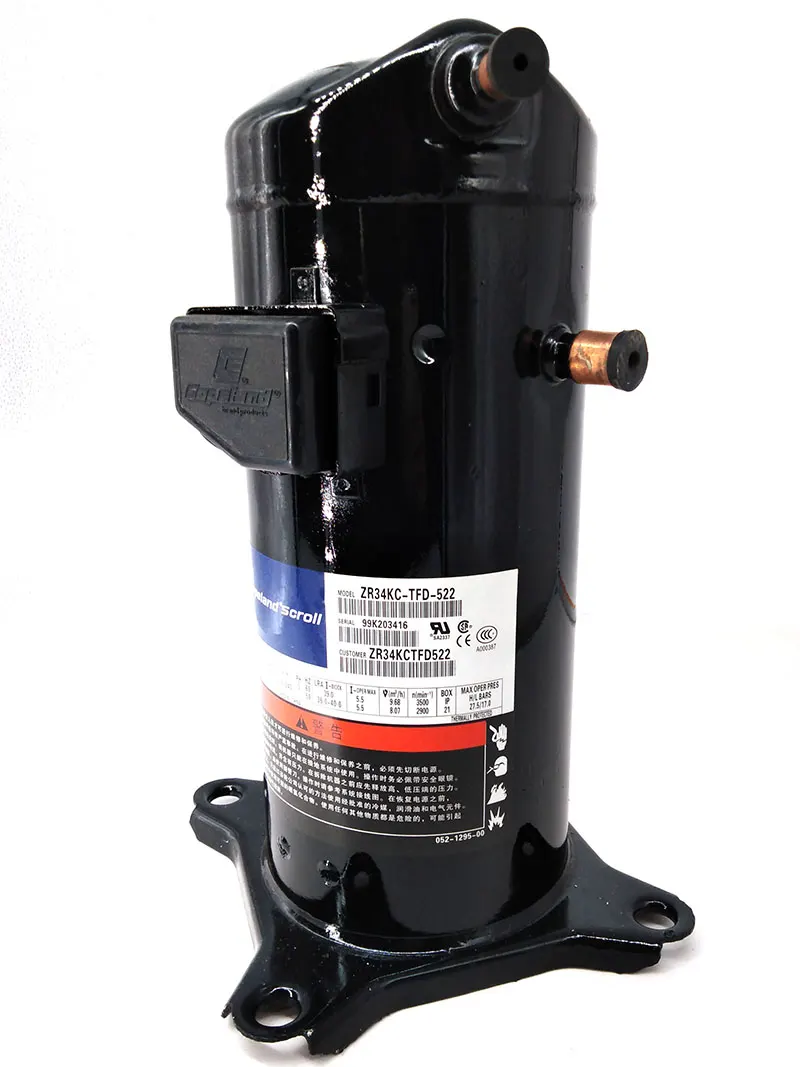
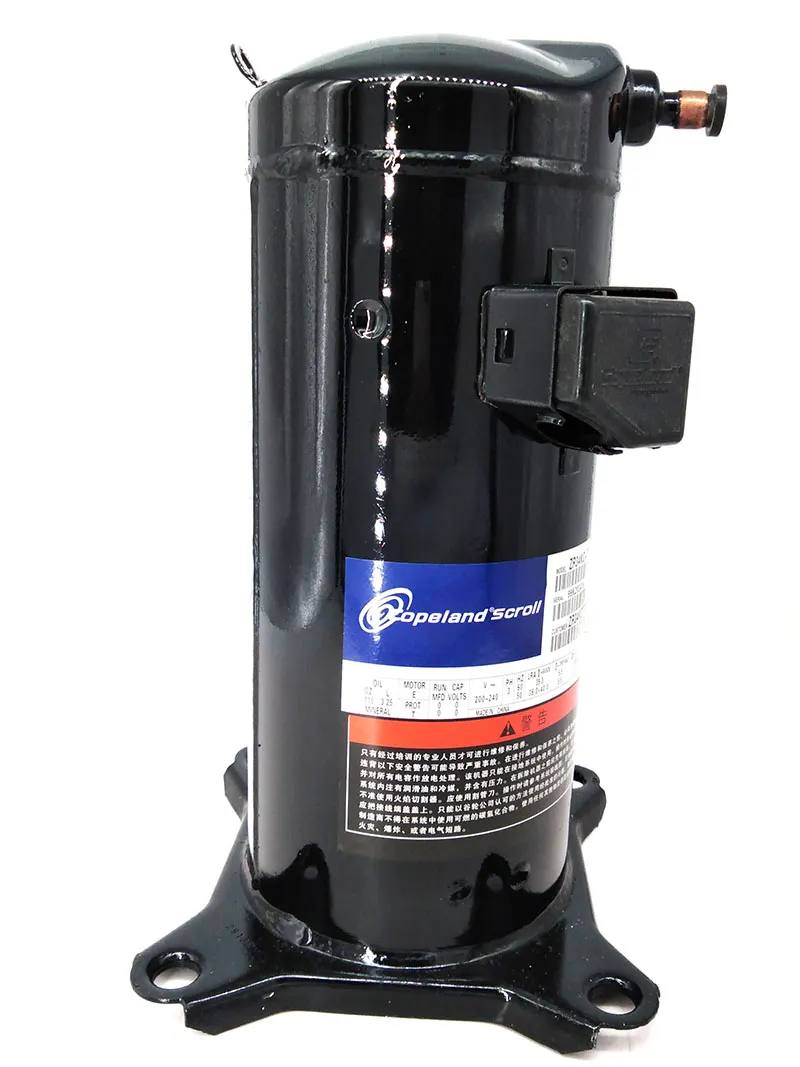
Original, New, Remanufactured or Used Compressor: What Should Import Buyers Choose?
A practical buyer guide comparing original, surplus, remanufactured, used, and aftermarket compressors by risk, warranty, lead time, price, and reliability.
Choosing between an original compressor vs refurbished compressor is rarely a simple price decision. For import buyers, the real question is whether the compressor condition matches the application risk, customer expectation, warranty responsibility, and delivery schedule.
A refrigeration spare parts distributor may need fast-moving models with clear traceability and stable warranty support. A service company may need a replacement unit quickly to restart a supermarket cold room. An installer working on a new project may prioritize reliability, documentation, and long-term serviceability. In each case, the cheapest offer can become expensive if the compressor fails early, arrives with missing accessories, or does not match the required refrigerant, voltage, capacity, or oil type.
This guide compares five common supply options in the compressor market: new original compressors, surplus stock, remanufactured compressors, used compressors, and aftermarket alternatives. It explains how each option performs in terms of price, risk, lead time, warranty, and application reliability so overseas buyers can make better purchasing decisions.
What Compressor Condition Really Means
Different suppliers may use similar words in different ways. Before comparing quotations, import buyers should define the product condition clearly in writing. A low price is not meaningful unless the buyer knows exactly what is being supplied.
New original compressor
A new original compressor is manufactured by the original compressor brand or its authorized production system. It should be unused and supplied as a new unit. Depending on the product and channel, it may come with factory packaging, labels, model identification, and standard technical markings.
For buyers, the value of a new original compressor is consistency. It is usually the preferred option for critical cold rooms, commercial refrigeration systems, air-conditioning repairs, OEM replacement, and projects where the end user expects original performance and formal warranty handling.
Key advantages often include:
- Lowest uncertainty when the model is correctly selected
- Better suitability for mission-critical refrigeration applications
- Stronger customer acceptance in distributor and service markets
- Easier communication around model number, voltage, refrigerant, and capacity
- More predictable warranty terms than used or rebuilt units
The main limitation is price. New original compressors are usually more expensive than refurbished, used, or aftermarket alternatives. Availability can also vary by model, especially for older or discontinued compressor series.
New surplus stock
Surplus stock, sometimes called old stock, excess stock, or inventory stock, refers to unused compressors that are no longer in active circulation through normal production or distribution channels. These units may be original and unused, but buyers still need to check storage condition, production age if available, packaging condition, and whether the model still fits current refrigerants and system requirements.
Surplus stock can be attractive when a buyer needs an obsolete model or when the price is lower than current new production. However, it should not be treated exactly the same as fresh factory stock.
Important checks include:
- Has the compressor remained sealed and unused?
- Is the packaging original and intact?
- Are nameplates, labels, terminals, and mounting points clean and undamaged?
- Does the supplier offer a clear warranty or only a limited guarantee?
- Is the model still suitable for the target refrigerant and application?
Surplus compressors can be a good option for distributors serving maintenance markets, especially where older refrigeration systems are still common. The key is transparency: buyers should know whether they are purchasing current new stock or unused surplus stock.
Remanufactured or refurbished compressor
A remanufactured or refurbished refrigeration compressor has been used before and then repaired, rebuilt, cleaned, tested, or reconditioned for resale. The quality range is very wide. Some rebuilt compressors may be processed carefully with replacement parts and testing; others may only receive basic cleaning and simple repair.
This category creates the most confusion in the compressor import market. Terms such as remanufactured, refurbished, reconditioned, rebuilt, repaired, and renewed are not always used consistently. Import buyers should ask exactly what was done to the compressor.
Questions to clarify include:
- Was the compressor fully disassembled or only repaired externally?
- Which internal parts were replaced?
- Was the motor winding tested?
- Was the compressor pressure-tested or performance-tested?
- What refrigerant and oil compatibility apply after refurbishment?
- Is there a written warranty, and what failures are excluded?
A remanufactured compressor can reduce cost for non-critical repairs or price-sensitive markets. It may also help when an original model is difficult to obtain. However, it carries more risk than a new original unit because previous operating history, internal wear, and repair quality can directly affect service life.
Used compressor
A used compressor is normally removed from a working or failed system and sold without full remanufacturing. It may be tested before sale, but it should not be assumed to perform like a new or properly rebuilt unit.
Used compressors are often selected for emergency repairs, temporary operation, low-budget jobs, or markets where customers accept higher risk for a lower purchase price. They may also be used for parts recovery or short-term replacement.
The largest risk is unknown history. A used compressor may have experienced overheating, liquid slugging, poor lubrication, incorrect refrigerant charging, contamination, voltage problems, or long operating hours. Even if it starts during a basic test, hidden damage can reduce reliability.
Used units should be handled with caution in applications such as:
- Cold rooms storing high-value products
- Supermarkets and food retail systems
- Medical, laboratory, or process cooling
- Remote installations where service access is difficult
- Warranty-sensitive projects where failure would damage buyer reputation
For professional import buyers, used compressors should be clearly labeled and sold with realistic expectations. They are not a direct substitute for new original compressors.
Aftermarket compressor alternative
An aftermarket compressor is not necessarily used or refurbished. It may be a new compressor produced by another manufacturer as an alternative to a known original model. In some cases, aftermarket options can offer good value, especially where the application allows model substitution and the technical match is confirmed.
The challenge is selection. A compressor is not interchangeable only because the horsepower looks similar. Buyers must confirm capacity, refrigerant, voltage, frequency, motor type, oil, displacement, starting method, mounting dimensions, pipe connections, and application envelope.
Aftermarket alternatives can be practical for:
- Standard commercial refrigeration repairs
- Price-sensitive replacement markets
- Systems where the contractor can verify compatibility
- Distributors that serve multiple brands and need broader availability
They are less suitable when an end user requires the exact original brand or when system design depends on a specific compressor performance envelope.
Risk, Warranty, Lead Time, Price, and Reliability Compared
Import buyers usually compare compressor offers across five business factors. A structured comparison helps avoid decisions based only on the lowest unit price.
Risk profile
New original compressors usually carry the lowest product-condition risk, provided the supplier is reliable and the model selection is correct. Surplus stock has low to moderate risk depending on storage and age. Remanufactured compressors have moderate to high risk depending on rebuild quality. Used compressors carry the highest uncertainty. Aftermarket alternatives vary widely: a high-quality new alternative may be reliable, but the risk increases if compatibility is not checked.
Risk is not only technical. It also includes commercial risk. If a compressor fails after installation, the importer may face freight cost, warranty claims, customer dissatisfaction, lost labor time, and damage to distributor reputation.
Warranty expectations
Compressor warranty should be discussed before purchase, not after failure. A new original compressor may come with clearer warranty terms, but actual warranty handling depends on the sales channel, installation conditions, and documentation. Suppliers often require proof that the compressor was installed correctly and used within specification.
For remanufactured and used compressors, warranty is usually more limited. It may cover only startup failure or a short period after delivery. Some suppliers may exclude failures caused by system contamination, wrong refrigerant, incorrect oil, electrical problems, or improper installation.
Import buyers should request warranty terms covering:
- Warranty period and starting point
- Whether warranty is replacement, repair, credit, or parts only
- Required installation records or photos
- Exclusions related to installation and system condition
- Responsibility for international freight and customs charges
A cheap compressor with unclear warranty can expose the buyer to more cost than a higher-priced unit with transparent support.
Lead time and availability
Lead time often determines the practical choice. A distributor replenishing stock may be able to wait for new original compressors. A service company dealing with a stopped cold room may need the fastest available solution.
New original models may have stable supply for common compressors but longer lead times for special voltage, less common refrigerants, or older models. Surplus stock can be fast if available, but quantities are limited. Remanufactured and used compressors may be available when new stock is unavailable, but each unit must be checked individually. Aftermarket alternatives may shorten lead time if a compatible model is in stock.
Buyers should separate urgent repair needs from planned inventory purchasing. Emergency purchases often accept more compromise; planned purchases should focus on lower lifecycle risk.
Price and total cost
The purchase price is only one part of compressor cost. Import buyers should evaluate total cost, including freight, customs, possible accessories, installation labor, warranty exposure, and the cost of downtime if the compressor fails.
A lower-priced compressor may be reasonable for a small non-critical system. It may be a poor choice for a cold room storing expensive products. A new original compressor may look expensive at the quotation stage but reduce the risk of repeat service visits and customer disputes.
A practical price comparison should include:
- Unit price
- Packing cost and export handling
- Sea or air freight cost
- Import duty and local taxes
- Installation labor
- Required accessories or electrical components
- Probability and cost of failure
- Customer warranty obligation
The best choice is not always the lowest price. It is the option that matches the value and risk level of the application.
Application reliability
Reliability depends on both compressor quality and system condition. Even a new original compressor can fail if installed into a contaminated system, charged with the wrong refrigerant, operated outside its envelope, or exposed to poor power supply.
For critical applications, buyers should prioritize new original compressors or carefully qualified new alternatives. For moderate-risk commercial repairs, surplus stock or aftermarket options may be acceptable if compatibility is confirmed. For low-budget or temporary repairs, remanufactured or used compressors may be considered with clear customer approval.
How Different Buyers Should Decide
Different customer types have different priorities. A distributor, repair company, and cold-room contractor may all buy compressors, but their decision logic is not identical.
Refrigeration spare parts distributors
Distributors need products that can be resold with confidence. Their biggest risk is not one unit; it is repeated claims across many customers. For this reason, distributors should classify inventory clearly by condition and avoid mixing new, surplus, refurbished, and used compressors under vague descriptions.
Recommended approach:
- Stock common new original models for high-demand applications
- Use surplus stock for discontinued or hard-to-find replacement needs
- Offer remanufactured or used units only with clear labeling and limited warranty terms
- Keep technical data organized by model, refrigerant, voltage, and application
- Avoid selling substitutes without confirming compatibility
A transparent product condition policy builds trust with repair companies and installers who depend on the distributor’s accuracy.
Service and repair companies
Repair companies often work under time pressure. When a system is down, the customer wants fast recovery. However, replacing a compressor without understanding why the old unit failed can lead to another failure.
Before selecting a new compressor vs remanufactured option, technicians should check system contamination, oil condition, electrical supply, refrigerant charge, condenser condition, expansion device operation, and signs of liquid return.
For service companies, a lower-cost refurbished refrigeration compressor may be acceptable when the customer approves the risk and the application is not critical. For high-value cold storage, food retail, or systems with strict uptime requirements, a new original compressor is usually a safer recommendation.
Cold-room contractors and engineering installers
Installers and contractors are often judged by long-term system performance. A compressor failure after project handover can create serious warranty pressure. For new cold rooms and engineered refrigeration systems, the compressor should match the design capacity, ambient condition, refrigerant, control logic, and electrical specification.
Contractors should be cautious with used or remanufactured compressors in new projects unless the contract clearly allows them. In most professional installations, new original compressors or properly selected new alternatives are more suitable.
Importers serving price-sensitive markets
Some markets prioritize low acquisition cost. In these cases, remanufactured or used compressors may have demand. The key is to sell them honestly. Buyers should avoid presenting used or rebuilt units as new original compressors.
Clear commercial terms can reduce disputes:
- State the product condition on invoice and packing list
- Provide photos of nameplates and actual units where possible
- Define warranty limits before shipment
- Explain that installation quality and system condition affect life
- Separate refurbished stock from new stock in warehouse records
Transparency protects both the importer and the final customer.
Practical Inspection and Purchasing Checklist
Before placing an order, import buyers should request enough information to verify that the compressor matches both the system and the commercial expectation.
Model and technical compatibility
Confirm the full model number, not only horsepower. Compressor model codes often contain important information about application range, refrigerant, displacement, motor type, voltage, and accessories.
Check:
- Full model number and series
- Refrigerant compatibility
- Voltage, phase, and frequency
- Cooling capacity at required operating conditions
- Application type: low, medium, or high temperature where relevant
- Oil type and charge requirements
- Starting components or electrical accessories
- Pipe connection size and mounting dimensions
For aftermarket alternatives, request a clear cross-reference and verify it with system requirements. A similar capacity rating under different conditions may not produce the same field performance.
Physical condition and packaging
For new original and surplus compressors, packaging and labeling are important indicators, although they are not the only proof of condition. For remanufactured and used units, photos and test information become more important.
Ask for:
- Photos of the actual compressor or representative stock
- Nameplate photos showing model and electrical details
- Packaging photos for export shipment
- Confirmation that ports are sealed
- Visible condition of terminals, shell, mounting feet, and connections
- Accessory list if included
Export packing matters. Compressors are heavy and can be damaged by poor handling. Buyers should ensure that packaging is suitable for sea or air transport and that terminals and pipe connections are protected.
Testing and documentation
Documentation should match the compressor condition. A new original compressor may not need the same test report as a used unit, but the buyer still needs invoice details, model information, and warranty terms. A remanufactured compressor should come with clearer information about test scope.
Useful documentation may include:
- Commercial invoice with accurate product condition
- Packing list with model and quantity
- Warranty statement or sales terms
- Photos before shipment
- Test confirmation for remanufactured or used compressors
- Technical datasheet or model reference where available
For international trade, accurate description is also important for customs clearance and customer communication.
Supplier transparency
A reliable wholesale compressor supplier should be willing to identify product condition clearly. If a quotation uses only general words such as “original,” “new type,” “good quality,” or “like new,” buyers should ask for clarification.
Useful questions include:
- Is the compressor brand-new, surplus, remanufactured, used, or aftermarket?
- Is the unit original brand production or an alternative brand?
- What warranty applies to this condition?
- Are photos of actual stock available before shipment?
- Are accessories included or sold separately?
- What happens if the unit is damaged in transit?
The supplier’s answers are often as important as the price.
Recommended Selection by Application
There is no single best compressor condition for every order. The correct choice depends on the application, urgency, budget, and customer risk tolerance.
Choose new original compressors when reliability is the priority
New original compressors are generally the best choice for critical systems, professional cold-room projects, warranty-sensitive repairs, and customers who require original-brand replacement. They are also suitable for distributors building long-term market trust.
Choose this option when:
- Downtime cost is high
- The end user expects original replacement
- Warranty reputation is important
- The system is part of a new installation or major repair
- The buyer needs predictable specification and performance
Choose surplus stock when the model is hard to find
Surplus stock can be useful for discontinued systems or older equipment that still operates in the field. It can also offer a balance between original product and improved availability.
Choose this option when:
- The unit is unused and condition is verified
- The model is no longer easy to source through regular channels
- The application is replacement service rather than a new project
- Warranty terms are understood before purchase
Choose remanufactured compressors for controlled cost and accepted risk
Remanufactured compressors can serve budget repairs, secondary systems, and markets where customers accept limited warranty in exchange for lower price. The decision depends heavily on rebuild quality and supplier honesty.
Choose this option when:
- The customer accepts the condition and warranty limit
- The application is not highly critical
- The supplier can explain the refurbishment and testing process
- New original stock is unavailable or commercially unsuitable
Choose used compressors only for low-risk or temporary needs
Used compressors are the highest-risk option. They may solve an urgent problem, but buyers should avoid treating them as long-term equivalents to new units.
Choose this option when:
- The repair is temporary or low-budget
- The customer accepts higher failure risk
- The compressor has at least basic test confirmation
- The application is not protecting high-value goods or critical processes
Choose aftermarket alternatives when compatibility is confirmed
Aftermarket compressors can be a practical supply solution if the buyer verifies the technical match. They should be selected by performance and application data, not by appearance or nominal horsepower alone.
Choose this option when:
- The original model is expensive or unavailable
- A compatible new alternative can be verified
- The installer can confirm system suitability
- The customer accepts a non-original replacement brand
The Bottom Line for Import Buyers
The debate over original compressor vs refurbished compressor is really a risk-management decision. New original compressors usually offer the strongest reliability position. Surplus stock can be valuable when unused condition and storage are verified. Remanufactured compressors can reduce cost but require careful qualification. Used compressors should be limited to low-risk or temporary applications. Aftermarket alternatives can work well when the technical cross-match is accurate.
For overseas import buyers, the safest purchasing process is to define the compressor condition, confirm the full model and application, review warranty terms, and match the product type to the risk level of the job. A transparent supplier, accurate documentation, and realistic warranty expectations are just as important as the quoted price.
FAQ
What is the main difference between an original compressor and a refurbished compressor?
A new original compressor is unused and made by the original compressor brand or its authorized production system. A refurbished or remanufactured compressor has been used before and repaired, rebuilt, cleaned, or tested for resale. The original unit generally has lower product-condition risk, while the refurbished unit is usually chosen for lower cost or limited availability.
Are remanufactured compressors reliable for cold rooms?
They can be used in some non-critical or budget-sensitive cold-room repairs, but reliability depends on the previous operating history, rebuild quality, testing process, and installation condition. For cold rooms storing high-value goods or requiring stable uptime, a new original compressor or properly selected new alternative is usually safer.
Is surplus stock the same as a new original compressor?
Surplus stock may be unused and original, but it is not always the same as fresh factory stock. Buyers should check packaging, storage condition, sealed ports, model suitability, and warranty terms. Surplus stock can be useful for older or hard-to-find compressor models when its condition is clearly verified.
When should an importer choose an aftermarket compressor alternative?
An aftermarket alternative can be a good choice when the original model is unavailable, too costly, or not required by the customer. The buyer must confirm refrigerant, voltage, capacity, oil type, application range, mounting dimensions, pipe connections, and starting method before using it as a replacement.
What should buyers ask a compressor supplier before ordering?
Buyers should ask whether the compressor is new original, surplus, remanufactured, used, or aftermarket; request the full model number, nameplate details, warranty terms, photos, packaging information, and accessory list; and confirm refrigerant, voltage, frequency, oil, and application compatibility.
Buyer Next Step
Move from research to sourcing with a category shortlist, relevant product examples, and a quote request channel.