How to Identify Genuine Compressors and Avoid Counterfeit Refrigeration Compressor Purchases
A practical buyer-protection guide for checking compressor authenticity, supplier reliability, warranty documents, pricing, packaging, and serial numbers.
How to Identify Genuine Compressors and Avoid Counterfeit Refrigeration Compressor Purchases
For refrigeration spare parts distributors, service companies, and cold-room installers, buying the right compressor is not only a price decision. A compressor is the heart of an air-conditioning, refrigeration, or cold-room system, and a counterfeit or misrepresented unit can lead to premature failure, refrigerant loss, warranty disputes, customer complaints, and costly site revisits.
The risk is especially important in wholesale compressor purchasing, where buyers often source international brands through trading channels, mixed-brand distributors, or regional stockists. Popular names such as Copeland, Danfoss/Secop, Embraco, Maneurop, Tecumseh, Bitzer, and other refrigeration compressor brands may be targeted by counterfeiters or by sellers offering refurbished, repainted, or non-original products as new.
A genuine compressor vs counterfeit compressor check should combine visual inspection, document review, supplier verification, and commercial judgment. No single sign proves authenticity in every case, but several checks together can greatly reduce purchasing risk.
Why Counterfeit Compressors Are a Serious Risk
A fake or misrepresented refrigeration compressor is not just a low-quality spare part. It can damage the entire refrigeration system and the buyer’s reputation.
Common risks include:
- Unexpected compressor failure: Non-original internal components, poor assembly, or incorrect oil can shorten service life.
- System compatibility problems: A fake unit may not match the claimed refrigerant, voltage, capacity, displacement, or application range.
- No valid warranty: Brand warranty support normally depends on traceable product origin, correct documentation, and proper installation records.
- Electrical safety concerns: Incorrect terminals, windings, overload protectors, or wiring details can create operational and safety risks.
- Higher after-sales cost: Distributors and installers may face returns, replacement claims, labor disputes, and lost customer trust.
- Damage to project schedules: Cold-room projects and commercial refrigeration sites cannot always wait for a second replacement shipment.
For overseas buyers, the risk is amplified by long shipping distances, customs procedures, local documentation requirements, and the difficulty of returning heavy compressors internationally. A careful pre-shipment authenticity process is much cheaper than resolving a dispute after delivery.
Packaging, Labels, and Nameplates: The First Inspection Points
Packaging and nameplates are usually the quickest way to identify suspicious compressors. They are not enough on their own, but they help buyers decide whether deeper verification is needed.
Check the outer carton or wooden packaging
For an original refrigeration compressor, packaging should normally look consistent, professionally printed, and appropriate for the compressor model and weight. When inspecting photos or received goods, pay attention to:
- Brand logo quality and spelling
- Model number consistency across carton, label, and invoice
- Clear printing rather than blurred or low-resolution labels
- Proper handling marks, barcodes, or product identification labels where applicable
- Packaging condition that matches the seller’s claim of new stock
- No obvious relabeling, covered markings, or mismatched cartons
Damaged packaging is not automatic proof of counterfeit goods, especially after long-distance transport. However, packaging that looks reused, unusually generic, or inconsistent with the compressor brand should trigger further checks.
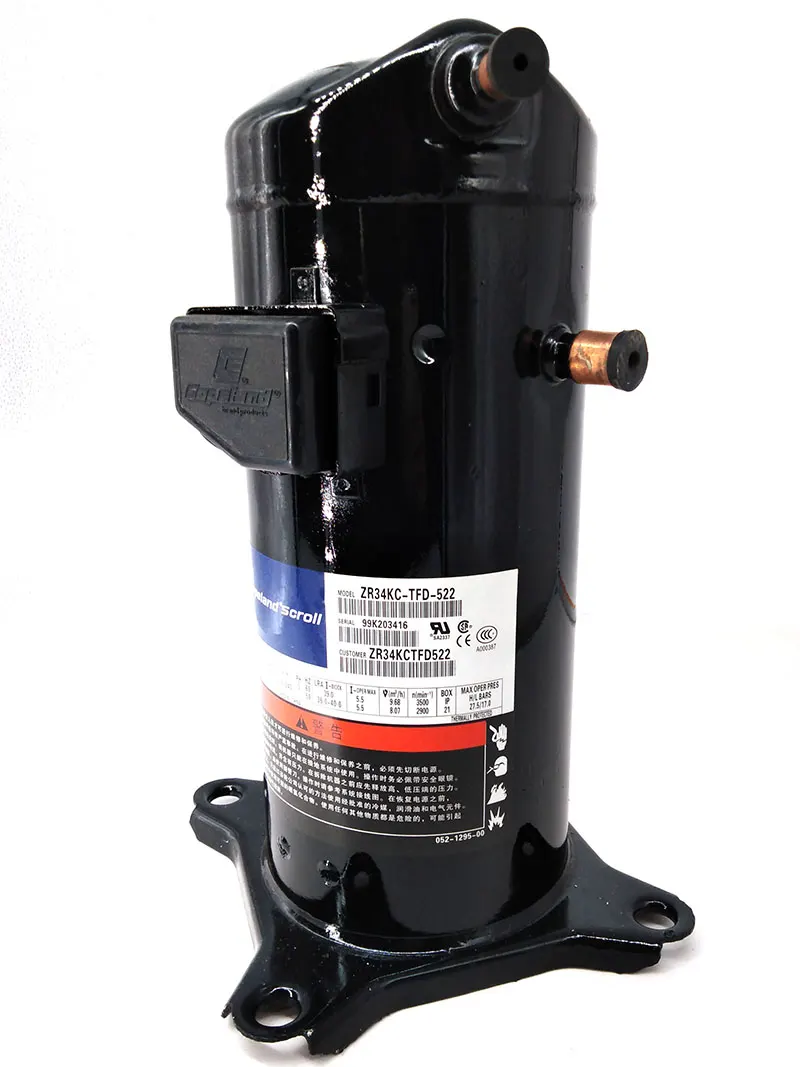
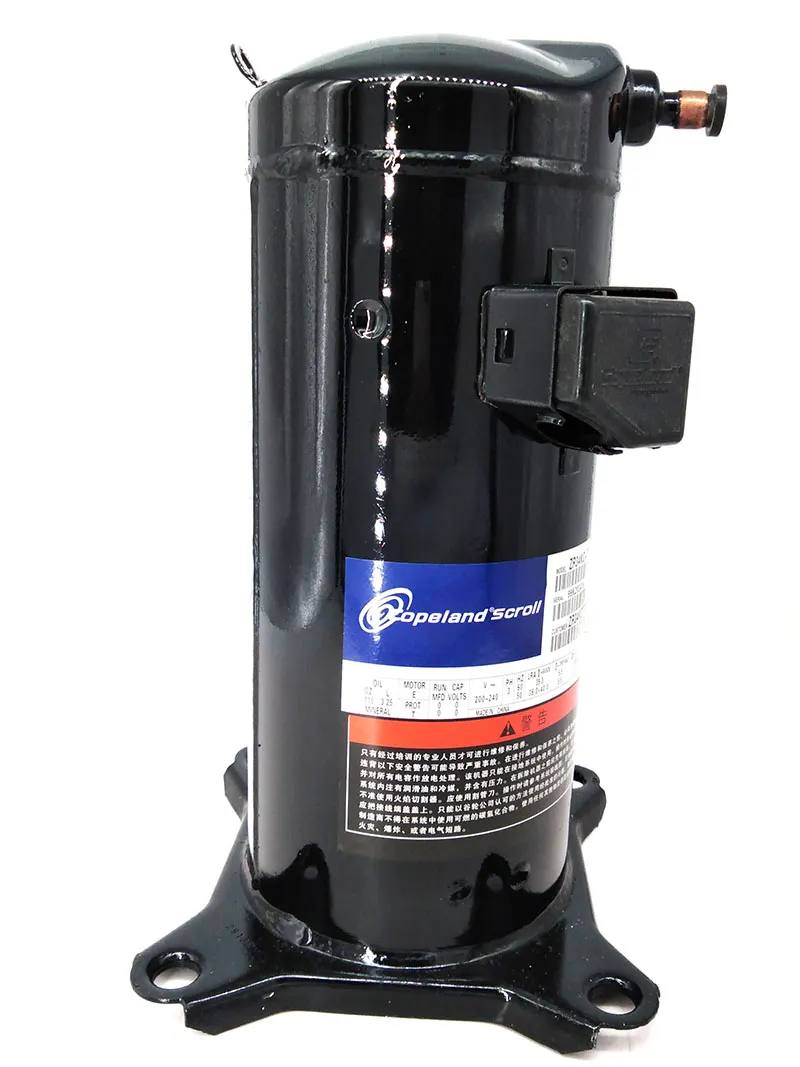
Inspect the compressor nameplate carefully
The nameplate is one of the most important authenticity clues. A genuine compressor nameplate should be firmly attached, clearly marked, and consistent with the model being offered.
Key information to compare includes:
- Model number
- Serial number or production code
- Voltage and phase
- Refrigerant type or application information
- Frequency rating, such as 50 Hz or 60 Hz where applicable
- Electrical data
- Brand name and manufacturing information
- Certification marks, where relevant to the market
Red flags include spelling mistakes, uneven engraving, poor-quality printing, missing serial numbers, altered labels, scratched-off information, or a nameplate that appears newer than the compressor body. Buyers should also compare the nameplate details with the quotation, proforma invoice, packing list, and any catalogue data available for that model.
Look for signs of repainting or refurbishment
Some compressors may be used or remanufactured units sold as new. This is different from a legitimate remanufactured product that is clearly declared, but it is still a serious purchasing risk when the buyer ordered new original goods.
Warning signs may include:
- Fresh paint covering bolts, seams, terminals, or old labels
- Uneven surface texture or color mismatch
- Oil stains around welded joints or service ports
- Scratched mounting feet or used bolt marks
- Damaged terminal covers or replaced accessories
- Inconsistent packaging compared with the compressor condition
For wholesale orders, request clear photos from several angles before shipment, including the nameplate, terminal box, suction and discharge connections, mounting feet, and packaging label.
Serial Number Checks and Brand Authorization
A compressor serial number check is one of the most useful steps in fake compressor identification, but it must be handled correctly. Brands may have different verification systems, and not every product can be checked through a public online database. Still, traceability matters.
What to request from the supplier
Before payment or shipment, buyers should ask the supplier to provide:
- Clear nameplate photos showing model and serial number
- Carton or pallet label photos
- Commercial invoice and packing list with complete model numbers
- Warranty documents or brand-related product documents, where available
- Confirmation of whether the compressor is new, original, unused, and not refurbished
- Country or region of supply, if relevant for warranty and compliance
For sensitive purchases, request sample serial numbers before confirming a large order. If the supplier refuses to provide any traceable information, gives inconsistent answers, or only sends catalogue pictures, buyers should proceed carefully.
How to approach brand verification
For genuine Copeland compressor purchases, Danfoss/Secop compressors, Embraco compressors, and other branded units, buyers can often verify authenticity through one or more of the following channels:
- The brand’s local office or regional representative
- An authorized distributor or service partner
- Brand customer service channels
- Product data tools or official catalogues, where available
- Warranty registration or service platforms, if applicable in the destination market
The goal is to confirm that the model number exists, the technical data makes sense, and the serial or production code is plausible. Buyers should avoid assuming that a logo alone proves authenticity. Counterfeit products often copy logos and packaging, but they are more likely to fail when model details, serial number format, and documentation are checked together.
Understand the limits of serial verification
A serial number check is valuable, but it is not perfect. A counterfeit product may copy a real serial number from a genuine unit. A grey-market product may be original but not supported by the brand warranty in the buyer’s country. A new old stock compressor may be genuine but require careful handling, storage, and warranty clarification.
For this reason, serial number verification should be combined with supplier verification, purchase documents, packaging inspection, and technical model matching.
Pricing, Warranty, and Documentation Red Flags
Suspicious pricing is one of the strongest warning signs in compressor purchasing. Every market has price differences caused by stock position, purchase volume, exchange rates, freight terms, and regional supply. However, a price that is far below normal market range needs explanation.
When a low price becomes a warning sign
A very low price may indicate:
- Counterfeit product
- Used compressor sold as new
- Refurbished compressor not clearly declared
- Old stock with uncertain storage conditions
- Non-original substitute packed under a famous brand name
- Missing warranty or incomplete documentation
- Incorrect voltage, refrigerant, or application version
A professional supplier should be able to explain why the price is competitive. For example, they may have regular stock, bulk procurement, a regional supply advantage, or a promotion on selected models. If the only explanation is vague pressure to “buy today” or “same original, special channel,” buyers should be cautious.
Warranty documents should match the transaction
Warranty terms vary by brand, region, product type, and sales channel. Buyers should not assume that every branded compressor automatically carries international warranty support. Before ordering, confirm:
- Who provides warranty support: brand, distributor, or seller
- Warranty period and conditions
- Required documents for claims
- Whether installation records are needed
- Whether the product is supported in the destination country
- What happens if the compressor is found to be incorrectly applied or improperly installed
A seller offering a vague “brand warranty” without documents, traceability, or claim procedure may not be able to support the buyer later. For distributors and repair companies, written warranty terms are essential because they affect resale confidence and after-sales responsibility.
Check documentation consistency
In genuine compressor purchasing, the model number should remain consistent across all documents. Compare the quotation, invoice, packing list, carton label, compressor nameplate, and any certificate or warranty paper.
Look for inconsistencies such as:
- One model number on the invoice and another on the nameplate
- Missing voltage or phase details
- Incorrect refrigerant application
- Generic product description without brand and model
- Serial numbers not listed for a high-value order
- Photos that do not match the ordered compressor
These issues may be simple administrative mistakes, but they should be corrected before shipment. Once compressors are loaded, shipped, and cleared through customs, resolving mismatched documents becomes much harder.
Supplier Verification for Overseas Compressor Buyers
Supplier verification is as important as product inspection. Many counterfeit problems begin not with the compressor itself, but with weak purchasing channels and unclear responsibility.
Evaluate the supplier’s compressor expertise
A reliable compressor supplier should understand more than part numbers. They should be able to discuss application details such as refrigerant, temperature range, power supply, displacement, cooling capacity, oil type where relevant, and suitable replacement options.
For example, a service company replacing a failed cold-room compressor may need confirmation of medium-temperature or low-temperature application, not only the model series. A distributor purchasing mixed compressors may need accurate carton dimensions, weight, voltage options, and cross-reference support.
If a supplier cannot answer basic technical questions, uses only copied catalogue pages, or recommends substitutes without checking application details, the purchasing risk increases.
Ask practical verification questions
Before placing a wholesale order, buyers can ask:
- Are the compressors new, original, and unused?
- Can you provide nameplate and packaging photos before shipment?
- Can serial numbers be recorded on the invoice or packing list?
- What warranty terms apply, and who handles claims?
- Are the compressors suitable for the destination market’s voltage and refrigerant requirements?
- Can you support mixed-brand purchasing with consistent documentation?
- How are compressors packed for sea or air shipment?
The quality of the answers often reveals the supplier’s reliability. Serious suppliers usually welcome clear requirements because it reduces disputes. Risky sellers often avoid traceability, refuse detailed photos, or push for fast payment before questions are resolved.
Watch for trading-channel warning signs
Common warning signs include:
- Prices far below the normal market without a clear reason
- No company identity, address, or trade history
- Refusal to provide real product photos
- Overuse of brand logos without proof of supply capability
- Inconsistent model descriptions
- Claims that every model is always available in large quantity
- No after-sales procedure
- Payment pressure before verification
Overseas buyers do not need to reject every non-authorized supplier automatically. Many legitimate multi-brand distributors and stockists trade original compressors through normal commercial channels. The key is to verify product traceability, technical accuracy, and after-sales responsibility before shipment.
Practical Checklist Before Buying Branded Refrigeration Compressors
A structured checklist helps purchasing teams avoid emotional decisions based only on price and availability.
Pre-order checklist
Before confirming the order, check:
- Exact compressor model and application
- Refrigerant compatibility
- Voltage, phase, and frequency
- Required capacity and operating temperature range
- Brand and model availability
- Supplier’s product photos and stock confirmation
- Estimated lead time and shipping method
- Warranty terms in writing
Authenticity checklist
For genuine compressor vs counterfeit compressor screening, request and compare:
- Nameplate photo
- Serial number or production code
- Carton or pallet label
- Packaging condition
- Invoice model number
- Packing list details
- Any warranty or product document available
- Supplier declaration that the product is new and original
Pre-shipment checklist
Before the goods leave the warehouse, confirm:
- Correct quantity and model numbers
- Clear photos of each model batch
- Packaging suitable for export transport
- Serial numbers recorded for high-value items where possible
- No visible oil leakage, dents, or repainted surfaces
- Accessories included as agreed
- Documents matching the shipment
Receiving inspection checklist
When the shipment arrives, inspect before installation or resale:
- Outer packaging condition
- Nameplate and serial number consistency
- Signs of transport damage
- Terminal box condition
- Connection caps and sealing condition
- Compressor body surface and mounting feet
- Match between received goods and purchase documents
If anything looks suspicious, do not install the compressor immediately. Take photos, keep packaging, record serial numbers, and contact the supplier before further handling.
What Buyers Should Pay Attention to for Copeland, Danfoss/Secop, Embraco, and Other Brands
Counterfeit risk is higher for well-known brands because market demand is strong and replacement buyers often need urgent supply. Whether purchasing a genuine Copeland compressor, Danfoss/Secop unit, Embraco compressor, or another branded refrigeration compressor, the same buyer-protection principles apply.
Pay attention to model accuracy. Many compressor series include similar-looking models with different refrigerants, voltage options, or application ranges. A compressor that looks correct may still be wrong for the job.
Pay attention to the sales channel. Authorized distribution can offer stronger traceability, but multi-brand distributors can also be useful when buyers need mixed brands, discontinued alternatives, or consolidated export shipments. In either case, documentation and supplier accountability matter.
Pay attention to after-sales handling. For repair companies and cold-room contractors, the real cost of a bad compressor includes labor, refrigerant recovery, downtime, customer dissatisfaction, and emergency replacement. A slightly cheaper compressor is not a saving if it creates a second service visit.
Pay attention to communication quality. A supplier that understands compressor applications, provides clear photos, records details, and confirms warranty responsibilities is generally safer than a seller competing only on the lowest price.
A Safer Buying Process Protects Margin and Reputation
Identifying fake compressors is not about one secret test. It is a disciplined purchasing process. Packaging, nameplates, serial numbers, warranty documents, pricing, and supplier verification all work together to protect the buyer.
For distributors, the goal is to resell original refrigeration compressors with confidence. For service and repair companies, the goal is to avoid repeat failures and warranty disputes. For cold-room installers, the goal is to protect project performance and long-term customer trust.
When in doubt, slow down the order process. Ask for photos, verify model details, question unusually low prices, and choose suppliers that are willing to provide traceable documentation. In the compressor business, authenticity is not only a product feature. It is part of the reliability chain that supports every refrigeration system after installation.
FAQ
How can I identify a genuine compressor vs counterfeit compressor?
Check the packaging, nameplate, serial number, model details, warranty documents, and supplier credentials together. A genuine compressor should have consistent model information across the carton, nameplate, invoice, and packing list. Suspicious signs include poor label quality, altered nameplates, mismatched documents, unclear serial numbers, repainted surfaces, and prices far below normal market levels.
Can a compressor serial number check prove authenticity?
A serial number check is useful, but it should not be the only verification method. Some counterfeit products may copy real serial numbers, and some genuine compressors may have regional warranty limitations. Buyers should combine serial number checks with brand or distributor verification, packaging inspection, technical model confirmation, and supplier due diligence.
Why are fake Copeland, Danfoss/Secop, and Embraco compressors risky?
Well-known compressor brands are often targeted because demand is high in replacement and wholesale markets. Fake or misrepresented units may have incorrect internal components, poor electrical safety, wrong application data, or no valid warranty. This can cause system failure, customer complaints, and expensive repeat service work.
What documents should I request before buying wholesale compressors?
Request a formal quotation with complete model numbers, clear nameplate and packaging photos, commercial invoice, packing list, warranty terms, and confirmation that the compressors are new, original, and unused. For high-value orders, ask the supplier to record serial numbers or production codes where possible.
Is a very low compressor price always a sign of counterfeit goods?
Not always. Price differences can come from stock position, purchase volume, freight terms, or regional supply. However, a price far below the normal market should be treated as a warning sign unless the supplier can clearly explain it and provide traceable product documentation.
Buyer Next Step
Move from research to sourcing with a category shortlist, relevant product examples, and a quote request channel.