How to Read Compressor Model Numbers: Brand, Capacity, Voltage, and Refrigerant Codes
Learn how compressor model numbers identify brand, series, capacity, voltage, and refrigerant, and how to verify a replacement before ordering.
How to Read Compressor Model Numbers: Brand, Capacity, Voltage, and Refrigerant Codes
A compressor model number is more than a product reference. It can indicate the manufacturer, compressor family, displacement or capacity range, motor design, voltage, frequency, refrigerant compatibility, and other options. Reading that code correctly helps distributors identify replacement parts, enables service technicians to avoid mismatched components, and gives installers a faster way to check whether a compressor belongs in a particular system.
The difficulty is that compressor model numbers do not follow one universal international standard. Copeland, Bitzer, Danfoss, Tecumseh, Embraco, Panasonic, GMCC, and other manufacturers use their own naming systems. A letter or number may have one meaning in a particular product family and a different meaning in another. Some model numbers are highly descriptive, while others are mainly internal ordering codes.
The safest approach is to treat the model number as an identification key, not as a complete technical specification. Use the nameplate, product datasheet, selection software, and distributor confirmation together before approving a replacement.
What Information Can a Compressor Model Number Contain?
Although each brand uses a different format, compressor codes commonly combine several types of information:
- Brand or manufacturer family
- Compressor type and product series
- Nominal capacity, displacement, or performance class
- Motor or electrical configuration
- Voltage and frequency
- Refrigerant designation
- Application range, such as low-temperature or medium-temperature refrigeration
- Oil type, protection, or design variant
- Connection, mounting, or packaging options
These details may appear as letters, numbers, suffixes, or separate nameplate fields. They are not always arranged in the same order. A code may begin with the compressor family and end with an electrical suffix, while another model may place the voltage or refrigerant information in a separate field.
A model number also does not always state cooling capacity directly. Capacity depends on operating conditions, including evaporating temperature, condensing temperature, suction gas conditions, superheat, subcooling, and refrigerant. Two compressors with similar-looking model numbers may produce different capacities when tested under different conditions.
For that reason, avoid treating a capacity-related digit as a universal rating in horsepower, BTU/h, or kilowatts. It may represent displacement, a nominal series size, or an internal frame designation instead.
How Brand and Series Codes Work
The opening characters of a compressor model often identify the manufacturer’s family or product platform. This is useful when the original label is damaged or when a buyer is comparing a replacement from the same brand. However, the brand name and the model prefix should be read together with the compressor construction and application.
Copeland compressor model numbers
Copeland uses different naming conventions across its compressor families, including reciprocating, scroll, and semi-hermetic products. A Copeland compressor model number may contain a family identifier followed by information related to size, motor configuration, application, or version. The meaning of a particular letter or position can change between product ranges.
When identifying a Copeland replacement, record the full model number, including every suffix. Do not rely only on a shortened series reference or a partial number printed on a carton. The complete code may distinguish voltage, motor protection, connection arrangement, or refrigerant-related configuration.
Bitzer compressor model numbers
Bitzer compressor model numbers are associated with different compressor families, such as reciprocating, screw, and compact screw designs. The code structure can provide clues about the compressor series and size, but the exact interpretation depends on the product range.
A Bitzer nameplate should be checked for more than the model code. Record the serial number, refrigerant information, electrical data, and any additional designation shown on the plate. For semi-hermetic and larger commercial systems, these details can be important when selecting valves, service parts, oil, controls, and motor protection.
Danfoss compressor model numbers
Danfoss model references vary between refrigeration and air-conditioning product families. A code may identify a compressor platform, application group, size, or electrical version, while refrigerant and performance information may be shown separately on the label or in the technical documentation.
Danfoss compressors are commonly supplied in different electrical and application versions. A model that appears close to the original may still be unsuitable if the voltage, frequency, refrigerant, starting arrangement, or operating envelope does not match the system. Confirm the complete reference rather than selecting by brand and approximate size alone.
Tecumseh, Embraco, Panasonic, and GMCC
Tecumseh, Embraco, Panasonic, and GMCC also use product-specific naming systems. Their codes may distinguish compressor families, motor versions, application ranges, or refrigerant configurations, but the information available in the characters differs by series and market.
For small hermetic compressors, the model number is often accompanied by a separate electrical code, refrigerant marking, or terminal specification. This is especially important for refrigerator and light-commercial replacements, where a similar physical size does not guarantee the same performance or starting behavior.
The practical rule is simple: use the model number to locate the correct product family, then verify the full technical data for that exact model and suffix.
Reading Capacity, Size, and Application Information
Capacity is one of the most frequently misunderstood parts of a compressor code. Buyers often expect a number in the model to equal horsepower or cooling capacity. In practice, it may indicate one of several things:
- A nominal compressor size
- Piston displacement or swept volume class
- A product family or frame size
- A motor rating group
- An internal sequence number
The same nominal compressor can have different cooling capacities with different refrigerants and test conditions. Capacity tables therefore provide more reliable information than model-number guesses.
Nominal size is not system capacity
A compressor’s nominal size should not be confused with the refrigeration capacity required by the system. The required capacity depends on the heat load and the design conditions. A cold-room compressor, for example, must be selected for the room load, ambient conditions, evaporating temperature, defrost arrangement, pull-down requirements, and expected operating cycle.
For air-conditioning equipment, the compressor must also match the indoor and outdoor heat exchangers, expansion device, control logic, and refrigerant circuit. A replacement with a similar model number can still cause poor cooling, excessive current, short cycling, or high discharge temperature if its operating range is wrong.
Low-temperature and medium-temperature applications
Model codes sometimes include an application indicator, but this should never be assumed without checking the documentation. A compressor designed for low-temperature refrigeration may have different operating limits and motor characteristics from one intended for medium-temperature or air-conditioning service.
Before ordering, compare the intended application with the manufacturer’s published envelope. Important checks include:
- Evaporating and condensing temperature range
- Refrigerant and oil compatibility
- Maximum discharge temperature
- Motor cooling requirements
- Starting conditions
- Suction and discharge pressure limits
- Required operating voltage and frequency
Voltage, Frequency, and Motor Codes
Electrical information is often represented by a suffix, a separate code, or a nameplate field. Common variables include voltage range, single-phase or three-phase operation, frequency, winding configuration, starting method, and motor protection.
A compressor rated for 220-240 V at 50 Hz should not automatically be treated as equivalent to a model intended for 208-230 V at 60 Hz. The acceptable range depends on the manufacturer’s specification and the equipment design. Some compressors are designed for dual-frequency operation, while others are not.
Electrical details to verify
When identifying a compressor, capture these fields exactly as printed:
- Rated voltage or voltage range
- Frequency: 50 Hz, 60 Hz, or dual frequency
- Phase: single-phase or three-phase
- Rated-load current or other current information
- Starting method and start components
- Terminal arrangement
- Internal or external overload protection
- Required capacitor, relay, inverter, or controller
For single-phase hermetic compressors, the start relay, capacitor, and overload protector may be matched to the motor design. Reusing the original accessories without checking compatibility can lead to hard starting, nuisance trips, overheating, or motor damage.
Inverter compressors require additional care. A model number may identify the compressor, but the drive or inverter controller must also be compatible with the compressor’s electrical characteristics and control requirements. The compressor should not be connected to a generic drive simply because the voltage appears similar.
Refrigerant Codes and Compatibility Checks
Refrigerant information may appear inside the model number, in a suffix, on the nameplate, or as a separate marking. Some compressor families are offered for more than one refrigerant, while others have a specific approved refrigerant range. The code alone may not provide enough information to determine compatibility.
Check the exact refrigerant designation and the approved oil type. Refrigerant compatibility affects pressure, mass flow, discharge temperature, motor cooling, lubrication, and system performance. A compressor designed for one refrigerant should not be treated as a drop-in replacement for another without confirmation from the manufacturer or a qualified technical source.
The refrigerant marking should be compared with:
- The refrigerant charged in the system
- The compressor datasheet
- The expansion device and control settings
- The oil specified for the compressor
- The pressure ratings of connected components
- Local service and refrigerant-handling requirements
The same compressor family may have different versions for traditional, lower-global-warming-potential, or mildly flammable refrigerants. Those versions may require different electrical components, safety controls, installation procedures, and system approvals.
A Practical Compressor Nameplate Guide
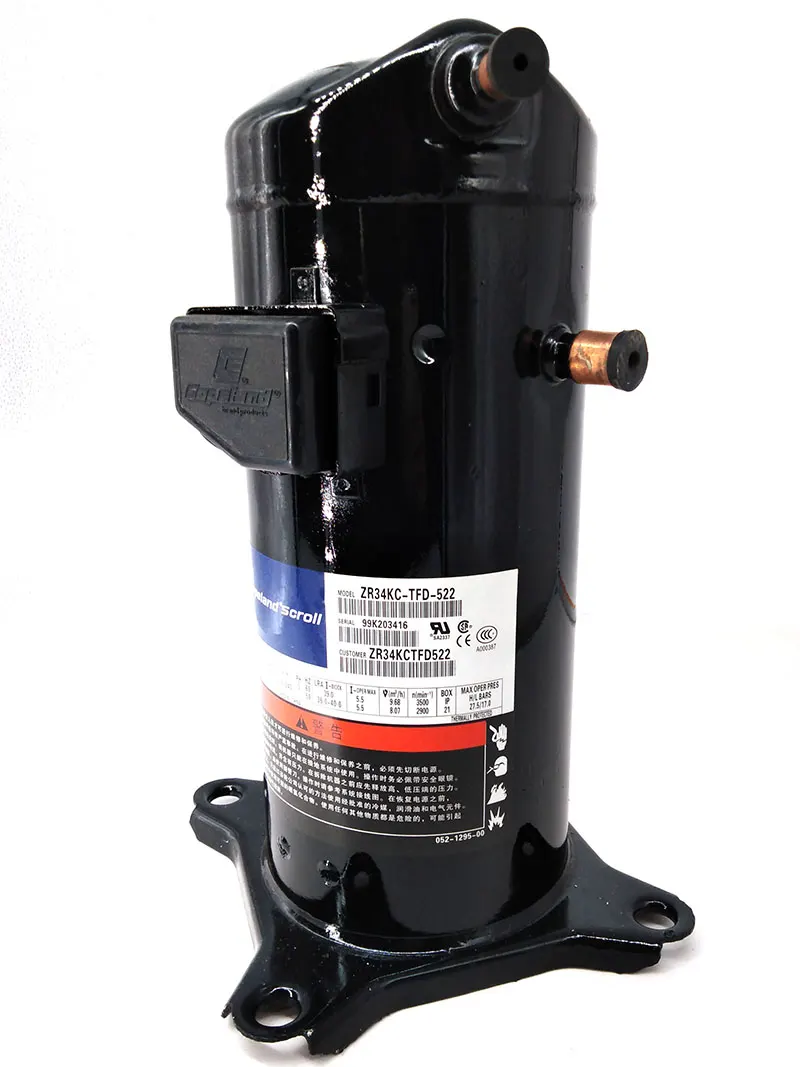
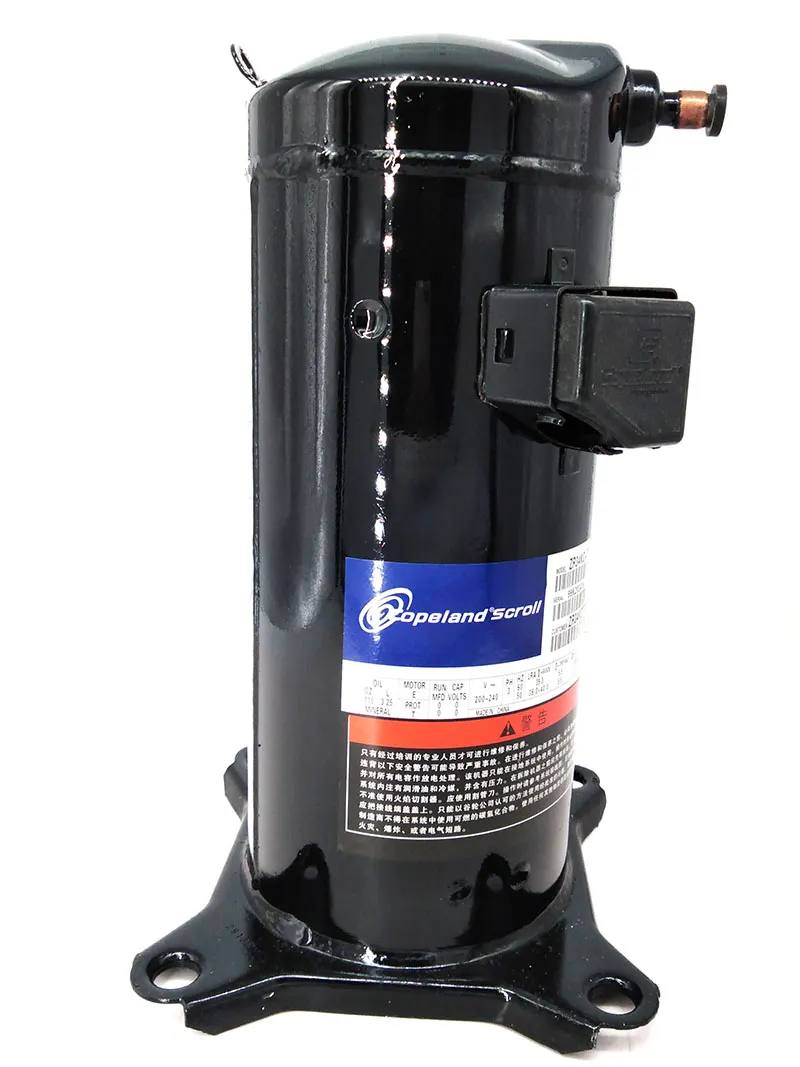
A clear photograph of the nameplate is often the fastest way to identify a compressor. The image should show the entire label, including small suffixes and electrical markings. Also record the equipment model and the application in which the compressor operates.
Use this checklist when sending information to a distributor or replacement supplier:
- Copy the full compressor model number exactly, including punctuation and suffixes.
- Record the brand and compressor type if visible.
- Photograph the complete nameplate and terminal cover markings.
- Note the refrigerant listed on the compressor or system label.
- Record voltage, frequency, phase, and current information.
- Measure or confirm suction and discharge connection sizes when relevant.
- Describe the equipment: refrigerator, display case, cold room, chiller, heat pump, or air conditioner.
- State the operating problem and whether the replacement is for a failed compressor or a system redesign.
- Include the system’s electrical supply and the country of installation.
- Request confirmation of the replacement model, accessories, and application range.
A nameplate photo is particularly valuable when the printed model number is partly worn. It can also reveal information that a typed reference omits, such as refrigerant, certification markings, voltage range, or production-specific suffixes.
Common Mistakes When Decoding Compressor Codes
Choosing by horsepower alone
Horsepower is not a sufficient replacement criterion. It does not fully describe cooling capacity, displacement, efficiency, starting performance, or operating range. Select against the required duty and published performance data.
Ignoring the suffix
The base model may represent a family, while the suffix identifies a meaningful electrical or application variant. Omitting the suffix creates a high risk of receiving a compressor that looks similar but cannot be installed safely or operated correctly.
Assuming every brand uses the same code logic
A number that indicates size in one brand may indicate a series or revision in another. Brand-neutral identification should begin with the complete model and nameplate, not with assumptions about character positions.
Treating physical fit as technical compatibility
Mounting points, shell diameter, and connection locations matter, but they are only part of the check. Electrical ratings, refrigerant, oil, capacity, operating envelope, and control components must also match.
Using an old model number without checking availability
Manufacturers may replace, supersede, or regionalize product references. An older compressor may have an approved successor, but the successor should be verified for performance, connections, electrical requirements, and accessories before shipment or installation.
How Buyers Should Confirm a Replacement
The most reliable replacement process combines three levels of verification:
1. Identity verification
Confirm the manufacturer, complete model number, serial number where available, compressor type, and nameplate data.
2. Technical verification
Compare refrigerant, oil, capacity or displacement, operating envelope, voltage, frequency, phase, connections, mounting, and starting or control requirements.
3. Application verification
Check the actual system duty, including evaporating temperature, condensing temperature, ambient conditions, load profile, defrost method, and control strategy.
A datasheet or manufacturer selection tool should provide the final confirmation. When documentation is incomplete, send the nameplate photograph and system details to a qualified distributor or technical representative. This is more dependable than decoding an unfamiliar letter sequence in isolation.
For distributors, retaining the original nameplate photo with the quotation or order record reduces identification errors on repeat purchases. Repair companies can use the same practice in service reports. Installers should confirm the replacement before removing the original compressor whenever the system design allows it.
Key Takeaway
Compressor model numbers can reveal brand, series, size class, electrical configuration, and refrigerant information, but their meaning is manufacturer- and product-family-specific. Copeland, Bitzer, Danfoss, Tecumseh, Embraco, Panasonic, GMCC, and other brands all require code interpretation within their own documentation.
Use the full model number and nameplate as the starting point. Then verify capacity, refrigerant, oil, voltage, frequency, application range, connections, and controls against the exact datasheet. That process gives overseas buyers, distributors, technicians, and installers a more reliable basis for selecting a compressor replacement.
FAQ
What does a compressor model number usually tell you?
A compressor model number may identify the brand, product family, size or displacement class, motor configuration, voltage, frequency, refrigerant version, and application type. The exact meaning depends on the manufacturer and compressor series.
Can compressor model numbers be decoded the same way for every brand?
No. Copeland, Bitzer, Danfoss, Tecumseh, Embraco, Panasonic, GMCC, and other manufacturers use different coding systems. A letter or number can have different meanings across brands or even across product families from the same brand.
Is a compressor with the same horsepower a suitable replacement?
Not necessarily. Horsepower alone does not confirm cooling capacity, refrigerant compatibility, operating range, electrical requirements, starting performance, or control compatibility. The complete model, nameplate, application duty, and datasheet should be checked.
What information should I send when requesting a replacement compressor?
Send the full model number, a clear nameplate photograph, brand, refrigerant, voltage, frequency, phase, equipment type, and relevant system details. Connection sizes and mounting information are also useful where physical replacement compatibility matters.
Buyer Next Step
Move from research to sourcing with a category shortlist, relevant product examples, and a quote request channel.