How to Read a Compressor Nameplate Before Ordering a Replacement
Learn what each compressor nameplate item means, from model number and voltage to refrigerant, LRA/RLA, oil type, frequency, and production code.
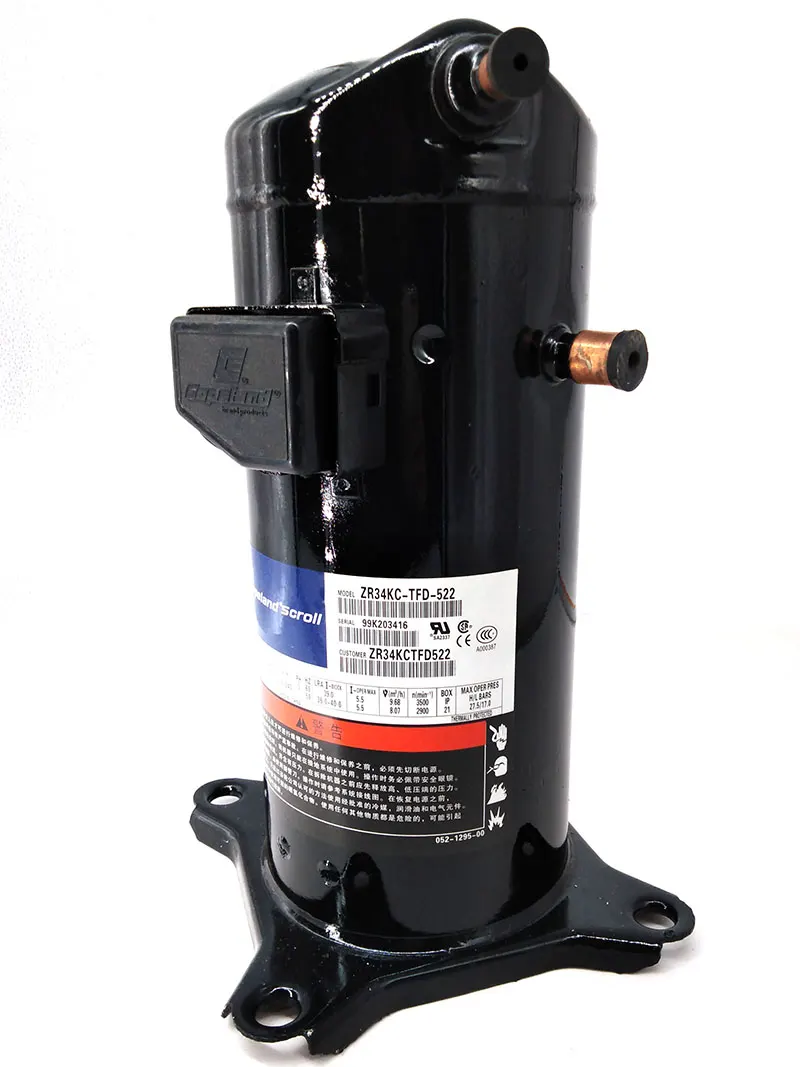
A compressor nameplate is the most important starting point when ordering a replacement compressor. A photo of the old unit may show the brand and general shape, but the nameplate confirms the electrical rating, refrigerant compatibility, model series, motor data, oil requirement, and production details that separate a correct replacement from an expensive wrong order.
For overseas distributors, service companies, cold-room installers, and HVAC spare parts buyers, the problem is often practical: the installed compressor is dirty, the label is partly scratched, or the customer sends only one unclear photo from site. Reading the available nameplate information in the right order helps reduce quotation delays, avoid incompatible voltage or refrigerant selections, and improve the quality of RFQs sent to suppliers.
This guide explains the typical compressor nameplate meaning item by item, including model number, voltage, phase, refrigerant, LRA, RLA, capacity, oil type, frequency, and manufacturing code. Nameplate layouts vary by brand and compressor type, but the buying logic is consistent: identify the exact unit, verify the operating conditions, and confirm the replacement against the application before ordering.
Why the Compressor Nameplate Matters for Replacement Orders
A refrigeration compressor nameplate is not just a label. It is the technical identity card of the compressor. It connects the physical unit in the field to catalog data, electrical requirements, refrigerant system design, and spare parts compatibility.
When ordering a replacement, the nameplate helps answer four critical questions:
- What exact compressor model is installed?
- What power supply does it require?
- What refrigerant and oil system is it designed for?
- Can the proposed replacement match the application safely and reliably?
Wrong compressor orders usually come from missing or misread details. A buyer may identify the brand correctly but overlook the voltage. A technician may match the cooling capacity but miss the refrigerant. A distributor may quote a similar model number without checking phase or frequency. These small gaps can lead to units that cannot be wired, cannot run correctly, or should not be installed in the system.
For international compressor procurement, the risk is higher because power standards and product versions differ by market. A compressor marked 220V 60Hz may not be the same as a 220-240V 50Hz model. A three-phase 380V compressor cannot be substituted with a single-phase model without system and electrical changes. A compressor designed for one refrigerant may not be suitable for another unless the manufacturer explicitly supports it.
The nameplate is also useful when the full model number is no longer readable. Even partial data such as voltage, phase, refrigerant, displacement, horsepower, LRA, RLA, and production code can help a supplier narrow down equivalent options.
Key Items on a Compressor Nameplate and What They Mean
Most compressor nameplates include a mix of identification, electrical, refrigerant, and manufacturing information. The order and wording differ by manufacturer, but the following items are common across air-conditioning, refrigerator, and cold-room compressors.
Model Number
The model number is usually the first item buyers look for. It may be printed as "Model," "Type," "Model No.," "Code," or simply a long alphanumeric string.
A compressor model number can indicate several characteristics, depending on the brand:
- Compressor series or platform
- Cooling capacity range
- Refrigerant version
- Motor type
- Voltage and frequency variant
- Application range, such as low, medium, or high temperature
- Connection or mounting configuration
The exact compressor model number meaning is brand-specific. One manufacturer may encode voltage in the final letters, while another may use a separate electrical code. For this reason, buyers should avoid interpreting model numbers only by appearance. Two models with nearly identical codes can have different voltage, refrigerant, or application ratings.
When sending an RFQ, provide the full model number exactly as shown, including hyphens, slashes, spaces, suffixes, and revision letters. A missing suffix can change the quotation.
Serial Number and Manufacturing Code
The serial number or manufacturing code identifies the individual compressor or production batch. It may be shown as "Serial No.," "S/N," "MFG No.," "Date Code," or "Production Code."
This information is useful when:
- The model number is partly damaged
- The compressor has multiple versions under the same model family
- A supplier needs to verify the production period or configuration
- Warranty or traceability questions are involved
Manufacturing codes are not always easy to decode without brand documentation. Some include date information, plant codes, batch codes, or internal revision data. Buyers do not need to decode the code themselves in most cases, but they should photograph it clearly and include it with the inquiry.
Voltage Rating
Voltage is one of the most important nameplate items. It may appear as 115V, 220V, 230V, 220-240V, 380V, 400V, 440V, 460V, or a voltage range.
For compressor ordering, voltage must match the site power supply and the compressor control system. A voltage mismatch can prevent starting, overheat the motor, damage electrical components, or create unsafe operating conditions.
Common nameplate formats include:
- 220V 50Hz
- 220-240V 50Hz
- 208-230V 60Hz
- 380-415V 50Hz
- 460V 60Hz
A range such as 380-415V does not automatically mean the unit is suitable for every voltage outside that range. Check the stated voltage and frequency together, not separately.
Phase
Phase is usually marked as 1PH, 1~, single phase, 3PH, 3~, or three phase. This tells you the motor power supply type.
Single-phase compressors are common in smaller air-conditioning and refrigeration applications. Three-phase compressors are common in larger commercial refrigeration, cold rooms, and industrial HVAC systems.
Phase must be confirmed before ordering because the electrical system, contactors, overloads, capacitors, and protection devices differ. A single-phase compressor usually requires start and run components, while a three-phase compressor depends on correct phase supply and protection. Replacing one with the other is not a simple like-for-like change.
Frequency: 50Hz and 60Hz
Frequency is marked as Hz and is normally 50Hz, 60Hz, or sometimes both if the compressor is approved for dual-frequency operation. It is closely linked to voltage, motor speed, cooling capacity, current, and operating envelope.
Do not treat frequency as a minor detail. A compressor rated for 60Hz may have different performance and current characteristics than a 50Hz version. In some regions, both voltage and frequency combinations vary widely, especially for imported equipment.
For buyers searching phrases such as compressor voltage 220V 380V 50Hz 60Hz, the important point is this: voltage, phase, and frequency must be verified as one electrical package. A quotation request should never list only "220V" or only "380V" without phase and Hz.
Refrigerant
The refrigerant is often marked as R134a, R404A, R407C, R410A, R507, R22, R290, R32, R448A, R449A, or another refrigerant code, depending on the compressor and application.
The compressor refrigerant rating matters because refrigerants operate at different pressures and require compatible motor, valve, lubricant, and system designs. A compressor designed for one refrigerant is not automatically suitable for another. Some compressor models may support multiple refrigerants, but this must be confirmed through manufacturer data or supplier verification.
For replacement orders, the refrigerant on the nameplate should be compared with the refrigerant actually used in the system. Field systems may have been retrofitted, especially older refrigeration equipment. If the nameplate says one refrigerant but the service tag or system label shows another, the buyer should flag this before placing an order.
LRA: Locked Rotor Amps
LRA stands for Locked Rotor Amps. It is the current drawn when the compressor motor is energized but the rotor is not turning. This value is especially important for starting components, contactors, breakers, generator sizing, and electrical protection.
A high LRA does not mean the compressor uses that current during normal operation. It indicates starting demand. For repair companies and cold-room contractors, LRA helps confirm that the electrical panel and protective devices are suitable for the replacement compressor.
When comparing equivalent compressors, LRA can differ between models even when capacity appears similar. A large difference should be reviewed carefully, especially when the site has sensitive power conditions or limited starting capacity.
RLA, FLA, MCC, and Running Current
RLA usually stands for Rated Load Amps or Running Load Amps, depending on the manufacturer. FLA means Full Load Amps. Some compressors may also list MCC, meaning Maximum Continuous Current.
These values help technicians and buyers understand expected electrical load and protection requirements. They are not always interchangeable across brands, so they should be used carefully. For replacement selection, running current should be checked with voltage, phase, refrigerant, and operating conditions.
If the old compressor failed due to overheating, nuisance trips, or abnormal current draw, do not select a replacement only by matching RLA. The system condition, condenser performance, refrigerant charge, airflow, oil return, and controls should also be inspected.
Capacity, Horsepower, or Displacement
Some nameplates list capacity directly. Others use horsepower, displacement, BTU/h, watts, or a model code that corresponds to capacity in a catalog.
Capacity information can help identify a replacement, but it should not be used alone. Compressor capacity depends on evaporating temperature, condensing temperature, refrigerant, frequency, and application range. A compressor described as 1 HP or a certain BTU/h value may not match another compressor with the same simple rating under different conditions.
For cold-room compressors, always consider the application temperature:
- Low temperature for freezers and frozen storage
- Medium temperature for chillers and cold rooms above freezing
- High temperature or air-conditioning applications
A compressor with similar nominal capacity may be unsuitable if its application envelope does not match the system.
Oil Type and Oil Charge
The oil type may be listed on the nameplate or nearby compressor label. Common references include mineral oil, alkylbenzene oil, POE oil, or PAG oil, depending on compressor design and refrigerant. Some nameplates also list oil charge quantity.
Oil compatibility is closely related to refrigerant and system design. Using the wrong oil type can affect lubrication and oil return. During replacement, technicians should confirm whether the new compressor is supplied with oil, what oil type it contains, and whether the system requires flushing or special handling.
For buyers, oil information is especially useful when replacing compressors in refrigeration systems that have been retrofitted from older refrigerants to newer alternatives. If there is any uncertainty, ask the supplier to verify the oil requirement before shipment.
Protection and Approval Marks
Nameplates may include internal overload protection, thermal protection, IP rating, approval marks, or wiring references. These details are not always central to selecting the model, but they matter for installation and compliance.
Examples include:
- Internal motor protector indication
- External overload requirement
- Wiring diagram reference
- Terminal identification
- Safety approval marks
- Enclosure or protection class information
Installers should follow the compressor wiring diagram and protection requirements rather than relying only on the old installation, especially if the previous compressor failed electrically.
How to Check a Compressor Nameplate Before Sending an RFQ
A good compressor ordering guide starts with clean information. Before contacting a supplier, capture the nameplate and system details in a way that allows proper verification.
Take the Right Photos
Send more than one photo. A single close-up is often not enough.
Useful photos include:
- Clear close-up of the compressor nameplate
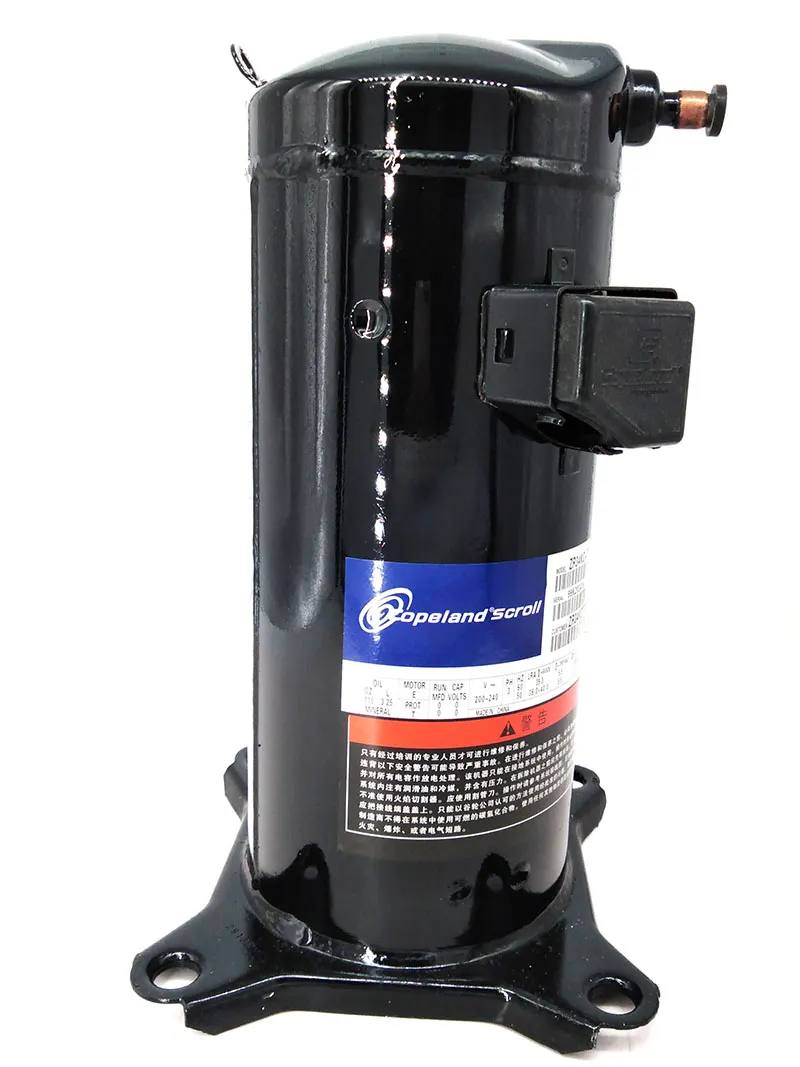
- Wider photo showing the complete compressor body
- Photo of terminal box or electrical cover label
- Photo of the system nameplate, if available
- Photo of the connected pipework and mounting style
- Photo of the failed compressor model label from another angle if scratched
Make sure the nameplate photo is readable when zoomed in. Avoid flash glare, shadows, and angled images that distort characters. If the label is dirty, wipe it gently before taking photos.
Copy the Nameplate Data in Text
Photos are helpful, but typed data reduces errors. Include the following information in the RFQ message:
- Brand
- Full model number
- Serial number or manufacturing code
- Voltage
- Phase
- Frequency
- Refrigerant
- LRA and RLA or FLA
- Capacity, horsepower, or displacement if shown
- Oil type and oil charge if shown
- Application: air-conditioning, refrigerator, freezer, chiller, or cold room
- Country or power standard at the installation site
Typed data is especially important when model characters are easy to confuse, such as 0 and O, 1 and I, 5 and S, or B and 8.
Confirm the System Application
The compressor nameplate tells you what the compressor is, but the system application tells you what the replacement must do. A supplier may need additional details to confirm the correct compressor or alternative model.
For refrigeration and HVAC spare parts buying, include:
- Evaporating temperature or application temperature range, if known
- Condensing unit or equipment model, if available
- Refrigerant currently charged in the system
- Capillary tube, expansion valve, or electronic expansion valve system
- Indoor and outdoor unit combination for split AC systems
- Cold-room size and target temperature for engineering projects
- Whether the compressor is for urgent repair stock or project installation
The more complete the application information, the easier it is to avoid a model that fits physically but does not match the duty.
Common Nameplate Reading Mistakes That Cause Wrong Orders
Compressor replacement errors are often preventable. The same mistakes appear across AC compressor nameplate inquiries, refrigerator compressor replacements, and commercial refrigeration spare parts orders.
Mistaking Similar Model Numbers
Compressor model numbers can be long and visually similar. A final letter or number may represent voltage, refrigerant, motor type, or design revision. Always quote the full code, not a shortened version from memory.
If part of the model number is missing, do not guess. Send a photo and all remaining electrical and refrigerant data so the supplier can cross-check.
Ignoring Voltage, Phase, or Frequency
A compressor with the correct model family but wrong electrical rating is still the wrong compressor. Always confirm voltage, phase, and Hz together. This is especially important for export markets where 220V, 230V, 380V, 400V, 440V, 50Hz, and 60Hz versions may all appear in different equipment.
Matching Only by Horsepower
Horsepower is a rough guide, not a complete selection method. Two compressors described as the same horsepower may differ in refrigerant, displacement, application range, efficiency level, motor type, and electrical data.
For cold rooms and refrigeration service work, match by verified model data and operating conditions, not by HP alone.
Overlooking Refrigerant and Oil Compatibility
Refrigerant and oil are linked. A compressor replacement must be suitable for the system refrigerant and lubricant requirements. If a system has been converted to another refrigerant, the nameplate on the old compressor may not tell the full story. Confirm the actual system refrigerant before ordering.
Assuming Physical Fit Means Technical Fit
Mounting feet, shell size, suction and discharge positions, and pipe diameter are important, but they do not prove compatibility. A compressor can look similar while having different motor data, capacity, refrigerant approval, or oil charge.
Physical dimensions should be checked after the technical match is confirmed, not used as the only selection basis.
Practical Checklist for Buyers, Distributors, and Service Teams
Before placing a compressor replacement order, use the nameplate as a verification checklist. This reduces back-and-forth and improves the chance of receiving a correct quotation.
Minimum Data Needed for a Reliable Quote
For most compressor RFQs, provide at least:
- Full compressor model number
- Clear nameplate photo
- Voltage, phase, and frequency
- Refrigerant
- Application type and temperature level
- Quantity required
- Destination country or market
For higher-value or urgent orders, add LRA/RLA, serial number, oil type, dimensions, connection positions, and equipment model.
When an Exact Replacement Is Not Available
Sometimes the original compressor model is discontinued, out of stock, or difficult to source. In that case, an alternative may be possible, but it should be checked carefully.
A responsible alternative selection should consider:
- Cooling capacity under comparable conditions
- Refrigerant and oil compatibility
- Voltage, phase, and frequency
- Application envelope
- Starting and running current
- Motor protection requirements
- Pipe connection and mounting differences
- Overall dimensions and service access
Distributors and installers should avoid presenting an alternative as a direct replacement until the key technical points are confirmed.
How to Write a Better Compressor RFQ
A strong RFQ does not need to be long. It needs to be complete. A practical format is:
"Please quote a replacement compressor for model [full model number]. Nameplate shows [voltage], [phase], [Hz], refrigerant [refrigerant], LRA [value], RLA [value]. Application is [cold room/freezer/AC/refrigerator] in [country]. Photos attached. Please confirm exact model or suitable alternative."
This style gives suppliers enough information to check availability, equivalent options, and possible ordering risks. It also helps distributors respond faster to their own customers.
What to Do When the Nameplate Is Damaged or Missing
A missing nameplate makes compressor replacement more difficult, but not impossible. The goal is to collect enough supporting information to identify the compressor family and application.
Useful backup information includes:
- Equipment brand and model number
- Condensing unit nameplate
- Original purchase documents or service records
- Compressor body shape and mounting pattern
- Suction and discharge pipe size and position
- Electrical supply at site
- Refrigerant label on the system
- Photos of the terminal box and wiring
- Approximate capacity or room size
- Application temperature
When the nameplate is unreadable, do not rely on visual similarity alone. A supplier may be able to narrow the options, but the final selection should still be checked against the system requirements.
For service companies, it is good practice to photograph compressor nameplates during routine maintenance. Those images become valuable records when a breakdown occurs later and the label is no longer readable.
Final Buying Advice
Understanding compressor nameplate meaning is one of the simplest ways to prevent wrong replacement orders. The model number identifies the compressor family, but the electrical data, refrigerant, frequency, current ratings, oil type, and manufacturing code help confirm whether the unit is truly suitable for the system.
For distributors, clear nameplate data improves quotation speed and reduces disputes. For repair companies, it supports faster site diagnosis and safer replacement decisions. For cold-room contractors and installers, it helps match compressor supply with project requirements before equipment reaches the job site.
Before ordering, slow down long enough to read the label carefully, photograph it clearly, and compare the data with the actual system. A correct compressor replacement starts with the nameplate.
FAQ
What is the most important information on a compressor nameplate for replacement ordering?
The full model number, voltage, phase, frequency, refrigerant, and application type are the most important items. LRA, RLA or FLA, oil type, serial number, and manufacturing code are also useful for verifying the correct replacement or equivalent model.
Can I order a compressor replacement using only the model number?
The model number is important, but it is safer to confirm the electrical rating, refrigerant, frequency, and application as well. Some compressor models have similar codes with different voltage, refrigerant, or motor versions.
What do LRA and RLA mean on a compressor nameplate?
LRA means Locked Rotor Amps, which indicates the current drawn when the motor is energized but not rotating. RLA usually refers to rated or running load current. These values help technicians check electrical protection, starting components, and power supply suitability.
Why must voltage, phase, and frequency be checked together?
A compressor is designed for a specific electrical supply combination, such as 220-240V 50Hz single phase or 380-415V 50Hz three phase. Matching only the voltage without checking phase and Hz can lead to a wrong order or installation failure.
What should I send to a supplier if the compressor nameplate is damaged?
Send clear photos of the compressor body, any readable part of the label, the equipment nameplate, terminal box, pipe connections, and system refrigerant label. Also provide the site voltage, phase, frequency, application type, and target temperature if available.
Buyer Next Step
Move from research to sourcing with a category shortlist, relevant product examples, and a quote request channel.