How to Read a Refrigeration Compressor Nameplate Before Ordering a Replacement
Learn how to identify compressor model, voltage, refrigerant, oil, LRA/RLA, and other nameplate data before requesting a replacement quote.
Ordering a replacement compressor should not start with guesswork. The fastest and safest way to identify the correct unit is to read the compressor nameplate carefully and send clear photos of the information to your supplier.
For refrigeration spare parts distributors, service companies, and cold-room installers, compressor nameplate identification reduces quotation delays, avoids mismatched parts, and helps confirm whether a direct replacement or an equivalent alternative is available. A few minutes spent checking model number, electrical data, refrigerant, oil type, and application details can prevent costly returns and installation problems.
This guide explains what to look for on a refrigeration compressor nameplate, what each item usually means, and what photos and site details to provide when requesting a replacement.
Why Compressor Nameplate Identification Matters
A refrigeration compressor is not identified by appearance alone. Two compressors can look similar but have different capacity, motor voltage, refrigerant compatibility, oil charge, starting characteristics, or mounting design. In some cases, the same compressor body may be produced in different variants for different regions or applications.
Accurate compressor identification helps confirm:
- The original model and possible replacement options
- Power supply requirements such as voltage, phase, and frequency
- Suitable refrigerant and oil type
- Cooling capacity or displacement range
- Electrical protection and starting component requirements
- Application suitability for medium temperature, low temperature, air conditioning, or heat pump duty
- Whether the replacement is a direct match or requires engineering checks
For buyers outside China sourcing from multi-brand compressor distributors, the nameplate is often the starting point for cross-reference. It allows the supplier to compare the original unit with available domestic and international compressor brands without relying only on a partial model or machine description.
Where to Find the Compressor Nameplate
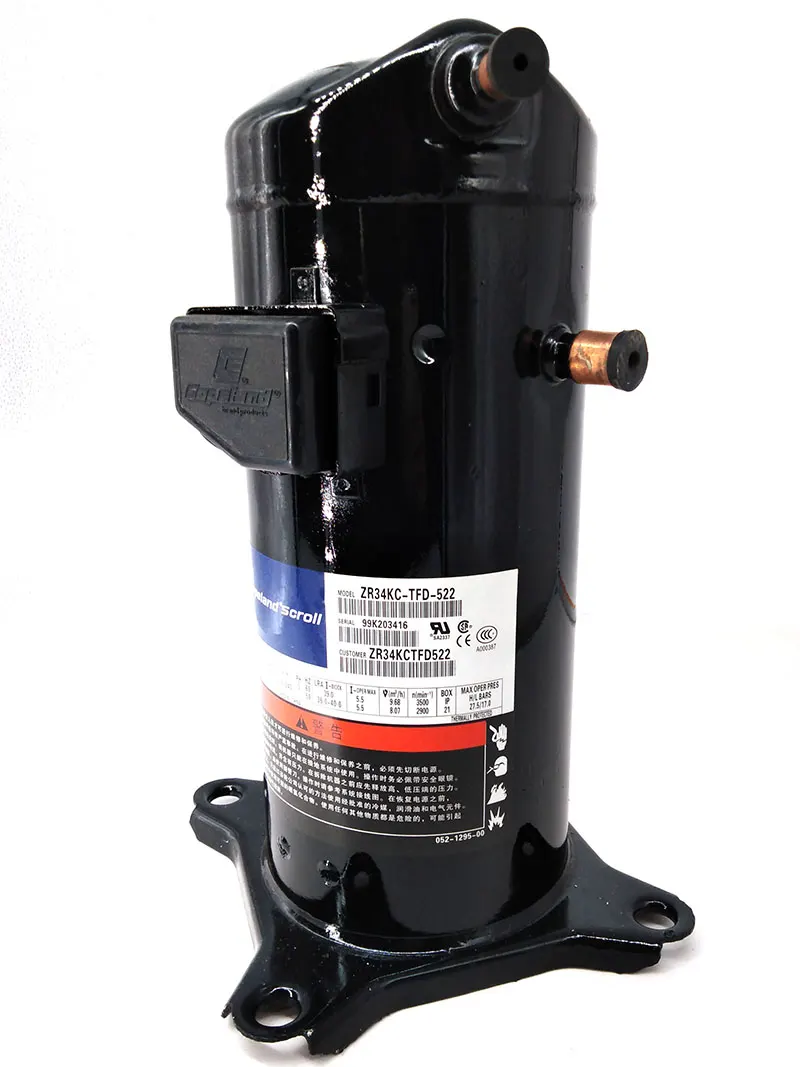
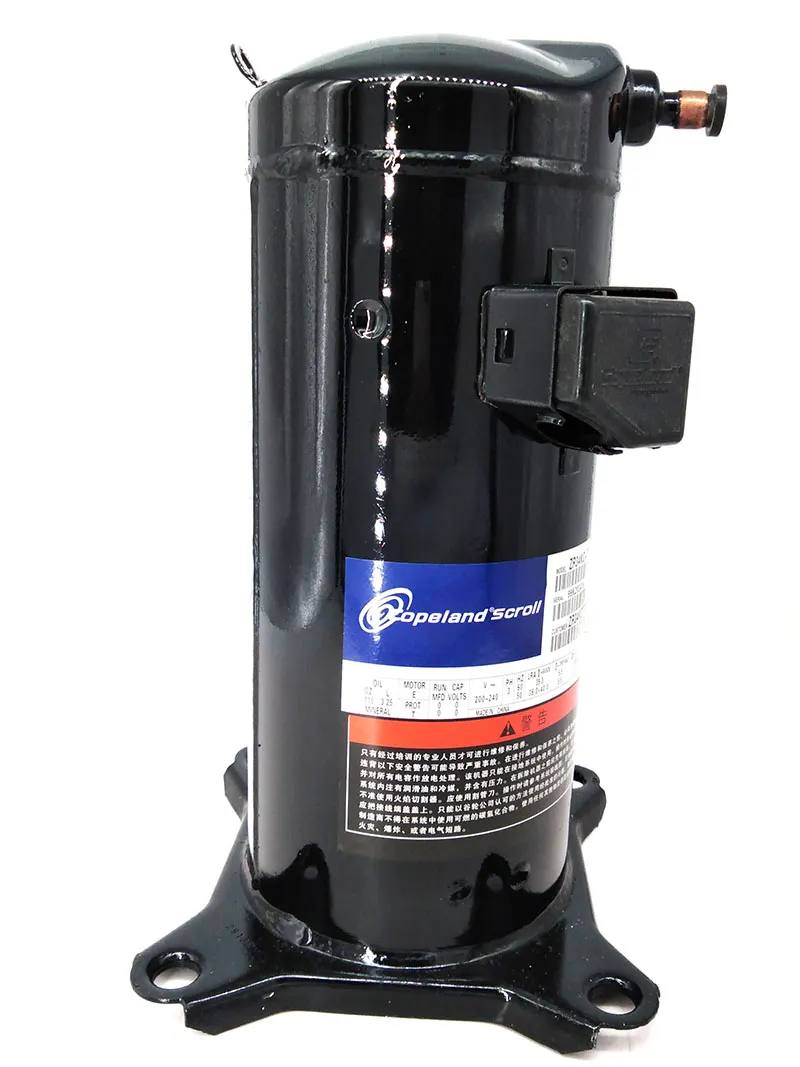
The nameplate is usually fixed directly to the compressor shell or terminal box area. On hermetic and semi-hermetic compressors, it may be a metal plate, printed label, laser marking, or stamped data area. On scroll compressors, it is often located on the upper or side body. On reciprocating compressors, it may be attached to the crankcase, motor cover, or terminal cover.
Before photographing or reading the nameplate, make sure the system is isolated safely and follow site electrical and refrigeration safety procedures. Never remove covers or clean around electrical terminals unless the equipment has been properly powered down by qualified personnel.
Common reasons the nameplate is difficult to read include:
- Oil, dust, rust, or paint covering the label
- Low lighting inside a condensing unit or machine room
- A label facing the wall or base frame
- Scratched or faded printing
- Replacement compressors with old service labels attached nearby
If the compressor nameplate is unreadable, do not rely on memory. Take photos of the compressor, condensing unit, electrical panel, refrigerant label, and any service records. These can help a supplier or technician narrow down possible models, though a confirmed nameplate is always better.
Key Nameplate Information to Check Before Ordering
A typical refrigeration compressor nameplate contains several categories of information. The exact layout depends on the brand and compressor type, but the following items are the most important for ordering a replacement.
Model Number
The model number is the most important identifier. It usually defines the compressor family, size, motor version, refrigerant application, and sometimes connection or mounting details.
When requesting a replacement, provide the full model exactly as shown, including letters, numbers, dashes, slashes, spaces, and suffixes. A missing suffix can change the electrical configuration or application.
For example, buyers often send only the visible main model and ignore the last characters. Those final characters may indicate motor type, voltage code, bill of material, refrigerant suitability, or regional version. If a supplier asks for the complete model, it is because the small suffix can matter.
Practical tip: send a close-up photo of the model area rather than typing it manually. Typing errors between characters such as 0 and O, 1 and I, or 5 and S are common.
Serial Number
The compressor serial number is the unique production identifier. It may help confirm manufacturing batch, production code, warranty-related information, or design generation depending on the brand.
For replacement sourcing, the serial number is useful when:
- The model number is partially unclear
- There are multiple versions of the same model
- The supplier needs to check production or compatibility details
- The compressor has been replaced before and system records are uncertain
Not every distributor can decode every brand’s serial number, but it is still valuable to include. A clear photo of both model and serial number is better than sending the model alone.
Voltage, Phase, and Frequency
Electrical data is critical. The nameplate should list voltage, phase, and frequency, often shown as combinations such as single-phase or three-phase power and 50 Hz or 60 Hz operation.
Before ordering, confirm that the replacement compressor matches the site power supply. A compressor with the wrong voltage or frequency may fail to start, overheat, trip protection devices, or be unsafe to install.
Key items to check include:
- Rated voltage or voltage range
- Single-phase or three-phase motor
- Frequency, usually 50 Hz, 60 Hz, or dual-rated where applicable
- Wiring configuration if shown on the compressor or terminal cover
For international buyers, frequency is especially important. A model common in one market may not be suitable for another market if the available power supply differs. Even when the physical compressor appears similar, the motor version must be checked.
Refrigerant
Many compressor nameplates show approved refrigerant or refrigerant families. In other cases, the refrigerant may be confirmed through the model code, product documents, or system label.
Refrigerant compatibility matters because compressors are designed around pressure range, motor cooling, oil compatibility, and application envelope. A compressor suitable for one refrigerant should not automatically be treated as suitable for another.
When ordering, provide:
- The refrigerant shown on the compressor nameplate, if listed
- The refrigerant shown on the condensing unit or system label
- Any information about system retrofit or refrigerant conversion
If the system has been converted from one refrigerant to another, mention this clearly. The original compressor nameplate may not reflect the current operating refrigerant.
Displacement and Capacity
Some nameplates list displacement, swept volume, nominal capacity, or horsepower. These values help compare compressor size, but they should not be used alone to select a replacement.
Displacement is a physical compressor parameter, often related to the volume pumped per revolution. Cooling capacity depends on operating conditions, refrigerant, evaporating temperature, condensing temperature, superheat, subcooling, and compressor efficiency. A compressor with similar displacement may not deliver the same capacity in a specific application.
For replacement selection, model number is still the primary reference. Capacity and displacement are useful for cross-checking, especially when the original model is obsolete or unavailable.
LRA and RLA
Electrical nameplate data may include LRA and RLA.
LRA means locked rotor amps. It is the current drawn when the motor rotor is not turning at startup. This value is important for contactors, overload protection, breakers, generators, and power supply planning.
RLA usually refers to rated load amps or running load amps, depending on the manufacturer’s terminology. It is used as a reference for electrical protection and operation checks.
When replacing a compressor, LRA and RLA should be compared with the existing electrical panel and protection devices. A replacement with very different starting or running current may require further review by a qualified technician.
Do not select a compressor only because the LRA or RLA is similar. Electrical values support identification, but they do not replace model, refrigerant, voltage, frequency, and application checks.
Oil Type and Oil Charge
Compressor oil information may appear on the nameplate or in technical documents. Common oil categories in refrigeration systems include mineral oil, alkylbenzene oil, and POE oil, depending on refrigerant and compressor design.
Oil compatibility is essential. The wrong oil can affect lubrication, oil return, chemical compatibility, and compressor life. When ordering a replacement, identify:
- Oil type shown on the compressor or system records
- Oil charge if listed
- Refrigerant used in the system
- Whether the system has been retrofitted
For service teams, oil information also matters when replacing a compressor after a burnout or major failure. The replacement decision may need to be combined with system cleaning, filter drier replacement, and oil contamination checks according to normal service practice.
Manufacturing Codes and Suffixes
Many compressor brands use manufacturing codes, bill of material numbers, version codes, or date codes. These may be printed separately from the main model and serial number.
These codes can indicate:
- Production version or design revision
- Motor variant
- Connection style
- Accessory configuration
- Regional specification
- Manufacturing batch or date information
Do not ignore small secondary labels. When a direct replacement is required, these codes can help confirm whether the quoted compressor is truly equivalent or only similar.
How to Photograph a Compressor Nameplate for a Faster Quote
A clear photo set can reduce several rounds of emails. For distributors and contractors buying internationally, good photos are often the difference between a same-day model check and a delayed quotation.
Send These Photos When Requesting a Replacement
For the fastest response, send the following:
- A close-up photo of the compressor nameplate
- A wider photo showing the complete compressor body
- A photo of the compressor terminal box or electrical connection area
- A photo of suction and discharge connections
- A photo of the condensing unit or equipment nameplate, if available
- A photo of the refrigerant label on the system
- A photo of the control panel or electrical data label, if relevant
The close-up nameplate photo should be sharp enough to read every character. Avoid flash glare on metal plates. If the label is curved or reflective, take several photos from different angles.
Include These Details in the Message
In addition to photos, include a short written summary:
- Compressor brand and full model number, if readable
- Serial number, if readable
- Refrigerant currently used
- Power supply at the site
- Application: cold room, freezer, display case, chiller, air conditioning, or heat pump
- Approximate evaporating temperature or storage temperature, if known
- Quantity required
- Destination country or region
- Whether a direct replacement is required or an equivalent alternative is acceptable
For cold-room and refrigeration engineering projects, application details are important. A compressor for a low-temperature freezer is not automatically interchangeable with a medium-temperature cold room compressor, even if some electrical data appears close.
What If the Nameplate Is Missing or Unreadable?
If the nameplate cannot be read, provide as much surrounding evidence as possible. Useful information includes:
- Equipment brand and model
- Condensing unit model
- Refrigerant type
- Compressor dimensions
- Mounting foot spacing
- Suction and discharge pipe sizes
- Electrical supply and contactor rating
- Photos of the failed compressor from all sides
- Any old invoice, service report, or parts list
A supplier may be able to suggest possible matches, but the risk is higher when the original nameplate is missing. In that situation, the buyer should expect additional technical confirmation before purchasing.
Common Mistakes When Ordering a Replacement Compressor
Many compressor replacement problems begin before the part is shipped. The most common mistakes are avoidable with proper nameplate identification.
Sending Only the Equipment Model
The cabinet, condensing unit, or refrigeration machine model may not be enough to identify the compressor. Manufacturers can change compressor suppliers or offer different compressor options under similar equipment models. Always send the compressor nameplate if possible.
Ignoring the Voltage Code
A correct compressor series with the wrong motor voltage is still the wrong compressor. Confirm voltage, phase, and frequency before ordering, especially for export markets and cross-border sourcing.
Assuming Refrigerant Compatibility
Do not assume a compressor can run with a different refrigerant because the capacity looks similar. Refrigerant and oil compatibility must be checked before replacement.
Confusing Horsepower With Capacity
Horsepower can be a rough category, but it is not a precise replacement specification. Different compressor designs and refrigerants can produce different cooling capacities at the same nominal horsepower. Use the full model number and operating conditions for selection.
Missing the Application Range
A compressor must match the application envelope. Medium-temperature, low-temperature, air-conditioning, and heat pump applications can have different operating pressures, motor cooling requirements, and capacity characteristics. If the application is not stated, a supplier may quote a model that fits the number but not the duty.
Overlooking Starting Components and Accessories
Single-phase compressors may require specific starting components. Some compressors need particular overloads, crankcase heaters, mounting kits, discharge temperature protection, or oil management accessories. When replacing, compare not only the compressor body but also the components needed for safe operation.
Practical Checklist Before You Request a Quote
Use this checklist before sending a replacement inquiry:
- Full compressor model number photographed clearly
- Serial number photographed clearly
- Voltage, phase, and frequency confirmed
- Refrigerant confirmed from compressor and system label
- Oil type checked if shown or available in records
- LRA and RLA photographed or written down
- Application and temperature range described
- Compressor type identified: scroll, reciprocating, semi-hermetic, screw, or rotary if known
- Connection positions and pipe sizes photographed
- Equipment nameplate photographed
- Quantity and delivery destination included
- Direct replacement or acceptable equivalent specified
For distributors, this checklist can also be used as a customer intake form. Asking for the right information at the beginning reduces quotation errors and helps purchasing teams compare offers more efficiently.
What Buyers Should Expect From a Supplier
A responsible compressor supplier should not quote purely from a partial model unless the match is obvious and the application is known. For international replacement orders, the supplier may ask for extra photos or technical details because compressor model codes vary by brand and market.
When a direct replacement is no longer available, a supplier may propose an equivalent model. In that case, buyers should compare:
- Refrigerant compatibility
- Capacity at relevant operating conditions
- Voltage, phase, and frequency
- Application envelope
- Oil type
- Mounting dimensions
- Suction and discharge connections
- Electrical data and protection requirements
- Required accessories or starting components
For repair companies and installers, the final replacement decision should be checked against the actual system condition. A compressor often fails because of an underlying issue such as poor airflow, refrigerant shortage, liquid return, contamination, incorrect controls, or electrical problems. Replacing the compressor without addressing the cause of failure can lead to repeat damage.
Conclusion
Compressor nameplate identification is the simplest way to make replacement sourcing faster and more accurate. The full model number, serial number, voltage, phase, frequency, refrigerant, oil, capacity information, and electrical data all help confirm whether a compressor is a direct match or whether an equivalent alternative must be reviewed.
Before ordering, send clear nameplate photos, wider compressor photos, equipment labels, and basic application details. This gives suppliers, distributors, repair teams, and installers the information needed to quote the right compressor, avoid mismatches, and keep refrigeration systems moving with fewer delays.
FAQ
What is the most important information on a refrigeration compressor nameplate?
The full model number is usually the most important item because it identifies the compressor series, size, motor version, and application details. Voltage, phase, frequency, refrigerant, serial number, oil type, and electrical data should also be checked before ordering.
Can I order a replacement compressor using only the horsepower?
No. Horsepower is only a rough category and does not confirm capacity, refrigerant compatibility, motor voltage, application range, or mounting details. Use the full compressor model number and nameplate data for replacement selection.
Why does the supplier ask for photos instead of just the model number?
Photos reduce typing errors and help confirm suffixes, serial numbers, electrical data, refrigerant information, and manufacturing codes. A clear photo also helps identify whether the compressor has special configuration details.
What should I do if the compressor nameplate is unreadable?
Send photos of the full compressor, equipment nameplate, refrigerant label, electrical panel, pipe connections, and any service records or invoices. Also provide the application, power supply, refrigerant, and destination country. The supplier may need extra checks before confirming a replacement.
Does the replacement compressor need to have the same LRA and RLA?
LRA and RLA should be reviewed because they affect electrical protection and starting requirements, but they are not the only selection criteria. The replacement must also match refrigerant, voltage, frequency, capacity range, oil compatibility, and application conditions.
Buyer Next Step
Move from research to sourcing with a category shortlist, relevant product examples, and a quote request channel.