Copeland Compressor Cross Reference: What Overseas Buyers Should Check Before Ordering
Need a Copeland compressor replacement for export? Check model number, refrigerant, voltage, oil, application range, and mounting details before ordering.
When a cold room, display cabinet, chiller, or air-conditioning system is down, the fastest request is often a simple one: “We need the same Copeland compressor.” In export purchasing, however, a Copeland compressor cross reference is rarely a one-line answer. A model number may point to a direct replacement, an updated platform, an equivalent capacity model, or an alternative compressor that needs further technical confirmation.
For overseas buyers, the goal is not only to find a compressor that fits the nameplate. The replacement must match the application, refrigerant, voltage, oil, operating envelope, connection style, and installation conditions. If any of these details are missed, the compressor may run inefficiently, trip on protection, fail prematurely, or be rejected by the installer at the job site.
This guide explains how refrigeration distributors, service companies, repair teams, and cold-room contractors should approach a Copeland compressor replacement request before placing an export order.
What a Copeland Compressor Cross Reference Really Means
A compressor cross reference is a technical comparison between an existing model and a possible replacement. In practice, buyers use cross reference information for several different purposes:
- Replacing an obsolete or hard-to-find Copeland compressor
- Finding the current equivalent for an older model number
- Comparing a Copeland scroll compressor model number with another Copeland platform
- Sourcing a Copeland compressor alternative when the original model is not available
- Checking whether another brand can match capacity and application requirements
- Preparing a clear inquiry for a compressor distributor
A cross reference does not automatically mean “drop-in replacement.” Some compressors may be close in cooling capacity but different in voltage, refrigerant compatibility, oil type, mounting base, pipe size, protection device, or operating envelope. These differences matter, especially in commercial refrigeration and cold-room projects where the system may operate for long hours under demanding conditions.
For export orders, cross reference accuracy is even more important because returns are expensive, delivery lead times are longer, and the buyer may not have easy access to factory technical support after installation.
Start With the Complete Copeland Model Number
The model number is the most important starting point in any Copeland compressor cross reference request. A partial model number can lead to a wrong quotation, especially where similar models exist across different voltage, refrigerant, and application ranges.
Capture the full nameplate information
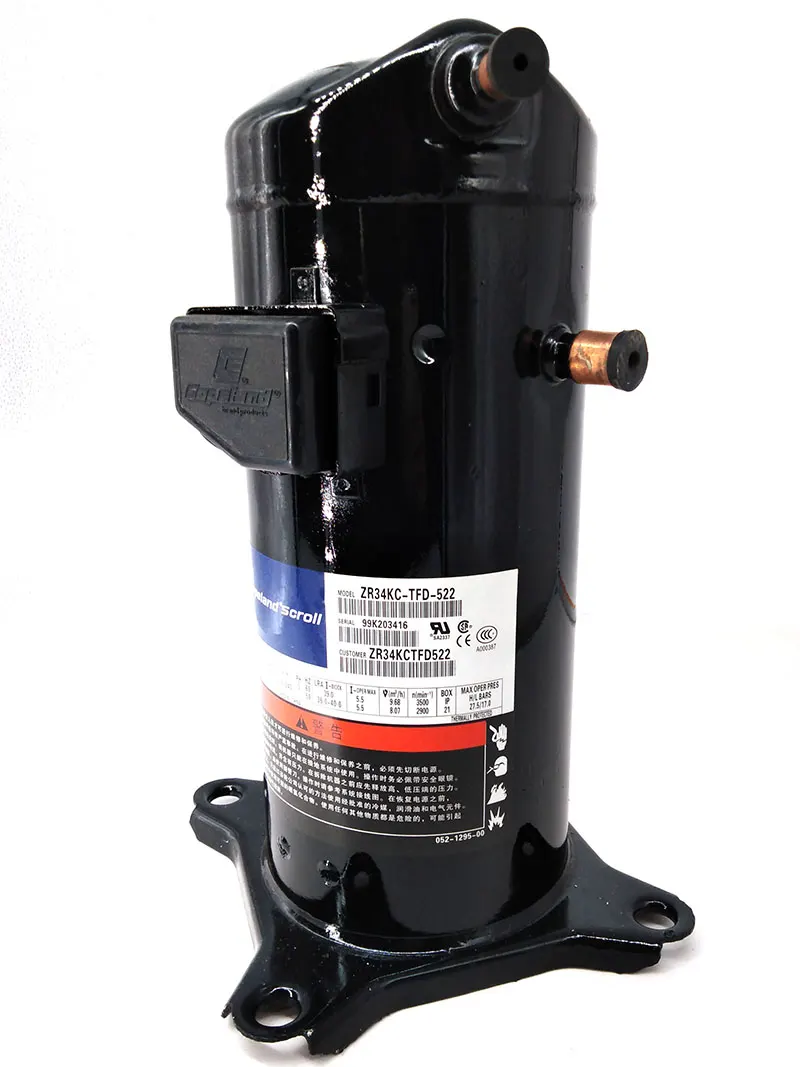
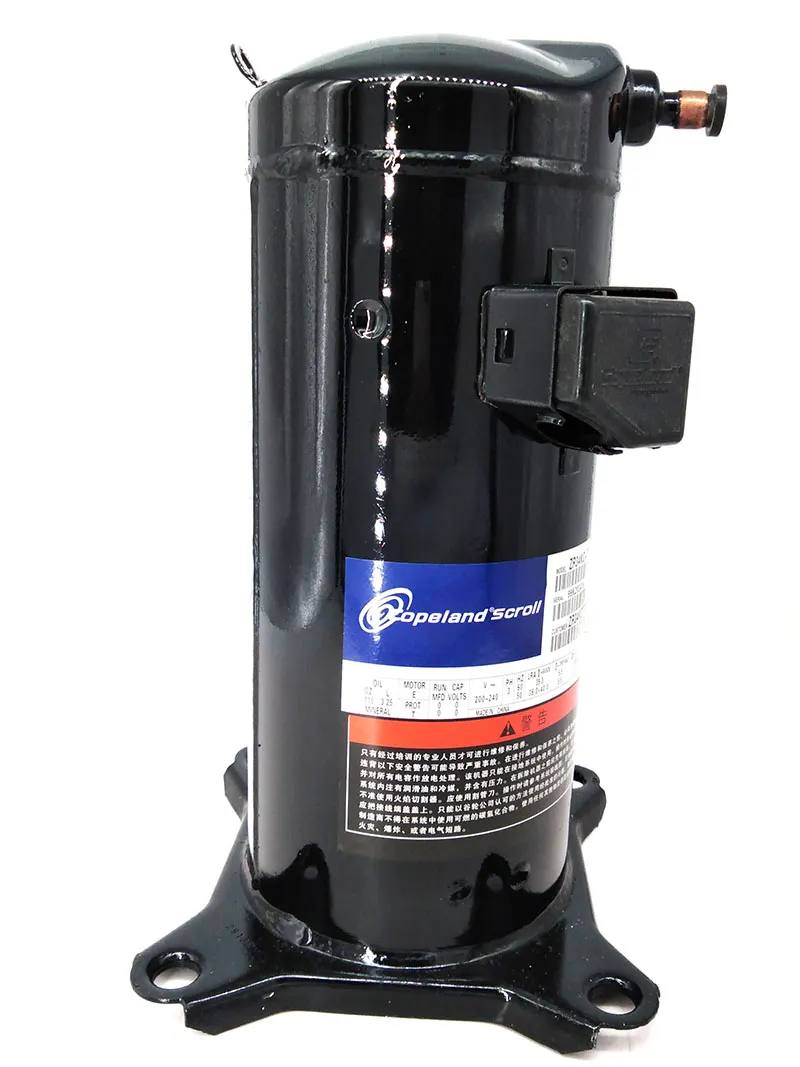
Before contacting a supplier, take a clear photo of the compressor nameplate and record the following details:
- Complete compressor model number
- Serial number, if visible
- Rated voltage and phase
- Frequency, such as 50 Hz, 60 Hz, or dual frequency
- Refrigerant used in the system
- Compressor type, such as scroll, semi-hermetic, or reciprocating
- Application, such as medium temperature, low temperature, air conditioning, heat pump, or chiller
- Oil type shown on the compressor or system record
- Any bill of material, suffix, or variation code shown on the unit
For many buyers, the most common search begins with a Copeland scroll compressor model number. Scroll models are widely used in air-conditioning, refrigeration condensing units, packaged equipment, and commercial systems. However, two scroll compressors that look similar may not be interchangeable if one is designed for air conditioning and another for refrigeration, or if their application envelopes are different.
Do not rely on capacity alone
Cooling capacity is useful, but it is not enough. Capacity changes with evaporating temperature, condensing temperature, refrigerant, and frequency. A compressor that appears close in nominal horsepower may not deliver the required capacity at the actual working conditions.
When comparing models, buyers should provide operating conditions whenever possible:
- Evaporating temperature
- Condensing temperature
- Ambient temperature around the condensing unit
- Superheat and subcooling assumptions, if available
- System application and product temperature
- Required capacity or original equipment model
For cold-room refrigeration, a “medium-temperature” and “low-temperature” distinction is critical. A compressor suitable for a chiller or display case may not be suitable for a freezer room, even if the horsepower looks similar.
Key Technical Checks Before Ordering a Replacement
A proper Copeland compressor replacement check should cover more than the model code. The following points are the practical items buyers and distributors should confirm before confirming a shipment.
Refrigerant compatibility
The replacement compressor must be compatible with the refrigerant used in the system. Common field issues occur when buyers try to replace a compressor without confirming whether the system uses an older refrigerant, an HFC refrigerant, or a newer lower-GWP alternative.
Refrigerant affects compressor displacement, oil compatibility, pressure levels, motor cooling, and application limits. A compressor selected for one refrigerant should not be assumed suitable for another unless the model documentation confirms it.
If the project involves a refrigerant conversion, the buyer should treat it as a system retrofit rather than a simple compressor replacement. Expansion devices, oil, seals, controls, pressure settings, and charge quantity may need review.
Voltage, phase, and frequency
Voltage mismatch is one of the most common causes of incorrect export compressor orders. Overseas markets use different electrical standards, and the same compressor family may have several motor options.
Always confirm:
- Voltage range
- Single-phase or three-phase supply
- 50 Hz or 60 Hz operation
- Start components, contactor, and overload requirements
- Whether the compressor will operate in a country with unstable power conditions
A compressor selected for 60 Hz operation may not deliver the same capacity at 50 Hz. Electrical accessories may also differ. For service replacements, the installer should confirm that the control panel, protection devices, cable size, and contactor are suitable for the replacement model.
Oil type and system cleanliness
Oil compatibility is essential. Different compressor generations and refrigerants may require different lubricants. Mixing oil types or installing a new compressor into a contaminated system can shorten compressor life.
Before ordering, confirm the oil type required by the replacement compressor and compare it with the existing system. For burnout replacement, the service team should also plan for proper cleaning, filter drier replacement, evacuation, and commissioning checks. A correct compressor cannot compensate for acid, moisture, sludge, or metal particles left in the system.
Application envelope
Every compressor has an allowed operating range. This includes combinations of evaporating temperature, condensing temperature, suction gas temperature, discharge temperature, and motor loading. A cross-referenced model must operate safely inside the required envelope.
This is particularly important for:
- Freezer rooms and low-temperature storage
- High-ambient outdoor condensing units
- Long pipe runs
- Systems with frequent start-stop cycles
- Heat pump or reversible operation
- Refrigeration equipment using floating head pressure control
If the replacement model is technically close but operates near the edge of its envelope, the buyer should ask for confirmation before shipping.
Mechanical fit and connection details
A compressor that matches electrically and thermodynamically may still require installation changes. For repair companies and cold-room installers, mechanical details can determine whether the job is fast or difficult.
Check the following:
- Mounting hole position and base dimensions
- Compressor height and clearance
- Suction and discharge connection size
- Brazed, rotalock, or other connection style
- Location of electrical terminal box
- Crankcase heater requirements
- Oil sight glass, service valves, and fittings where applicable
- Weight and handling requirements
For packaged units or compact condensing units, even small dimensional differences can affect installation. When the project has limited space, request drawings or dimensional confirmation before ordering.
How to Evaluate a Copeland ZB Compressor Replacement
Copeland ZB compressors are widely associated with commercial refrigeration applications, and many buyers search specifically for a Copeland ZB compressor replacement when maintaining cold rooms, display cabinets, and condensing units. The same careful cross reference process applies.
A ZB replacement request should include the full model number and suffix, not only the “ZB” family designation. The buyer should also identify whether the system is medium-temperature refrigeration, the refrigerant in use, and the power supply available at the installation site.
Important checks include:
- Matching the application range rather than only horsepower
- Confirming refrigerant and oil compatibility
- Checking whether the old model has been superseded by an updated model
- Comparing displacement and capacity at the design evaporating temperature
- Reviewing voltage and frequency for the destination country
- Confirming accessories such as crankcase heater, mounting kit, and electrical protection
If the original ZB model is unavailable, a distributor may suggest an equivalent or alternative. In that case, the buyer should ask for a technical comparison rather than accepting a model solely because the capacity appears similar. For refrigeration service companies, this reduces the risk of an installation dispute with the end user.
Original, Equivalent, or Alternative: Choosing the Right Supply Option
When buyers request a Copeland compressor cross reference, they usually fall into one of three sourcing situations: original replacement, equivalent replacement, or alternative selection. Each has different advantages and risks.
Original replacement
An original replacement is usually the preferred option when the existing compressor is still available and the system design should remain unchanged. It is the simplest choice for service work because the installer expects the same technical characteristics and similar installation requirements.
Even for original replacements, buyers should still confirm voltage, refrigerant, suffix, and accessories. A model with a similar base code but different motor version can create problems.
Equivalent or superseded model
A compressor model may be replaced by a newer equivalent due to product updates or platform changes. In this case, the replacement may be recommended for the same application, but buyers should still review differences in connection, dimensions, electrical components, and accessories.
For export orders, it is wise to ask the supplier to state whether the offered model is a direct replacement, a recommended equivalent, or a technically selected substitute. These terms should not be treated as identical.
Alternative compressor
A Copeland compressor alternative may be considered when the original model is unavailable, the project budget requires another option, or the buyer is sourcing for stock. Alternatives can come from another compressor family or another brand.
An alternative may be acceptable when the technical match is properly reviewed. The buyer should compare:
- Refrigerant and oil compatibility
- Cooling capacity at the same operating conditions
- Electrical specifications
- Operating envelope
- Connection sizes and mounting dimensions
- Protection and control requirements
- Availability of spare parts and service knowledge in the local market
Alternative selection should be handled carefully for warranty-sensitive projects, OEM equipment, or systems with strict design requirements.
Information a Compressor Distributor Needs for a Fast Quotation
A clear inquiry helps a Copeland compressor distributor or multi-brand compressor supplier respond faster and more accurately. For overseas buyers, complete information can prevent repeated messages and reduce the chance of receiving the wrong model.
A strong quotation request should include:
- A clear photo of the compressor nameplate
- Original Copeland model number and suffix
- Refrigerant in the system
- Voltage, phase, and frequency
- Application type, such as cold room, freezer, chiller, display cabinet, or air-conditioning unit
- Required quantity
- Destination country or port
- Whether the buyer wants original, equivalent, or alternative options
- Any urgent delivery requirement
- Photos of the compressor and installation space if mechanical fit is uncertain
For stock orders, distributors should also define whether they need popular fast-moving models, project-specific replacements, or a mixed compressor list. For project orders, design conditions and equipment data are more important than quantity alone.
Practical Buying Tips for Overseas Replacement Orders
International compressor purchasing involves both technical and logistics considerations. A technically correct compressor still needs to arrive in good condition, with the right accessories and documents.
Before confirming an order, buyers should check:
- Whether the compressor is new, original, equivalent, or alternative
- Whether accessories are included or quoted separately
- Packaging method for export shipment
- Model and quantity on the proforma invoice
- Lead time and shipping method
- Destination voltage and frequency requirements
- Any documentation needed for customs clearance
- Whether the installer has confirmed the technical match
For urgent repair work, buyers often focus on delivery speed. Speed matters, but compressor selection should not be rushed to the point where basic technical checks are skipped. A wrong compressor delivered quickly still delays the project.
What Buyers Should Pay Attention to Before Final Confirmation
A Copeland compressor cross reference is most reliable when it is treated as a technical verification process, not just a product search. The buyer should start with the full model number, then confirm the refrigerant, voltage, oil, application range, and installation details.
For distributors, repair companies, and cold-room contractors, the best purchasing practice is to send complete nameplate information and ask the supplier to clarify the replacement type: original, equivalent, superseded, or alternative. This simple step reduces ambiguity and helps protect both the buyer and the installer.
When the original Copeland model is available, it may be the most straightforward path. When it is not, an equivalent or alternative can still work, but only after the operating conditions and system requirements are checked. In refrigeration, the right cross reference is not just the model that can be shipped; it is the model that can operate safely and reliably in the customer’s system.
FAQ
What information is needed for a Copeland compressor cross reference?
Buyers should provide the full Copeland model number, suffix or variation code, nameplate photo, refrigerant, voltage, phase, frequency, application type, and any known operating conditions. For export orders, the destination country and required quantity are also useful.
Can I replace a Copeland compressor with the same horsepower model?
Horsepower alone is not enough for compressor replacement. The new compressor must match the refrigerant, voltage, application range, oil type, capacity at operating conditions, and mechanical connection details. Two compressors with similar horsepower may perform differently in a refrigeration system.
What should I check for a Copeland ZB compressor replacement?
For a Copeland ZB compressor replacement, confirm the complete model number, refrigerant, medium-temperature application requirements, voltage and frequency, oil compatibility, mounting dimensions, connection sizes, and accessories such as crankcase heater or electrical protection.
Is a Copeland compressor alternative the same as a direct replacement?
No. A direct replacement is intended to match the original model closely, while an alternative is a technically selected substitute. Alternatives should be checked carefully against the system’s refrigerant, capacity, operating envelope, electrical supply, and installation requirements.
Why is voltage and frequency important for overseas compressor orders?
Different countries use different power supplies, and compressor performance can change between 50 Hz and 60 Hz operation. Ordering the wrong voltage, phase, or frequency may cause starting problems, reduced capacity, protection trips, or compressor failure.
Buyer Next Step
Move from research to sourcing with a category shortlist, relevant product examples, and a quote request channel.