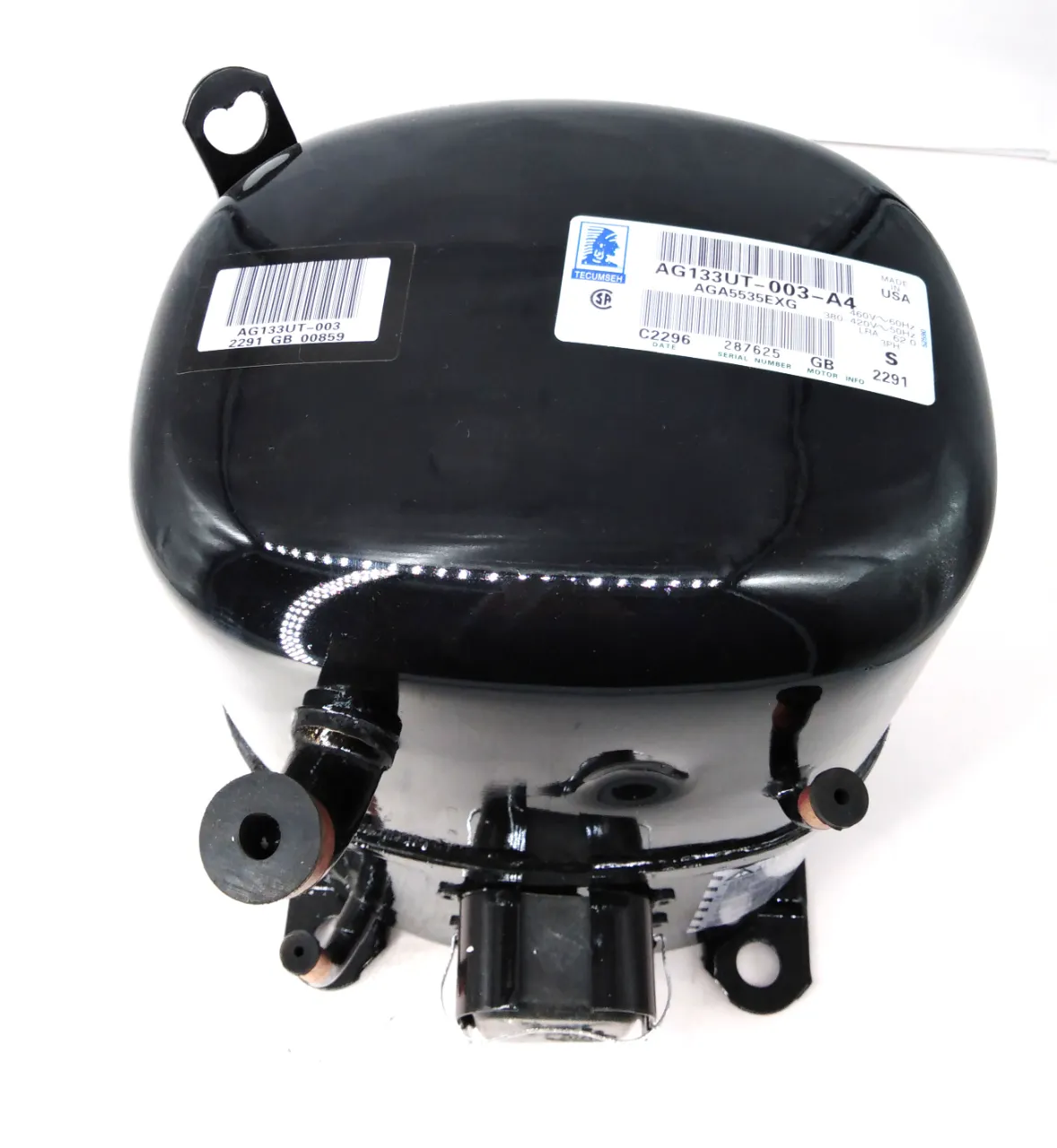
How to Read a Compressor Nameplate Before Ordering a Replacement
A practical checklist for reading compressor nameplate information before sourcing a replacement for refrigeration, AC, or cold-room systems.
How to Read a Compressor Nameplate Before Ordering a Replacement
Ordering a replacement compressor should never start with a guess. A similar-looking shell, matching horsepower, or familiar brand name is not enough to confirm compatibility. The most reliable starting point is the compressor nameplate information printed or stamped on the unit.
For distributors, service technicians, repair companies, and cold-room installers, a clear nameplate reading can prevent wrong orders, installation delays, warranty disputes, and avoidable system failures. It helps the supplier identify the correct compressor model, confirm electrical compatibility, check refrigerant and oil requirements, and review connection details before shipping.
This guide explains how to read a compressor nameplate before ordering a replacement, what each field usually means, and what photos or notes you should send to a supplier for accurate sourcing.
Why Compressor Nameplate Information Matters
A compressor nameplate is the identity card of the compressor. It may be a metal plate, adhesive label, laser marking, or printed tag fixed to the compressor body or terminal box. Depending on the brand and compressor type, it can include the model number, serial number, voltage, phase, refrigerant, locked rotor amps, rated load amps, oil type, capacity data, and safety certifications.
Correct compressor identification matters because compressors that look similar can have very different operating requirements. A wrong replacement may have incompatible voltage, different refrigerant approval, unsuitable displacement, incorrect oil, or suction and discharge connections that do not match the existing pipework.
The most common problems caused by incomplete identification include:
- Ordering by horsepower only and receiving the wrong capacity or application range
- Confusing the serial number with the model number
- Missing voltage or phase details on international projects
- Replacing an R22 compressor with a unit not approved for the new refrigerant
- Ignoring oil type and causing lubrication or compatibility issues
- Overlooking connection size, mounting pattern, or terminal arrangement
- Selecting a compressor without checking LRA against the electrical panel or contactor
A complete nameplate check is especially important when sourcing across borders. Model codes, local voltage standards, refrigerant regulations, and stock availability can vary by market. A clear photo and a written checklist help both the buyer and supplier work from the same data.
Where to Find and Photograph the Nameplate
The compressor nameplate is usually located on the compressor shell, near the electrical terminal box, on the side of a semi-hermetic body, or on a welded bracket. On older units it may be dirty, scratched, oil-stained, or partly hidden by piping and insulation.
Before taking photos, isolate the equipment safely and follow site procedures. Do not open electrical covers or remove guards unless you are qualified and authorized to do so.
Photo checklist for accurate sourcing
For a supplier to perform refrigeration compressor identification, send more than one photo. A single close-up can miss important installation details.
Recommended photos:
- A clear close-up of the entire nameplate, not only the model code
- A wider photo showing the full compressor body and brand area
- Photos of the suction and discharge connections
- A photo of the electrical terminal box or wiring label if accessible
- A photo of the system nameplate or condensing unit label, if present
- A photo showing mounting feet or base arrangement
- Any label showing refrigerant charge, oil, or application notes
Simple photo framing guide
Use this as a practical field reference:
[Photo 1] Full compressor nameplate, sharp and readable
[Photo 2] Complete compressor in the machine room or condensing unit
[Photo 3] Suction and discharge pipe connections
[Photo 4] Electrical terminal box and wiring information
[Photo 5] System or condensing unit label, if available
If the nameplate is damaged, take several photos from different angles with side lighting. Sometimes stamped characters become easier to read when light hits the plate from the side. Write down uncertain characters separately, using a question mark where needed. For example: “Model: ZR?4K3E-TFD” is more useful than a guessed model number.
The Key Fields on a Compressor Nameplate
Not every compressor label uses the same layout, but most industrial, commercial refrigeration, and air-conditioning compressors share several common data points. Understanding compressor nameplate meaning helps you know which fields are essential and which are supporting details.
Model number: the primary identification code
The compressor model number is usually the most important field for replacement sourcing. It identifies the compressor family, size, electrical version, application range, and sometimes connection or oil variations.
On many brands, the model number is a combination of letters and numbers. The structure is brand-specific, so it should not be interpreted without the manufacturer’s nomenclature. For example, letters may represent compressor series, refrigerant application, motor type, or approval version, while numbers may indicate nominal capacity or displacement.
When sending a compressor model number lookup request, copy the model exactly:
- Keep all letters, numbers, dashes, slashes, and suffixes
- Do not omit the last characters
- Distinguish similar characters such as O and 0, I and 1, S and 5
- Include the full brand name if visible
A missing suffix can change the electrical configuration or application. For replacement ordering, the full model code is usually more useful than a general description such as “5 HP semi-hermetic compressor.”
Serial number: useful but not the same as the model number
The compressor serial number identifies an individual unit or production batch. It may help confirm production details, warranty records, or manufacturing version, depending on the brand. However, it is usually not enough by itself to select a replacement.
A common field mistake is sending only the serial number. For sourcing, the supplier typically needs both:
- Model number: identifies what compressor it is
- Serial number: identifies the specific unit or production record
If the label says “S/N,” “Serial,” or “No.,” it is likely the serial number. If it shows a longer alphanumeric code near the brand and capacity information, it may be the model number. When in doubt, send a full photo instead of typing only one line.
Voltage, phase, and frequency
Electrical data must match the site power supply and system control components. Compressor nameplates often show voltage, phase, and frequency in formats such as 220–240V 1Ph 50Hz, 380–420V 3Ph 50Hz, or 460V 3Ph 60Hz. Some compressors support multiple voltage ranges, while others are specific to one supply.
For international buyers, this is one of the most important checks. A compressor suitable for one country may not be correct for another market. The same mechanical compressor family can have different motor versions for different voltages and frequencies.
Confirm these items before ordering:
- Supply voltage available at the site
- Single-phase or three-phase power
- Frequency: 50Hz or 60Hz
- Voltage tolerance shown on the label or technical data
- Starter type, contactor size, overload protection, and control voltage
Do not assume that a replacement compressor can be used just because the pipe connections are similar. Electrical mismatch can prevent startup or damage the compressor and controls.
Refrigerant information
Many compressor nameplates list approved refrigerants or application categories. The label may show one refrigerant, such as R134a, R404A, R407C, or R410A, or it may show a refrigerant family depending on the model and manufacturer.
Refrigerant approval is not only a performance issue. It affects discharge temperature, pressure rating, oil compatibility, motor cooling, and system safety. In cold-room and commercial refrigeration projects, the application temperature range also matters. A compressor used for low-temperature freezing duty is not always interchangeable with one used for medium-temperature storage.
When requesting a replacement, provide:
- Existing refrigerant in the system
- Target evaporating temperature or application: AC, chiller, medium temperature, low temperature, freezer, or cold room
- Whether the system is being retrofitted to a different refrigerant
- Any refrigerant label on the condensing unit or system cabinet
If the system has already been converted to another refrigerant, the compressor nameplate may not reflect the current operating condition. In that case, technical verification is required before selecting a replacement.
LRA and RLA: starting and operating current
Two common electrical current values on compressor labels are LRA and RLA. They are often misunderstood but are important for selection and installation.
- LRA means Locked Rotor Amps. It is the current drawn when the motor rotor is not turning, such as during startup or a locked rotor condition.
- RLA often means Rated Load Amps or Running Load Amps, depending on the manufacturer’s terminology. It is used for selecting wiring, contactors, and overload protection.
These values help technicians confirm whether the electrical system can handle the replacement compressor. A compressor with similar capacity but higher LRA may create startup problems, especially on weak power supplies, long cable runs, generator-backed sites, or systems with undersized contactors.
LRA and RLA should not be treated as capacity ratings. They are electrical values. Use them with the model number and technical data, not as a standalone selection method.
Oil type and oil charge
Oil information may appear on the compressor nameplate, a separate label, or in the technical documentation. Common compressor oils include mineral oil, alkylbenzene oil, and polyolester oil, but compatibility depends on the refrigerant and compressor design.
Oil mistakes can cause serious reliability problems. The wrong oil can affect lubrication, refrigerant miscibility, oil return, and internal wear. This is especially important when replacing compressors in refrigeration systems that have experienced burnout, contamination, or refrigerant retrofit.
For replacement ordering and installation planning, check:
- Oil type specified for the compressor
- Factory oil charge if listed
- Whether the supplied compressor includes oil
- Whether the system requires oil balancing or oil level control
- Whether the existing system oil is compatible with the replacement and refrigerant
Service teams should also consider the condition of the failed compressor. If the old compressor failed due to acid, moisture, or severe mechanical damage, system cleaning and filter drier replacement may be required before installing a new compressor.
Capacity, displacement, and application range
Some compressor nameplates show nominal capacity, horsepower, displacement, or input power. These values can help confirm the general size, but they are not always enough to select a replacement.
Compressor capacity depends on several conditions, including refrigerant, evaporating temperature, condensing temperature, frequency, and superheat. A “nominal” number on a label may refer to a specific test condition, not the actual operating capacity in your cold-room system.
For accurate selection, provide the application details together with the nameplate:
- Cold-room temperature or evaporating temperature
- Condensing temperature or ambient condition
- Refrigerant
- Required cooling capacity, if known
- Compressor type: hermetic, scroll, semi-hermetic, screw, rotary, or reciprocating
- Original condensing unit or system model
For engineering installers, this is where nameplate reading connects with system design. Replacing a compressor is not only a parts transaction; it must maintain the correct capacity balance for the evaporator, condenser, expansion device, and controls.
Suction, discharge, and mounting connection information
Nameplate data may not include all physical connection details. That is why photos are important. Even when the model number is correct, there can be variations in connection type, service valve configuration, mounting position, or terminal box orientation.
Check and photograph:
- Suction pipe size and connection type
- Discharge pipe size and connection type
- Service valve style, if used
- Mounting foot pattern and bolt spacing
- Compressor height and body diameter if space is limited
- Oil sight glass or oil equalization connection, if present
- Crankcase heater, pressure ports, and accessories
For distributors and repair companies, connection details help reduce disputes after delivery. A compressor may be technically correct but still require adapters, valves, or pipe modifications. Knowing this in advance allows better planning and quotation.
Practical Ordering Checklist for Replacement Compressors
Use the following checklist before sending an inquiry to a compressor supplier or distributor. It is designed for refrigeration spare parts distributors, service companies, and cold-room contractors who need fast but accurate sourcing.
Minimum information to send
At minimum, provide these items:
- Brand name of the compressor
- Full model number
- Serial number, if readable
- Clear photo of the nameplate
- Voltage, phase, and frequency
- Refrigerant used in the system
- Application: air-conditioning, refrigeration, cold room, freezer, chiller, or heat pump
- Quantity required
- Destination country and any required certification or documentation needs
Better information for faster confirmation
For a more accurate quotation and fewer follow-up questions, also provide:
- LRA and RLA from the label
- Oil type and oil charge, if shown
- Suction and discharge connection photos
- Condensing unit or equipment model number
- Operating temperature range
- Failure description of the old compressor
- Required delivery schedule
- Whether an exact replacement or acceptable alternative is needed
Common typing mistakes to avoid
When copying compressor nameplate information, small errors can lead to wrong cross-references. Avoid these mistakes:
- Typing the serial number as the model number
- Missing suffix letters after the main model code
- Replacing a dash with a slash or leaving it out
- Confusing 0 with O, 1 with I, and 8 with B
- Sending only horsepower instead of the full model
- Using the condensing unit model when the compressor model is required
- Assuming voltage from the country instead of reading the label
A good rule is simple: send the photo and the typed information. The photo provides verification, while the typed text helps the supplier search quickly.
When the Nameplate Is Missing or Unreadable
A missing compressor label does not make identification impossible, but it increases the risk of error. In this case, the replacement should be selected more carefully using system and physical information.
Useful alternative information includes:
- Condensing unit or equipment model number
- Original equipment manufacturer brand and model
- Refrigerant and application temperature
- Compressor body photos from all sides
- Electrical supply and control panel data
- Pipe sizes and connection layout
- Mounting dimensions
- Approximate cooling capacity required
- Old invoices, service records, or maintenance reports
If the compressor is part of a packaged air-conditioning unit or refrigeration condensing unit, the equipment nameplate may help identify the original compressor. For supermarket, cold-room, and industrial refrigeration systems, service records can be equally valuable.
Where exact identification is not possible, a qualified engineer or supplier should compare the application requirements, capacity data, refrigerant, electrical supply, and mechanical fit before recommending a substitute. In these cases, avoid relying only on visual similarity.
Quick Field Template: Information to Send Your Supplier
Copy this template into a message or inquiry form when requesting a replacement compressor:
Compressor brand:
Full model number:
Serial number:
Voltage / phase / frequency:
Refrigerant:
Application temperature or room use:
LRA / RLA:
Oil type or oil charge:
Compressor type:
Suction connection:
Discharge connection:
Condensing unit or system model:
Quantity required:
Destination country:
Photos attached: nameplate / full compressor / connections / terminal box
Exact replacement required or alternative acceptable:
The best replacement inquiries are not the longest; they are the clearest. Complete compressor nameplate information allows the supplier to check the model, confirm electrical and refrigerant compatibility, identify possible substitutes, and avoid shipping a part that cannot be installed.
For buyers working across brands and markets, a brand-neutral checklist is especially useful. It keeps the conversation focused on verifiable data rather than assumptions, and it helps both technical and purchasing teams make faster decisions with fewer ordering errors.
FAQ
What compressor nameplate information is most important for ordering a replacement?
The most important information is the full model number, brand, voltage, phase, frequency, refrigerant, and clear nameplate photo. Serial number, LRA, RLA, oil type, application temperature, and connection photos help confirm the correct replacement more quickly.
Is the compressor serial number the same as the model number?
No. The model number identifies the compressor type, size, electrical version, and application details. The serial number identifies an individual unit or production record. For replacement sourcing, the model number is usually essential, while the serial number is supporting information.
Can I order a replacement compressor by horsepower only?
Ordering by horsepower alone is risky. Compressors with the same horsepower may have different voltage, refrigerant approval, capacity, application range, oil type, and connection layout. Always use the full compressor nameplate information and system details.
What do LRA and RLA mean on an AC or refrigeration compressor label?
LRA means Locked Rotor Amps, the current drawn during startup or a locked rotor condition. RLA usually refers to rated or running load amps, depending on the manufacturer. These values help check wiring, contactors, overload protection, and startup requirements.
What should I do if the compressor nameplate is unreadable?
Send photos of the full compressor, terminal box, suction and discharge connections, and the system or condensing unit nameplate. Provide refrigerant, voltage, application temperature, pipe sizes, and any service records. A supplier or engineer can then compare technical requirements to identify a suitable replacement.
Buyer Next Step
Move from research to sourcing with a category shortlist, relevant product examples, and a quote request channel.