How to Read a Compressor Model Number Before You Order Spare Parts or Replacements
Learn what a compressor model number means, which nameplate details matter, and what documents to request before placing a replacement order.
Ordering a replacement compressor should be straightforward, but one wrong letter or voltage code can turn a routine purchase into an expensive delay. Compressor model numbers often contain important information about series, refrigerant, displacement, motor type, voltage, application range, and design revision. The problem is that each manufacturer uses its own naming structure, and many distributors handle mixed brands from different markets.
For overseas buyers, the risk is even higher. A compressor that looks similar in photos may not match the original application. A model may have several variants for different refrigerants, power supplies, starting components, mounting layouts, or efficiency generations. In cross-border trade, returning the wrong compressor is costly, slow, and sometimes impractical.
Understanding the compressor model number meaning helps spare parts distributors, service companies, repair technicians, and cold-room installers check compatibility before ordering. It also improves communication with suppliers, especially when the original brand is discontinued, unavailable, or being replaced by an equivalent model.
Why Compressor Model Numbers Matter in Replacement Orders
A compressor model number is more than a product name. It is a compact identification code used to separate one technical configuration from another. Depending on the brand and compressor type, the model number may indicate:
- Compressor family or series
- Refrigerant compatibility
- Cooling capacity or displacement
- Application temperature range
- Motor type and protection method
- Voltage, phase, and frequency
- Oil type or lubrication requirement
- Connection style or mounting arrangement
- Design generation or revision
For buyers, the key point is simple: two compressors with similar capacity are not automatically interchangeable. Capacity is only one part of selection. A compressor must also match the refrigerant, operating envelope, electrical supply, physical installation, and control system.
This is especially important for refrigeration spare parts distributors who receive inquiries from many countries. A customer may send only a partial model number, a blurry nameplate image, or a local substitute code. Without a structured compressor part number check, the risk of supplying an unsuitable unit increases.
Service and repair companies face another challenge: the compressor installed in the equipment may not be the original one. It may already be a replacement from a previous repair. In that case, the nameplate information, system refrigerant, and real operating conditions all need to be checked together.
The Main Elements Hidden in a Compressor Model Number
There is no single global standard for compressor model decoding. A hermetic refrigerator compressor, a scroll compressor for air-conditioning, and a semi-hermetic compressor for a cold room may all use different naming logic. Still, most model numbers are built from several common elements.
Series or compressor family
The first letters or number group often identify the product series. This may tell you the compressor platform, construction type, or intended equipment category. For example, a series code may distinguish a small hermetic compressor from a commercial refrigeration model, or a standard scroll platform from a high-efficiency version.
When replacing a compressor, the series is important because it can affect dimensions, mounting feet, electrical accessories, pipe connections, and spare part availability. A different series from the same brand may deliver similar capacity but require changes to the system layout.
Refrigerant code
Many compressor model numbers include a refrigerant indicator, or the refrigerant may be identified separately on the nameplate. Common refrigeration and air-conditioning refrigerants may require different motor design, oil type, pressure rating, and operating envelope.
Never assume refrigerant compatibility from appearance. A compressor designed for one refrigerant may not be suitable for another, even if the displacement is close. When converting or replacing a system, confirm the refrigerant shown on the equipment label, compressor nameplate, and service records.
For compressor identification, refrigerant information is one of the most critical details to send to a supplier. If the compressor model number is incomplete, the refrigerant can help narrow the correct version.
Displacement, capacity, or nominal size
A number in the model code often represents displacement, nominal capacity, horsepower class, or a manufacturer-specific size reference. This is one of the most commonly misunderstood parts of compressor model number meaning.
The same number does not always mean the same thing across brands. In one product line, it may relate to cubic centimeters per revolution. In another, it may be a capacity class under specific rating conditions. Some codes are internal size references rather than direct engineering values.
For replacement ordering, avoid using only horsepower or capacity labels. Confirm the real application conditions, including evaporating temperature, condensing temperature, refrigerant, power supply, and duty. A compressor selected for medium-temperature refrigeration may not be suitable for low-temperature operation even if the nominal horsepower looks similar.
Application range
Many compressors are designed for a defined application range. Common categories include low temperature, medium temperature, high temperature, air-conditioning, heat pump, and commercial refrigeration. The application range affects compressor cooling, motor load, pressure ratio, and reliable operation.
A cold-room contractor replacing a compressor should pay attention to whether the original unit is used for chilled storage, frozen storage, process cooling, or air-conditioning. If the application code is ignored, the replacement may run outside its safe operating envelope.
In practical purchasing terms, always describe the equipment and operating duty. For example, “freezer room compressor for low-temperature R404A system” is more useful than simply sending “5 HP compressor.”
Voltage, phase, and frequency
Electrical codes are a common source of wrong orders in international trade. Compressors may be built for different voltages, single-phase or three-phase supply, and 50 Hz or 60 Hz operation. Some models are available in several electrical versions under very similar model names.
The compressor nameplate information should be checked carefully for:
- Rated voltage or voltage range
- Phase, such as 1PH or 3PH
- Frequency, such as 50 Hz, 60 Hz, or dual-rated supply
- Locked rotor current and running current
- Starting method and required components
- Motor protection type
A replacement compressor with the wrong electrical configuration may fail to start, overload the circuit, or require different contactors, relays, capacitors, overload protectors, or control wiring. For distributors, it is good practice to confirm electrical data in writing before shipment.
Motor code and starting components
The motor code may identify the type of motor winding, starting method, or protection design. This is particularly important for single-phase compressors, where relay type, capacitor specification, and overload protection must be matched correctly.
For three-phase compressors, motor codes may still matter because they can indicate voltage range, winding configuration, or protection requirements. Some compressors use internal overload protection, while others require external motor protection modules.
When ordering spare parts, do not separate the compressor from its required electrical accessories unless you are certain the existing components are compatible. A correct compressor can still fail in operation if the starting kit or protection device is wrong.
Revision, generation, and suffix codes
Suffix letters at the end of a model number are easy to overlook, but they can be important. A suffix may indicate a design revision, oil charge, connection change, mounting variation, packaging version, or market-specific configuration.
For compressor part number check, the full model number should be recorded exactly as shown, including spaces, dashes, slashes, and final letters. If a supplier asks for the suffix, it is not a small detail. It may determine whether the unit is a direct replacement or only a close alternative.
What to Check on the Compressor Nameplate
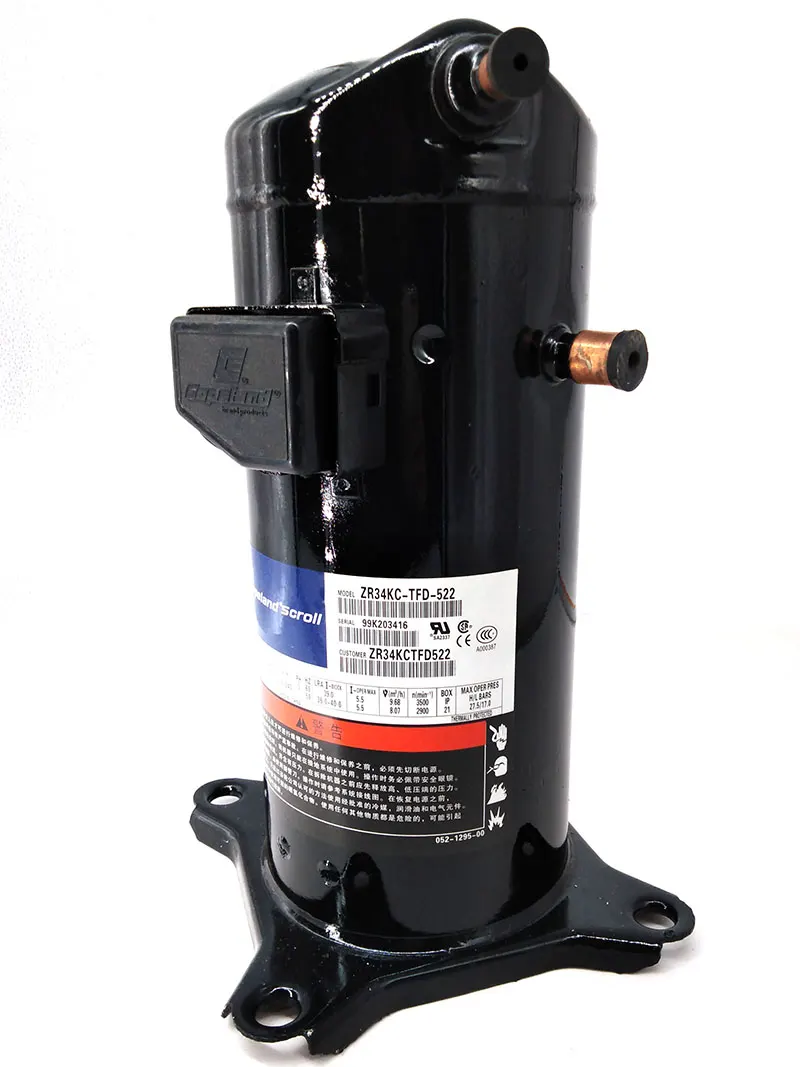
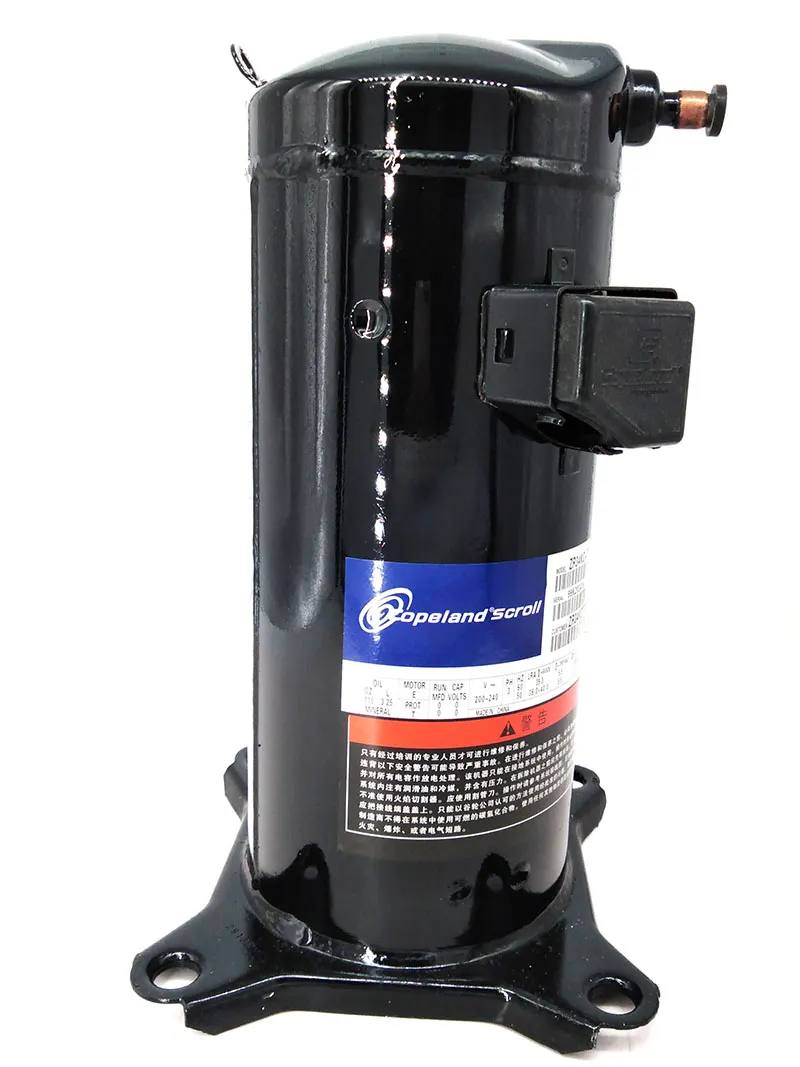
The nameplate is the best starting point for compressor identification. It normally provides the most reliable information available in the field, although old units may have damaged or unreadable labels.
A useful nameplate check should include the following details:
- Full compressor model number
- Compressor serial number
- Brand and manufacturer name
- Refrigerant listed on the label
- Voltage, phase, and frequency
- Rated current or operating current
- Locked rotor current, if shown
- Oil type or oil charge, if shown
- Manufacturing code or date code, if available
- Approval marks or market certification, where relevant
The compressor serial number should not be confused with the model number. The model number identifies the product configuration; the serial number identifies the individual unit or production batch. In some cases, the serial number can help suppliers verify production generation or service history, but it usually cannot replace the model number for ordering.
If the nameplate is missing, collect alternative evidence. Take photos of the compressor body, terminal box, mounting base, pipe connections, system nameplate, controller settings, and the whole machine. For cold-room systems, include the evaporator and condensing unit labels where possible.
A Practical Decoding Workflow Before You Order
A structured workflow reduces errors, especially when the buyer and supplier are in different countries. The goal is not only to read the code, but to confirm the real replacement requirement.
Step 1: Record the full model number exactly
Write down the model number exactly as it appears. Do not remove letters that look like revision codes. Do not replace hyphens or slashes with spaces. Do not rely on memory or handwritten notes if a photo is available.
If a technician sends the code by message, ask for a clear nameplate photo as confirmation. Many wrong orders start with a single misread character, such as O and 0, I and 1, or B and 8.
Step 2: Identify the compressor type
Confirm whether the unit is hermetic, semi-hermetic, scroll, rotary, screw, or another compressor type. The replacement approach differs by construction. For example, a small refrigerator compressor is usually replaced as a sealed unit, while a semi-hermetic compressor may have serviceable parts and multiple accessory options.
The compressor type also affects logistics. Weight, packaging, oil handling, and transport requirements can vary significantly.
Step 3: Confirm refrigerant and application
Check the refrigerant on the compressor nameplate, system label, and service records. If the system has been retrofitted, the compressor label may no longer reflect the current refrigerant. In that case, the supplier needs to know the actual refrigerant in use and the original compressor configuration.
Also confirm the application range: air-conditioning, chiller, refrigerator, freezer, cold room, display case, ice machine, or heat pump. Add the approximate evaporating temperature if known.
Step 4: Check electrical compatibility
Verify voltage, phase, and frequency before discussing substitutes. Cross-border buyers should be especially careful because the same equipment category may use different power supplies in different regions.
If the replacement compressor is not an exact same model, ask whether existing electrical accessories can be reused or must be replaced. This includes contactors, overloads, relays, capacitors, crankcase heaters, protection modules, and wiring harnesses.
Step 5: Compare physical connections and mounting
A technically suitable compressor still needs to fit the installation. Confirm suction and discharge connection sizes, connection type, mounting foot pattern, height clearance, and terminal box position.
For repair teams working on site, physical mismatch can create extra labor, pipe modification, vibration problems, or delays. For distributors, asking for installation photos helps prevent disputes after delivery.
Step 6: Confirm exact replacement or acceptable equivalent
There is a difference between an exact same model, an official replacement, and a compatible alternative. Buyers should state which option they need.
- Exact same model: preferred when the customer requires no modification.
- Official replacement: a newer or updated model recommended for the same application.
- Compatible alternative: a substitute selected by matching capacity, refrigerant, envelope, electrical data, and installation requirements.
When an equivalent is offered, request the technical data sheet and compare the key parameters before confirming the order.
Document Request Checklist for Cross-Border Compressor Orders
Good documentation is the easiest way to reduce wrong shipments. Before ordering a compressor or major spare part, buyers should send a complete inquiry package rather than a short model number only.
Photos to request or provide
Ask for clear images of:
- Compressor nameplate
- Full compressor body from several angles
- Terminal box and wiring area
- Suction and discharge connections
- Mounting feet and base frame
- System or equipment nameplate
- Existing electrical components, if replacement accessories are needed
Photos should be sharp, well-lit, and close enough to read the labels. If the label is dirty, clean it carefully before taking the photo.
Technical information to include
A strong inquiry should include:
- Full model number and serial number
- Brand of the compressor
- Refrigerant currently used in the system
- Application type and temperature range
- Voltage, phase, and frequency
- Compressor type and approximate capacity, if known
- Oil type, if shown or specified
- Required quantity
- Destination country
- Whether the buyer needs an exact model or can accept an equivalent
For cold-room installers, it is also helpful to provide room temperature, product type, condensing unit model, and evaporator information. For air-conditioning service companies, include equipment model, outdoor unit label, and system capacity where available.
Commercial and logistics details to confirm
Technical matching is only one part of a successful order. Cross-border compressor purchases should also confirm:
- Packaging method suitable for international transport
- Whether oil is included or shipped separately
- Required accessories included in the scope of supply
- Lead time and availability
- Warranty terms and installation requirements
- HS code or import documentation needs, if applicable
- Incoterms and delivery address details
These details help distributors and buyers avoid misunderstandings after payment, especially when compressors are heavy, fragile, or urgently needed for service work.
Common Mistakes When Identifying a Compressor
Several common mistakes appear repeatedly in replacement inquiries.
One is using only the compressor horsepower. Horsepower can be a rough commercial label, but it is not enough for compressor selection. Refrigerant, application temperature, displacement, and electrical data must also match.
Another mistake is ignoring the suffix. Many buyers send the main model number but leave out the final letters. Those letters may identify voltage, motor version, application range, or revision.
A third mistake is assuming the installed compressor is original. In older refrigeration equipment, the installed compressor may already be a previous substitute. The system operating conditions should be checked before repeating the same selection.
A fourth mistake is relying on catalog capacity without checking rating conditions. Capacity changes with evaporating temperature, condensing temperature, superheat, subcooling, and refrigerant. For commercial refrigeration, the same compressor may show very different capacity values under different conditions.
Finally, buyers sometimes forget accessories. A compressor replacement may require a matching relay, capacitor, overload, protection module, mounting kit, gasket set, or crankcase heater. The model number helps identify the compressor, but the complete repair requirement may be wider.
Practical Takeaways for Buyers and Distributors
The best way to read a compressor model number is to treat it as part of a wider identification process. The code gives important clues, but it should be checked against the nameplate, refrigerant, application, electrical supply, and installation details.
For distributors, a standard inquiry form can greatly reduce wrong orders. For repair companies, clear photos and complete operating information save time. For cold-room contractors, confirming application range and electrical compatibility is just as important as matching capacity.
Before confirming a replacement order, make sure the supplier has enough information to answer four questions clearly:
- What is the original compressor configuration?
- Why is the proposed model suitable for the application?
- Who will be affected if accessories, voltage, or mounting differ?
- What documents confirm the match before shipment?
A careful compressor identification process may take a little longer at the inquiry stage, but it is much faster than dealing with an incorrect delivery. In spare parts trade, the full model number, nameplate data, and supporting photos are the buyer’s best protection against costly mistakes.
FAQ
What does a compressor model number usually mean?
A compressor model number usually identifies the product series, refrigerant version, size or displacement class, application range, motor type, voltage, and sometimes a design revision or suffix. The exact structure depends on the manufacturer, so the full model number should always be checked with the nameplate and technical data.
Is the compressor serial number the same as the model number?
No. The model number identifies the compressor configuration, while the serial number identifies an individual unit or production batch. For ordering a replacement, the model number is usually the main reference, but the serial number can help verify production details in some cases.
Can I order a replacement compressor by horsepower only?
No. Horsepower alone is not enough to select a compressor. You must also confirm refrigerant, application temperature range, voltage, phase, frequency, motor type, capacity rating conditions, mounting, and connection details.
What photos should I send before ordering a compressor from overseas?
Send clear photos of the compressor nameplate, full compressor body, terminal box, suction and discharge connections, mounting feet, system nameplate, and relevant electrical components. Sharp photos reduce the risk of misreading the model number or missing an important suffix.
Can a different compressor brand be used as a replacement?
A different brand may be used only if the technical match is confirmed. The alternative must be suitable for the refrigerant, capacity requirement, application range, electrical supply, operating envelope, mounting arrangement, and required accessories. A technical data sheet should be reviewed before ordering.
Buyer Next Step
Move from research to sourcing with a category shortlist, relevant product examples, and a quote request channel.