Hermetic, Scroll, Semi-Hermetic, and Screw Compressors: Which Type Should You Buy?
A practical buyer guide comparing hermetic, scroll, semi-hermetic, and screw compressors for refrigeration, air-conditioning, and cold-room applications.
Choosing between a hermetic vs scroll compressor is only part of the decision. In refrigeration and air-conditioning projects, buyers also compare semi-hermetic piston compressors, open or semi-hermetic screw compressors, and different brand families designed for domestic refrigeration, commercial cold rooms, process cooling, and HVAC systems.
The right compressor type affects cooling capacity, energy use, repair options, noise, refrigerant compatibility, stock planning, and total lifecycle cost. For spare parts distributors, service companies, and cold-room installers, the best choice is rarely “the strongest compressor.” It is the compressor that matches the system design, operating temperature, available service skills, and customer budget.
This guide compares the four major refrigeration compressor types—hermetic, scroll, semi-hermetic, and screw—so buyers can select more confidently for refrigerator, air-conditioning, and cold-room applications.
Quick Comparison: Hermetic vs Scroll vs Semi-Hermetic vs Screw Compressor
| Compressor type | Common applications | Capacity range | Serviceability | Typical strengths | Typical limitations |
|---|---|---:|---|---|---|
| Hermetic compressor | Domestic refrigerators, freezers, small display cabinets, small commercial refrigeration | Small to medium | Sealed, usually replaced as a complete unit | Compact, low cost, quiet, widely available | Not designed for internal repair; limited to smaller systems |
| Scroll compressor | Air-conditioning, heat pumps, light commercial refrigeration, some cold-room systems | Small to medium-large | Usually sealed or semi-serviceable depending on design | Efficient, smooth operation, fewer moving parts, low vibration | Sensitive to liquid slugging and correct application selection |
| Semi-hermetic compressor | Cold rooms, supermarkets, commercial refrigeration, industrial-style serviceable systems | Medium to large | Serviceable housing with replaceable parts | Durable, repairable, suitable for demanding refrigeration | Higher upfront cost, heavier, more service requirements |
| Screw compressor | Large cold storage, industrial refrigeration, chillers, process cooling | Large to very large | Serviceable, system-dependent | High capacity, stable continuous operation, good for large loads | Higher investment, requires skilled installation and maintenance |
A hermetic compressor is often the practical choice for small refrigeration equipment where replacement is faster and cheaper than repair. A scroll compressor is commonly selected when efficiency, quiet operation, and stable performance are important, especially in air-conditioning and heat pump systems. A semi-hermetic compressor is favored in commercial refrigeration where serviceability matters. A screw compressor is normally reserved for high-capacity cold storage, industrial cooling, and large chiller systems.
What Each Compressor Type Means in Practice
Hermetic Compressor
A hermetic compressor has the motor and compression mechanism sealed inside a welded shell. The refrigerant cools the motor internally, and the complete assembly is not intended to be opened for normal repair.
Hermetic compressors are widely used in:
- Household refrigerators and freezers
- Beverage coolers and display cabinets
- Small ice machines
- Small commercial refrigeration units
- Compact air-conditioning equipment in certain designs
For distributors, hermetic compressors are attractive because they are standardized, relatively compact, and often stocked by model number, refrigerant, voltage, cooling capacity, and application temperature. For repair companies, replacing a failed hermetic unit is usually faster than attempting internal repair.
The main trade-off is serviceability. If the internal motor or mechanical components fail, the unit is normally replaced. This makes hermetic compressors cost-effective for small equipment but less suitable where downtime is expensive and repairable components are preferred.
Scroll Compressor
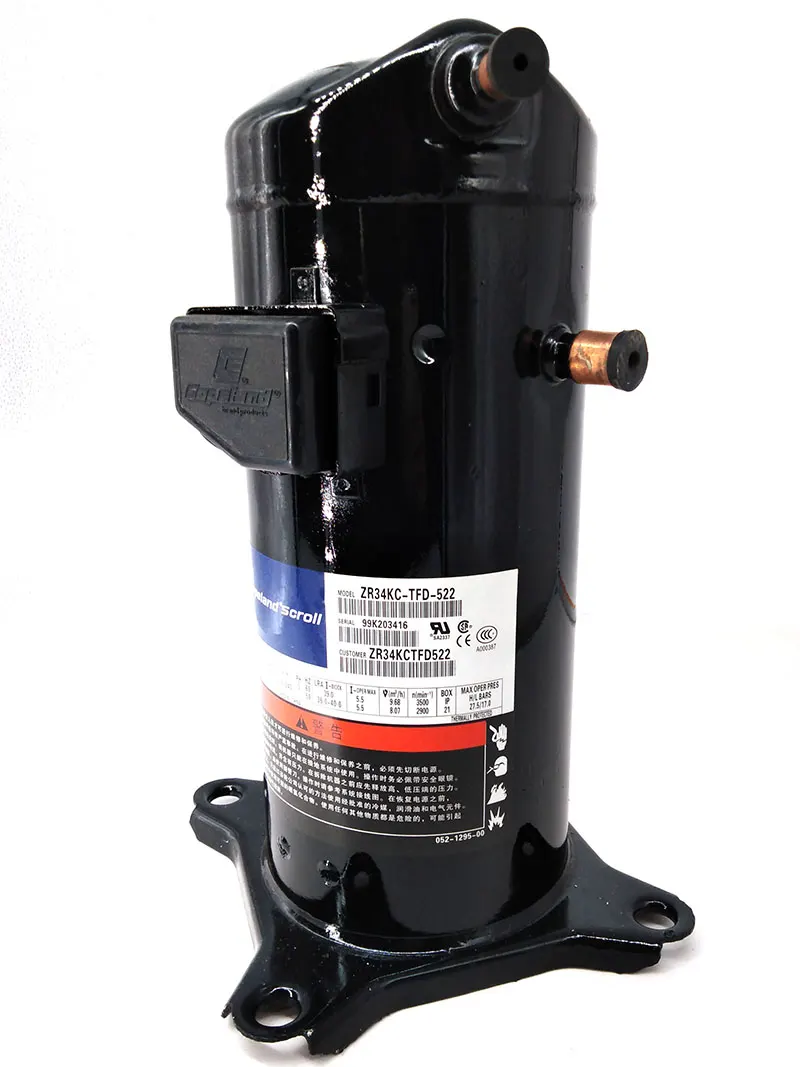
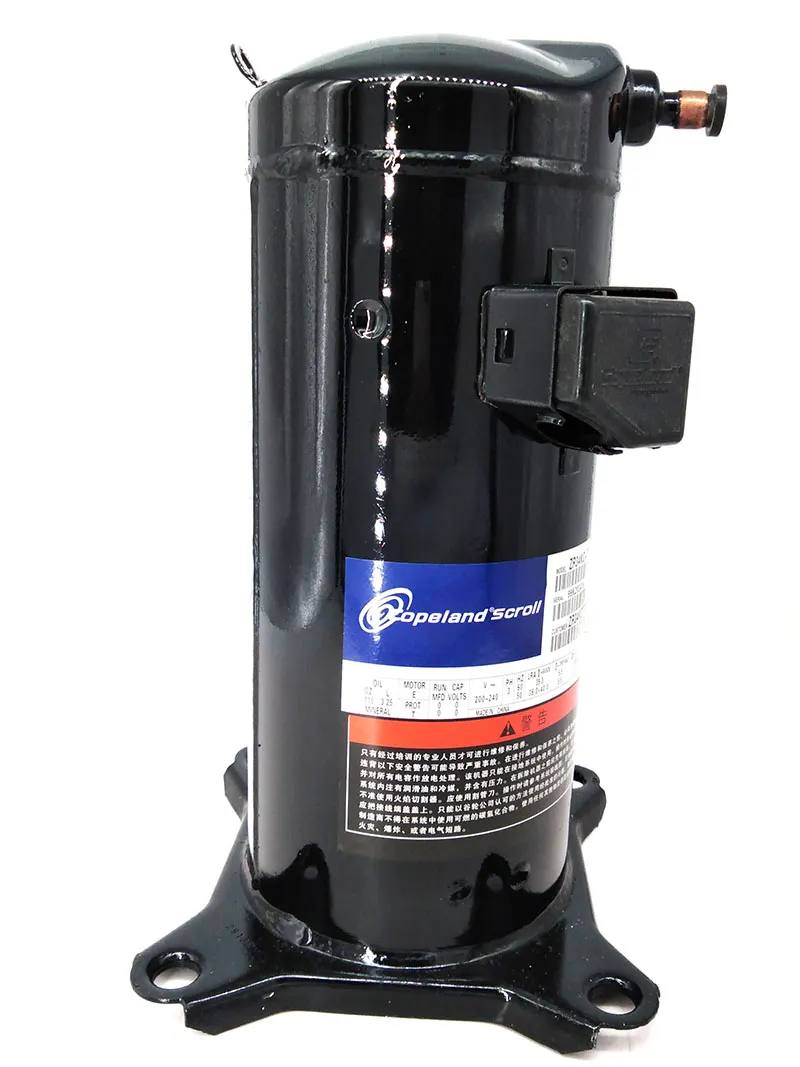
A scroll compressor uses two spiral-shaped scrolls: one fixed and one orbiting. The movement compresses refrigerant smoothly with fewer major moving parts than many reciprocating designs. In the hermetic vs scroll compressor comparison, it is important to understand that many scroll compressors are also hermetically sealed. “Hermetic” describes the enclosure, while “scroll” describes the compression mechanism.
Scroll compressors are commonly used in:
- Split and packaged air-conditioning systems
- Heat pumps
- Rooftop units
- Precision air-conditioning
- Light commercial refrigeration
- Medium-temperature cold-room systems where suitable
Scroll compressors are known for smooth operation, lower vibration, and good efficiency when correctly applied. They are often preferred in HVAC because they deliver stable performance and relatively quiet operation.
However, scroll compressors must be selected carefully for the correct refrigerant, evaporating temperature, condensing temperature, and application envelope. In refrigeration work, not every air-conditioning scroll compressor is suitable for low-temperature cold-room duty. Liquid return, poor oil management, or operation outside the approved range can shorten compressor life.
Semi-Hermetic Compressor
A semi-hermetic compressor contains the motor and compression mechanism in a bolted housing rather than a welded shell. The housing can be opened by qualified technicians, allowing valves, gaskets, pistons, connecting rods, bearings, oil pumps, and other components to be inspected or replaced, depending on model design.
Semi-hermetic compressors are widely used in:
- Medium and low-temperature cold rooms
- Supermarket refrigeration systems
- Food processing refrigeration
- Commercial freezer rooms
- Condensing units for larger refrigeration loads
- Systems where repairability and long service life matter
Many semi-hermetic compressors use reciprocating piston technology, although the term “semi-hermetic” refers to the casing design, not only the compression method. Their main advantage is field serviceability. When a compressor is part of a valuable refrigeration system, replacing individual components may be more economical than replacing the complete compressor.
The disadvantages are higher purchase cost, more weight, more installation complexity, and the need for trained technicians. Semi-hermetic units are not usually selected for very small equipment, but they are often a strong choice for commercial refrigeration contractors handling cold-room and supermarket projects.
Screw Compressor
A screw compressor uses two intermeshing rotors to compress refrigerant. It is designed for larger refrigeration and air-conditioning loads where continuous operation and high capacity are required.
Screw compressors are commonly found in:
- Large cold storage warehouses
- Food and beverage processing plants
- Industrial refrigeration systems
- Large water chillers
- District cooling and process cooling projects
- Centralized refrigeration plants
Screw compressors perform well under steady, high-capacity operating conditions. They are often paired with advanced controls, oil separation systems, economizers, and capacity regulation methods depending on the system design.
The buying decision for screw compressors is more engineering-driven than replacement-driven. Correct sizing, oil management, refrigerant selection, controls, service access, and commissioning quality all matter. For a small distributor or repair shop, screw compressor replacement usually requires detailed confirmation of the system model, operating conditions, and installation requirements.
How to Choose by Application
Domestic Refrigerators and Small Freezers
For household refrigerators, small freezers, water coolers, and compact commercial cabinets, hermetic compressors are usually the standard choice. They offer the best balance of cost, size, availability, and noise performance.
When buying replacement hermetic compressors, confirm:
- Refrigerant type
- Voltage and frequency
- Cooling capacity
- Application temperature range
- Starting method and electrical components
- Oil type
- Mounting dimensions and pipe connections
A close physical match is not enough. A compressor that fits the base plate may still be wrong for the refrigerant, operating temperature, or electrical supply.
Air-Conditioning and Heat Pumps
For air-conditioning, scroll compressors are one of the most common options in light commercial and residential-style systems. They are popular because they are efficient, compact, and relatively quiet.
In the hermetic vs scroll compressor decision for air-conditioning, buyers often compare a basic hermetic rotary or reciprocating compressor against a scroll compressor. Scroll models are often preferred for larger split systems, packaged units, and heat pumps where stable performance and lower vibration are important.
Important selection checks include:
- Refrigerant compatibility
- Cooling or heat pump application
- Power supply and phase
- Capacity at rated conditions
- Inverter or fixed-speed design
- Discharge temperature protection
- Approved operating envelope
For service companies, replacing a scroll compressor should include checking the reason for failure. Acidic oil, blocked coils, poor airflow, refrigerant overcharge, liquid floodback, or electrical issues can damage the replacement unit if not corrected.
Commercial Cold Rooms
Cold rooms require closer attention to evaporating temperature, duty cycle, and serviceability. Medium-temperature cold rooms for fresh produce, dairy, beverages, and general food storage may use scroll, hermetic, or semi-hermetic compressors depending on size and design. Low-temperature freezer rooms often require compressors specifically designed for low evaporating temperatures.
For small cold rooms, hermetic or scroll condensing units may be practical because they are compact and cost-effective. For larger rooms or demanding service conditions, semi-hermetic compressors are often selected because they are more repairable and robust.
Cold-room contractors should confirm:
- Medium-temperature or low-temperature application
- Refrigeration load and safety margin
- Ambient temperature around the condensing unit
- Refrigerant and oil compatibility
- Compressor cooling method
- Defrost strategy
- Expected running hours
- Availability of spare parts and trained service support
Choosing only by horsepower can be misleading. Two compressors with the same nominal horsepower may have different capacities at the actual evaporating and condensing conditions.
Supermarkets and Multi-Compressor Systems
Supermarkets and larger commercial refrigeration systems often use semi-hermetic compressors in racks or parallel systems. This allows staged capacity, maintenance access, and component-level repair.
Scroll compressors may also be used in some commercial racks and packaged systems, particularly where modularity and low vibration are priorities. The decision depends on system design, refrigerant strategy, maintenance capability, and local market preferences.
For replacement buyers, exact model cross-reference is important. A substitute compressor should be checked not only for capacity, but also for displacement, refrigerant, oil, voltage, unloading method, protection devices, mounting, and pipe layout.
Industrial Refrigeration and Large Cold Storage
For high-capacity refrigeration loads, screw compressors are commonly considered. They are suitable for central systems with continuous operation and large cooling demand.
Screw compressors require a more complete buying process than small hermetic replacements. Buyers should review compressor package design, control system compatibility, oil separator arrangement, cooling capacity at operating conditions, part-load operation, and service access.
For large cold storage warehouses, the lowest purchase price may not provide the best outcome. Reliability, commissioning support, maintenance planning, and spare parts availability can have a greater impact on long-term cost.
Buying Criteria That Matter Most
Capacity and Operating Conditions
Capacity should be checked at the real operating conditions, not only at a catalog headline rating. Refrigeration compressor types perform differently depending on evaporating temperature, condensing temperature, superheat, subcooling, and refrigerant.
For cold-room projects, always define whether the application is high, medium, or low temperature. For HVAC projects, check the rated cooling and heating conditions. For replacement work, compare the original compressor’s technical data with the proposed substitute.
Serviceability and Downtime
Hermetic compressors are generally replaced as complete units. This is convenient for small systems but less flexible for large installations. Semi-hermetic and screw compressors allow more service access, but they require trained technicians and more careful maintenance.
A good rule for buyers:
- Small equipment with low replacement cost: hermetic is usually practical.
- HVAC systems needing quiet, efficient operation: scroll is often suitable.
- Commercial refrigeration where repairability matters: semi-hermetic is often preferred.
- Large continuous cooling loads: screw compressor may be the right category.
Efficiency and Part-Load Performance
Efficiency depends on both compressor type and system design. Scroll compressors are often valued for efficient operation in many HVAC applications. Semi-hermetic compressors can perform very well in commercial refrigeration when correctly selected. Screw compressors can be efficient in large systems, especially when controls match the load profile.
Part-load behavior is important. A compressor that operates efficiently at full load may not be the best choice if the system spends most of its time at partial load. Capacity control, inverter technology, unloading, and staging should be evaluated with the overall system.
Noise and Vibration
Noise matters in retail stores, hotels, restaurants, offices, and residential areas. Hermetic and scroll compressors are often quieter than larger serviceable compressors, although installation quality also affects noise.
Scroll compressors are widely chosen for low vibration. Semi-hermetic piston compressors may require stronger mounting and vibration control. Screw compressors are used in larger plant rooms or industrial areas where acoustic treatment and installation design can be planned.
Cost and Lifecycle Value
Initial cost is only one part of the decision. A low-cost compressor that fails early, consumes excessive energy, or is difficult to replace can be more expensive over time.
Commercial buyers should compare:
- Purchase price
- Expected application life
- Energy consumption
- Spare parts availability
- Local technician familiarity
- Warranty and supplier support
- Downtime risk
- Compatibility with existing system components
For distributors, stocking strategy also matters. Fast-moving hermetic and scroll models may support repair demand, while semi-hermetic and screw compressors often require more project-based selection.
Refrigerant Compatibility
Compressor selection must match the refrigerant. Different markets use different refrigerants depending on equipment age, environmental regulations, safety standards, and application. A compressor designed for one refrigerant cannot automatically be used with another.
Always confirm refrigerant type, oil type, pressure range, motor cooling requirements, and safety classification before approving a replacement. This is especially important when replacing older compressors or supporting customers in countries with changing refrigerant regulations.
Common Compressor Brands Buyers Often Compare
Global buyers commonly evaluate compressor brands by availability, model coverage, application support, and local service familiarity. Brand choice also depends on whether the buyer needs a refrigerator compressor, air-conditioning compressor, cold-room compressor, or industrial refrigeration compressor.
Commonly encountered brands in international refrigeration and HVAC markets include names such as Copeland, Danfoss, Bitzer, Tecumseh, Embraco, Panasonic, Mitsubishi, GMCC, Highly, Hanbell, Dorin, Frascold, and others. Availability varies by country, refrigerant, voltage, and product category.
When comparing brands, buyers should avoid choosing by name alone. The correct model and application match are more important than brand reputation by itself. A premium compressor used outside its approved envelope can still fail, while a properly selected mid-range compressor may perform reliably in the right system.
For distributors and repair companies, a practical compressor sourcing process includes:
- Identify the original compressor model and nameplate data.
- Confirm refrigerant, voltage, phase, and frequency.
- Define the application temperature and operating conditions.
- Check capacity and displacement rather than horsepower alone.
- Review dimensions, mounting, pipe connections, and electrical accessories.
- Confirm whether the customer needs direct replacement or acceptable equivalent.
- Verify spare parts, start components, protection devices, and oil requirements.
Practical Selection Guide for Buyers
If the customer needs a compressor for a household refrigerator or small freezer, start with hermetic models designed for the correct refrigerant and temperature range. Price, availability, and exact electrical match are usually the key factors.
If the project is an air-conditioning or heat pump system, scroll compressors are often a strong option. Confirm whether the system uses fixed-speed or inverter technology and whether the scroll is approved for the operating envelope.
If the job is a medium or large cold room, compare scroll and semi-hermetic options carefully. Scroll units may offer compact, quiet operation for suitable loads. Semi-hermetic compressors offer better serviceability and are often preferred for demanding commercial refrigeration.
If the project involves large cold storage, process cooling, or a central refrigeration plant, screw compressors should be evaluated with full engineering data. The decision should include part-load performance, controls, oil management, maintenance capability, and commissioning requirements.
For replacement buyers, the safest path is to treat compressor selection as a technical matching process, not a simple product search. A correct match reduces callbacks, warranty disputes, and unnecessary downtime.
Bottom Line: Which Compressor Type Should You Buy?
For small refrigeration equipment, buy a hermetic compressor when compact size, low cost, and quick replacement are the priorities. For air-conditioning and many light commercial systems, a scroll compressor is often the preferred balance of efficiency, low vibration, and quiet operation. For commercial cold rooms and supermarket-style systems, a semi-hermetic compressor is usually worth considering when repairability and durability matter. For large industrial refrigeration and chiller applications, a screw compressor is the appropriate category when the load is high and continuous.
The best compressor is the one that fits the application, refrigerant, operating envelope, service expectations, and local support conditions. For distributors, repair teams, and cold-room installers, careful selection protects both the system and the customer relationship.
FAQ
What is the main difference between a hermetic compressor and a scroll compressor?
A hermetic compressor is defined by its sealed welded housing, while a scroll compressor is defined by its scroll compression mechanism. Many scroll compressors are also hermetically sealed. In practical buying terms, hermetic compressors are common in small refrigeration equipment, while scroll compressors are widely used in air-conditioning, heat pumps, and suitable light commercial refrigeration systems.
Which compressor is best for a cold room?
Small and medium cold rooms may use hermetic, scroll, or semi-hermetic compressors depending on the load and temperature range. For larger or more demanding cold rooms, semi-hermetic compressors are often preferred because they are serviceable and suitable for commercial refrigeration duty. Very large cold storage systems may require screw compressors.
Are scroll compressors suitable for refrigeration?
Yes, scroll compressors can be suitable for refrigeration, but only when the model is designed for the required evaporating temperature, refrigerant, and operating envelope. An air-conditioning scroll compressor should not be assumed suitable for low-temperature refrigeration unless the manufacturer’s data confirms it.
Why choose a semi-hermetic compressor instead of a hermetic compressor?
A semi-hermetic compressor can be opened and serviced by qualified technicians, making it useful for commercial refrigeration systems where repairability and downtime control matter. A hermetic compressor is usually replaced as a complete sealed unit, which is practical for smaller equipment but less flexible for larger systems.
When should buyers consider a screw compressor?
Buyers should consider a screw compressor for large cold storage, industrial refrigeration, process cooling, or chiller systems with high and continuous cooling demand. Screw compressors require careful engineering selection, including capacity control, oil management, refrigerant compatibility, and service planning.
Buyer Next Step
Move from research to sourcing with a category shortlist, relevant product examples, and a quote request channel.