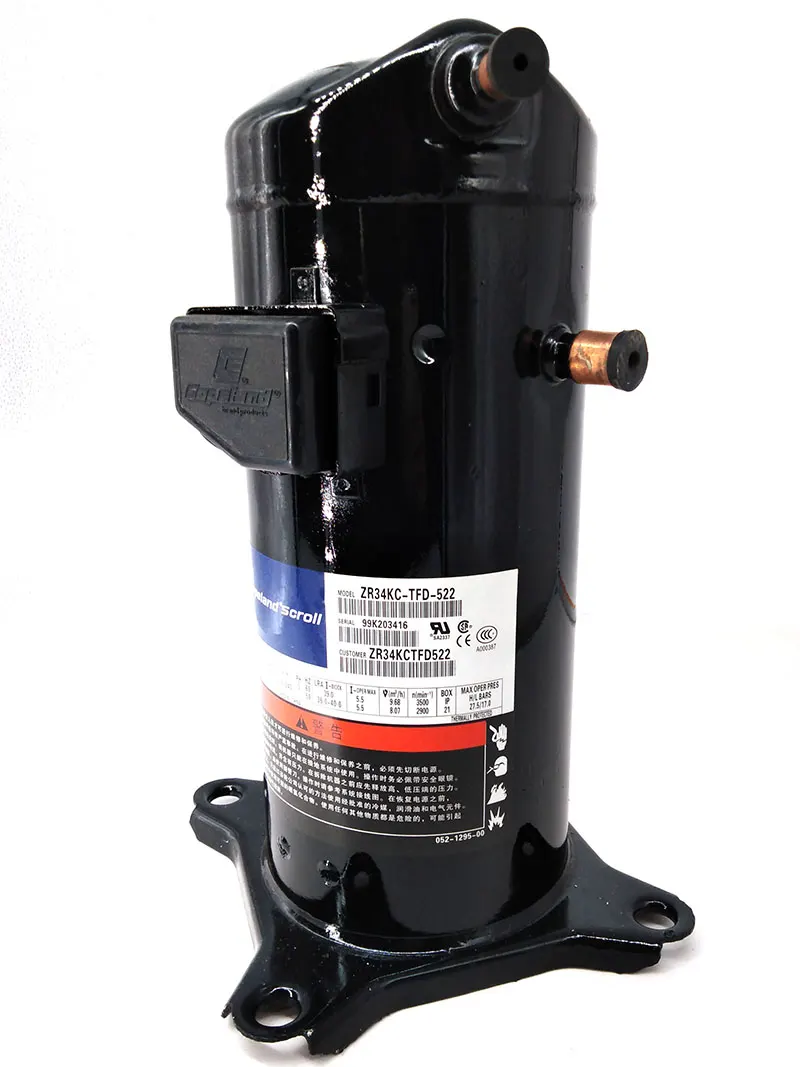
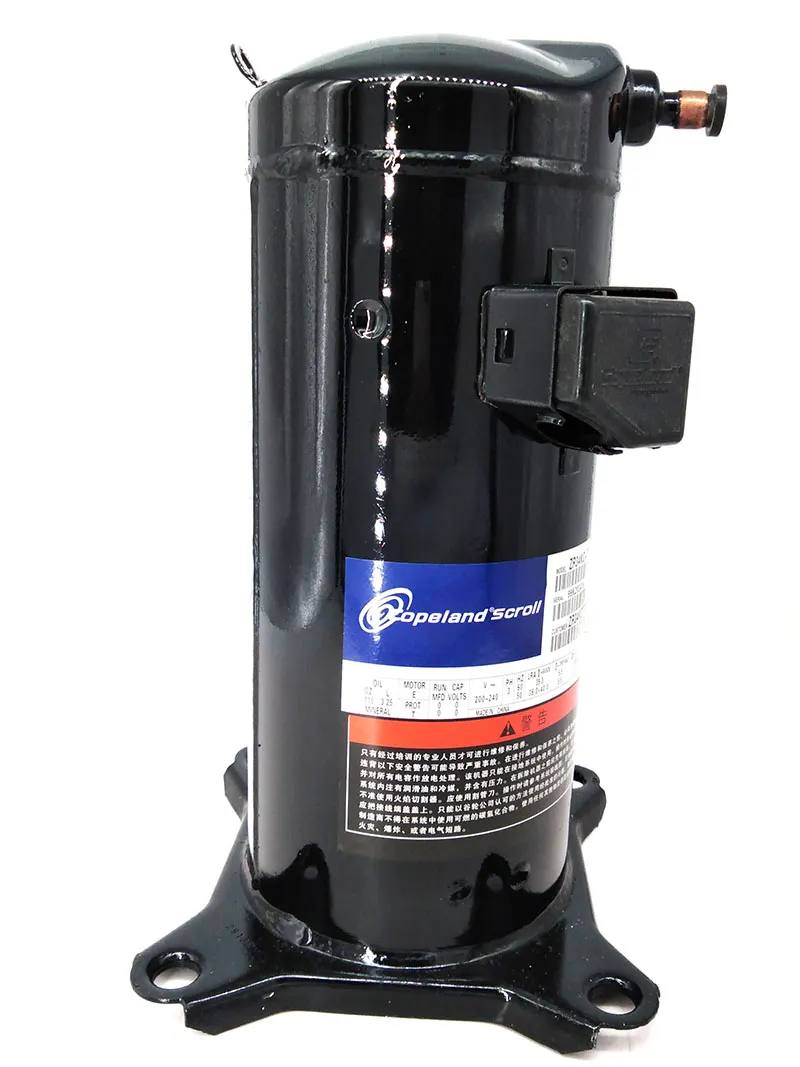
Compressor HP, BTU, Watts and Cooling Capacity: What Buyers Should Know Before Matching a Model
Horsepower is only a rough clue. Learn how BTU/h, watts, displacement and rating conditions affect compressor replacement selection.
When a refrigeration compressor fails, buyers often start with one question: “What HP is it?” Horsepower is familiar, easy to communicate and widely printed in catalogs. It is also one of the most common reasons for incorrect compressor matching.
A 1 HP compressor is not automatically equal to another 1 HP compressor. The real cooling capacity depends on refrigerant type, evaporating temperature, condensing temperature, compressor design, displacement, motor efficiency, voltage and the test standard used for the published rating. The same model may show very different BTU/h or watt capacity under air-conditioning, medium-temperature refrigeration or low-temperature freezing conditions.
For distributors, repair companies, service technicians and cold-room installers, understanding compressor HP to BTU conversion is less about memorizing a chart and more about comparing the correct rating point. A good replacement decision protects cabinet temperature, energy use, compressor life and customer satisfaction.
Why Horsepower Alone Is Not Enough
Horsepower describes motor power, not the exact cooling capacity delivered in a refrigeration system. In simple terms, HP tells you something about the compressor motor size, while BTU/h or watts of cooling capacity describe how much heat the compressor can help remove from the refrigerated space under specific conditions.
This distinction matters because refrigeration compressors do not operate at one fixed capacity. Their output changes with suction pressure, discharge pressure, refrigerant properties and system temperature. A compressor used for an air-conditioning evaporator may deliver much higher capacity than the same compressor operating in a freezer application.
A common problem in replacement selection is assuming that compressors with the same nominal HP are interchangeable. They may not be. Differences can include:
- Different refrigerants, such as R134a, R404A, R407C, R410A, R448A, R449A, R290 or other market-specific options
- Different application ranges, such as high, medium or low back pressure
- Different electrical specifications, including voltage, phase and frequency
- Different compressor technologies, such as reciprocating, scroll, rotary or semi-hermetic designs
- Different displacement and speed
- Different oil type and refrigerant compatibility
- Different capacity ratings under different test conditions
For example, a compressor described as “1 HP” for medium-temperature refrigeration cannot be selected confidently without checking its rated capacity at the required evaporating and condensing temperatures. In low-temperature conditions, the same horsepower class may provide much less cooling capacity than a buyer expects.
Understanding BTU/h, Watts, HP and Displacement
Compressor catalogs use several capacity-related terms. They are connected, but they do not mean the same thing. Matching a replacement requires knowing what each term can and cannot tell you.
BTU/h: heat removal rate
BTU/h, or British thermal units per hour, is a measure of cooling capacity. It tells you how much heat the system can remove per hour at a stated operating condition. Many buyers in North America, the Middle East, Africa and parts of Asia are comfortable comparing refrigeration compressor capacity in BTU/h.
As a general unit conversion:
- 1 watt of cooling capacity equals about 3.412 BTU/h
- 1,000 watts equals about 3,412 BTU/h
- 12,000 BTU/h is commonly called 1 refrigeration ton
These are unit conversions, not compressor selection rules. A compressor rated at 12,000 BTU/h at one condition may not deliver 12,000 BTU/h at another condition.
Watts: cooling output or electrical input?
Watts can create confusion because catalogs may use watts for different values. A product sheet may list cooling capacity in watts, input power in watts or both.
- Cooling capacity in watts means heat removal capacity.
- Input power in watts means electrical power consumed by the compressor.
- The relationship between cooling capacity and input power is expressed through efficiency indicators such as COP or EER.
A compressor with 2,000 W cooling capacity does not necessarily consume 2,000 W of electrical power. Depending on conditions and efficiency, the electrical input will be different. When checking refrigeration compressor watts, always confirm whether the number refers to capacity or power consumption.
Horsepower: motor size and market label
Horsepower is a motor power unit. In mechanical conversion, 1 HP is approximately 746 watts. However, that does not mean a 1 HP compressor has 746 W of cooling capacity. Cooling capacity is normally higher than electrical input because the refrigeration cycle moves heat rather than directly converting electricity into cooling.
In commercial practice, HP is often used as a product class label. The exact BTU/h capacity of compressors labeled with the same HP can vary widely depending on design and rating conditions. A compressor horsepower chart can be useful for rough screening, but it should not be the only basis for model replacement.
Displacement: volume moved by the compressor
Compressor displacement, often shown in cc, cm³/rev or m³/h, indicates the swept volume of the compressor mechanism. It is important because it influences mass flow and potential capacity. Higher displacement generally suggests greater capacity potential, but it is not a complete answer.
Cooling capacity also depends on volumetric efficiency, refrigerant density at suction conditions, compression ratio, motor speed and compressor technology. Two compressors with similar compressor displacement cc values can still perform differently if they use different refrigerants or operate in different temperature ranges.
Displacement is most useful when comparing models within the same compressor family, refrigerant and application range. It becomes less reliable when comparing different brands, technologies or refrigerants.
Why Rating Conditions Change Cooling Capacity
The most important reason HP-to-BTU matching fails is that compressor capacity changes with operating conditions. A compressor rating is only meaningful when the rating point is known.
Evaporating temperature
Evaporating temperature is closely related to suction pressure and the temperature level of the application. Higher evaporating temperature generally allows higher compressor capacity. Lower evaporating temperature reduces suction gas density and increases the compression ratio, so capacity drops and the compressor works harder.
Typical application categories include:
- Air-conditioning and high-temperature cooling
- Medium-temperature refrigeration for chillers, display cases and cold rooms above freezing
- Low-temperature refrigeration for freezers and frozen storage
A compressor may be suitable for one category but not another. Using a medium-temperature compressor in a low-temperature application without checking its envelope can lead to overheating, low capacity, poor oil return or early failure.
Condensing temperature
Condensing temperature is linked to outdoor ambient temperature, condenser size, airflow and system cleanliness. Higher condensing temperature normally reduces cooling capacity and increases compressor power input. This is especially important in hot climates, rooftop installations, poorly ventilated plant rooms and systems with undersized or dirty condensers.
When comparing compressor BTU capacity, check whether the catalog rating is based on a condensing temperature that matches the real installation. A model that looks acceptable at moderate condensing temperature may be insufficient when operating in high ambient conditions.
Superheat and subcooling
Catalog performance data may also define suction gas temperature, return gas superheat, liquid subcooling or ambient assumptions. These conditions affect capacity and efficiency. For accurate comparison, buyers should compare data at the same or similar test conditions.
If two catalogs use different assumptions, the numbers may not be directly comparable. This is one reason replacement selection should rely on manufacturer performance tables or selection software when available, not just a simple HP or BTU label.
Frequency and speed
In many export markets, compressors may be sold for 50 Hz or 60 Hz power systems. A motor designed for both frequencies can show different capacity and input values depending on operating frequency. In general, speed affects refrigerant mass flow, but the final rating must still come from the manufacturer’s data.
Before substituting a model across markets, confirm voltage, phase, frequency, wiring, starting components and protection requirements. A capacity match is not enough if the electrical specification is wrong.
How to Compare Compressor Models Correctly
A practical replacement process starts with the failed model and the application, then checks capacity under the same operating conditions. The goal is not to find a compressor with the same HP label; the goal is to match the required cooling duty and application envelope.
1. Identify the original compressor and system duty
Record the full compressor model number, brand, refrigerant, voltage, phase, frequency and oil type. Also confirm the equipment type: air conditioner, refrigerator, freezer, display case, cold room, ice machine or condensing unit.
For a cold room, useful information includes room temperature, product load, insulation condition, evaporator type, condenser environment and control method. For a cabinet or appliance, the original compressor label and application category are especially important.
2. Compare capacity at the same evaporating and condensing temperatures
Look for the rated cooling capacity in BTU/h or watts at the same evaporating and condensing conditions. If the original model is rated at one condition and the replacement is rated at another, the comparison can be misleading.
A simplified cooling capacity calculation can help estimate load, but final compressor selection should be checked against compressor performance data. In service replacement, the safest starting point is usually the original model’s performance rating, not a generic HP conversion.
3. Check application range and operating envelope
Confirm that the replacement compressor is approved for the application range. Important points include:
- Low, medium or high back pressure application
- Minimum and maximum evaporating temperature
- Maximum condensing temperature
- Return gas temperature limits
- Required expansion device type
- Motor cooling requirements
- Approved refrigerants and lubricants
A compressor that can start and run does not necessarily operate safely across the required envelope. Operating outside the envelope may reduce life or cause nuisance trips.
4. Compare displacement, efficiency and physical fit
Displacement helps verify whether the models are in a similar capacity class, especially within the same refrigerant and application range. Efficiency data is also valuable because a replacement with similar capacity but higher power input may increase operating cost and heat rejection.
Physical and installation details matter as well:
- Mounting footprint
- Suction and discharge connection size and position
- Shell dimensions
- Electrical terminal layout
- Start relay, capacitor or contactor requirements
- Oil charge and service procedure
- Compatibility with the existing condenser and evaporator
For distributors, these details reduce returns and avoid sending a technically close but practically unsuitable compressor.
5. Review test standards and catalog notes
Compressor ratings may refer to recognized test standards or manufacturer-defined rating points. ASHRAE compressor rating conditions are commonly referenced in many markets, but buyers should still read the details. The standard or rating method defines how capacity and power are measured, including temperatures and sometimes superheat or subcooling assumptions.
When two models are rated under different standards or conditions, do not compare the headline BTU/h number directly. Ask for performance data at the same rating point, or use official selection tools where possible.
Practical Rules for Buyers, Distributors and Installers
A good compressor match balances capacity, reliability, electrical compatibility and availability. The following rules are useful when handling cross-brand or replacement inquiries.
Treat HP as a starting point, not the decision
HP is useful for narrowing the search, but it should not be treated as a direct compressor HP to BTU conversion. Use HP to identify a likely size range, then confirm cooling capacity in BTU/h or watts under the correct conditions.
Ask for the operating condition behind every capacity number
Whenever a supplier quotes compressor BTU capacity, ask: at what evaporating temperature, condensing temperature, refrigerant and frequency? Without those details, the number cannot be used for reliable matching.
Match refrigerant and oil compatibility
A replacement compressor must be suitable for the system refrigerant and lubricant. Changing refrigerant type is not just a compressor decision; it may involve expansion devices, controls, seals, oil return and system performance. For routine replacement, matching the original refrigerant specification is often the most straightforward path unless a qualified retrofit plan is in place.
Avoid oversizing and undersizing
Undersizing can cause long run times, poor pull-down, high product temperature and customer complaints. Oversizing can create short cycling, unstable control, poor humidity performance, reduced efficiency and potential oil return issues. The best replacement is not necessarily the larger one; it is the one that matches the load and operating envelope.
Document cross-reference decisions
For spare parts distributors and repair companies, every cross-reference should include the reason for selection: original model, replacement model, refrigerant, voltage, rated capacity and rating condition. This protects the sales team, supports the installer and makes future service easier.
Consider climate and condenser condition
In hot regions, high condensing temperature is a major factor. A compressor that is marginal at catalog conditions may struggle in high ambient installations. Installers should also inspect condenser cleanliness, airflow and fan operation before blaming the compressor alone for poor capacity.
A Simple Way to Think About HP to BTU Conversion
There is no universal compressor horsepower chart that can accurately convert every HP value into BTU/h for all refrigeration applications. Any chart is only approximate unless it states the refrigerant, application and rating conditions.
A practical comparison looks like this:
- Use HP to estimate the general size class.
- Use BTU/h or watts to compare actual cooling capacity.
- Use evaporating and condensing temperatures to make the comparison meaningful.
- Use displacement to check whether models are mechanically similar.
- Use the operating envelope to confirm the compressor can survive in the application.
- Use electrical and physical specifications to confirm it can be installed correctly.
This approach is especially important for overseas buyers sourcing multiple compressor brands. Different brands may use different model codes, capacity labels and catalog formats. A structured comparison reduces mistakes and helps buyers choose replacements that work in real systems, not just on paper.
Key Takeaway
Compressor HP to BTU conversion is not a fixed formula for selecting a replacement. Horsepower, BTU/h, watts and displacement all provide useful information, but none should be read in isolation. The correct match depends on the refrigerant, application temperature, condensing condition, rating standard, electrical supply and system design.
For distributors, service companies and cold-room contractors, the safest practice is to compare compressor models at the same rating conditions and verify the full application envelope before ordering. This is the difference between a compressor that merely fits the price list and a compressor that performs reliably in the field.
FAQ
Can I convert compressor HP directly to BTU/h?
Not reliably. HP is a motor size indicator, while BTU/h is cooling capacity at specific operating conditions. A rough compressor horsepower chart can help with initial screening, but final selection must compare rated capacity at the same evaporating temperature, condensing temperature, refrigerant and frequency.
Why do two compressors with the same HP have different BTU capacity?
Compressors with the same HP can differ in refrigerant, displacement, speed, efficiency, application range and design. Capacity also changes with evaporating and condensing conditions, so two 1 HP compressors may show different BTU/h ratings in air-conditioning, medium-temperature or low-temperature applications.
What is the difference between compressor watts and cooling capacity watts?
Cooling capacity watts describe the heat removed by the refrigeration system. Input watts describe the electrical power consumed by the compressor. These values are related but not the same. Always check whether a catalog watt value refers to capacity or power input.
How important is compressor displacement in replacement selection?
Compressor displacement is useful for comparing models in a similar family, refrigerant and application range. However, displacement alone does not determine capacity. Volumetric efficiency, refrigerant properties, motor speed and operating conditions also affect performance.
What should buyers check before accepting a cross-reference compressor model?
Buyers should check the original model number, refrigerant, voltage, phase, frequency, cooling capacity at the same rating conditions, application envelope, oil type, starting components, mounting dimensions and pipe connections. The replacement should match both performance and installation requirements.
Buyer Next Step
Move from research to sourcing with a category shortlist, relevant product examples, and a quote request channel.