Commercial Refrigerator Compressor Replacement: Information to Send Before Requesting a Quote
Need a commercial refrigerator compressor replacement quote? Send the right model, refrigerant, voltage, capacity, photos, and dimensions to avoid delays.
Commercial Refrigerator Compressor Replacement: Information to Send Before Requesting a Quote
When a commercial refrigerator, freezer, display cabinet, bottle cooler, or cold-room unit stops cooling, the compressor quickly becomes the most urgent part of the repair discussion. For overseas buyers, however, a commercial refrigerator compressor replacement quote can be delayed by one simple problem: the supplier does not have enough technical information to identify the correct compressor or a reliable alternative.
A compressor is not a universal spare part. Even when two compressors look similar, they may differ in refrigerant, voltage, cooling capacity, application temperature range, motor type, starting components, mounting pattern, oil compatibility, or terminal arrangement. These details affect whether the replacement will start correctly, cool properly, and fit safely into the existing refrigeration system.
For refrigeration spare parts distributors, service companies, repair technicians, and engineering installers, preparing the right information before asking for a quotation can save time, reduce back-and-forth communication, and improve the accuracy of the replacement recommendation. The checklist below explains what to send, why each item matters, and how to collect the details from the existing equipment.
Why Complete Compressor Information Matters
A compressor replacement is not only about matching the physical size. The compressor must match the operating conditions of the equipment and the electrical supply available at the installation site. Incomplete information may lead to a quotation for a model that is close, but not technically suitable.
For example, a display refrigerator compressor used for medium-temperature operation is different from a freezer compressor replacement designed for low-temperature use. A bottle cooler compressor may have a compact layout and specific electrical components, while a cold-room compressor selection may depend more heavily on cooling capacity, evaporating temperature, condensing conditions, and installation environment.
Complete information helps the supplier check several key points:
- Whether the original compressor model is still available
- Whether a direct replacement or equivalent model can be offered
- Whether the refrigerant and compressor oil are compatible with the system
- Whether the motor voltage and frequency match the destination country
- Whether the cooling capacity is suitable for the cabinet, freezer, or cold room
- Whether the compressor will physically fit the base frame and piping layout
- Whether additional accessories, such as relays, capacitors, overload protectors, or mounting kits, may be required
For distributors and repair companies, this also improves customer service. A clear quotation with the right technical basis is easier to explain to end users and reduces the risk of returns caused by incorrect selection.
Compressor Quotation Checklist: What to Send
Before contacting a commercial fridge compressor supplier, prepare the following information as completely as possible. If one item is missing, send the rest and explain what cannot be found. Good photos can often help fill the gap.
1. Original Compressor Model Number
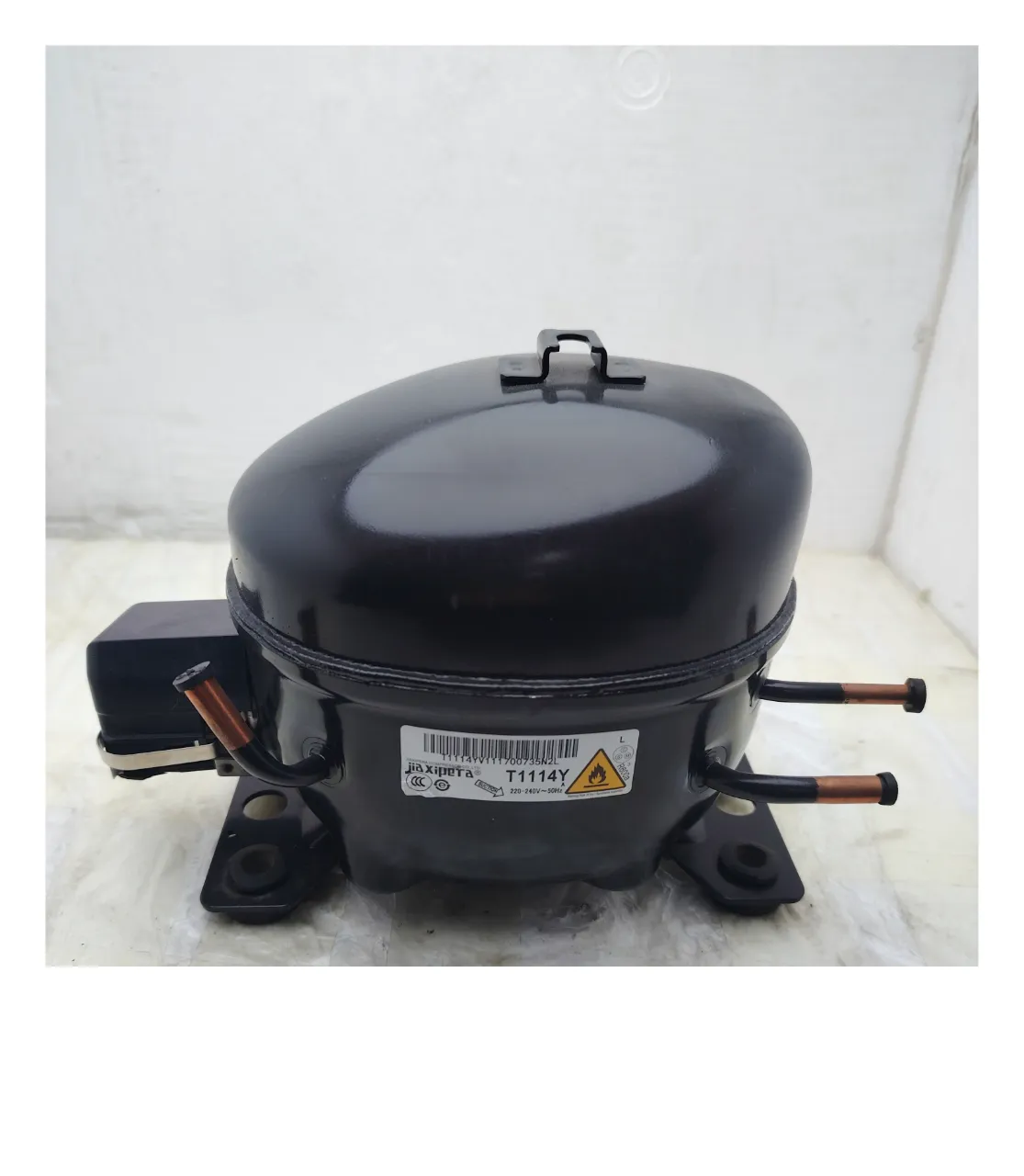
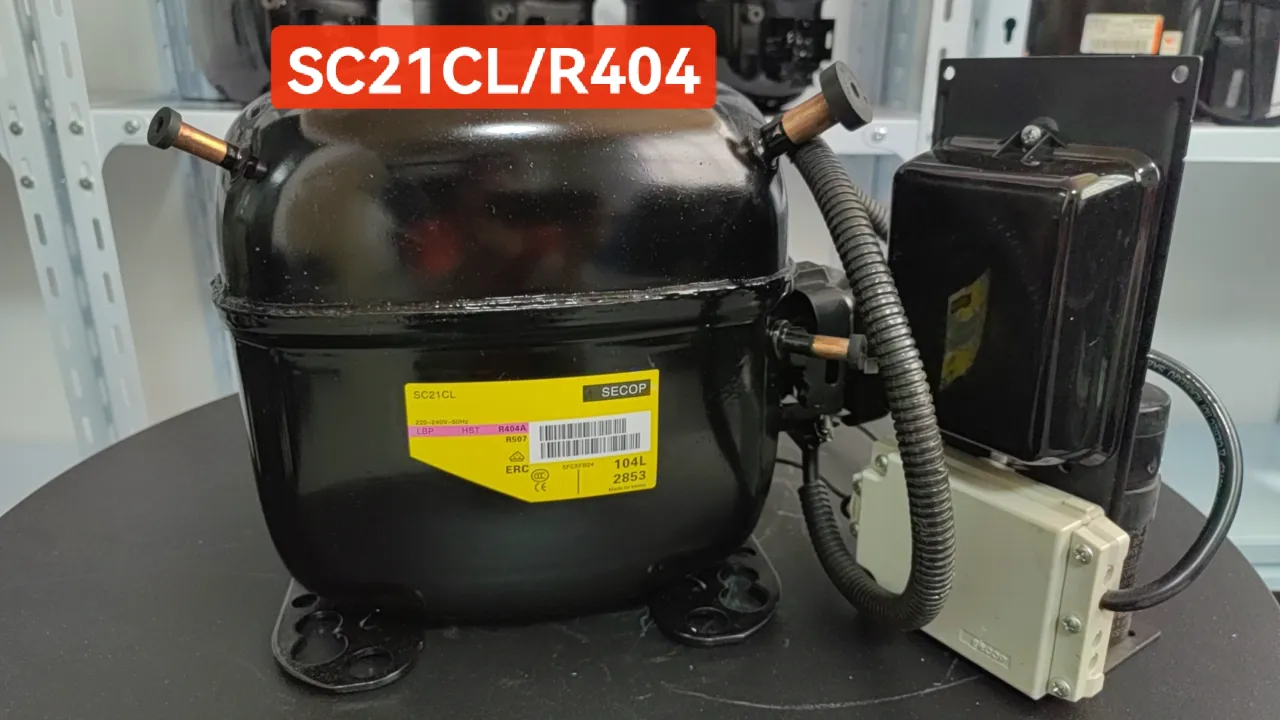
The compressor model number is usually the most important starting point. It is normally printed on the compressor nameplate or label. Depending on the brand, the model code may include information about series, displacement, refrigerant, voltage, motor type, and application range.
Send a clear photo of the nameplate and type the model number in your message. Photos are useful, but typed text avoids confusion when labels are scratched, dirty, or hard to read.
When sending the model number, include:
- Full compressor model code
- Brand name, if visible
- Serial number, if requested or available
- Any additional codes on the label
Do not send only part of the model code unless the full label is unreadable. A missing letter or number can change the technical meaning of the model.
2. Refrigerant Type
The refrigerant must be confirmed before quoting a replacement compressor. Common commercial refrigeration systems may use different refrigerants depending on the equipment age, market, and application. The compressor must be suitable for the refrigerant used in the system and compatible with the oil and operating conditions.
Look for the refrigerant on:
- Compressor nameplate
- Equipment data plate
- Condensing unit label
- Service records
- Refrigeration circuit label inside the cabinet or machine compartment
If the system has been retrofitted to another refrigerant, mention that clearly. Do not rely only on the original cabinet label if the system has been modified in the field.
For service technicians, refrigerant information is also important because it affects charging, pressure range, capillary tube or expansion valve behavior, and oil return. A replacement that matches the old compressor body but not the refrigerant may not operate correctly.
3. Voltage, Phase, and Frequency
Electrical data is essential for any commercial refrigerator compressor replacement. Send the exact voltage, phase, and frequency required at the job site.
Typical information includes:
- Voltage, such as 115 V, 220 V, 230 V, 380 V, or 400 V
- Single-phase or three-phase supply
- Frequency, usually 50 Hz or 60 Hz depending on the country
- Starting component details for single-phase compressors, if known
This is especially important for overseas orders. A compressor suitable for one market may not be correct for another, even if the model appears similar. Voltage and frequency can affect motor performance, starting behavior, current draw, and reliability.
If you are a distributor buying for stock, tell the supplier the countries or regions where the compressors will be sold. If you are buying for a specific repair job, confirm the actual site voltage instead of guessing from the equipment brand.
4. Horsepower or Nominal Power Rating
Horsepower can be useful, especially in repair markets where technicians identify compressors by approximate size. However, horsepower alone is not enough to select a replacement. Different compressor designs can have different cooling capacities at the same nominal horsepower.
Send the horsepower if it is known, but also provide the model number, refrigerant, and cooling capacity whenever possible. If the nameplate shows input power, rated current, locked rotor current, or displacement instead of horsepower, include those details as well.
For small commercial units such as bottle coolers, undercounter refrigerators, and display cabinets, fractional horsepower ratings are common. For larger systems, a more detailed capacity match is usually necessary.
5. Cooling Capacity and Rating Conditions
Cooling capacity is one of the best ways to compare compressor performance, but it must be understood with its rating conditions. A compressor capacity value is usually linked to evaporating temperature, condensing temperature, ambient temperature, return gas temperature, and refrigerant.
When available, send:
- Cooling capacity value
- Unit of measurement, such as W, kW, BTU/h, or kcal/h
- Evaporating temperature
- Condensing temperature
- Refrigerant
- Any performance table or catalog page from the original compressor
If you do not have the exact capacity, provide the equipment type and operating temperature. For example, a glass-door display refrigerator, ice cream freezer, bottle cooler, prep table, or small cold room gives the supplier useful context.
Capacity mismatch can cause real operating problems. An undersized compressor may not reach temperature during high load periods. An oversized compressor may short cycle, reduce efficiency, or create temperature control issues. In systems with capillary tubes, matching compressor capacity is particularly important because the metering device is not as adjustable as an expansion valve.
6. Application Temperature: Chiller, Freezer, or Low Temperature
The application temperature tells the supplier whether the compressor is intended for high, medium, or low evaporating temperature operation. This is critical because a compressor designed for a display refrigerator may not be suitable for a freezer, even if the refrigerant and voltage are the same.
Include the target box or room temperature:
- Bottle cooler or beverage cabinet: often medium-temperature operation
- Display refrigerator: usually chilled storage or merchandising temperature
- Commercial freezer: low-temperature operation
- Cold room: may be chiller or freezer depending on use
- Food prep table or undercounter refrigerator: usually medium temperature
If the compressor is used in a special application, describe it. Examples include high ambient environments, long piping runs, frequent door opening, outdoor condensing units, or continuous operation. These conditions can affect compressor selection and may require a more careful equivalent recommendation.
7. Photos of the Compressor and Equipment
Photos are one of the fastest ways to prevent selection errors. Send clear images from multiple angles, not just a close-up of the label.
Useful photos include:
- Compressor nameplate
- Full compressor body inside the machine compartment
- Suction and discharge pipe positions
- Electrical terminal cover area
- Starting components, capacitors, relays, and overload protector
- Mounting feet and base plate
- Equipment data plate
- Condensing unit or cabinet front view
For repair companies, photos help the supplier understand whether the compressor is hermetic, semi-hermetic, rotary, scroll, reciprocating, or another type. They also help identify pipe orientation, space limitations, and accessory requirements.
Make sure the photos are well lit and not blurred. If the compressor is installed in a narrow cabinet, take several angled pictures instead of one dark image.
8. Terminal Layout and Electrical Accessories
The terminal layout and starting components matter, especially for single-phase compressors. Compressors may use different relay types, capacitors, overload protectors, terminal covers, and wiring arrangements. A replacement compressor may require matching or new electrical accessories.
Send a photo of:
- Compressor terminal pins
- Terminal cover
- Relay or starter
- Run capacitor and start capacitor, if installed
- Overload protector
- Wiring diagram on the unit, if visible
Do not assume that old electrical components are reusable. In many compressor failure cases, related electrical parts may also be damaged or aged. A supplier may recommend a compressor with its matching electrical kit to reduce start-up risk.
For installers, correct wiring is also a safety issue. Always follow the compressor manufacturer’s wiring diagram and local electrical standards. If the existing wiring has been modified, mention it before requesting the quote.
9. Mounting Dimensions and Pipe Connections
A technically correct compressor still needs to fit the equipment. This is especially important for compact commercial cabinets, bottle coolers, island freezers, and display refrigerators where the machine compartment has limited space.
Send the mounting information if the replacement is not a direct original model:
- Distance between mounting holes
- Foot pattern and base plate dimensions
- Compressor height and width limits
- Suction pipe diameter and position
- Discharge pipe diameter and position
- Process tube or service tube position
- Available space around the compressor for ventilation and service access
Photos with a ruler or measuring tape are very helpful. If the compressor must fit an existing base, provide exact dimensions rather than approximate descriptions.
Pipe connection size is also important. Different compressors may require different brazing connections, adapters, or pipe modifications. For field repair work, knowing this before shipment allows the technician to prepare materials and reduce downtime.
10. Destination Country and Import Requirements
Always include the destination country when requesting a compressor quotation. This helps the supplier consider voltage and frequency, available models, packaging requirements, logistics options, and documentation needs.
For distributors, the destination country may also influence product labeling, plug or electrical accessory preferences, and the type of models most commonly used in the local service market. For installers and repair companies, it helps avoid quoting a compressor that is available but unsuitable for the local power supply.
If the shipment is urgent, mention the city, nearest port or airport, preferred shipping method, and whether the order is for one repair job or stock replenishment. While logistics details do not replace technical selection, they help the supplier prepare a more realistic commercial quote.
How Different Buyers Should Prepare a Compressor Request
Different customer types need different levels of detail. A spare parts distributor buying stock has different priorities from a technician replacing one failed compressor at a restaurant or supermarket.
Refrigeration Spare Parts Distributors
Distributors should focus on repeatable model identification and market demand. When requesting quotes, send a list of target compressor models, refrigerants, voltages, and expected quantities. If you are looking for equivalents across multiple domestic and international brands, provide the original model list and the market where the compressors will be sold.
Useful distributor information includes:
- Current popular models in your market
- Required voltage and frequency
- Preferred refrigerants
- Monthly or trial order quantity
- Whether compressors are for air-conditioning, refrigerator, freezer, or cold-room use
- Required accessories, if any
This allows the supplier to quote original models where available and suggest practical alternatives where suitable.
Service and Repair Companies
Repair companies usually need fast identification for a failed unit. The best approach is to send photos from the job site together with the technical data from the compressor label and equipment plate.
A service request should include:
- Equipment type and brand, if known
- Original compressor model
- Refrigerant
- Voltage, phase, and frequency
- Cabinet or room temperature
- Photos of compressor, wiring, and pipe layout
- Failure symptoms, if relevant
Failure symptoms are not always required for quotation, but they can be useful. For example, a compressor that failed after repeated overload trips may raise questions about condenser cleanliness, fan operation, refrigerant charge, or system blockage. A replacement compressor should not be installed until the cause of failure is checked.
Cold-Room Contractors and Engineering Installers
Cold-room compressor replacement often requires more operating detail than a small cabinet repair. The compressor may be part of a condensing unit, rack, or custom refrigeration system. Capacity, temperature range, refrigerant, and site conditions are especially important.
Send information such as:
- Cold-room application, such as chilled storage or freezer storage
- Room temperature requirement
- Room size, if relevant to capacity discussion
- Refrigerant and expansion device type
- Condensing unit model, if available
- Compressor model and electrical data
- Photos of the unit and installation environment
If the original compressor is unavailable, equivalent selection should be reviewed carefully to avoid capacity, oil return, or operating envelope issues.
Common Mistakes That Delay Replacement Quotes
Many quotation delays happen because the inquiry contains only a photo of the compressor or a short message such as “need freezer compressor.” This is understandable during an urgent repair, but it is not enough for accurate selection.
Avoid these common mistakes:
- Sending only horsepower without refrigerant or voltage
- Sending a blurred nameplate photo with no typed model number
- Confusing cabinet temperature with evaporating temperature
- Assuming all compressors using the same refrigerant are interchangeable
- Forgetting to mention 50 Hz or 60 Hz power supply
- Requesting a freezer compressor replacement for a medium-temperature compressor model
- Ignoring mounting dimensions in compact cabinets
- Reusing old starting components without checking compatibility
- Not mentioning that the system was retrofitted to another refrigerant
- Asking for a quote without destination country or quantity
The more complete the inquiry, the easier it is for a commercial fridge compressor supplier to respond with a suitable model, accessories, and lead time.
A Simple Message Template for Requesting a Quote
Use the following format when contacting a supplier. It works for display refrigerators, commercial freezers, bottle coolers, undercounter units, and many small condensing units.
Compressor replacement quote request
- Equipment type: display refrigerator / freezer / bottle cooler / cold room / other
- Original compressor brand and model:
- Refrigerant:
- Voltage / phase / frequency:
- Horsepower or power rating:
- Cooling capacity and rating conditions, if available:
- Application temperature or cabinet temperature:
- Destination country:
- Quantity required:
- Photos attached: nameplate, compressor body, terminal area, wiring, mounting feet, equipment plate
- Mounting dimensions:
- Suction and discharge pipe sizes or photos:
- Urgency: repair job / stock order / project order
- Notes: system retrofit, special ambient condition, space limitation, or accessory requirement
This format gives the supplier enough information to check both technical suitability and commercial availability. It also creates a written record that your purchasing, service, and warehouse teams can review later.
Practical Takeaway
A successful commercial refrigerator compressor replacement quote depends on clear technical information. The most important details are the original model number, refrigerant, voltage, horsepower or power rating, cooling capacity, application temperature, photos, terminal layout, mounting dimensions, and destination country.
For overseas distributors and repair companies, a complete compressor quotation checklist reduces delays and helps suppliers compare direct replacements with suitable alternatives. For installers and service technicians, it also lowers the risk of receiving a compressor that cannot be wired, mounted, or operated correctly in the existing system.
When in doubt, send more information rather than less. A few clear photos and accurate nameplate details can prevent days of unnecessary communication and help move the repair or purchase forward with confidence.
FAQ
What information is most important for a commercial refrigerator compressor replacement quote?
The most important details are the original compressor model number, refrigerant, voltage, phase, frequency, cooling capacity, application temperature, photos of the nameplate and compressor, terminal layout, mounting dimensions, and destination country.
Can a compressor be selected by horsepower only?
Horsepower is helpful, but it is not enough. Compressors with the same horsepower can have different cooling capacities, refrigerants, voltage ratings, application ranges, and mounting layouts. Always provide the model number, refrigerant, electrical data, and application temperature.
Why does the supplier need photos of the old compressor?
Photos help confirm the nameplate data, compressor type, pipe positions, terminal layout, electrical accessories, mounting feet, and available installation space. Clear photos reduce the risk of quoting a compressor that does not fit or requires unexpected modifications.
Is a display refrigerator compressor the same as a freezer compressor?
Not necessarily. Display refrigerators usually operate at medium temperatures, while freezers require low-temperature compressor performance. Even with the same refrigerant and voltage, the compressor must match the correct application temperature range.
Why should I include the destination country when requesting a compressor quote?
The destination country helps confirm voltage and frequency requirements, logistics options, documentation needs, and market suitability. It is especially important for overseas buyers because power supply standards and common compressor models vary by region.
Buyer Next Step
Move from research to sourcing with a category shortlist, relevant product examples, and a quote request channel.