How to Select a Compressor for Low-Temperature Refrigeration and Freezer Systems
A practical guide to choosing a compressor for low-temperature refrigeration, with key checks on evaporating temperature, refrigerant, oil return, defrost, and compressor type.
Low-temperature refrigeration puts far more stress on a compressor than medium-temperature cooling. Freezers, frozen food rooms, blast freezers, and deep-freeze cabinets operate with lower evaporating temperatures, higher compression ratios, and tighter control demands. That changes how buyers should evaluate compressor capacity, motor cooling, discharge temperature, oil return, and refrigerant compatibility.
For distributors, service companies, and cold-room installers, compressor selection is not only a technical decision. It affects reliability, replacement intervals, pull-down time, energy use, and whether the system can survive real operating conditions such as hot ambient weather, frequent door openings, long piping runs, and heavy defrost cycles.
A compressor that performs well in a chiller or medium-temp cold room may struggle badly in freezer duty. The right selection starts with the application conditions, not just the nominal horsepower.
Why low-temperature applications are different
A compressor for low temperature refrigeration must operate efficiently and safely at lower suction pressures. As the evaporating temperature drops, the compression ratio rises. That usually means:
- lower mass flow for a given displacement
- higher discharge temperature
- reduced volumetric efficiency
- greater stress on valves, oil, and motor insulation
- more sensitivity to refrigerant charge and oil return problems
Typical low-temperature applications include:
- freezer rooms
- frozen storage warehouses
- supermarket frozen cases
- ice cream cabinets
- blast freezers
- process freezers
- deep-freeze systems
In practical terms, buyers should focus on the full operating envelope. A compressor must handle both design conditions and difficult field conditions, such as dirty condensers, low superheat stability, long refrigerant lines, and irregular maintenance.
Start with the real operating temperatures
The most important input is the actual evaporating temperature, not only the room setpoint.
A freezer room at -18°C room temperature does not mean the compressor works at -18°C evaporating temperature. The evaporating temperature is normally lower because the evaporator needs a temperature difference to remove heat. The exact gap depends on evaporator design, airflow, frost condition, and system loading.
Evaporating temperature and application range
When selecting a freezer compressor, confirm:
- room or product target temperature
- evaporating temperature under normal load
- condensing temperature at local ambient conditions
- expected suction superheat
- design pull-down requirement
A system serving a frozen room, a hardening room, and an ultra-low process load may all be called low temp, but their compressor requirements can be very different.
Broadly speaking:
- Freezer duty usually requires a compressor suited to low evaporating temperatures with stable performance below normal chiller conditions.
- Deep-freeze or ultra-low temperature duty may require special refrigerants, reinforced motor protection, liquid injection, economized designs, or two-stage compression.
Do not size by horsepower alone
Horsepower is a poor shortcut for low-temp compressor selection. Two compressors with similar motor ratings can deliver very different capacity at low evaporating temperatures. Buyers should compare:
- refrigeration capacity at the required evaporating and condensing conditions
- power input at the same conditions
- operating envelope limits
- discharge temperature control requirements
- refrigerant and oil compatibility
For replacement jobs, this is especially important. A nominally similar compressor may fit the pipe connections but fail in the application because its low-temperature envelope is narrower.
Control discharge temperature and compression stress
High discharge temperature is one of the main risks in low-temperature refrigeration. As suction gas gets colder and the pressure ratio increases, discharge temperature can rise to levels that damage oil, valves, gaskets, and motor windings.
Why discharge temperature matters
Excessive discharge temperature can lead to:
- oil breakdown and carbon formation
- reduced lubrication quality
- valve plate damage
- nuisance trips on thermal protection
- shorter compressor life
This risk becomes more serious when a system also has:
- high condensing temperature
- low suction pressure
- insufficient return gas cooling
- low refrigerant mass flow
- poor condenser maintenance
Common ways to manage discharge temperature
Depending on compressor design and refrigerant, discharge temperature may be managed with:
- liquid injection
- vapor injection or economizer circuits
- head cooling fan arrangements on some semi-hermetic designs
- correct superheat control
- condenser sizing and cleaning
- lower compression ratio through better system design
- two-stage compression for very low evaporating temperatures
For buyers and contractors, the key point is simple: do not assume every low temp refrigeration compressor can run safely across the full freezer range without additional cooling measures. Always verify whether the model requires injection, external cooling, or strict operating limits.
Refrigerant choice affects compressor selection
The refrigerant is not a secondary detail. It directly affects compressor capacity, motor loading, discharge temperature, oil management, pressure levels, and replacement options.
What to check when matching refrigerant and compressor
Before selecting or replacing a compressor, confirm:
- approved refrigerants for that compressor model
- expected capacity at freezer conditions with that refrigerant
- lubricant type required
- discharge temperature behavior
- expansion device suitability
- compatibility with existing system components and controls
Some refrigerants are widely used for low and medium temperature systems, while others are selected for lower discharge temperature, specific regulatory needs, or retrofit pathways. In deep-freeze or ultra low temperature applications, refrigerant selection becomes even more critical because the compressor may need a special application design or multistage arrangement.
Replacement buyers should be cautious with cross-brand matching
A replacement compressor cannot be selected only by refrigerant name, displacement, and voltage. Cross-brand substitution should also check:
- low-temperature application envelope
- motor protection method
- oil type and charge quantity
- cooling method
- connection sizes and orientation
- defrost and pump-down operating pattern
This is where many field problems start. A compressor may run initially but fail early because the application conditions exceed its intended low-temp operating range.
Oil return, piping design, and defrost are not minor details
Many low-temperature compressor failures are linked to system conditions rather than factory defects. Long pipe runs, poor suction line layout, irregular defrost, and oversized evaporators can all affect compressor survival.
Oil return becomes more difficult at low temperature
At low suction velocities and long piping distances, oil can remain trapped in the evaporator or suction line. Frost buildup and fluctuating load conditions can make the problem worse.
Poor oil return may cause:
- low oil level trips
- bearing wear
- noisy operation
- reduced heat transfer in the evaporator
- eventual compressor seizure
Distributors and contractors should pay close attention to:
- vertical riser design
- suction line sizing
- oil traps where appropriate
- line velocity during minimum load conditions
- evaporator circuit balance
- separator use on larger or more complex systems
A compressor that is technically correct on paper may still underperform if the piping design does not support reliable oil return.
Defrost changes the operating pattern
Defrost has a direct impact on freezer compressor selection because it changes evaporator temperature, suction behavior, and total system load.
Key effects include:
- temporary loss of cooling capacity during defrost periods
- higher load immediately after defrost
- moisture and frost affecting airside performance
- possible liquid floodback risk during restart if controls are poor
When evaluating a low temp compressor for a freezer room or display case, consider:
- defrost method used
- defrost frequency
- pull-down requirement after defrost
- refrigerant migration risk during off cycle
- crankcase heating and pump-down strategy
Frequent defrost cycles can create more severe operating swings than steady frozen storage duty. Service teams should review not only compressor size, but also controls, solenoid operation, defrost termination, and restart sequence.
Choosing the right compressor type for freezer and deep-freeze duty
There is no single best compressor type for every low-temperature refrigeration system. The right choice depends on application size, refrigerant, temperature range, serviceability, and budget.
Hermetic compressors
Hermetic compressors are common in smaller packaged freezer equipment and cabinets. They can be a practical option where the system is compact and factory-matched.
Strengths:
- compact design
- lower installation complexity
- common in factory-built equipment
Limitations:
- less field serviceability
- application envelope must be checked carefully for low temp use
- replacement often requires close electrical and performance matching
Semi-hermetic reciprocating compressors
Semi-hermetic reciprocating compressors are widely used in cold rooms, condensing units, and larger freezer systems. They are often preferred where serviceability and broad application flexibility matter.
Strengths:
- easier field service
- good suitability for many freezer applications
- broad capacity range
- common choice for cold-room contractors and replacement markets
Points to watch:
- discharge temperature management
- unloading behavior where fitted
- oil management on long line systems
- correct refrigerant and motor version selection
Scroll compressors for low temperature duty
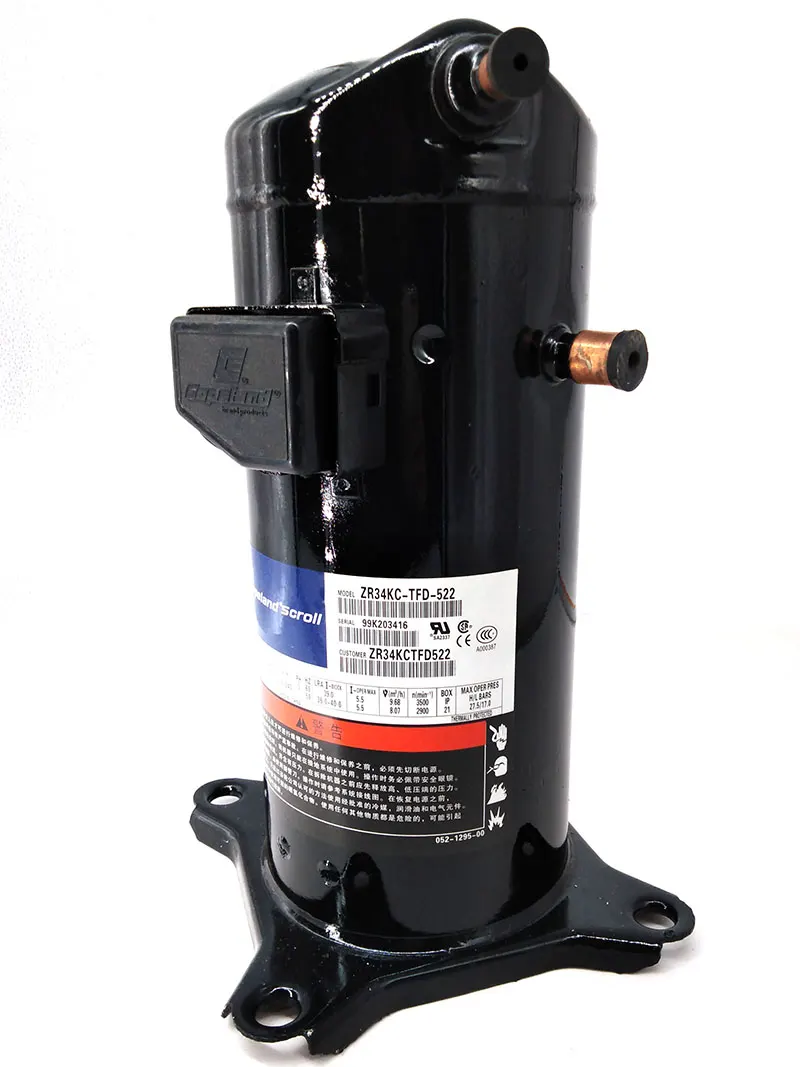
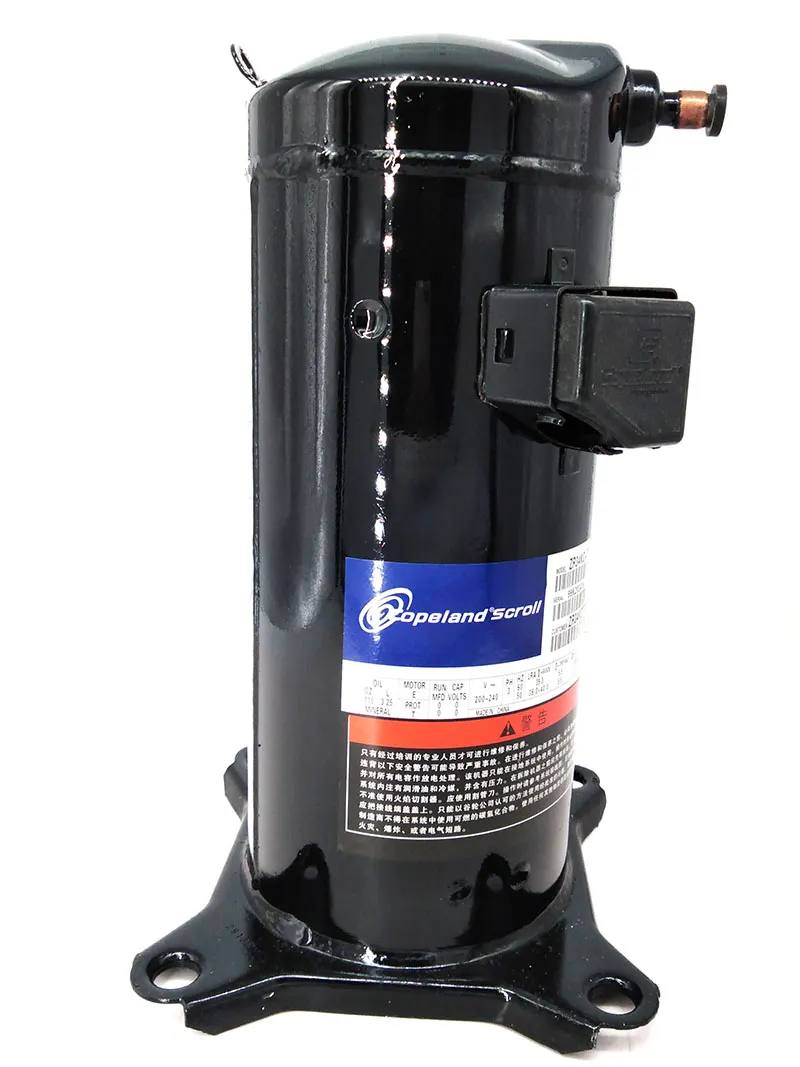
Some scroll compressors are designed for low-temperature refrigeration and can offer compact installation and fewer moving parts. However, suitability depends heavily on the approved refrigerant and operating envelope.
Strengths:
- compact and efficient in the right application
- common in packaged condensing units
Points to watch:
- strict operating envelope compliance
- liquid return sensitivity
- injection requirements on certain low-temp models
Two-stage compressors for very low evaporating temperatures
When evaporating temperatures become very low, a two stage compressor for freezer or deep-freeze applications may be the better choice. Two-stage compression reduces the compression ratio handled in a single step and can improve operating stability in demanding conditions.
Typical reasons to consider two-stage compression:
- very low suction temperatures
- high discharge temperature risk with single-stage designs
- deep-freeze or hardening applications
- better match to ultra-low temperature duty
This does not mean every freezer needs a two-stage machine. For many standard frozen storage rooms, a properly selected single-stage low temp compressor is fully adequate. The decision depends on the actual evaporating temperature and system conditions.
Practical checklist for buyers, distributors, and service teams
When comparing a compressor for low temperature refrigeration, use a structured checklist instead of selecting by model family alone.
Core selection checklist
Confirm the following before ordering:
- required room or product temperature
- design evaporating temperature
- design condensing temperature
- refrigerant type
- voltage, phase, and frequency
- cooling capacity at actual working conditions
- compressor operating envelope
- discharge temperature control method
- oil type and oil return considerations
- defrost method and post-defrost pull-down pattern
- line length and piping layout
- existing controls and protection devices
- mounting, connection, and dimensional compatibility for replacements
Commercially important questions to ask
For overseas spare parts buyers and project contractors, these questions help avoid the wrong purchase:
- Is this compressor rated for true low-temperature freezer duty, or only medium temp work?
- What capacity does it deliver at the actual evaporating and condensing conditions?
- Does the application require liquid injection, vapor injection, or two-stage compression?
- Is the refrigerant approved for this compressor version?
- Will the existing system provide reliable oil return and safe defrost restart?
- Is the replacement intended for storage freezer duty, pull-down duty, or deep-freeze processing?
The bottom line
Selecting a freezer compressor is not a matter of choosing the nearest horsepower or matching the old nameplate as closely as possible. Low-temperature refrigeration increases compression stress, raises discharge temperature risk, and puts more pressure on oil return and control quality.
The best selection process starts with the real evaporating and condensing conditions, then checks refrigerant compatibility, operating envelope, discharge temperature control, oil management, and the effect of defrost cycles. For standard freezer rooms, a properly rated low temp compressor may be enough. For deeper evaporating temperatures and harsher applications, special low-temperature designs or two-stage compression may be the safer route.
For distributors, repair companies, and installers, that approach reduces warranty problems, repeat service calls, and costly mismatches in the field.
FAQ
What is the most important factor when selecting a compressor for low-temperature refrigeration?
The most important factor is the actual operating condition, especially the evaporating temperature and condensing temperature. Compressor selection should be based on capacity and operating envelope at those real conditions, not only on room temperature or motor horsepower.
Why is discharge temperature a major concern in freezer compressor applications?
Low-temperature systems usually run with higher compression ratios, which can push discharge temperature too high. If discharge temperature is not controlled, it can damage oil, valves, gaskets, and motor insulation, leading to shorter compressor life and unreliable operation.
When should a two-stage compressor be considered for freezer duty?
A two-stage compressor should be considered when the evaporating temperature is very low, when discharge temperature becomes difficult to control in a single-stage system, or when the application is deep-freeze, hardening, or other ultra-low temperature duty.
How does defrost affect low-temperature compressor selection?
Defrost changes the thermal load and can create demanding pull-down conditions after each cycle. It can also increase the risk of liquid floodback during restart if controls are poor. Compressor selection should account for the defrost method, frequency, and restart behavior.
Can any low temp refrigeration compressor be used as a cross-brand replacement?
No. A replacement must match more than nominal capacity and refrigerant. Buyers should verify the compressor's low-temperature application range, approved refrigerant, lubricant, cooling method, electrical data, protection method, and physical compatibility with the existing system.
Buyer Next Step
Move from research to sourcing with a category shortlist, relevant product examples, and a quote request channel.