Cold Room Condensing Unit vs Compressor: What Should You Replace or Buy?
A practical guide for deciding whether to replace only the compressor or buy a complete cold room condensing unit for repair or new installation.
Cold Room Condensing Unit vs Compressor: What Should You Replace or Buy?
When a cold room stops pulling down temperature, the compressor is often the first suspect. For repair companies, refrigeration contractors, and spare parts distributors, the next question is usually practical and urgent: should the customer replace only the compressor, or is it better to buy a complete cold room condensing unit?
The answer depends on more than the failed component. System age, refrigerant type, installation condition, oil contamination, electrical controls, condenser condition, and the customer’s downtime tolerance all matter. A compressor-only replacement can be faster and more economical when the rest of the system is healthy. A complete condensing unit can reduce risk when multiple parts are aging, mismatched, damaged, or unavailable.
This guide explains the difference between a cold room condensing unit and a compressor, when each replacement option makes sense, and what information suppliers need to quote the correct model.
Condensing Unit vs Compressor: What Is the Difference?
A compressor and a condensing unit are closely related, but they are not the same product.
What a compressor does
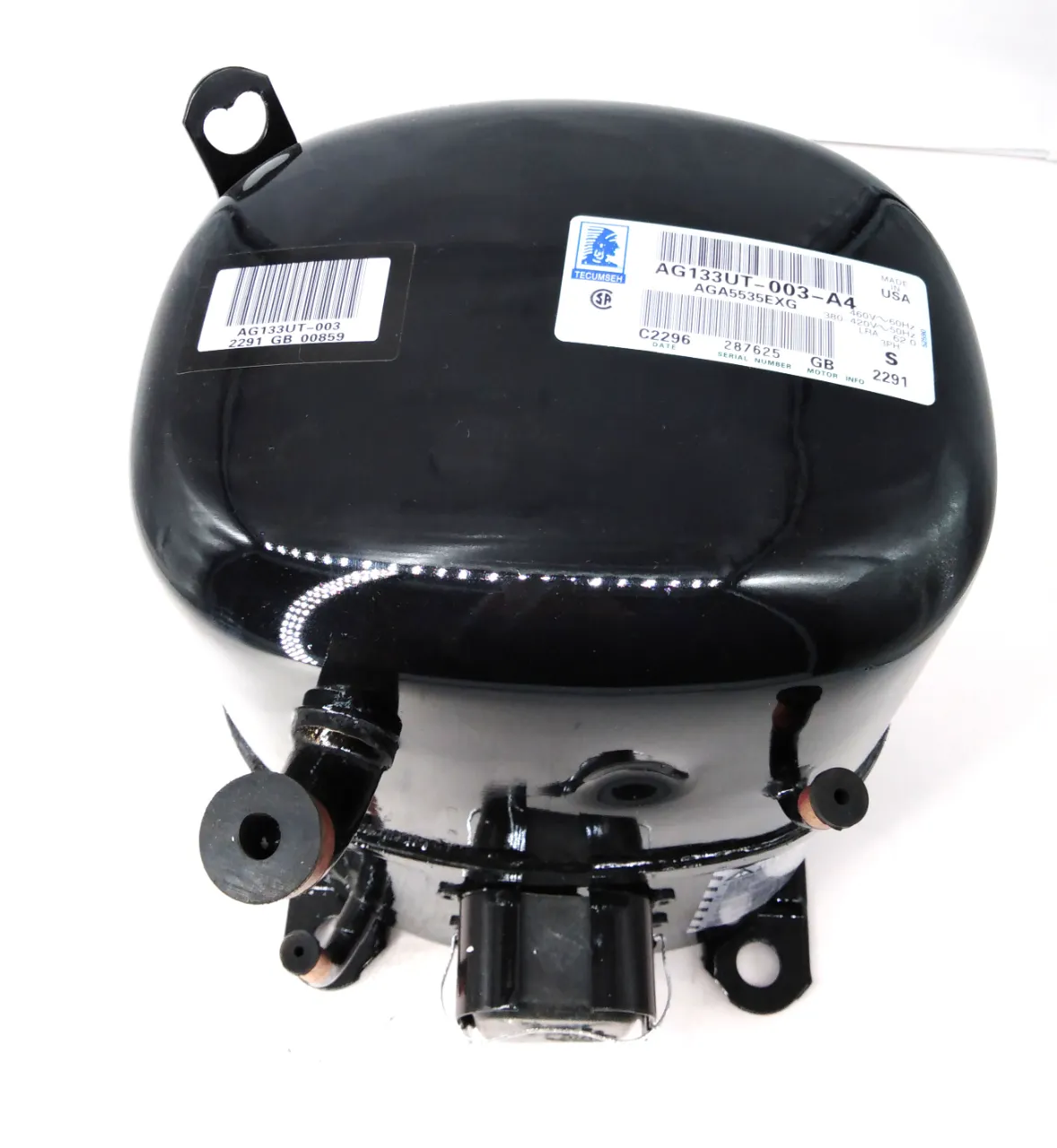
The compressor is the core mechanical component that circulates refrigerant through the refrigeration system. It compresses low-pressure refrigerant vapor from the evaporator into high-pressure vapor, allowing heat to be rejected at the condenser.
In cold room applications, compressors may be supplied as:
- Hermetic compressors
- Semi-hermetic compressors
- Scroll compressors
- Reciprocating compressors
- Screw compressors for larger systems
For walk-in coolers, freezer rooms, food storage rooms, and small industrial cold rooms, hermetic, semi-hermetic, scroll, and reciprocating models are common depending on capacity and temperature range.
What a cold room condensing unit includes
A cold room condensing unit is a packaged outdoor or machine-room assembly built around the compressor. Depending on design and manufacturer, it commonly includes:
- Compressor
- Air-cooled condenser coil
- Condenser fan motor and fan blade
- Receiver, on many medium and larger systems
- Oil separator or accumulator, depending on application
- Filter drier and sight glass, in some configurations
- Pressure controls and protection devices
- Electrical box, contactor, overload, and basic controls
- Service valves and mounting frame or housing
In simple terms, the compressor is the heart of the refrigeration circuit. The condensing unit is the heart plus the condenser, controls, fan system, and supporting components needed to reject heat and operate safely.
Why the distinction matters for buyers
A buyer searching for a “cold room condensing unit compressor” may be looking for either a bare compressor replacement or a full condensing package. Confusing the two can lead to wrong quotations, incorrect capacity matching, delayed repair, and avoidable installation costs.
For distributors and service companies, clarifying this point early helps avoid sending the wrong part to site. For installers, it also affects pipework, wiring, refrigerant charge, commissioning time, and warranty handling.
When Replacing Only the Compressor Makes Sense
A compressor-only replacement can be the right choice when the system is otherwise in good condition and the failure is isolated. It is common in service work where the existing condensing unit frame, condenser coil, fan, receiver, controls, and pipework remain usable.
Good reasons to buy only the compressor
Replacing only the compressor may be suitable when:
- The existing condensing unit is relatively new or well maintained
- The condenser coil is clean, structurally sound, and not heavily corroded
- Condenser fan motors, controls, and wiring are working properly
- The replacement compressor is available with matching capacity and refrigerant compatibility
- The original failure cause is known and corrected
- The customer needs a lower-cost repair rather than full equipment replacement
- Installation space or pipework makes full unit replacement difficult
For example, if a compressor has an electrical winding failure but the condenser, fans, pressure controls, and refrigerant circuit are in good condition, a like-for-like compressor replacement can be efficient.
What technicians must check before compressor replacement
A failed compressor is often a symptom, not the root cause. Before installing a new compressor, repair teams should investigate why the original unit failed. Important checks include:
- Supply voltage and phase balance
- Contactor condition and overload protection
- Refrigerant charge and evidence of leaks
- Condenser airflow and coil cleanliness
- Evaporator fan operation
- Expansion valve operation and superheat
- Oil return and pipe sizing
- Acid or moisture contamination after motor burnout
- Suction and discharge pressure history, if available
Installing a new compressor into a contaminated or poorly operating system can cause repeat failure. In motor burnout cases, proper cleanup, filter drier replacement, evacuation, and oil/refrigerant handling are especially important.
Commercial advantages of compressor-only replacement
For spare parts distributors and repair contractors, compressor-only replacement has clear advantages:
- Lower product cost than a full condensing unit
- Easier stocking for fast-moving models
- Less transport volume and freight cost
- Minimal changes to existing pipework and installation layout
- Faster repair when the correct model is available
However, the apparent saving should be compared with labor time, additional parts, risk of old accessories failing later, and whether the replacement compressor is truly compatible with the existing refrigeration system.
When Buying a Complete Cold Room Condensing Unit Is Better
A complete condensing unit is often the better choice when the existing unit is old, heavily corroded, poorly matched, or has multiple failing components. It is also the natural choice for new cold room projects and many system upgrades.
Good reasons to replace the full condensing unit
Buying a full condensing unit may be the safer option when:
- The compressor failed due to long-term high head pressure or poor heat rejection
- The condenser coil is corroded, blocked, leaking, or undersized
- Fan motors, controls, contactors, and wiring are also aged or unreliable
- The current unit uses an outdated or unavailable compressor model
- The system requires a refrigerant change or capacity change
- The original installation is poorly configured or difficult to service
- The customer wants improved reliability and fewer repeat service calls
- The job is a new walk-in cooler, freezer room, or cold storage installation
In many cold room repair projects, the compressor replacement cost is only part of the total cost. Labor, refrigerant, accessories, brazing materials, electrical work, evacuation, commissioning, and future service calls must also be considered. If several major components are near end of life, a complete condensing unit may offer better long-term value.
Full unit replacement can reduce mismatch risk
A condensing unit is designed as an integrated assembly. Compressor capacity, condenser surface area, fan airflow, receiver size, controls, and operating envelope should work together. When buyers replace only one major component in an older unit, compatibility becomes the installer’s responsibility.
A complete unit can reduce risks such as:
- Compressor capacity not matching the condenser
- Incorrect refrigerant application
- Insufficient condenser airflow in hot ambient conditions
- Electrical control mismatch
- Poor service access after modification
- Unclear warranty responsibility between parts
This is especially important for overseas projects where the supplier, installer, and final customer may be in different countries. A complete condensing unit is easier to specify, ship, install, and support when the application details are clear.
When a walk-in cooler condensing unit is the practical choice
For walk-in cooler and freezer projects, contractors often prefer a complete walk-in cooler condensing unit rather than sourcing every component separately. This is practical when the project needs predictable installation time, standard service components, and a clear match to room temperature and cooling load.
For replacement work, a full unit may also be preferred when site access allows easy removal and installation. In that case, the contractor can renew the compressor, condenser, fans, electrical box, and controls in one job instead of repairing the old unit piece by piece.
How to Decide: Repair Cost, Risk, and System Condition
The best decision is not always the cheapest quotation. A good replacement choice balances upfront price, labor, system reliability, delivery time, and future maintenance.
Use a simple decision framework
When deciding whether to replace the compressor or condensing unit, evaluate these five points:
- Cause of failure
If the compressor failed because of external system problems, those problems must be corrected. If the cause is unknown, replacing only the compressor carries higher risk.
- Condition of the existing condensing unit
A clean, solid, properly sized unit may justify compressor replacement. A corroded, leaking, or heavily modified unit may not.
- Age and availability of components
If fan motors, controls, and compressor models are difficult to obtain, a complete new unit may reduce future downtime.
- Total installed cost
Compare the compressor price plus labor, refrigerant, driers, oil, electrical parts, cleaning, and commissioning against the installed cost of a complete unit.
- Customer downtime and reliability expectations
Food storage, pharmaceutical storage, and high-value goods may justify a more reliable full-unit replacement to avoid repeat breakdowns.
Compressor replacement cost is only one part of the calculation
Many buyers focus on compressor replacement cost because it is the most visible line item. In real service work, the final job cost may also include:
- Site diagnosis
- Refrigerant recovery and recharge
- New filter drier and related accessories
- Nitrogen pressure test
- Vacuum pump time and commissioning
- Electrical troubleshooting
- Oil or acid cleanup after burnout
- Transport and lifting
- Return visits if another old component fails
For this reason, distributors and contractors should avoid comparing a bare compressor price directly with a complete condensing unit price without considering installation scope.
Do not ignore operating conditions
Cold room systems operate under very different conditions depending on ambient temperature, room temperature, product load, door openings, insulation, and defrost design. A compressor or condensing unit that works well in one application may be wrong for another.
Important application factors include:
- Chiller room or freezer room operation
- Target room temperature
- Local ambient temperature around the condenser
- Refrigerant type
- Power supply voltage and frequency
- Required cooling capacity
- Evaporating and condensing temperature assumptions
- Indoor evaporator model and expansion device
For accurate refrigeration condensing unit selection, these details are more useful than simply saying “same horsepower.” Horsepower is a rough reference, not a full selection method.
What Information Suppliers Need for an Accurate Quotation
A cold room condensing unit supplier or compressor distributor can quote faster and more accurately when the inquiry includes technical details. Clear information reduces back-and-forth emails, wrong model selection, and shipping delays.
If you need only a replacement compressor
Send the supplier as much of the following information as possible:
- Existing compressor brand and model number
- Compressor nameplate photo
- Refrigerant type
- Power supply: voltage, phase, and frequency
- Application: medium temperature, low temperature, chiller, freezer, etc.
- Existing condensing unit model, if available
- Cooling capacity requirement or cold room size and temperature
- Failure type: mechanical failure, winding burnout, low capacity, noise, locked rotor, etc.
- Required accessories: relay, capacitor, overload, crankcase heater, mounting kit, oil, or terminal cover
- Connection sizes and mounting dimensions, if replacement space is limited
For semi-hermetic and larger compressors, also provide oil type, unloading requirements, capacity control details, and any special electrical protection requirements if known.
If you need a complete condensing unit
For a full cold room condensing unit quotation, provide:
- Cold room internal dimensions or storage volume
- Target room temperature
- Product type and incoming product temperature, if relevant
- Required pull-down time, if important
- Ambient temperature at the condensing unit location
- Refrigerant preference or local refrigerant requirement
- Power supply: voltage, phase, frequency
- Medium-temperature or low-temperature application
- Indoor evaporator model or required evaporator matching
- Installation location: indoor machine room, outdoor, rooftop, coastal area, or high-temperature environment
- Required unit type: open frame, boxed unit, silent unit, or special configuration
- Quantity, delivery destination, and packaging requirements
Photos of the existing unit and installation site are very helpful for replacement projects. They allow suppliers to see pipe direction, service space, condenser condition, fan arrangement, and electrical layout.
Questions buyers should ask before ordering
Before confirming an order, buyers should clarify:
- Is the quoted item a bare compressor or complete condensing unit?
- Is it suitable for the required refrigerant and temperature range?
- What power supply does the model require?
- Are electrical accessories included or optional?
- Are receiver, pressure controls, fan motors, and service valves included in the condensing unit?
- What installation parts must be purchased separately?
- Are there any limits on ambient temperature or application range?
- What documents, wiring diagrams, or nameplate details are available?
These questions are especially important for importers and overseas distributors who need to resell or install the equipment in different markets.
Practical Buying Advice for Distributors, Repair Teams, and Installers
For refrigeration spare parts distributors, stocking a mix of common compressors and popular condensing unit ranges can support both emergency repair and project demand. Fast-moving compressor models help repair companies reduce downtime, while complete condensing units serve installers, cold-room contractors, and customers upgrading older systems.
Repair companies should focus on diagnosis and compatibility. A compressor-only job can be profitable and efficient, but only when the system is clean, stable, and correctly matched. If the failure cause is not corrected, the new compressor may fail again and damage customer trust.
Engineering installers should treat condensing unit selection as part of the whole cold room design. Cooling load, ambient temperature, evaporator matching, refrigerant, pipe length, and controls must be considered together. A complete unit is not simply a box with a compressor; it is a selected refrigeration package that must fit the application.
Replacement buyers should not send only a horsepower value and ask for the cheapest equivalent. The most useful inquiry includes nameplate photos, refrigerant, voltage, application temperature, site conditions, and whether the buyer wants a bare compressor or a full condensing unit. With that information, suppliers can offer a more accurate and commercially realistic option.
The practical rule is simple: replace only the compressor when the rest of the system is healthy, compatible, and worth keeping. Buy a complete cold room condensing unit when the old unit is unreliable, mismatched, heavily aged, or when the project needs a complete refrigeration package for new installation.
FAQ
Should I replace only the compressor or the whole cold room condensing unit?
Replace only the compressor when the existing condenser, fans, controls, wiring, and refrigeration circuit are in good condition and the failure cause is understood. Replace the whole condensing unit when the system is old, corroded, mismatched, has multiple failing parts, or needs a new refrigerant or capacity selection.
Is a compressor the same as a condensing unit?
No. The compressor is the component that circulates and compresses refrigerant. A condensing unit is a package that includes the compressor plus the condenser coil, fan system, controls, service valves, frame or housing, and sometimes a receiver and other accessories.
What information is needed to quote a replacement compressor?
Suppliers usually need the existing compressor model, nameplate photo, refrigerant, voltage, phase, frequency, application temperature, failure type, and any required accessories. For better matching, also provide the cold room temperature, existing condensing unit model, and connection or mounting limitations.
What information is needed to quote a complete cold room condensing unit?
Provide the cold room size, target temperature, product type, ambient temperature, refrigerant requirement, power supply, application type, evaporator information, installation location, preferred unit style, quantity, and destination. Photos of the old unit or job site are very helpful for replacement projects.
Why can a complete condensing unit be cheaper in the long run?
Although the purchase price is higher than a bare compressor, a complete condensing unit can reduce mismatch risk, renew aging fans and controls, improve service reliability, and avoid repeated labor costs when several old components are near failure.
Buyer Next Step
Move from research to sourcing with a category shortlist, relevant product examples, and a quote request channel.