Cold Room Compressor Buying Guide: Scroll vs Semi-Hermetic vs Reciprocating
Compare scroll, semi-hermetic, and reciprocating cold room compressors for walk-in coolers, freezers, condensing units, and warehouse cold rooms.
Cold Room Compressor Buying Guide: Scroll vs Semi-Hermetic vs Reciprocating
Choosing the right cold room compressor is one of the most important decisions in any refrigeration project. The compressor affects pull-down speed, temperature stability, energy consumption, service cost, noise level, spare-parts planning, and the long-term reliability of the whole cold room system.
For export buyers, the decision is not only technical. A refrigeration spare parts distributor needs compressor models that are easy to stock and support. A service company needs units that technicians can diagnose and repair quickly. A cold-room installer needs a reliable match for walk-in coolers, walk-in freezers, condensing units, and warehouse cold rooms operating in different climates and power conditions.
The main choices are usually scroll compressors, semi-hermetic compressors, and reciprocating compressors. Each type can work well when applied correctly, but they are not interchangeable in every situation. The best option depends on evaporating temperature, cooling capacity, refrigerant, installation space, noise requirements, service expectations, and total lifecycle cost.
What a Cold Room Compressor Must Do
A cold room compressor is the heart of a vapor-compression refrigeration system. It compresses low-pressure refrigerant vapor from the evaporator and sends high-pressure vapor to the condenser. In practical terms, it keeps the cold room at the required temperature by maintaining the pressure and temperature conditions needed for refrigeration.
Cold room applications usually fall into several common categories:
- Walk-in coolers for beverages, dairy, fruit, vegetables, flowers, and general chilled storage
- Walk-in freezers for meat, seafood, frozen food, ice cream, and low-temperature storage
- Cold room condensing units used by installers for small and medium commercial projects
- Warehouse cold rooms requiring larger capacity, longer running hours, and stronger service planning
- Replacement compressors for repair jobs where matching performance and connection details matters
A compressor must be selected around the actual operating condition, not only the room size. A walk-in cooler at medium temperature has very different compressor demands from a walk-in freezer operating at low evaporating temperature. Ambient temperature, insulation quality, door opening frequency, product loading temperature, and condenser performance all influence compressor duty.
For buyers comparing compressor families, the most important evaluation points are:
- Cooling capacity at the required evaporating and condensing temperatures
- Compatibility with the refrigerant and oil type
- Energy efficiency during real operating conditions
- Starting characteristics and electrical requirements
- Noise and vibration level
- Repairability and spare-parts availability
- Local technician familiarity
- Initial purchase price versus lifetime operating cost
Scroll Compressors for Cold Rooms
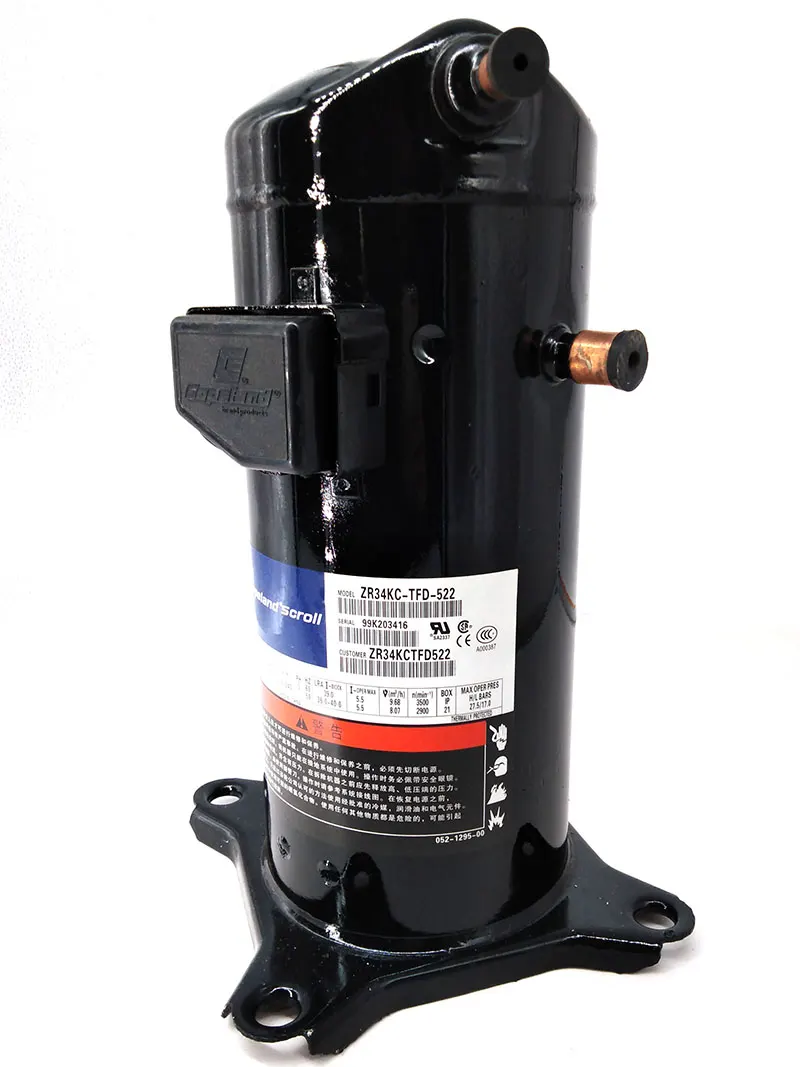
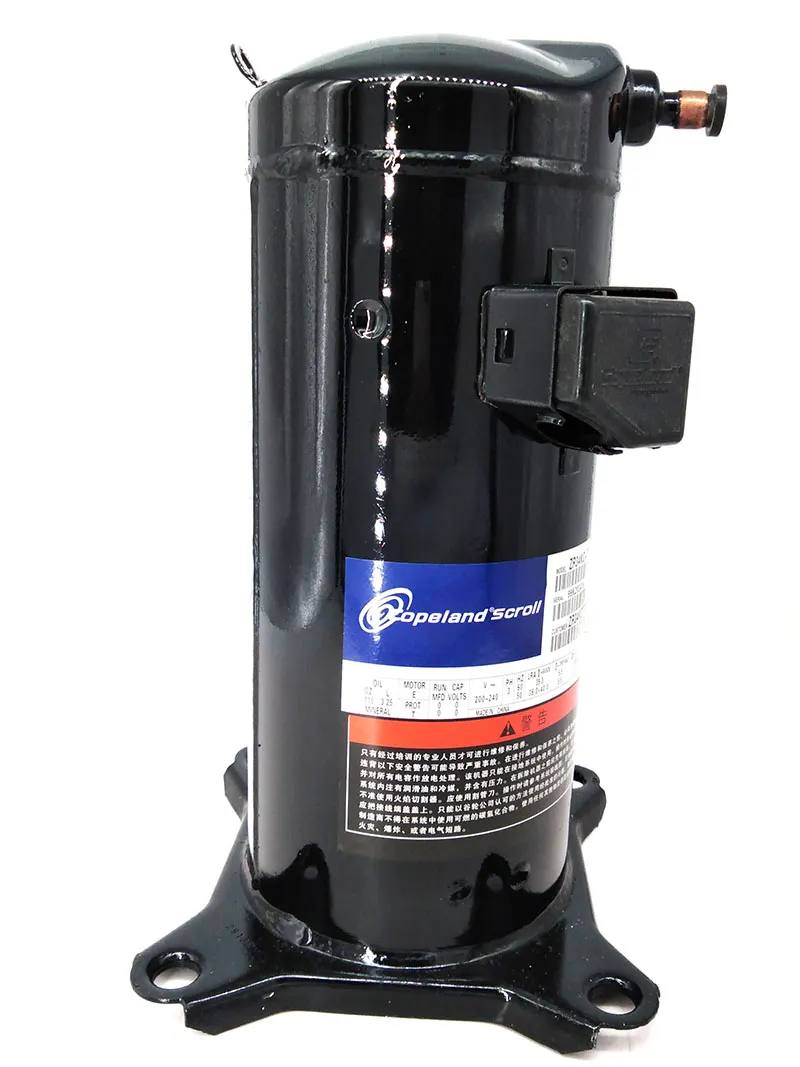
A scroll compressor for refrigeration uses two spiral-shaped scroll elements to compress refrigerant. One scroll remains fixed while the other orbits, creating pockets of refrigerant that move inward and increase in pressure. This design has fewer moving parts than many reciprocating designs and is widely used in commercial refrigeration and air-conditioning equipment.
Where scroll compressors fit best
Scroll compressors are commonly used in small and medium cold room systems, especially packaged condensing units and compact refrigeration equipment. They are often a strong fit for:
- Walk-in coolers
- Small and medium walk-in freezers, when properly rated for low-temperature use
- Convenience store and restaurant cold rooms
- Supermarket back-room storage
- Compact outdoor or indoor condensing units
- Projects where low noise and simple installation are priorities
For many contractors, scroll compressors are attractive because they are compact, relatively quiet, and efficient within their intended operating range. They are also well suited to factory-assembled condensing units where the compressor, condenser, receiver, controls, and protective devices are selected as a package.
Strengths of scroll compressors
The main advantages of scroll compressors are operational simplicity and smooth performance. Compared with many piston-type compressors, scroll units typically have lower vibration because the compression process is more continuous. This can be valuable in restaurants, retail stores, hotels, and urban sites where equipment noise matters.
Scroll compressors are also compact. For installers working with limited plant-room space or rooftop units, this can simplify layout and handling. In many standard cold-room condensing units, scroll compressors support a clean and efficient equipment design.
From a distributor’s perspective, scroll compressors can be easier to sell for standardized applications because many models are tied to common condensing unit platforms. For service companies, replacement is often straightforward when the model, refrigerant, voltage, oil type, and operating envelope are correctly matched.
Limitations and buying cautions
Scroll compressors are usually hermetic, meaning the motor and compression mechanism are sealed inside a welded shell. This improves compactness and reduces external leakage points, but it also means internal repair is not practical in most cases. If the compressor suffers a mechanical or motor failure, the normal solution is replacement rather than overhaul.
Application range is another key point. Not every scroll compressor is suitable for freezer duty. Low-temperature refrigeration requires the correct model selection, often with additional measures such as liquid injection, vapor injection, or specific operating controls depending on the compressor design and system requirement. Buyers should check the compressor’s published operating envelope rather than assuming one scroll model can handle all cold-room conditions.
Scroll compressors are also sensitive to liquid slugging, poor oil return, incorrect phase rotation on three-phase models, and operating outside the approved pressure range. Good system design, correct charging, and proper controls are essential.
Semi-Hermetic Compressors for Cold Rooms
A semi-hermetic compressor places the electric motor and compressor mechanism inside a bolted housing. Unlike a welded hermetic compressor, the casing can be opened for inspection and repair. This makes the semi hermetic compressor a major option for commercial and industrial refrigeration systems where serviceability and long operating life are priorities.
Where semi-hermetic compressors fit best
Semi-hermetic compressors are widely used in medium and larger cold-room systems, especially where the owner expects long service life and where downtime is costly. Common applications include:
- Medium and large walk-in freezers
- Food processing cold rooms
- Distribution center cold storage
- Warehouse cold rooms
- Multi-compressor racks
- Larger cold room condensing units
- Installations requiring better repair options after long service
Semi-hermetic designs are especially relevant for export buyers serving professional refrigeration markets. Many contractors and service companies prefer them for projects where the compressor may need valve plate, gasket, oil pump, bearing, motor, or terminal repairs over time, depending on the model and failure condition.
Strengths of semi-hermetic compressors
The strongest commercial advantage of a semi-hermetic compressor is serviceability. The compressor can be opened, diagnosed, and repaired by qualified technicians. This can reduce lifetime replacement cost in markets where skilled labor and parts are available.
Semi-hermetic compressors also offer a broad capacity range and are commonly used in demanding refrigeration conditions. They can be selected for medium-temperature and low-temperature applications, and many product families support multiple refrigerants and operating configurations. For warehouse cold rooms, where equipment may run for long hours, the ability to service key components can be a major lifecycle advantage.
Another benefit is system flexibility. Semi-hermetic compressors can be used in single-compressor condensing units, parallel systems, and custom refrigeration packages. For engineering installers, this makes them suitable for tailored cold-room projects where standard packaged units are not enough.
Limitations and buying cautions
Semi-hermetic compressors are generally larger, heavier, and more expensive at the initial purchase stage than many scroll or small hermetic reciprocating models. They may also generate more noise and vibration, depending on design, mounting, enclosure, and system condition. Proper installation with vibration absorbers, adequate ventilation, and correct piping support is important.
Serviceability is only a benefit when the market can support it. Export buyers should confirm whether local technicians are familiar with the compressor brand and whether spare parts such as gaskets, valve plates, sight glasses, oil pumps, terminal plates, crankcase heaters, and protection modules are available. If parts are difficult to obtain, the repairable design may not deliver its full value.
For distributors, stock planning is also more complex. Semi-hermetic compressors often require careful matching by capacity, displacement, refrigerant, voltage, application temperature, and accessories. Cross-referencing should be handled carefully to avoid mismatched replacements.
Reciprocating Compressors for Cold Rooms
A reciprocating compressor uses pistons driven by a crankshaft to compress refrigerant in cylinders. This is one of the most established compressor technologies in refrigeration. Reciprocating compressors are available in hermetic, semi-hermetic, and open-drive designs, but in commercial cold room purchasing, buyers often compare small hermetic reciprocating units and larger semi-hermetic reciprocating units with scroll alternatives.
Where reciprocating compressors fit best
Reciprocating compressors remain common in many refrigeration service markets because technicians understand them well and spare parts are often familiar. They are used in:
- Small walk-in coolers
- Small walk-in freezers
- Replacement jobs for older equipment
- Condensing units in markets with strong reciprocating compressor service experience
- Applications where proven mechanical design and parts familiarity matter
A reciprocating compressor can be a practical choice when the system design is conventional and service teams are trained on piston-type equipment. In some markets, customers prefer reciprocating technology because they already stock compatible parts and know how these compressors behave under field conditions.
Strengths of reciprocating compressors
The main strength of reciprocating compressors is familiarity. Many service technicians can diagnose common problems such as valve damage, oil issues, electrical faults, overheating, and wear patterns. In repair-driven markets, this can make reciprocating compressors easier to support than less familiar alternatives.
Reciprocating designs can also perform well across a range of operating conditions when correctly selected. Semi-hermetic reciprocating compressors, in particular, are used in many cold-room and freezer systems where serviceability is important.
For distributors, reciprocating compressors may offer broad replacement demand because many existing cold rooms still use piston-type compressors. A strong stock position in common models can support repair companies that need quick replacement options.
Limitations and buying cautions
Reciprocating compressors typically have more moving parts than scroll compressors. This can mean more vibration, more wear points, and potentially higher noise, depending on the design and installation. Good mounting, pipe layout, and maintenance practices are important.
Efficiency depends heavily on compressor model, operating condition, and system design. A modern scroll or well-selected semi-hermetic compressor may offer better efficiency in some applications, while a correctly applied reciprocating compressor may still be competitive in others. Buyers should compare capacity and input power at the same evaporating and condensing temperatures rather than relying on compressor type alone.
For hermetic reciprocating compressors, internal repair is generally not practical. For semi-hermetic reciprocating compressors, repair is possible but requires parts, tools, and skilled technicians. As with any compressor family, the real lifecycle cost depends on local service infrastructure.
Scroll vs Semi-Hermetic vs Reciprocating: Practical Comparison
No compressor type is universally best. The right cold room compressor is the one that matches the application, the service market, and the owner’s cost priorities.
Efficiency
Efficiency should be compared at the exact operating condition. A compressor that looks efficient at medium temperature may not be the best choice for low-temperature freezer duty. For walk-in coolers, scroll compressors are often attractive because of smooth operation and compact condensing unit designs. For larger cold rooms and freezers, semi-hermetic compressors may provide strong performance when correctly matched to the system.
Key buying advice: ask for capacity and power input at the intended evaporating temperature, condensing temperature, refrigerant, and voltage. Do not compare nominal horsepower alone.
Serviceability
Semi-hermetic compressors usually provide the best service access because the housing can be opened. This matters in markets where repair labor is available and downtime is expensive. Scroll compressors are usually replaced as complete units after major internal failure. Hermetic reciprocating compressors are also commonly replaced rather than repaired, while semi-hermetic reciprocating models can be serviced.
Key buying advice: if the customer operates a warehouse cold room or critical freezer, evaluate not only compressor price but also repair options, parts lead time, and technician capability.
Noise and vibration
Scroll compressors are often preferred where low noise and low vibration are important. Reciprocating compressors can produce more vibration because of piston movement, although good design and installation can control it. Semi-hermetic compressors vary by model and installation, and larger units require careful mounting and pipe support.
Key buying advice: for restaurants, hotels, retail stores, and buildings with noise-sensitive neighbors, compressor sound level and condensing unit design should be part of the purchasing decision.
Spare-parts availability
Spare-parts availability is different from compressor availability. A distributor may be able to supply complete scroll compressors quickly, but internal parts are usually not the repair route. Semi-hermetic compressors require access to service parts if the buyer expects repairability. Reciprocating compressor parts may be widely understood in some markets, but availability depends on brand and model.
Key buying advice: export buyers should confirm the availability of both complete replacement compressors and service parts before committing to a product line.
Total lifecycle cost
The cheapest compressor is not always the lowest-cost choice. Total lifecycle cost includes purchase price, energy use, installation time, failure risk, repair cost, spare-parts stocking, and downtime.
A scroll compressor may offer a good balance for small and medium packaged cold rooms where replacement is acceptable and low noise is valued. A semi-hermetic compressor may cost more upfront but can reduce long-term risk in larger installations where repairability matters. A reciprocating compressor may be commercially attractive in markets with strong service familiarity and existing replacement demand.
Application-Based Selection Guide
Walk-in cooler compressor
For a walk-in cooler compressor, medium-temperature operation is the main requirement. Scroll compressors are often a strong choice for compact condensing units, especially where quiet operation and simple replacement are preferred. Reciprocating compressors are also common, particularly in replacement markets. Semi-hermetic compressors may be used for larger walk-in coolers or projects requiring serviceable equipment.
Pay attention to product load, door openings, ambient temperature, and condenser location. A cooler in a hot climate with frequent door openings may need more robust capacity planning than a lightly loaded storage room.
Walk-in freezer compressor
A walk-in freezer compressor must be selected for low-temperature operation. This is where operating envelope, discharge temperature control, oil return, and defrost strategy become more critical. Some scroll compressors are suitable for freezer use, but only if they are specifically rated and applied correctly. Semi-hermetic compressors are widely used for freezer rooms because they offer capacity range and service access. Reciprocating compressors can also be suitable when properly selected.
Buyers should avoid choosing a freezer compressor by horsepower alone. Low-temperature capacity can be much lower than medium-temperature capacity for the same nominal size.
Cold room condensing unit compressor
For a cold room condensing unit compressor, the best option depends on whether the unit is designed for a standard commercial application or a custom project. Scroll compressors are popular in compact packaged units. Semi-hermetic compressors are often selected for larger or more serviceable condensing units. Reciprocating compressors remain relevant where replacement demand and technician familiarity are strong.
A good condensing unit match should include compressor protection, correct condenser sizing, receiver capacity when needed, suitable controls, and compatibility with the target refrigerant.
Warehouse cold room compressor
Warehouse cold rooms usually require a more strategic approach. Longer running hours, larger product loads, higher downtime cost, and more complex piping make compressor selection more important. Semi-hermetic compressors are often considered for these projects because they support serviceability and larger capacities. Multiple-compressor systems may also be used to improve capacity control and redundancy, depending on project design.
For warehouse applications, buyers should evaluate lifecycle cost, spare-parts support, maintenance access, and local technician experience before choosing the compressor family.
Buyer Checklist Before Ordering a Cold Room Compressor
Before placing an order, distributors, service companies, and installers should confirm the technical and commercial details that affect fit and reliability.
Important checks include:
- Required cooling capacity at actual operating conditions
- Medium-temperature or low-temperature application
- Refrigerant type and oil compatibility
- Power supply, voltage, phase, and frequency
- Evaporating and condensing temperature range
- Compressor operating envelope
- Starting method and electrical protection requirements
- Connection sizes and mounting dimensions
- Crankcase heater, oil separator, liquid injection, or other accessories if needed
- Noise and vibration requirements
- Availability of complete replacement units
- Availability of service parts for semi-hermetic models
- Local technician familiarity with the compressor type and brand
- Warranty handling and documentation requirements for export markets
A good cold room compressor purchase is not only a model number match. It is a balance of performance, service support, and commercial risk. For small walk-in coolers, a compact scroll-based condensing unit may be the most practical choice. For freezer rooms and warehouse cold storage, a serviceable semi-hermetic compressor may offer stronger long-term value. For replacement-heavy markets, reciprocating compressors can remain important because technicians know them and customers already use them.
The most reliable buying decision comes from comparing compressor types under the same conditions and selecting around the customer’s real operating environment. For export buyers, that means looking beyond the initial quotation and asking how the compressor will be installed, serviced, stocked, and replaced throughout its working life.
FAQ
Which cold room compressor is best for a walk-in cooler?
For many walk-in coolers, a scroll compressor is a practical choice because it is compact, quiet, and commonly used in packaged condensing units. Reciprocating compressors are also common in replacement markets, while semi-hermetic compressors may be preferred for larger coolers or projects requiring repairable equipment.
Can a scroll compressor be used for a walk-in freezer?
Yes, but only if the scroll compressor is specifically rated for low-temperature refrigeration and selected within its approved operating envelope. Freezer applications require careful attention to evaporating temperature, discharge temperature, oil return, refrigerant, and system controls.
Why do many warehouse cold rooms use semi-hermetic compressors?
Semi-hermetic compressors are often used in larger cold rooms because they offer broad capacity options and can be opened for service by qualified technicians. This can be valuable where downtime is costly and spare parts are available locally.
Is a reciprocating compressor still a good choice for cold rooms?
A reciprocating compressor can still be a good choice when it is correctly selected for the application and supported by local technicians. It is especially relevant in repair markets where existing equipment uses piston-type compressors and spare parts are familiar.
What should export buyers check before ordering a cold room compressor?
Export buyers should confirm cooling capacity at the actual operating conditions, refrigerant and oil compatibility, voltage and frequency, application temperature range, mounting and connection details, spare-parts availability, and local service capability.
Buyer Next Step
Move from research to sourcing with a category shortlist, relevant product examples, and a quote request channel.