How to Choose a Commercial Refrigeration Compressor Supplier for Import Business
A practical importer’s guide to evaluating compressor suppliers by stock depth, brand coverage, replacement support, export handling, and after-sales response.
Choosing the Right Commercial Refrigeration Compressor Supplier
For overseas importers, a commercial refrigeration compressor supplier is more than a source of hardware. The supplier affects delivery reliability, replacement accuracy, project schedules, service reputation, and inventory risk. A low unit price can quickly lose its value if the compressor is the wrong match, the shipment lacks proper documentation, or after-sales communication is slow when a customer’s cold room is down.
This matters especially for refrigeration spare parts distributors, HVACR service companies, repair workshops, and cold-room engineering contractors. These buyers often handle mixed demand: urgent replacements for failed units, planned stock orders for fast-moving models, and project-based sourcing for condensing units, cold rooms, display cabinets, ice machines, and process cooling systems.
A strong supplier should help buyers reduce uncertainty. That means maintaining practical stock, sourcing across multiple compressor brands, confirming replacements carefully, understanding export procedures, and handling claims in a structured way. The goal is not only to buy compressors, but to protect uptime and maintain confidence with local customers.
Evaluate Stock Depth, Not Just Product Lists
Many supplier websites and catalog sheets show a wide range of compressor models. Importers should look beyond the list and ask what is actually available, how frequently stock changes, and whether the supplier can support repeat orders.
Why stock matters for import buyers
Commercial refrigeration demand is often time-sensitive. A failed compressor in a supermarket, restaurant cold room, hotel kitchen, food warehouse, or medical storage facility can create immediate pressure. If a distributor cannot supply the correct replacement quickly, the end customer may move to another service provider.
For importers, stock depth affects several operating realities:
- Lead time for urgent replacement orders
- Ability to consolidate mixed compressor models in one shipment
- Reliability of repeat supply for common models
- Flexibility when customer demand changes suddenly
- Lower risk of accepting unsuitable alternatives under pressure
A supplier with only occasional stock may still be useful for special orders, but it may not be suitable as a core commercial compressor wholesale partner. Importers should separate suppliers into categories: regular stock partners, project sourcing partners, and backup sourcing channels.
Questions to ask about inventory
Before placing meaningful orders, buyers should ask direct stock questions:
- Which compressor models are normally in stock?
- Are the units original, new, and unused?
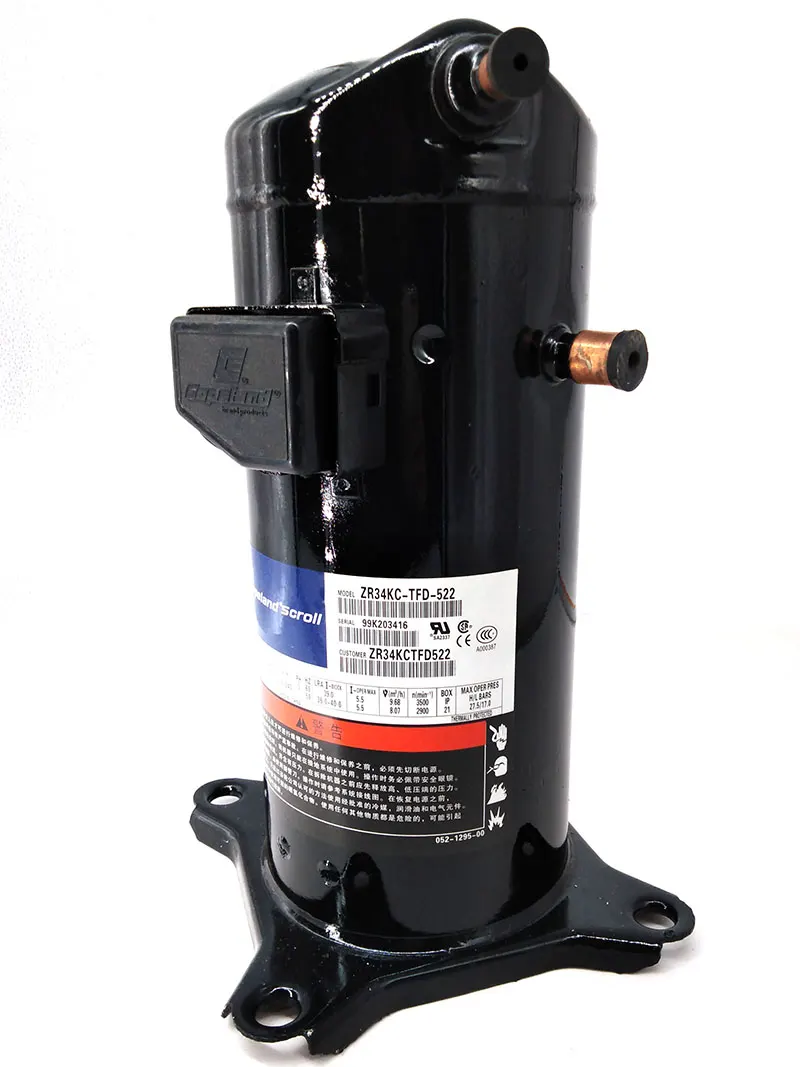
- Can the supplier provide photos of nameplates, cartons, and packing before shipment?
- How many units are available now, and how long can the supplier hold them?
- Are matching accessories or related spare parts available?
- Can mixed models be packed and shipped together?
The answers reveal how the supplier operates. A serious commercial refrigeration compressor supplier should be comfortable confirming model numbers, quantities, voltage, refrigerant application, packaging condition, and shipment readiness before payment or dispatch.
Check Multi-Brand Sourcing Ability
Overseas refrigeration markets are rarely built around one compressor brand. A spare parts distributor may receive inquiries for domestic and international compressor brands in the same week. A service company may need to replace units across old and new systems, imported equipment, local OEM cabinets, and custom-built cold rooms.
This is why multi-brand sourcing ability is a major supplier evaluation point. A supplier that can handle several compressor brands and model families can reduce the buyer’s sourcing workload and improve order consolidation.
Why multi-brand supply is useful
A refrigeration compressor distributor or HVACR spare parts supplier often serves many equipment types, including:
- Reach-in refrigerators and freezers
- Display cases and island freezers
- Walk-in cold rooms and freezer rooms
- Ice machines
- Condensing units
- Packaged refrigeration equipment
- Light commercial air-conditioning and heat pump applications
Different applications may require hermetic, semi-hermetic, scroll, rotary, reciprocating, or screw compressors. They may also involve different refrigerants, capacities, voltages, connection types, and oil requirements. A supplier with broader brand access can help buyers compare availability and replacement options more efficiently.
What to verify before relying on a multi-brand supplier
Multi-brand ability should be tested in practice, not accepted as a slogan. Importers can send a sample inquiry list with mixed brands and model numbers, then evaluate how the supplier responds.
A capable supplier should be able to:
- Identify complete model codes and avoid confusing similar models
- Confirm voltage and frequency options
- Check refrigerant compatibility and application temperature range
- Distinguish compressor-only supply from full condensing unit supply
- Explain when a model is available, discontinued, uncommon, or requires checking
- Offer realistic alternatives when exact models are not available
The best suppliers do not force substitutions without technical confirmation. For import buyers, that discipline is important. A compressor that looks similar may differ in capacity, motor type, starting components, oil, mounting, displacement, or operating envelope. Those differences can cause installation problems or system failure if they are ignored.
Make Replacement Support a Core Requirement
Replacement demand is one of the most common reasons overseas customers contact compressor suppliers in China and other sourcing markets. A buyer may have only a nameplate photo, an old model number, or a failed compressor removed from equipment. The supplier’s ability to confirm a suitable replacement is often more valuable than a broad catalog.
Replacement is not just model matching
A compressor replacement should be checked against the real system conditions. Model number matching is helpful, but it is not always enough. Older models may have regional variations, changed refrigerants, discontinued series, or OEM-specific configurations.
A proper replacement confirmation should consider:
- Original compressor model and full nameplate details
- Refrigerant used in the system
- Application temperature: high, medium, low, or air-conditioning range
- Power supply: voltage, phase, and frequency
- Cooling capacity requirement and operating conditions
- Starting method and electrical components
- Oil type and compatibility
- Suction and discharge connection style
- Mounting dimensions and available installation space
- Whether the system uses capillary tube, expansion valve, or other controls
For distributors and repair companies, this process reduces return risk. It also helps protect the buyer’s reputation with local service technicians and end users.
Information buyers should send for faster confirmation
When asking for a replacement, importers should prepare clear technical information. A good inquiry usually includes:
- Photos of the compressor nameplate
- Photos of the compressor body and terminals
- Equipment type and application
- Refrigerant type
- Voltage and frequency
- Required quantity
- Destination country or port
- Any urgent delivery requirement
If the old compressor model is unavailable, the supplier may need to propose an alternative. The buyer should ask for the replacement logic, not only the price. Useful confirmation may include capacity comparison, application range, electrical compatibility, and any installation notes.
Review the Technical Confirmation Process
A reliable compressor exporter should have a disciplined process for checking details before order confirmation. This is especially important for import business, where mistakes are expensive to correct after shipment.
What a professional confirmation process looks like
The process does not need to be complicated, but it should be consistent. For most compressor orders, the supplier should confirm:
- Full model number and brand
- Quantity and current availability
- Refrigerant and application range
- Voltage, phase, and frequency
- Product condition and packaging
- Unit weight and shipping dimensions when needed
- HS code or customs-related product description when applicable
- Packing method for air, sea, or courier shipment
- Required documents for import clearance
For replacement orders, the supplier should ask additional technical questions instead of immediately quoting the lowest-priced option. This is a good sign. It means the supplier understands that compressors are not generic parts.
Red flags during technical communication
Importers should be cautious when a supplier:
- Quotes without checking voltage, refrigerant, or application
- Treats all similar model numbers as interchangeable
- Cannot provide a clear photo of the nameplate or packaging
- Pushes a substitute without explaining the match
- Avoids written confirmation of key specifications
- Changes availability after payment without a clear reason
- Gives inconsistent answers across sales, warehouse, and shipping communication
A small communication problem before the order can become a major cost after delivery. Buyers should keep written records of confirmed specifications, model numbers, quantities, and shipping terms.
Assess Export Experience and After-Sales Handling
For importers, export experience is not a minor detail. Compressors are heavy, valuable, and often sensitive to handling. Packing, documentation, shipment method, and after-sales communication all affect the real landed cost and customer satisfaction.
Export handling for compressor orders
A supplier serving overseas buyers should understand the practical needs of international trade. Depending on order size and urgency, compressors may be shipped by express courier, air freight, LCL sea freight, or full container shipment.
Importers should confirm:
- Packing strength for individual units and palletized cargo
- Whether wooden packing or reinforced cartons are used when needed
- Gross weight and dimensions for freight quotation
- Product labeling and model identification
- Commercial invoice and packing list details
- Trade terms and payment terms
- Ability to coordinate with the buyer’s freight forwarder
- Export documentation requirements for the destination market
Good export handling reduces damage risk and avoids delays in customs clearance. For distributors building regular stock, it also helps with warehouse planning because carton labels, model visibility, and packing consistency make receiving and inventory control easier.
After-sales handling and claim process
No importer wants after-sales problems, but every serious buyer should know how the supplier handles them. Compressor claims can be complex because failures may result from product issues, transportation damage, incorrect installation, unsuitable application, poor system cleaning, voltage problems, refrigerant contamination, or oil return issues.
A professional supplier should have a practical claim process. Buyers should ask what evidence is required and how cases are reviewed. Typical information may include:
- Photos and videos of the compressor and nameplate
- Description of the fault
- Installation date and operating time
- System application and refrigerant
- Electrical measurements or protection device status
- Photos of piping, wiring, and installation environment when relevant
- Transport damage photos taken before installation if packaging is affected
For repair companies and engineering installers, after-sales clarity is important because the end customer expects a quick answer. A supplier that responds clearly, even when more information is needed, is more valuable than one that only reacts when a dispute escalates.
Balance price with total import risk
Price remains important in commercial compressor wholesale, but it should be evaluated together with technical reliability and service response. A cheaper unit can become expensive if it creates returns, installation delays, air freight replacement costs, or lost customer trust.
Importers should compare suppliers using a balanced checklist:
- Stock availability for fast-moving models
- Ability to source multiple brands and compressor types
- Accuracy of replacement recommendations
- Technical confirmation before order approval
- Export packing and document quality
- Response speed for urgent inquiries
- After-sales procedure and evidence requirements
- Willingness to support repeat business, not only one-time orders
A dependable commercial refrigeration compressor supplier helps buyers build a more stable local supply chain. For overseas refrigeration spare parts distributors, service teams, and cold-room contractors, that stability can be the difference between simply importing compressors and running a reliable replacement business.
Practical Buyer Checklist Before Placing an Order
Before committing to a supplier, importers can use a short operational checklist. It helps compare offers in a consistent way and reduces the chance of overlooking key details.
Commercial checks
- Is the quoted model exactly the model requested?
- Is the stock confirmed, and for how long?
- Are lead time, payment terms, and trade terms clear?
- Are packing dimensions and weight available for freight costing?
- Can the supplier support mixed-model orders?
Technical checks
- Are voltage, phase, and frequency confirmed?
- Is the refrigerant compatible with the application?
- Is the compressor suitable for the required temperature range?
- Are starting components or accessories needed?
- Has the supplier confirmed the replacement basis if the original model is unavailable?
Import and service checks
- Are invoice and packing list details suitable for customs clearance?
- Is the packing method appropriate for the shipment route?
- Does the supplier provide nameplate and packing photos before dispatch?
- Is there a clear contact for after-sales questions?
- Does the supplier explain claim requirements before a problem occurs?
The right supplier will not object to careful checking. In compressor import business, detailed confirmation is normal. It protects the buyer, the supplier, and the end user relying on the refrigeration system.
FAQ
What should importers check before choosing a commercial refrigeration compressor supplier?
Importers should check real stock availability, supported brands, model confirmation process, replacement selection ability, export packing, documentation support, and after-sales handling. Price is important, but it should be compared with technical accuracy and delivery reliability.
Why is multi-brand sourcing important for refrigeration compressor distributors?
Distributors often receive requests for different compressor brands, model series, refrigerants, voltages, and applications. A supplier with multi-brand sourcing ability can help consolidate orders, reduce sourcing time, and provide alternatives when exact models are unavailable.
What information is needed to confirm a replacement compressor?
Buyers should provide the old compressor model, nameplate photos, refrigerant, voltage, frequency, equipment type, application temperature, quantity, and any installation constraints. For uncertain replacements, capacity, oil type, connection style, and operating range should also be checked.
How can buyers reduce risk when importing compressors from China or other overseas suppliers?
Buyers can reduce risk by requesting written specification confirmation, nameplate and packing photos, clear shipment dimensions, suitable export documents, and a defined after-sales process. They should avoid approving substitutes without technical comparison.
What makes a compressor supplier suitable for repair companies and cold-room contractors?
Repair companies and cold-room contractors need quick response, accurate replacement advice, practical stock, and support for urgent orders. A suitable supplier should understand refrigeration applications and help confirm whether a compressor matches the system before shipment.
Buyer Next Step
Move from research to sourcing with a category shortlist, relevant product examples, and a quote request channel.