Bitzer vs Copeland vs Danfoss Compressors: Which Brand Fits Your Refrigeration Project?
A practical comparison of Bitzer, Copeland, and Danfoss compressors for refrigeration buyers, contractors, repair teams, and distributors.
Why Buyers Compare Bitzer, Copeland, and Danfoss
Choosing a refrigeration compressor is rarely a simple brand decision. For most commercial projects, the right choice depends on the cooling duty, refrigerant, installation conditions, controller strategy, service network, and long-term spare parts plan. That is why the search for a Bitzer Copeland Danfoss compressor comparison usually comes from buyers who already understand that all three names are established in the HVACR market, but need a clearer view of where each brand tends to fit.
Bitzer, Copeland, and Danfoss are commonly considered for cold rooms, display refrigeration, process cooling, condensing units, supermarket systems, air-conditioning equipment, and replacement work. Each brand offers compressor technologies that can serve different system sizes and operating conditions. None should be treated as the universal best choice for every project.
For distributors, repair companies, engineering installers, and overseas replacement buyers, the practical question is more specific: Which compressor type is available, compatible, serviceable, and commercially sensible for the job in front of you?
Brand Positioning and Common Application Strengths
Bitzer Compressors
Bitzer is widely associated with commercial and industrial refrigeration applications, especially where semi-hermetic reciprocating compressors, screw compressors, and larger system configurations are involved. In many markets, Bitzer compressors are specified for cold storage, food processing, transport-related refrigeration infrastructure, and medium-to-large commercial systems.
A Bitzer compressor is often considered when the project requires:
- Robust compressor construction for commercial refrigeration duty
- Semi-hermetic compressor serviceability
- Suitability for cold-room and rack-type applications
- A clear match with engineering-driven system design
- Replacement options for existing Bitzer-equipped installations
For repair teams, the semi-hermetic format can be attractive because certain service operations may be more practical than with fully sealed compressor designs. For installers, Bitzer is often selected where the compressor is part of a larger engineered refrigeration package rather than a small self-contained unit.
The main buyer consideration is system fit. Bitzer compressors need to be selected against the correct operating envelope, refrigerant, voltage, cooling capacity, oil requirements, and application temperature range. For international buyers, model availability and lead time can vary by region, so confirming the exact model code and replacement equivalence is essential before ordering.
Copeland Compressors
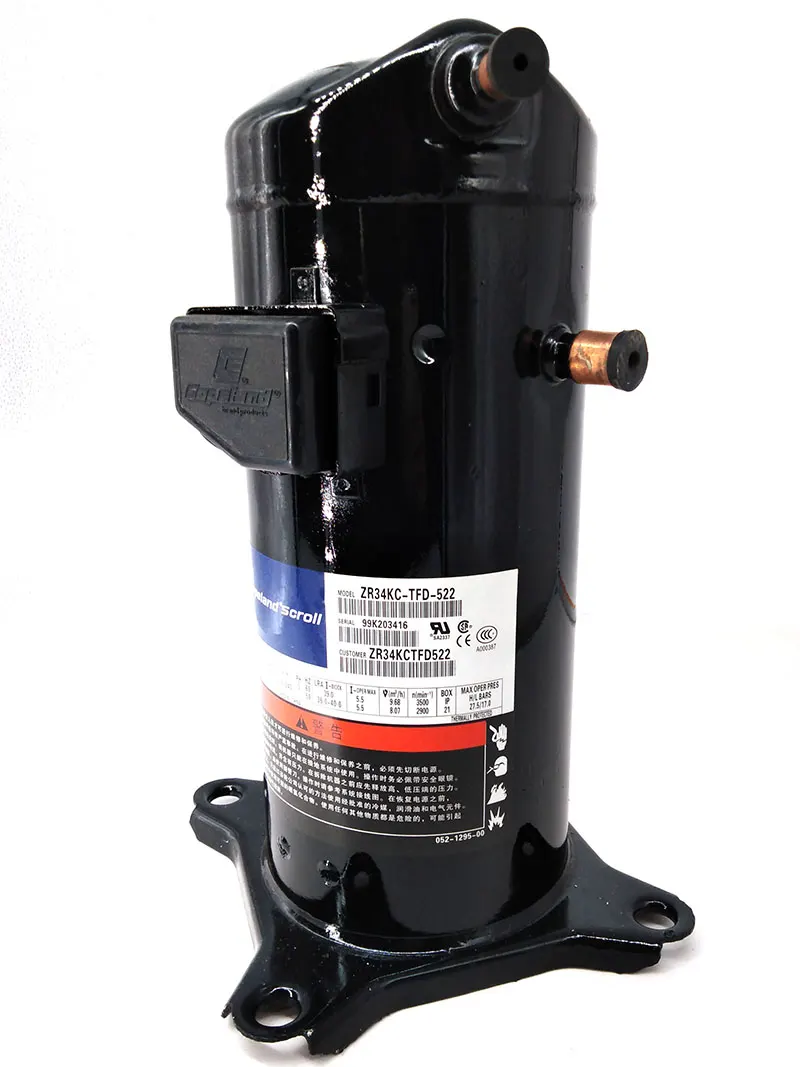
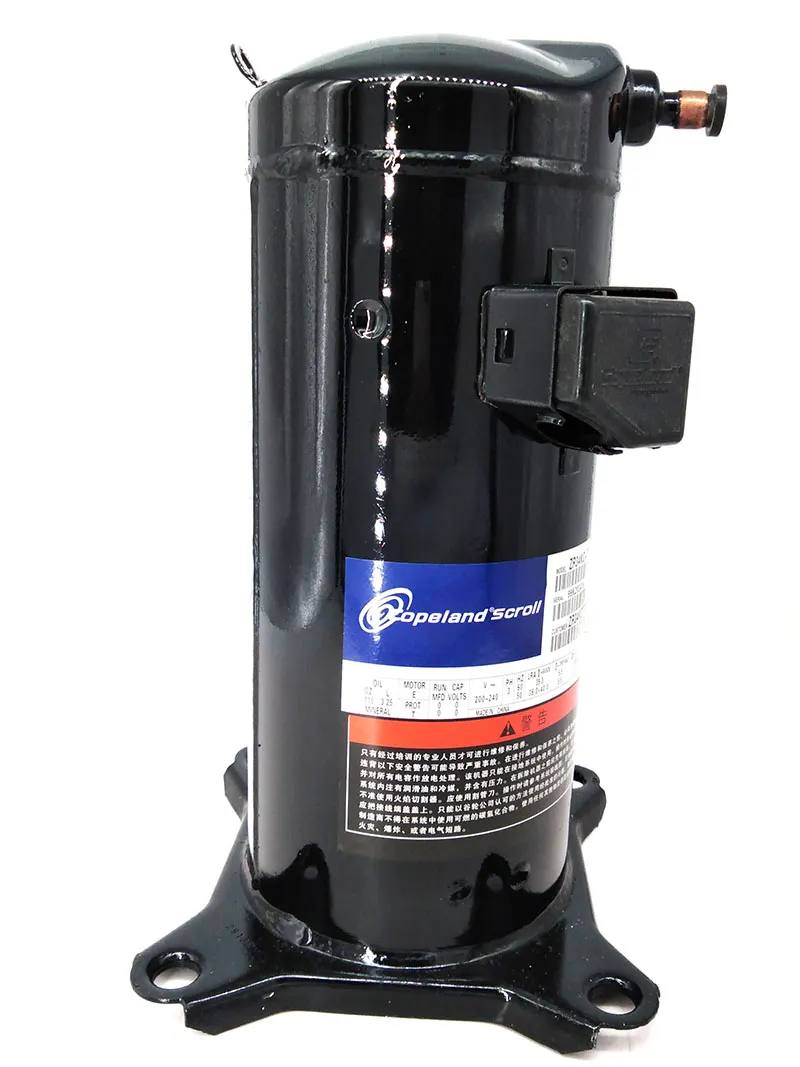
Copeland is a major name in commercial refrigeration and air-conditioning compressors, particularly known in many markets for scroll compressor technology as well as semi-hermetic and other compressor formats depending on the application. A Copeland compressor is frequently encountered in condensing units, rooftop units, packaged air-conditioning systems, display refrigeration, heat pumps, and replacement service work.
Copeland is often considered when buyers need:
- Broad use across HVAC and refrigeration equipment
- Scroll compressor options for compact and efficient system designs
- Replacement compressors for existing OEM equipment
- Compressor choices for condensing units and packaged systems
- Familiarity among service technicians in many regions
For service and repair companies, Copeland compressors are often relevant because many installed systems already use them. Replacement buyers should pay close attention to the full model number, electrical specification, mounting arrangement, refrigerant compatibility, and whether the compressor is used in air-conditioning, medium-temperature refrigeration, or low-temperature refrigeration duty.
Copeland can be a practical choice where the buyer values broad application coverage and replacement familiarity. The exact decision still depends on the original equipment design and the compressor’s intended operating range.
Danfoss Compressors
Danfoss is strongly connected with refrigeration and HVAC components, including compressors, controls, valves, drives, and system solutions. Danfoss compressors are commonly found in light commercial refrigeration, commercial cooling, air-conditioning, heat pump systems, and variable-speed applications depending on the product line and market.
A Danfoss compressor is often evaluated when the project requires:
- Compact compressor options for commercial refrigeration or HVAC equipment
- Integration with broader refrigeration controls and components
- Variable-speed or electronically controlled system concepts where applicable
- Replacement for equipment originally designed around Danfoss compressor models
- Component consistency across a refrigeration package
Danfoss can be especially relevant for buyers who are not only selecting a compressor, but also considering valves, controllers, expansion devices, pressure controls, or electronic control strategy. For contractors, this can simplify system coordination when the compressor and control components are selected as part of the same engineering approach.
As with any brand, the key is not the logo but the match: capacity, refrigerant, application envelope, voltage, approvals, and physical installation requirements.
Compressor Types: What Matters More Than the Brand Name
A useful commercial compressor comparison should begin with compressor type. Bitzer, Copeland, and Danfoss each participate in different parts of the HVACR compressor market, but the correct technology depends on the application.
Reciprocating Compressors
Reciprocating compressors are common in many refrigeration systems and can be used across medium- and low-temperature applications when properly selected. Semi-hermetic reciprocating compressors are often favored in serviceable commercial and industrial systems, while hermetic designs are common in smaller or factory-built equipment.
Buyers should check:
- Required cooling capacity at the actual evaporating and condensing temperatures
- Medium-temperature or low-temperature duty
- Refrigerant compatibility
- Oil type and oil management requirements
- Cylinder unloading or capacity control needs, where applicable
- Service access and spare parts availability
For cold-room contractors, reciprocating compressors remain relevant because they can handle a wide range of refrigeration duties and are familiar to many technicians.
Scroll Compressors
Scroll compressors are widely used in air-conditioning, heat pumps, condensing units, and commercial refrigeration equipment. They are compact, commonly available in packaged equipment, and often selected where low vibration and simplified installation are priorities.
When comparing scroll compressors, pay attention to:
- Whether the model is approved for refrigeration or air-conditioning duty
- Application temperature range
- Refrigerant and oil compatibility
- Fixed-speed or variable-speed design
- Tandem or multiple-compressor configuration options
- Protection devices and control requirements
Scroll compressors can be a strong fit for smaller commercial systems and replacement work, but they should not be substituted only by nominal horsepower. The model code and operating envelope matter.
Screw Compressors
Screw compressors are generally associated with larger refrigeration and air-conditioning systems where high capacity and continuous operation are important. They may be used in cold storage, process cooling, industrial refrigeration, and larger chiller applications.
Project teams considering screw compressors should review:
- Part-load performance requirements
- Oil cooling and oil separation design
- Control method and capacity modulation
- Refrigerant choice and system pressure design
- Installation space and service access
- Availability of trained technicians for commissioning and maintenance
For larger cold-room and industrial projects, the compressor decision should be part of a full system engineering review, not a replacement-only purchasing decision.
Hermetic and Semi-Hermetic Designs
Hermetic compressors are sealed units and are common in smaller equipment and many packaged systems. Semi-hermetic compressors allow more service access and are commonly used in larger commercial refrigeration systems.
The decision affects the entire maintenance plan. Hermetic compressors are typically replaced as complete units when they fail. Semi-hermetic compressors may allow certain internal service operations, depending on the failure mode, technician capability, and parts availability.
For distributors, this distinction matters because customers may need more than the compressor itself. They may also require gaskets, oil, protection modules, contactors, pressure controls, filter driers, or matching accessories.
Availability, Replacement, and Service Considerations
Model Availability and Cross-Reference Work
Overseas buyers often ask for a brand name first, but procurement usually succeeds or fails at the model-code level. A compressor described only as “5 HP Copeland” or “Bitzer for cold room” is not enough for accurate selection.
A serious compressor inquiry should include:
- Full compressor model number from the nameplate
- Refrigerant used in the system
- Power supply voltage, phase, and frequency
- Application temperature: high, medium, or low temperature
- Existing system type: condensing unit, rack, chiller, cold room, display case, or OEM equipment
- Cooling capacity requirement or original equipment reference
- Photos of nameplate, terminal box, mounting base, and pipe connections
For distributors and repair companies, asking these questions early reduces wrong shipments, installation delays, and disputes over compatibility.
Spare Parts and Service Network
A compressor is not only a purchase item. It is part of an operating system that may need support for years. Before choosing between Bitzer, Copeland, and Danfoss, buyers should consider local technician familiarity and the availability of accessories and service parts.
Important service factors include:
- Start components or protection modules
- Oil type and charging quantity
- Mounting kits and vibration absorbers
- Crankcase heaters where required
- Pressure and temperature protection
- Replacement valves, gaskets, or electrical parts where applicable
- Controller compatibility for advanced systems
A brand with strong technical performance can still be the wrong choice if the local service team cannot commission it correctly or obtain the required accessories in time.
Refrigerant Transition and Compatibility
Refrigerant selection is one of the most important issues in compressor replacement and new project design. Many markets are moving through changes in refrigerant rules, availability, and customer preferences. That makes compressor compatibility more important than brand preference.
Buyers should never assume that a compressor suitable for one refrigerant can be used with another. The refrigerant affects pressure levels, oil selection, displacement requirements, safety classification, controls, and system components.
Before ordering, confirm:
- The compressor is approved for the refrigerant in the system
- The oil type matches the refrigerant and operating conditions
- The system components are compatible with the selected refrigerant
- The compressor operates within the required temperature envelope
- Local regulations and customer specifications allow the refrigerant choice
This is especially important for replacement work, where the old compressor may have operated with a refrigerant that is now less available or no longer preferred in the customer’s market.
Typical Use Cases by Buyer Type
Refrigeration Spare Parts Distributors
Distributors need compressor choices that match local market demand, common installed equipment, and service urgency. Stocking every model from every brand is unrealistic, so inventory planning should focus on fast-moving models, common voltage types, and application categories.
For a distributor, the comparison between Bitzer, Copeland, and Danfoss should include:
- Which brands are already installed in the local customer base
- Which compressor types are most requested: scroll, semi-hermetic, hermetic, or screw
- Which refrigerants dominate local service work
- Which models require accessories or protection modules
- Which compressors have acceptable lead times for urgent repair demand
A multi-brand sourcing approach can help distributors respond to more inquiries, but cross-reference discipline is essential. Equivalent does not mean identical, and substitutions should be checked carefully.
Refrigeration Service and Repair Companies
Repair companies usually care about speed, compatibility, and installation risk. When a cold room or supermarket cabinet is down, the customer may want the fastest available compressor. That does not remove the need for technical matching.
Service teams should verify:
- Whether the compressor failure was caused by an external system problem
- The condition of contactors, overloads, pressure switches, and controllers
- Oil contamination, acid formation, moisture, or blocked filters
- Correct refrigerant charge and airflow or water flow conditions
- Whether a like-for-like replacement is available
Replacing a compressor without correcting the root cause can lead to repeat failure. For this reason, the best brand choice is often the one that can be installed correctly with the right accessories, cleaning procedures, and commissioning checks.
Cold-Room Contractors and Engineering Installers
Installers working on new cold rooms or system upgrades should treat the compressor as part of the whole refrigeration design. The correct choice depends on room temperature, product load, ambient temperature, insulation, evaporator and condenser selection, pipe length, defrost method, and controls.
For contractors, brand comparison should include:
- Project duty: chilled storage, frozen storage, blast cooling, or process cooling
- Expected operating hours and load variation
- Ambient conditions at the installation site
- Customer preference for serviceability or compact equipment
- Availability of local support for commissioning
- Long-term spare parts planning
Bitzer, Copeland, and Danfoss can all be relevant in contractor projects, but the selected model should be tied to real design conditions rather than a generic capacity label.
Practical Selection Checklist
A balanced Bitzer Copeland Danfoss compressor comparison should lead to a structured buying decision. Before placing an order, buyers should confirm the technical, commercial, and service details together.
Technical Fit
Check the compressor against the actual application, not only the old model’s horsepower.
- Refrigerant and oil compatibility
- Evaporating and condensing temperature range
- Cooling capacity at design conditions
- Voltage, phase, and frequency
- Starting method and electrical protection
- Pipe connection size and mounting dimensions
- Compressor cooling requirements
Commercial Fit
The best technical option still has to work within project timing and budget.
- Model availability
- Lead time and shipping method
- Accessory requirements
- Warranty terms and documentation
- Local service capability
- Total replacement cost, including installation materials
Replacement Risk
Replacement work needs extra caution because the existing system may have hidden problems.
- Confirm the original compressor model code
- Identify the cause of compressor failure
- Check whether the system needs flushing or filter replacement
- Confirm controller and protection compatibility
- Avoid unverified substitutions in low-temperature or critical applications
How to Choose Without Looking for One Universal Winner
Bitzer, Copeland, and Danfoss all serve important parts of the refrigeration and HVACR market. Bitzer is often considered for robust commercial and industrial refrigeration duties, especially where semi-hermetic and larger system designs are involved. Copeland is frequently evaluated for scroll-based HVACR equipment, condensing units, and widespread replacement applications. Danfoss is often relevant where compact refrigeration, HVAC equipment, controls integration, and system component coordination matter.
The stronger purchasing decision comes from matching the compressor to the project, not ranking brands in isolation. For overseas buyers, distributors, repair companies, and installers, the safest approach is to define the operating conditions, confirm the exact model requirements, check refrigerant compatibility, and secure the right accessories before shipment.
A multi-brand compressor supplier can be useful when the buyer needs side-by-side options, cross-reference support, and availability checks. The goal is not to force one brand into every job. The goal is to supply the compressor that fits the system, can be serviced locally, and keeps the refrigeration equipment operating reliably.
FAQ
Which is better: Bitzer, Copeland, or Danfoss compressors?
There is no universal best brand for every refrigeration project. Bitzer is often considered for commercial and industrial refrigeration duties, Copeland is widely used in HVACR equipment and replacement applications, and Danfoss is relevant for compact systems, controls integration, and various refrigeration or HVAC uses. The right choice depends on refrigerant, capacity, application temperature, voltage, service access, and local availability.
Can I replace a Bitzer compressor with a Copeland or Danfoss compressor?
A cross-brand replacement may be possible in some cases, but it should never be based only on horsepower or general capacity. The replacement must match the refrigerant, operating envelope, cooling capacity, voltage, oil type, mounting arrangement, pipe connections, and control requirements. For critical refrigeration systems, like-for-like replacement or an engineer-approved substitute is usually safer.
What information should I provide when requesting a replacement compressor?
Provide the full compressor model number, nameplate photo, refrigerant, voltage, phase, frequency, application temperature, equipment type, and photos of the installation connections. If possible, include the original equipment model and the reason the compressor failed. This helps suppliers check compatibility and avoid incorrect shipments.
Are scroll compressors better than semi-hermetic compressors?
Scroll and semi-hermetic compressors serve different needs. Scroll compressors are common in compact air-conditioning, heat pump, condensing unit, and commercial refrigeration equipment. Semi-hermetic compressors are often selected for larger commercial refrigeration systems where service access and engineered system design are important. The better option depends on system size, duty, service expectations, and operating conditions.
What should distributors consider when stocking Bitzer, Copeland, and Danfoss compressors?
Distributors should focus on local installed equipment, common refrigerants, voltage standards, fast-moving model ranges, accessory requirements, and service demand. It is also important to maintain accurate model cross-reference procedures, because compressor substitutions can create installation and warranty problems if technical details are not checked.
Buyer Next Step
Move from research to sourcing with a category shortlist, relevant product examples, and a quote request channel.