Copeland vs Bitzer vs Danfoss Compressors: Which Brand Fits Your Refrigeration Project?
Compare Copeland, Bitzer, and Danfoss compressors by technology, application, serviceability, replacement needs, and supply considerations for global buyers.
Copeland vs Bitzer vs Danfoss Compressors: Which Brand Fits Your Refrigeration Project?
Choosing between Copeland, Bitzer, and Danfoss compressors is rarely a simple brand preference. The correct choice depends on the refrigeration duty, compressor technology, refrigerant, operating conditions, electrical supply, installation design, and the support available in the target market.
For overseas distributors, refrigeration service companies, and cold-room installers, the most useful comparison is not which brand is universally better. It is which brand and compressor family best match the system being built or repaired, while keeping replacement, documentation, and future availability under control.
Copeland, Bitzer, and Danfoss all serve important parts of the refrigeration and air-conditioning market. Their product ranges overlap in some applications, but they are not interchangeable simply because the compressor capacity appears similar. A reliable comparison must consider the complete operating envelope and the practical requirements of the project.
Quick Comparison of Copeland, Bitzer, and Danfoss
| Brand | Common technology strengths | Typical buyer considerations |
|---|---|---|
| Copeland | Scroll and reciprocating compressor solutions for air conditioning, commercial refrigeration, and heat pump applications | Strong attention to model selection, application data, controls, and replacement compatibility |
| Bitzer | Semi-hermetic reciprocating, screw, scroll, and other commercial and industrial refrigeration solutions | Serviceability, rebuildable designs in relevant ranges, system flexibility, and technical documentation |
| Danfoss | Scroll and reciprocating solutions for commercial refrigeration, air conditioning, and light commercial systems | Compact equipment design, application matching, controls compatibility, and regional product availability |
This table is a starting point rather than a product specification. Each brand offers multiple compressor families, and performance can vary substantially between models using different refrigerants or working conditions.
A buyer comparing brands should identify the following information before requesting a quotation:
- Refrigerant and oil type
- Required cooling capacity at the actual evaporating and condensing temperatures
- Application: air conditioning, cold room, freezer, display case, chiller, or process cooling
- Voltage, phase, and frequency
- Compressor type and starting method
- Suction and discharge connection sizes
- Operating envelope and ambient conditions
- Required accessories, including crankcase heaters, mounting kits, capacity controls, or electronic protection
- Replacement restrictions created by the existing system design
Copeland Compressors: A Broad Choice for HVAC and Commercial Refrigeration
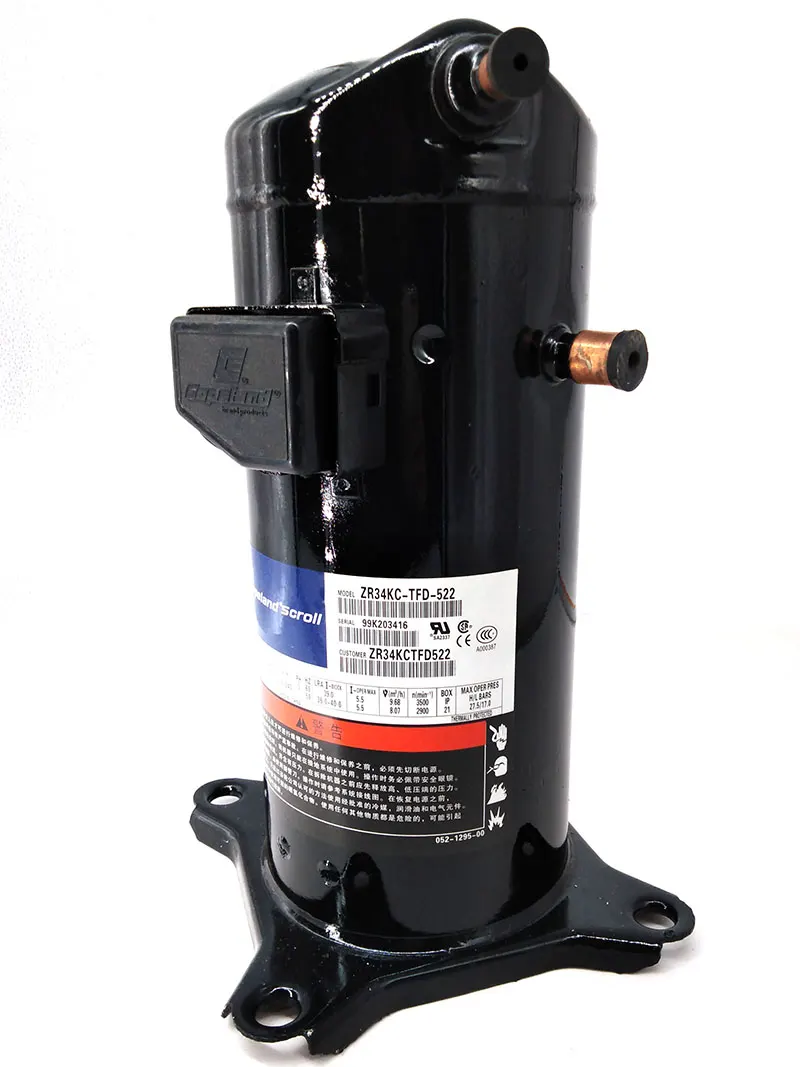
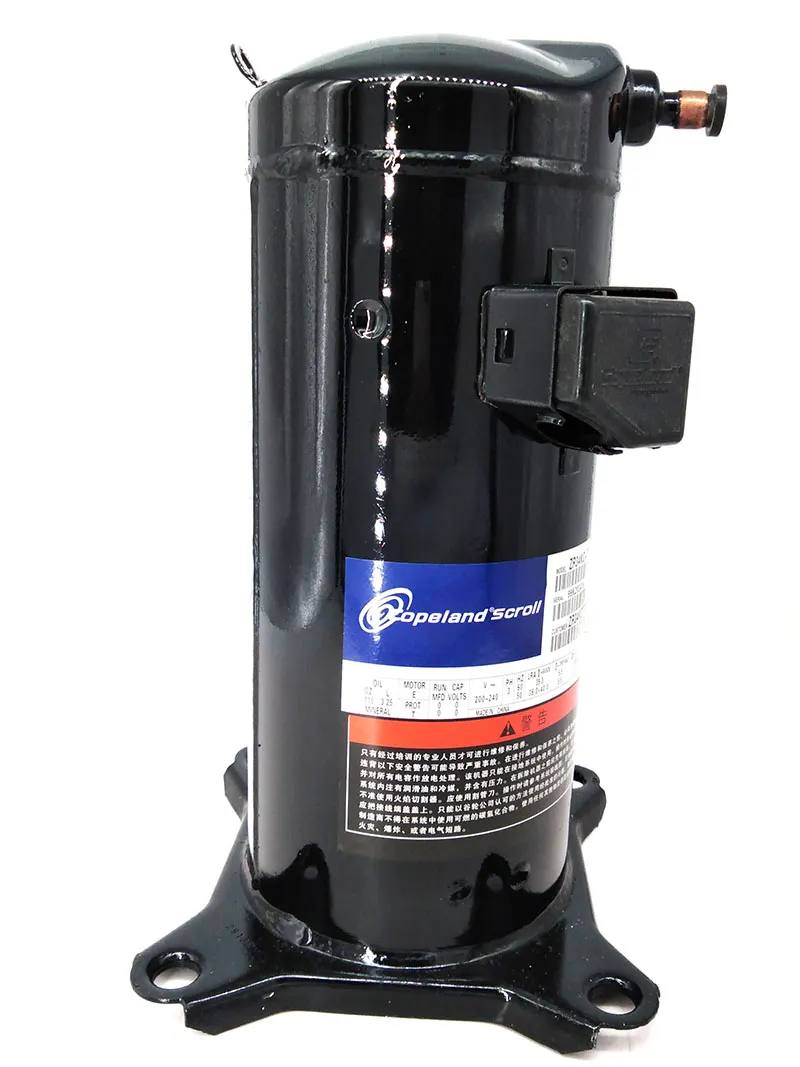
Copeland is widely associated with scroll compressors, reciprocating compressors, and compressor solutions used in air-conditioning and commercial refrigeration equipment. For many buyers, the main advantage is the breadth of applications covered by the product portfolio. A distributor may encounter Copeland compressors in comfort cooling equipment, condensing units, refrigeration systems, heat pumps, and replacement projects.
Where Copeland commonly fits
Copeland scroll compressors are often considered for air-conditioning, heat-pump, chiller, and light commercial applications where compact equipment design and smooth operation are important. Scroll technology can be attractive when a project requires a relatively compact compressor package with limited moving parts and a design suited to continuous operation within its specified envelope.
Copeland reciprocating compressors remain relevant for commercial refrigeration and replacement work. They may be selected for systems requiring a familiar service format, particular capacity steps, or compatibility with an existing condensing unit and control arrangement.
The practical question is not simply whether a Copeland compressor has the required nominal horsepower. Buyers should compare capacity at the project’s evaporating and condensing temperatures, along with power input, refrigerant approval, motor characteristics, and protection requirements.
Copeland selection points for buyers
A Copeland compressor can be a good fit when the project depends on accurate application matching and the local service network is familiar with the brand. It may also be a practical option where an existing system was designed around a Copeland model and a direct or near-direct replacement is required.
Replacement buyers should verify the complete model number. Small changes in suffixes can indicate differences in voltage, oil charge, refrigerant compatibility, motor protection, connection arrangement, or application range. A compressor with the same basic series name may still require different accessories or controls.
For distributors, the main operational issue is maintaining correct model data. A stock list that records only brand, horsepower, and voltage is not sufficient for dependable substitution. Capacity tables, application ranges, connection details, and accessory requirements should be available before the compressor is offered as an alternative.
Bitzer Compressors: Flexible Options for Commercial and Industrial Systems
Bitzer is strongly associated with semi-hermetic reciprocating compressors and is also active in scroll, screw, and other refrigeration compressor technologies. Its equipment is commonly considered for commercial refrigeration, cold rooms, supermarkets, industrial refrigeration, transport-related applications, and engineered systems where service access and system configuration matter.
Where Bitzer commonly fits
Bitzer semi-hermetic reciprocating compressors are often evaluated for systems that require a serviceable compressor format and a broad range of capacity or configuration options. In suitable applications, semi-hermetic construction can support inspection, repair, or component replacement without treating the compressor as a completely sealed disposable unit. The actual service procedure depends on the model, failure mode, available parts, and technician capability.
Bitzer screw compressors are relevant to larger refrigeration and industrial projects where the system design calls for higher capacity and continuous-duty operation. These applications normally require a more detailed engineering review, including oil management, capacity control, discharge temperature, system volume, and operating conditions.
Bitzer scroll compressors can also be considered in commercial and air-conditioning applications where scroll technology is appropriate. The correct choice depends on the capacity range, refrigerant, electrical specification, and the equipment manufacturer’s design requirements.
Bitzer selection points for buyers
Bitzer is often a strong candidate when the project values serviceability, engineered configuration, or a compressor platform already used by the contractor or end user. It can be especially relevant for replacement work involving semi-hermetic systems, provided that the replacement matches the original compressor’s performance and mechanical arrangement.
A distributor should not assume that a Bitzer model can replace a Copeland or Danfoss compressor based on displacement alone. The replacement must be checked against refrigeration capacity, motor power, speed, oil, refrigerant, mounting, connections, control method, and operating envelope.
For repair companies, documentation and spare-parts planning are important parts of the purchase decision. A semi-hermetic compressor may offer service advantages, but technicians still need the correct valves, gaskets, electrical components, oil specifications, and commissioning information. The availability of these supporting items can affect the real cost of ownership.
Danfoss Compressors: Practical Choices for Commercial and Light Commercial Equipment
Danfoss supplies compressor solutions used in commercial refrigeration, air conditioning, heat pumps, and related cooling equipment. Its product families include scroll and reciprocating technologies, with models designed for different refrigerants, capacities, electrical systems, and application conditions.
Where Danfoss commonly fits
Danfoss scroll compressors are commonly evaluated for air-conditioning, heat-pump, chiller, and commercial applications where compact equipment and carefully matched system components are required. In light commercial refrigeration, reciprocating models may be considered for condensing units, cabinets, small cold rooms, and other systems that need a replacement compressor with known electrical and mechanical characteristics.
Danfoss can be a practical choice for installers working with equipment designed around the brand’s compressors, controls, or other system components. However, compatibility still needs to be confirmed at the model level. A compressor brand may be familiar while a particular series is unsuitable for the refrigerant, temperature range, or electrical supply in a new installation.
Danfoss selection points for buyers
Danfoss models should be compared using published performance conditions rather than nominal displacement or marketing category. Low-temperature refrigeration, medium-temperature refrigeration, air conditioning, and heat-pump duty can place very different demands on a compressor. A model designed for one duty should not be moved to another without checking its approved application range.
For distributors, regional availability can be as important as technical performance. The same brand may have different product availability, voltage variants, or replacement pathways in different countries. Confirming lead time, packaging, documentation, and after-sales parts support helps avoid delays during urgent repair work.
For installers, check whether the compressor requires a specific controller, protection device, crankcase heater, mounting arrangement, or start component. These details should be included in the equipment design and quotation rather than discovered during commissioning.
How to Compare Compressor Brands by Application
The best brand depends heavily on the type of refrigeration project. The following framework helps buyers narrow the comparison before selecting an exact model.
Air-conditioning and heat-pump equipment
Scroll compressors are common in many air-conditioning and heat-pump designs because they can provide a compact solution for the intended capacity range. Copeland and Danfoss are both frequently considered in this area, while Bitzer may be evaluated where its relevant compressor family and the equipment design support the application.
Compare seasonal performance where applicable, but also check rated capacity at the actual design conditions. Heating and cooling systems can experience wide changes in suction and discharge conditions. The compressor must remain within its approved envelope during start-up, normal operation, low ambient operation, and defrost or reversing cycles where relevant.
Medium-temperature commercial refrigeration
Medium-temperature systems include many display cases, beverage coolers, food-storage rooms, and commercial condensing units. Reciprocating and scroll compressors may both be suitable, depending on capacity, refrigerant, noise expectations, control strategy, and equipment layout.
In this category, replacement compatibility is often more important than brand reputation. Confirm the original compressor’s operating conditions and electrical specification before considering a different brand. A substitute may require changes to piping, mounting, controls, start components, or oil management.
Low-temperature refrigeration and freezer systems
Freezer and low-temperature applications require closer attention to compression ratio, discharge temperature, oil return, motor cooling, and operating limits. A compressor that performs well in medium-temperature refrigeration may not be suitable for low-temperature duty.
Buyers should compare low-temperature capacity and power data at the specified evaporating and condensing temperatures. They should also check whether additional cooling, injection, protection, or operating controls are required. The lowest purchase price is rarely the right basis for a freezer replacement if the compressor cannot operate reliably under the actual load conditions.
Cold rooms and refrigeration engineering projects
Cold-room contractors often need a compressor that fits both the heat load and the construction of the condensing unit. Bitzer semi-hermetic compressors may be considered where service access and repairability are important. Copeland and Danfoss models may also be suitable depending on the system size, compressor family, and local availability.
An engineering quotation should include more than the compressor name. It should identify the refrigerant, design temperatures, capacity basis, electrical supply, receiver and condenser requirements, controls, and commissioning conditions. This information makes future replacement easier and reduces the risk of supplying a model that only appears equivalent.
Availability, Substitution, and Distributor Support
Brand comparison becomes especially important when a distributor is buying for several countries. A technically suitable compressor may still create operational problems if it is difficult to source, poorly documented, or unavailable with the required electrical variant.
A dependable compressor supply program should review:
- Availability of common models and replacement equivalents
- Factory packaging and protection during international shipment
- Model-number accuracy and traceability
- Technical data for the relevant refrigerants and operating conditions
- Access to mounting, electrical, oil, and protection accessories
- Warranty handling and inspection procedures
- Local demand for scroll, reciprocating, semi-hermetic, and larger-capacity products
Cross-brand substitution should be treated as an engineering decision. The replacement should be compared across four areas: performance, mechanical fit, electrical compatibility, and system controls. If one area is uncertain, the replacement should be confirmed with the equipment manufacturer, compressor supplier, or qualified refrigeration engineer.
For urgent repair orders, buyers should provide photographs of the nameplate, the complete model number, the system refrigerant, the application temperature, and the available electrical supply. This information is usually more useful than a request for a compressor based only on horsepower.
Which Compressor Brand Should You Choose?
Copeland may suit buyers looking for broad coverage across scroll, reciprocating, air-conditioning, heat-pump, and commercial refrigeration applications. Bitzer may suit projects that prioritize semi-hermetic serviceability, engineered refrigeration systems, or larger commercial and industrial configurations. Danfoss may suit commercial and light commercial applications where compact compressor solutions, application matching, and regional support align with the equipment design.
No brand should be selected without checking the exact compressor model. The correct decision combines technical suitability with supply continuity. For distributors, that means maintaining accurate cross-reference information and realistic stock planning. For service companies, it means confirming compatibility before promising a replacement. For installers, it means selecting the compressor as part of the complete system design rather than as an isolated component.
A reliable Copeland, Bitzer, or Danfoss compressor supplier should be able to discuss application conditions, model equivalence, accessories, packaging, and delivery requirements. That level of detail is what turns a brand comparison into a workable purchasing decision.
Frequently Asked Questions
Is a Copeland compressor interchangeable with a Bitzer or Danfoss compressor?
Not automatically. A replacement must match capacity, refrigerant, oil, evaporating and condensing conditions, voltage, phase, frequency, connections, mounting, motor protection, and control requirements. Model-level engineering verification is required before substitution.
Which brand is best for cold-room refrigeration?
There is no universal best brand for every cold room. Bitzer, Copeland, and Danfoss all have compressor families that may fit different cold-room sizes and temperature ranges. The selection should be based on the design heat load, refrigerant, operating temperatures, electrical supply, service expectations, and available replacement support.
Are scroll compressors suitable for commercial refrigeration?
Scroll compressors can be suitable for selected commercial refrigeration applications, but the compressor must be approved for the refrigerant and operating range. Medium-temperature, low-temperature, air-conditioning, and heat-pump duties should not be treated as identical. Always use performance data for the actual design conditions.
What information should I send to a compressor supplier?
Send the complete compressor model number, nameplate photograph, refrigerant, application, evaporating and condensing temperatures if available, voltage, phase, frequency, cooling capacity, connection sizes, and any required accessories. For a replacement, also provide system and mounting details.
How should distributors manage cross-brand compressor substitutions?
Distributors should maintain model-level records covering capacity, refrigerant, oil, electrical data, connections, mounting, application range, and accessories. A substitution should be confirmed technically before it is quoted as an equivalent, and customers should receive clear information about any installation or control changes.
FAQ
Is a Copeland compressor interchangeable with a Bitzer or Danfoss compressor?
Not automatically. A replacement must match capacity, refrigerant, oil, operating conditions, electrical data, connections, mounting, protection, and controls. Confirm equivalence at the exact model level.
Which compressor brand is best for cold-room refrigeration?
There is no single best brand for every cold room. Copeland, Bitzer, and Danfoss each offer compressor families for different capacities, refrigerants, temperature ranges, service needs, and regional supply conditions.
Are scroll compressors suitable for commercial refrigeration?
Scroll compressors can be suitable for selected commercial refrigeration systems when the model is approved for the refrigerant and operating range. The required application and performance data must be checked before selection.
What information should I send to a compressor supplier?
Provide the complete model number, nameplate photograph, refrigerant, application, operating temperatures, voltage, phase, frequency, cooling capacity, connections, mounting details, and required accessories.
How should distributors manage cross-brand compressor substitutions?
Distributors should compare model-level performance, refrigerant and oil compatibility, electrical data, connections, mounting, controls, application range, accessories, and availability before describing another compressor as an equivalent.
Buyer Next Step
Move from research to sourcing with a category shortlist, relevant product examples, and a quote request channel.