How Overseas HVAC Spare Parts Distributors Can Source Air Conditioning Compressors in Bulk
A practical sourcing guide for overseas HVAC distributors buying air conditioning compressors in bulk, from brand mix and MOQ to model checks and warranty.
How Overseas HVAC Spare Parts Distributors Can Source Air Conditioning Compressors in Bulk
For overseas HVAC spare parts distributors, sourcing air conditioning compressors in bulk is not only a price negotiation. It is a technical and operational purchasing process that affects inventory turnover, service compatibility, warranty exposure, and customer trust.
A good air conditioning compressor wholesale supplier should help buyers secure the right mix of models, brands, refrigerants, voltages, and packaging formats for their market. The challenge is that replacement demand is often fragmented. One distributor may need rotary compressors for residential split air conditioners, scroll compressors for light commercial systems, and selected inverter compressor models for newer equipment. At the same time, the buyer must manage minimum order quantities, shipping lead time, documentation, and after-sales claims.
This guide explains how importers, wholesalers, service networks, and refrigeration contractors can structure bulk AC compressor purchasing with fewer mistakes and better commercial control.
What Overseas Buyers Should Define Before Requesting a Quote
Bulk compressor sourcing becomes much easier when the buyer prepares a clear procurement brief. A vague request such as “send price for AC compressors” usually leads to delays, incorrect offers, or unsuitable substitutes. A professional air conditioner compressor supplier will normally need technical and commercial details before confirming availability and price.
Key information to prepare
Before contacting an AC compressor distributor, prepare the following details where possible:
- Compressor type: rotary, scroll, reciprocating, inverter, or fixed-speed
- Application: residential air conditioner, commercial air conditioner, heat pump, packaged unit, or replacement market
- Refrigerant: such as R22, R410A, R32, R407C, or other market-specific refrigerants
- Power supply: voltage, phase, and frequency, such as 220–240V/50Hz, 208–230V/60Hz, or three-phase supply
- Cooling capacity or nominal horsepower
- Original compressor model number and nameplate photo
- Required quantity by model
- Destination country or port
- Preferred brand range or acceptable alternatives
- Packaging requirement: individual carton, pallet, wooden case, or mixed container loading
- Required documents: invoice, packing list, certificate of origin, test report, or other import documents
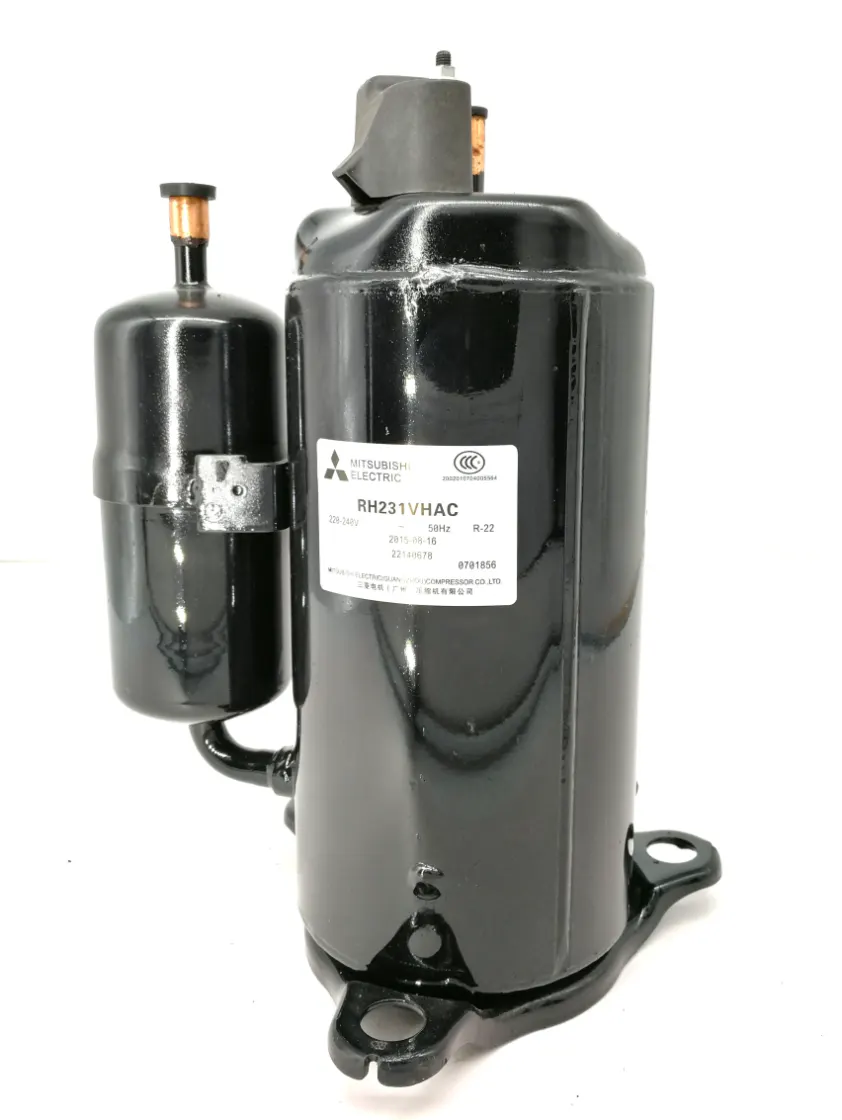
For replacement buyers, the most important item is the compressor nameplate. Model codes often contain information about capacity, refrigerant, voltage, motor type, and application range. A clear photo of the old compressor label helps the supplier verify whether the requested model is still available, whether an equivalent option exists, and whether accessories such as mounting parts or terminal covers are needed.
Choosing the Right Brand Mix for Wholesale Inventory
Overseas distributors rarely rely on only one compressor brand. A practical wholesale inventory usually includes a balanced mix of well-known international brands, regional brands, and cost-effective domestic alternatives. The right mix depends on local equipment population, customer expectations, import budget, and after-sales risk.
A third-party air conditioning compressor wholesale supplier can be useful when the buyer needs access to multiple brands rather than a single factory product line. This is especially important for distributors serving repair companies and installers, because field demand can shift quickly depending on which air conditioner models are common in the local market.
Common brand mix strategies
Many HVAC compressor wholesale buyers organize inventory into three levels:
- Premium replacement range: used for customers who request original or internationally recognized brands, especially for commercial jobs where downtime is expensive.
- Mid-range replacement range: suitable for everyday service work, balancing availability, performance, and cost.
- Price-sensitive range: used for highly competitive repair markets where customers prioritize lower replacement cost.
The goal is not simply to buy the cheapest compressor. A low purchase price can become expensive if the model has poor compatibility, insufficient documentation, high return rates, or limited after-sales support. For distributors, the real cost includes handling claims, technician complaints, unsold stock, and customer loss.
Why brand flexibility matters
Some compressor models may have unstable supply, long production cycles, or limited export availability. A supplier with a broad brand network can often recommend equivalent or alternative models when the original item is unavailable. However, substitutions must be handled carefully. A replacement compressor should be checked against the original unit’s refrigerant, capacity, voltage, frequency, oil type, application envelope, mounting dimensions, pipe connection size, and starting method.
For importers, brand flexibility is useful only when supported by proper model confirmation. Random substitution creates technical and warranty risk.
MOQ, Pricing, and Bulk Order Structure
Minimum order quantity is one of the most important commercial topics in compressor wholesale. MOQ may vary by brand, model, packaging method, and supplier stock position. Some fast-moving compressor models may be available in small mixed quantities, while less common models may require higher order volumes or factory lead time.
Typical order formats
Overseas buyers often purchase compressors in one of several formats:
- Mixed-model LCL shipment: suitable for testing a market, replenishing urgent models, or serving repair demand with many different references.
- Palletized bulk order: useful when buying moderate quantities of several models and reducing handling damage.
- Full container order: suitable for importers with stable demand and enough warehouse capacity.
- Project-based order: used by contractors or engineering installers sourcing compressors for a specific batch of equipment or maintenance project.
The best order structure depends on sales velocity. A distributor should separate fast-moving models from occasional-demand models. High-rotation rotary compressors may justify larger quantities, while uncommon three-phase scroll compressors may be better purchased in smaller batches unless the buyer has confirmed project demand.
Price factors buyers should understand
The quoted compressor price can be affected by several factors:
- Brand and model availability
- Refrigerant and voltage specification
- Fixed-speed or inverter design
- Order quantity per model
- Packaging requirement
- Stock versus production lead time
- Export documentation requirement
- Shipping method and destination
- Exchange rate and payment terms
A lower unit price may not always produce the best landed cost. If packaging is weak, damage risk increases. If the supplier cannot confirm exact models, wrong shipments can create expensive returns. If the MOQ forces too many slow-moving items, the distributor’s capital is locked in inventory.
For importers, the better comparison is total landed value: product cost, freight, duty, damage risk, warranty handling, and sales turnover.
Confirming Compressor Models Before Shipment
Model confirmation is the most important technical checkpoint in bulk AC compressor sourcing. Many compressors look similar from the outside, but small differences can make them unsuitable for replacement.
What to check on an AC compressor model
Before placing a purchase order, buyers should confirm:
- Exact model code and any suffix letters
- Refrigerant compatibility
- Rated voltage, phase, and frequency
- Cooling capacity or displacement range
- Compressor oil type
- Application temperature range
- Starting components or inverter compatibility
- Suction and discharge pipe position
- Mounting foot pattern
- Terminal layout and electrical protection
- Accessories included in the package
A small model suffix can sometimes indicate a different voltage, oil, refrigerant, or application. For this reason, overseas buyers should avoid relying only on partial model numbers. When possible, share nameplate photos, outdoor unit model numbers, and system application details.
Replacement versus OEM supply
Distributors serving the spare parts market usually focus on replacement compatibility rather than original equipment production. The replacement compressor must work safely within the system design, but it may not always be identical to the factory-installed compressor. If an equivalent model is offered, the supplier should explain the basis for compatibility.
Repair companies and installers should also check the failed system before replacing the compressor. A burnout, blocked capillary, contaminated refrigerant circuit, incorrect charge, poor airflow, or electrical fault can damage a new compressor quickly. Wholesale buyers can reduce disputes by educating downstream customers that compressor warranty usually depends on correct installation and system diagnosis.
Common Air Conditioning Compressor Categories for Wholesale Buyers
An effective wholesale range should reflect the most common compressor categories in the local market. For air conditioning applications, the main categories are rotary, scroll, reciprocating, and inverter compressors.
Rotary compressor wholesale
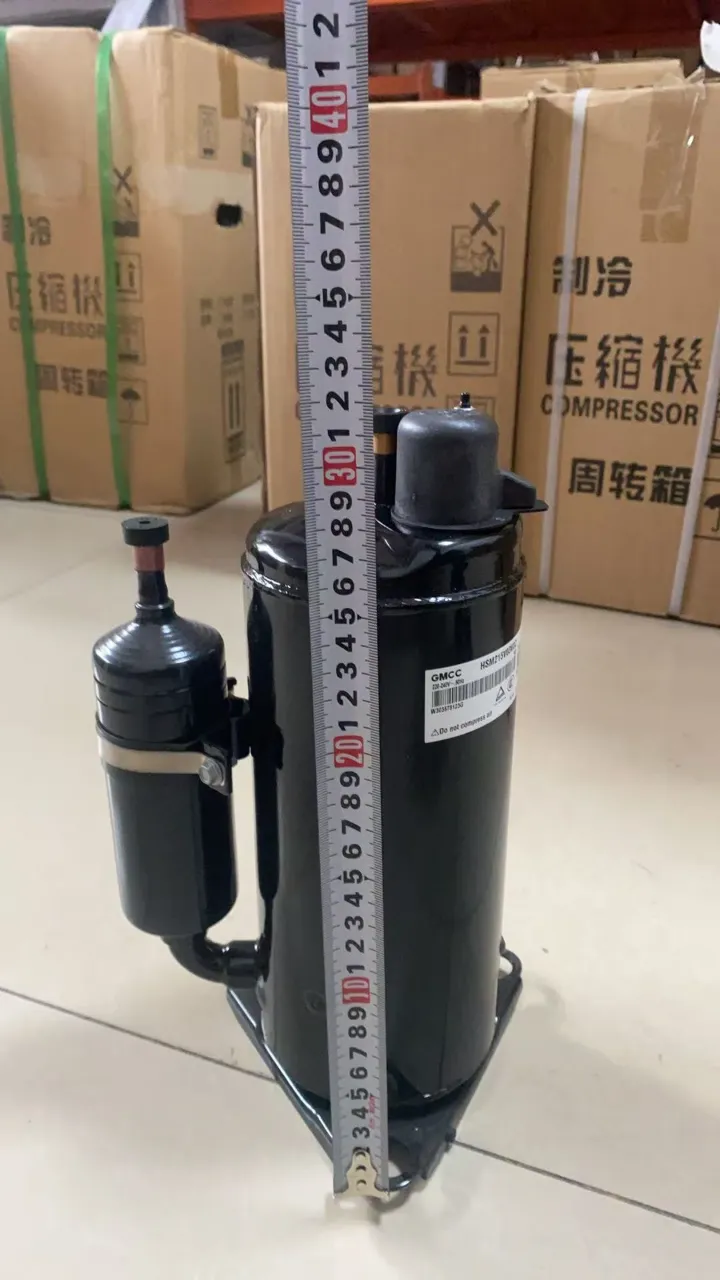
Rotary compressors are widely used in residential and light commercial air conditioners, especially split units and window-type systems. They are compact, efficient for many small-to-medium capacity applications, and commonly requested by repair markets.
When buying rotary compressors in bulk, distributors should pay attention to:
- Refrigerant type, especially when markets include both older and newer refrigerants
- Voltage and frequency differences between regions
- Fixed-speed versus inverter models
- Capacity matching for the air conditioner system
- Pipe connection layout and mounting dimensions
Rotary compressor wholesale demand is often diverse, so mixed-model purchasing may be more practical than buying a large quantity of one model unless there is confirmed local demand.
Scroll compressor supplier selection
Scroll compressors are common in commercial air conditioners, packaged units, rooftop units, heat pumps, and some larger split systems. They are often higher-value items, so incorrect selection can create greater financial risk.
When choosing a scroll compressor supplier, buyers should confirm:
- Refrigerant and oil compatibility
- Single-phase or three-phase power supply
- Application range for air conditioning or heat pump use
- Capacity and operating envelope
- Protection devices and accessory requirements
- Whether the model is fixed-speed, digital, or inverter-driven
Because scroll compressors are often used in commercial systems, buyers may need more careful technical confirmation and stronger packaging for export shipment.
Reciprocating compressors in the replacement market
Reciprocating compressors are still found in certain air conditioning and refrigeration applications, especially in older systems or specific regional markets. For AC spare parts distributors, demand may be less broad than rotary and scroll categories, but selected models can remain important for service companies.
Before stocking reciprocating compressors, buyers should review local installed equipment, refrigerant trends, and repair economics. In some markets, customers may replace the entire unit rather than repair an old system. In other markets, compressor replacement remains cost-effective.
Inverter AC compressors
Inverter compressors require special attention because compatibility depends not only on mechanical specifications but also on the drive system and control logic. An inverter compressor is not usually interchangeable in the same simple way as a fixed-speed compressor.
For inverter compressor sourcing, buyers should confirm the exact model, system brand, drive board compatibility, refrigerant, and electrical specifications. Importers should avoid stocking large quantities of inverter models without clear demand data because model variation can be high.
Packaging, Lead Time, and Shipping Considerations
Compressors are heavy, oil-filled mechanical products that require careful handling. Export packaging directly affects damage rates and customer satisfaction.
Packaging points to confirm
A buyer should clarify packaging before shipment, especially for mixed-model orders. Important details include:
- Individual carton or original brand packaging
- Palletization method
- Wooden case or reinforced export packaging for heavy models
- Upright positioning and anti-tilt handling
- Moisture protection
- Clear model labels on cartons and pallets
- Packing list matched to model and quantity
Poor labeling can cause warehouse mistakes, especially when several compressor models have similar appearance. For distributors, clear external labeling saves time during receiving, storage, and order picking.
Lead time planning
Lead time depends on whether the compressor is in stock, requires supplier consolidation, or needs factory production. Buyers should ask for realistic lead time at the model level rather than accepting a general estimate for the whole order.
A practical procurement plan includes:
- Stock confirmation before payment
- Expected ready date for each model
- Inspection or photo confirmation before shipment
- Booking time for sea, air, or courier shipment
- Customs documentation preparation
- Buffer time for seasonal demand peaks
Air conditioning spare parts demand is often seasonal. Distributors should avoid waiting until peak summer demand to replenish core compressor models. Emergency orders by air freight may be possible, but freight cost can reduce margin significantly.
Warranty, Claims, and After-Sales Control
Warranty is a commercial and technical issue. Compressor failure may be caused by product defect, shipping damage, installation error, system contamination, incorrect refrigerant charge, electrical problems, or poor operating conditions. A clear warranty process protects both the buyer and the supplier.
What distributors should clarify in advance
Before ordering in bulk, ask the supplier to define:
- Warranty period and coverage conditions
- Required claim evidence, such as photos, nameplate, installation details, and failure description
- Whether returned parts are required for analysis
- Exclusions related to improper installation or system faults
- Credit, replacement, or repair handling method
- Responsibility for freight and local labor costs
For overseas buyers, compressor warranty claims can be difficult if evidence is incomplete. A distributor should train service customers to record installation conditions, refrigerant type, system pressure readings, electrical data, and failure symptoms. This makes claim evaluation faster and reduces disputes.
Reducing warranty risk before sale
Distributors can reduce after-sales problems by stocking confirmed models, checking packaging on arrival, keeping compressors upright, avoiding long-term storage in poor conditions, and providing basic installation reminders to customers.
For repair teams, the replacement process should include system cleaning where needed, filter drier replacement when applicable, vacuuming, correct charging, electrical checks, and airflow inspection. A new compressor should not be installed into a system with unresolved root-cause faults.
Practical Sourcing Checklist for Overseas Importers
A reliable bulk purchasing process is built on repeatable checks. The following checklist can help overseas HVAC spare parts distributors source more confidently from an air conditioning compressor wholesale supplier:
- Build a demand list from actual sales history and local installed equipment.
- Separate fast-moving models from slow-moving specialty models.
- Confirm exact compressor model codes using nameplate photos.
- Specify refrigerant, voltage, frequency, phase, and application.
- Decide the target brand mix for premium, mid-range, and price-sensitive customers.
- Ask whether models are in stock or require production lead time.
- Confirm MOQ by model, not only by total order quantity.
- Review packaging details for export shipment.
- Request clear carton and pallet labeling for warehouse management.
- Clarify warranty terms and claim evidence before payment.
- Check shipping documents and packing list before dispatch.
- Keep records of model substitutions and customer approvals.
Bulk sourcing works best when procurement, technical confirmation, and after-sales policy are handled together. For importers and wholesalers, the right supplier is not only the one that offers a competitive price. It is the one that can support model accuracy, brand flexibility, stable packing, reasonable lead time, and a clear claims process.
Overseas HVAC distributors serving repair companies and installers need compressors that move quickly, fit correctly, and arrive in saleable condition. By building a structured sourcing workflow, buyers can reduce wrong purchases, improve stock quality, and serve their local air conditioning market with more confidence.
FAQ
What information should I send to an air conditioning compressor wholesale supplier?
Send the compressor model number, nameplate photo, refrigerant, voltage, phase, frequency, application, required quantity, destination country, preferred brand range, and packaging requirements. For replacements, a clear nameplate photo is especially important.
Can one AC compressor model be replaced by another brand?
Sometimes, but only after technical confirmation. The substitute should match refrigerant, capacity, voltage, frequency, oil type, application range, mounting dimensions, pipe connections, and electrical requirements. Random substitution can cause performance problems or warranty disputes.
Which compressor types are most common for HVAC wholesale buyers?
Rotary compressors are common for residential and light commercial air conditioners, while scroll compressors are widely used in commercial AC systems, packaged units, and heat pumps. Reciprocating and inverter compressors may also be needed depending on the local equipment population.
How should overseas distributors manage compressor MOQ?
Buy larger quantities of fast-moving models and smaller quantities of specialty or uncertain models. Ask for MOQ by model, not only by total order value, and consider mixed-model pallets or LCL shipments when testing market demand.
What should be checked before shipping bulk AC compressors?
Confirm model codes, quantities, packaging, carton labels, pallet details, shipping marks, documents, and warranty terms. For mixed orders, ask for photos or a packing list before dispatch to reduce receiving and inventory errors.
Buyer Next Step
Move from research to sourcing with a category shortlist, relevant product examples, and a quote request channel.