Air Conditioning Compressor Wholesale Buying Guide for Distributors
A practical wholesale guide for AC compressor distributors covering compressor types, voltage, phase, refrigerant match, MOQ, packing, and fast-moving models.
Air Conditioning Compressor Wholesale Buying Guide for Distributors
For distributors, buying air conditioning compressors in bulk is not only about finding a low unit price. A compressor is a high-value replacement part, and the wrong selection can lead to installation delays, warranty disputes, slow-moving inventory, and unhappy service customers. The most successful distributors balance price, technical compatibility, stock turnover, packing quality, and supplier reliability.
The global replacement market for air conditioning compressors is especially varied. Different regions use different voltage standards, refrigerants, installation habits, and equipment brands. A model that sells quickly in one country may sit in stock for months in another. Before placing a wholesale HVAC compressor order, distributors should understand the main compressor categories, application requirements, and commercial terms that affect resale performance.
This guide is written for air conditioning spare parts distributors, service companies, repair workshops, and HVAC installers who source compressors from overseas suppliers or multi-brand aggregators.
What Distributors Should Confirm Before Buying AC Compressors Wholesale
A wholesale order should start with a clear technical and commercial checklist. Compressor appearance alone is not enough to confirm compatibility. Even compressors with similar capacity may differ in oil type, refrigerant, voltage, terminal layout, mounting base, or discharge and suction connection sizes.
Key information to confirm before requesting a quotation includes:
- Compressor type: rotary, scroll, reciprocating, inverter, or fixed-speed
- Application: residential split AC, commercial air conditioning, packaged unit, rooftop unit, or light commercial HVAC
- Cooling capacity or compressor displacement
- Refrigerant type, such as R22, R410A, R32, R407C, or other approved refrigerants
- Voltage and frequency, such as 220-240V/50Hz, 220V/60Hz, 380-415V/50Hz, or 460V/60Hz
- Phase: single-phase or three-phase
- Oil type and oil charge where relevant
- Electrical components required, including capacitor, relay, overload, or contactor compatibility
- Connection size and mounting dimensions
- Brand preference or acceptable alternative brands
- Packaging requirements for export handling
- Minimum order quantity, mixed-model order policy, and lead time
For an AC compressor distributor, the strongest purchase orders are usually built around known demand: popular replacement models, commonly serviced air conditioner sizes, and voltage standards used in the target market. Guesswork can quickly create dead stock.
Common Air Conditioning Compressor Types in Wholesale Supply
Air conditioning compressors are available in several designs. Each type has different market demand, replacement patterns, and pricing behavior.
Rotary AC Compressors
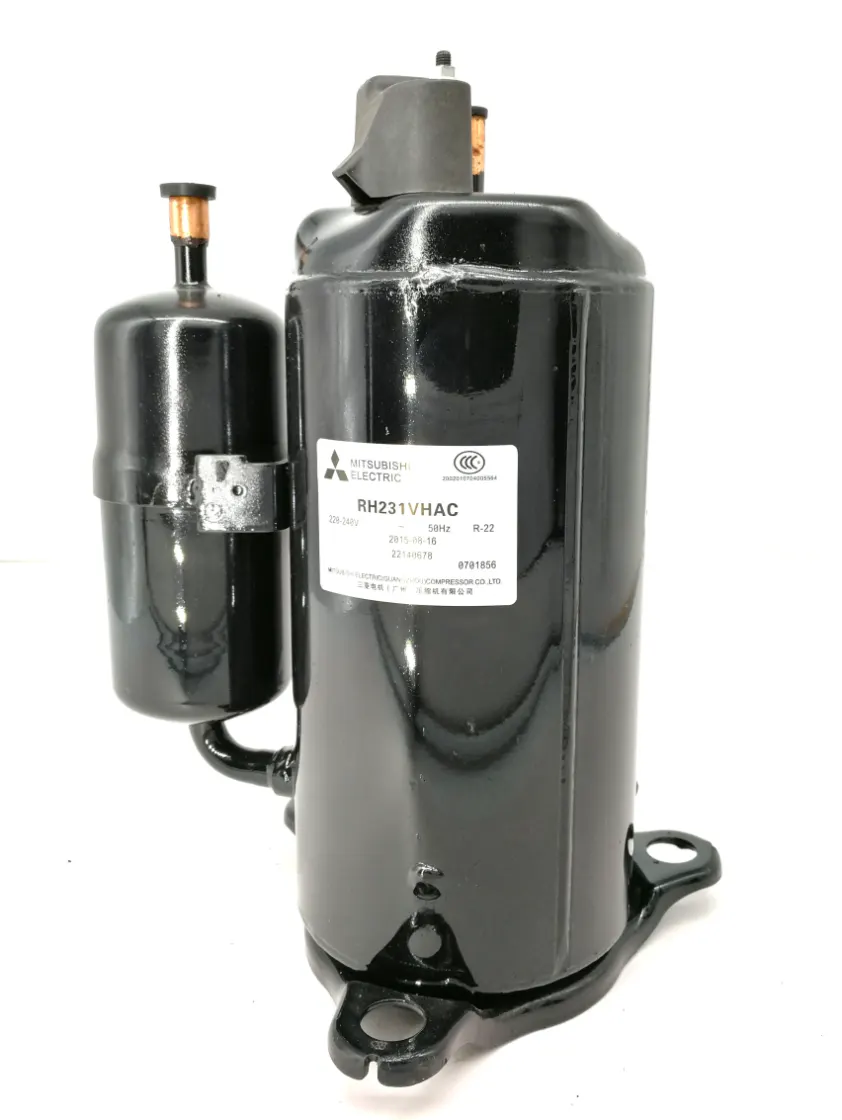
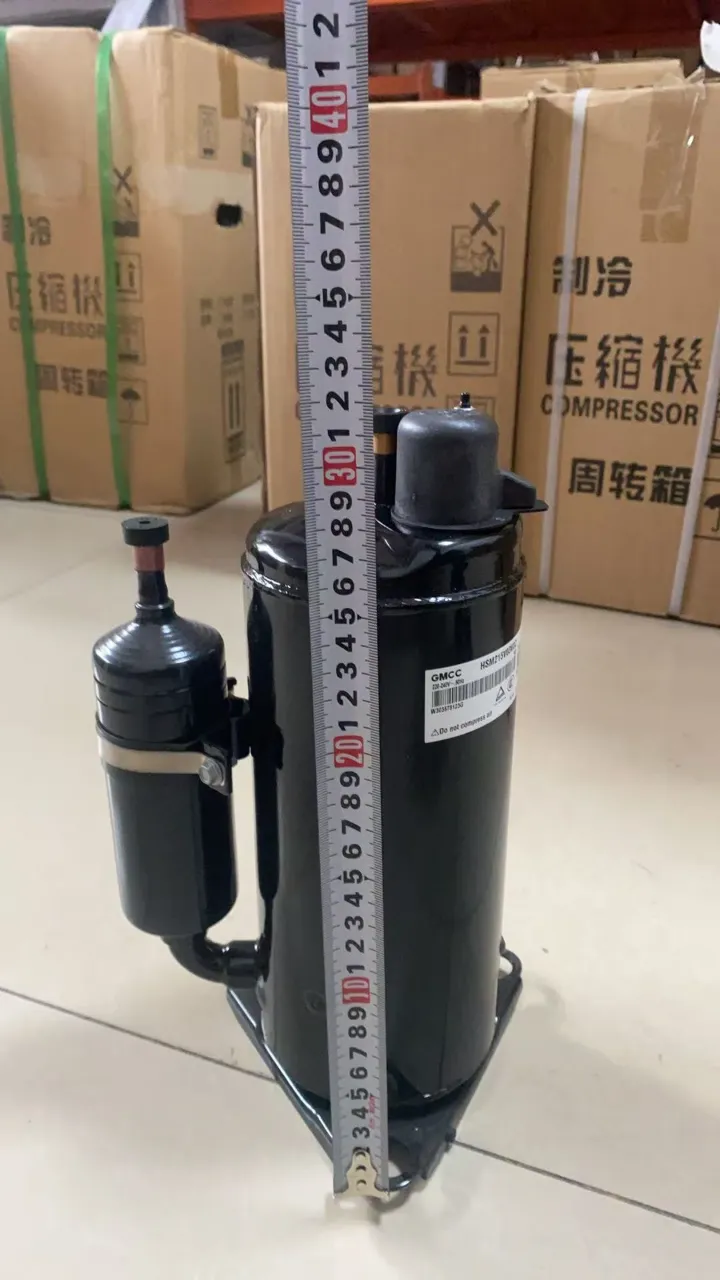
Rotary compressors are widely used in residential split air conditioners, window units, portable air conditioners, and some light commercial systems. They are compact, cost-effective, and commonly found in small to medium-capacity air conditioning equipment.
For distributors, rotary AC compressor demand is often driven by repair volume in residential markets. Common wholesale inquiries include compressors for 9,000 BTU, 12,000 BTU, 18,000 BTU, and 24,000 BTU air conditioners, though exact selection should always be based on the original compressor model and system specification rather than BTU size alone.
Rotary compressors can be fixed-speed or inverter-driven. Fixed-speed models are typically simpler to match when replacing a failed compressor. Inverter compressors require closer attention to the outdoor control board, drive electronics, refrigerant, and motor design. Distributors should avoid treating inverter and non-inverter rotary compressors as interchangeable.
Rotary compressor buying points:
- Best suited for residential and light commercial AC replacement demand
- Strong demand in split AC spare parts channels
- Requires careful matching of refrigerant, voltage, capacity, and electrical design
- Inverter models need stricter technical confirmation
- Packing quality matters because shell and copper connections can be damaged during transport
Scroll AC Compressors
Scroll compressors are commonly used in commercial air conditioning, packaged units, rooftop systems, chillers, and larger split or ducted systems. They are known for stable operation and are a common choice where higher capacity and reliability are required.
A scroll AC compressor usually has a higher unit value than a small rotary compressor. This makes model accuracy especially important for distributors. A wrong scroll compressor shipment can tie up more capital and create more serious warranty or return pressure.
When sourcing scroll compressors wholesale, buyers should pay close attention to phase, voltage, refrigerant, oil, capacity, and connection configuration. Three-phase scroll compressors are common in commercial systems, but single-phase models may also be used in some markets and capacities.
Scroll compressor buying points:
- Common in commercial HVAC and larger air conditioning systems
- Higher unit value and stronger need for exact model confirmation
- Often sold to engineering installers, repair contractors, and commercial service companies
- Phase sequence and electrical compatibility are important for three-phase models
- Good stock planning is needed because demand may be model-specific
Reciprocating and Semi-Hermetic Compressors
Although this guide focuses on air conditioning compressor wholesale, some distributors also handle reciprocating or semi-hermetic compressors for commercial air conditioning, refrigeration, and cold-room applications. These compressors may appear in older systems, special commercial equipment, or combined HVAC and refrigeration inventories.
For replacement purposes, buyers should confirm whether the compressor is intended for air conditioning duty or refrigeration duty. Application range matters. A compressor designed for one operating envelope may not be suitable for another system.
Fixed-Speed vs Inverter Compressors
The growth of inverter air conditioners has changed compressor sourcing. Inverter compressors cannot be selected only by capacity. The compressor must match the drive control, motor characteristics, refrigerant, and system design.
For distributors, this means inverter compressor stock should be based on reliable demand data and clear model references. If the local market has many inverter AC repairs, carrying selected fast-moving inverter models may be useful. If technical identification is weak, stocking too many inverter compressors can increase the risk of misapplication.
Voltage, Phase, and Refrigerant Match: The Main Compatibility Checks
Many wholesale compressor problems start with basic specification mismatches. A compressor that is correct in capacity but wrong in voltage, phase, or refrigerant is not a usable replacement.
Voltage and Frequency Standards
Air conditioning markets around the world use different electrical standards. Distributors should always confirm both voltage and frequency before ordering. Common examples include 220-240V/50Hz, 220-230V/60Hz, 380-415V/50Hz, and 440-460V/60Hz, depending on the country and equipment type.
A compressor designed for one electrical standard should not be assumed suitable for another. Even where voltage appears similar, frequency can affect motor speed, capacity, current draw, and system performance. For export orders, the purchasing team should provide the supplier with the destination market and required electrical specification.
Practical distributor checks:
- Confirm voltage range on the compressor nameplate or model data
- Confirm 50Hz or 60Hz operation
- Check whether the compressor is single-voltage or dual-rated
- Match capacitor and electrical accessories where applicable
- Avoid mixing similar model codes without confirming the electrical suffix
Single-Phase vs Three-Phase Compressors
Single-phase compressors are common in residential and small commercial air conditioning systems. They usually require starting or running components such as capacitors, depending on design. Three-phase compressors are widely used in larger commercial systems and generally require proper phase connection and electrical protection.
For distributors, the difference affects both inventory and customer support. A service technician who receives a three-phase compressor for a single-phase installation cannot complete the job. Likewise, a single-phase replacement is not a direct substitute for a three-phase commercial unit.
Important buying points:
- Single-phase compressors are often faster-moving in residential repair channels
- Three-phase compressors are important for commercial installers and service companies
- Model codes may look similar while phase specifications differ
- Three-phase scroll compressors require correct rotation direction
- Accessories and protection devices should be checked with the system design
Refrigerant Compatibility
Refrigerant match is one of the most important technical requirements in air conditioning compressor wholesale. Compressors are designed for specific refrigerants and operating pressures. Common air conditioning refrigerants include R22, R410A, R32, and R407C, but availability and regulations vary by market.
A compressor suitable for R22 should not automatically be used in an R410A or R32 system. Refrigerants have different pressures, oil requirements, and system design conditions. Using the wrong compressor can cause poor performance, failure, or unsafe operation.
Distributors should ask customers for the original compressor model, refrigerant on the outdoor unit nameplate, and photos of the failed compressor label. For replacement sales, this information reduces disputes and helps the supplier recommend a suitable match.
Refrigerant checks should include:
- Refrigerant type on the original system
- Compressor oil compatibility
- Pressure class and operating envelope
- Whether the system is fixed-speed or inverter
- Local refrigerant availability and service practice
MOQ, Packing, Mixed Orders, and Export Handling
Wholesale buying is also an operational decision. A good compressor order should fit the distributor’s cash flow, warehouse capacity, and expected sales cycle.
Minimum Order Quantity and Mixed-Model Orders
MOQ varies by supplier, compressor brand, and model availability. Some fast-moving models may be available in small quantities, while less common models may require higher MOQ or longer procurement time. For a distributor testing a new market, mixed-model orders can reduce risk by combining several popular models in one shipment.
When discussing MOQ with an air conditioner compressor supplier, ask whether the order can include:
- Mixed rotary and scroll compressors
- Multiple voltage specifications
- Several refrigerant categories
- Different brands in one shipment
- Trial quantities for new models
- Consolidation with other refrigeration spare parts
A flexible mixed order can be more valuable than a very low price on a single model that does not match market demand. Distributors should calculate turnover speed, not only purchase cost.
Export Packing and Damage Prevention
Compressors are heavy, sealed components with vulnerable terminals, mounting feet, and copper connection points. Poor packing can lead to dented shells, broken terminal covers, bent tubes, oil leakage concerns, or unusable stock.
For export shipments, distributors should confirm packing before payment. Depending on the compressor type and quantity, suitable packing may include original cartons, reinforced cartons, pallets, wooden cases, internal supports, moisture protection, and clear model labels.
Packing details to request:
- Individual model label visibility
- Upright positioning where required
- Protection for terminals and connection ports
- Palletizing method for container or LCL shipment
- Export carton strength
- Photos before shipment
- Clear packing list by model and quantity
Good packing reduces claims and helps warehouse staff identify models quickly after arrival.
Documentation and Model Traceability
For wholesale compressor orders, documentation matters. Distributors should keep model lists, nameplate photos, packing lists, invoices, and shipment records. If a customer later asks for a warranty review or technical confirmation, traceability helps resolve the issue faster.
Useful documentation includes:
- Full compressor model numbers
- Brand and origin information where available
- Voltage, phase, refrigerant, and frequency data
- Quantity per carton or pallet
- Serial number records when provided
- Photos of nameplates and packed goods
How to Build a Fast-Moving AC Compressor Stock List
A profitable compressor inventory is built around repeat demand. The right stock list depends on the local installed base, climate, voltage standard, refrigerant use, and service habits.
Start with Local Repair Data
Distributors should collect model requests from service technicians, repair shops, and installation contractors. Even simple inquiry tracking can show which compressors are requested most often. Record the compressor model, air conditioner brand, capacity, refrigerant, voltage, and whether the request converted into a sale.
Over time, this helps identify fast-moving models and avoid overstocking slow items.
Useful data sources include:
- Repair shop purchase history
- Failed compressor nameplate photos
- Outdoor unit model photos
- Seasonal demand patterns
- Warranty replacement inquiries
- Installer feedback from commercial projects
Balance Rotary and Scroll Inventory
For many air conditioning spare parts distributors, rotary compressors create frequent residential sales, while scroll compressors serve higher-value commercial demand. The balance depends on customer type.
A distributor serving mostly repair shops may focus on rotary compressor models for common split AC sizes. A distributor serving contractors and commercial service companies may need more scroll compressors, three-phase models, and project-based sourcing.
A practical stock structure may include:
- Fast-moving residential rotary compressors
- Selected inverter compressor models with confirmed demand
- Commercial scroll compressors for common voltage and refrigerant combinations
- A few special-order models handled through supplier back-to-back sourcing
- Related electrical accessories where appropriate
Avoid Over-Reliance on Capacity Labels
Many buyers describe compressors by air conditioner size, such as 1HP, 1.5HP, 2HP, 12,000 BTU, or 24,000 BTU. These labels are useful for conversation but not enough for final selection. Two systems with similar nominal capacity can use different refrigerants, voltage, oil, and compressor designs.
For accurate wholesale purchasing, the compressor model number is the strongest starting point. If the original model is unavailable, a replacement should be selected by technical data, not by size label alone.
Work with Suppliers Who Understand Multi-Brand Matching
Because the global AC compressor market includes many domestic and international brands, distributors often need more than a single-brand source. A multi-brand air conditioner compressor supplier can help compare availability, alternative models, and commercial options across different product lines.
The supplier should be able to discuss technical parameters clearly, ask for the right application details, and help prevent mismatched orders. Good communication before shipment is usually cheaper than solving a technical dispute after the compressor arrives.
Practical Wholesale Checklist Before Placing an Order
Before confirming an air conditioning compressor wholesale order, distributors should review the following checklist with their sales, technical, and warehouse teams:
- Are the compressor model numbers complete and correct?
- Is the refrigerant type confirmed for every model?
- Are voltage, frequency, and phase correct for the destination market?
- Are fixed-speed and inverter compressors clearly separated?
- Are rotary and scroll compressor requirements listed correctly?
- Is the MOQ suitable for expected sales volume?
- Can slow-moving models be ordered in smaller quantities or as special orders?
- Is the packing suitable for export shipment and local handling?
- Are labels, packing lists, and model records clear enough for warehouse control?
- Has the supplier confirmed availability and lead time?
- Are accessories required, such as capacitors or overload protectors?
- Is there a process for handling technical questions from repair customers?
Air conditioning compressor wholesale works best when purchasing is driven by technical accuracy and market demand. Distributors that understand compressor types, voltage standards, phase requirements, refrigerant compatibility, and packing details can reduce purchasing risk and serve repair customers more confidently. In a competitive spare parts market, the strongest advantage is not simply having compressors in stock, but having the right compressors ready when technicians and installers need them.
FAQ
What information is needed before buying air conditioning compressors wholesale?
Distributors should confirm the compressor model, refrigerant, voltage, frequency, phase, capacity, compressor type, oil compatibility, connection size, mounting dimensions, and whether the unit is fixed-speed or inverter. Photos of the original nameplate are very helpful for avoiding mismatches.
What is the difference between rotary and scroll AC compressors?
Rotary compressors are commonly used in residential split air conditioners and smaller systems, while scroll compressors are widely used in commercial air conditioning, packaged units, and larger HVAC systems. Scroll compressors usually have a higher unit value and require careful confirmation of voltage, phase, refrigerant, and connection details.
Can a single-phase compressor replace a three-phase compressor?
No. Single-phase and three-phase compressors are not direct substitutes. They have different motor designs and electrical requirements. A replacement compressor must match the system’s phase, voltage, frequency, and control design.
Why is refrigerant matching important when sourcing AC compressors?
Compressors are designed for specific refrigerants and operating pressures. A compressor for R22, R410A, R32, or R407C should only be used where its design and oil type match the system requirements. Incorrect refrigerant matching can cause poor performance, compressor failure, or unsafe operation.
How can distributors identify fast-moving AC compressor models?
The best method is to track local repair inquiries, failed compressor nameplate photos, service company orders, installed air conditioner brands, voltage standards, and seasonal demand. Over time, this data shows which rotary and scroll compressor models should be kept in regular stock.
Buyer Next Step
Move from research to sourcing with a category shortlist, relevant product examples, and a quote request channel.