Air Conditioning Compressor Types Explained: Rotary, Scroll, Reciprocating, and Inverter Models
A practical guide to air conditioning compressor types, comparing rotary, scroll, reciprocating, and inverter models for replacement, repair, and sourcing decisions.
Air conditioning compressors do the hardest job in any cooling system: they move refrigerant, create the pressure difference needed for heat transfer, and largely determine how an AC unit sounds, performs, and ages in the field. For repair companies, spare parts distributors, and installation contractors, understanding compressor types is not just a technical issue. It affects fault diagnosis, replacement planning, inventory decisions, and customer expectations.
The market often groups compressors into broad categories, but buyers and technicians usually need a more practical view. The key questions are simple: which type is installed, how does it work, where is it commonly used, how efficient is it, how repairable is it, and when does replacement make more sense than repair?
This guide focuses on the main air conditioning compressor types used in comfort cooling and light commercial AC systems: rotary, scroll, reciprocating, and inverter-driven models. It also highlights what matters during wholesale sourcing and field replacement.
Why compressor type matters in AC systems
Not all compressors behave the same way under the same operating conditions. Two units with similar capacity can differ significantly in starting current, sound level, part-load efficiency, tolerance to liquid return, and serviceability.
For distributors and service teams, compressor type matters because it influences:
- System compatibility with refrigerant, voltage, frequency, and application
- Replacement strategy when an original model is unavailable
- Repair economics compared with complete compressor change-out
- Stock planning for common replacement categories
- Customer expectations on noise, efficiency, and durability
In split AC, rooftop units, packaged systems, and some ducted applications, the compressor is often the most expensive single component. A correct identification can prevent repeat failures, poor performance, and costly callbacks.
The main air conditioning compressor types
Rotary compressors
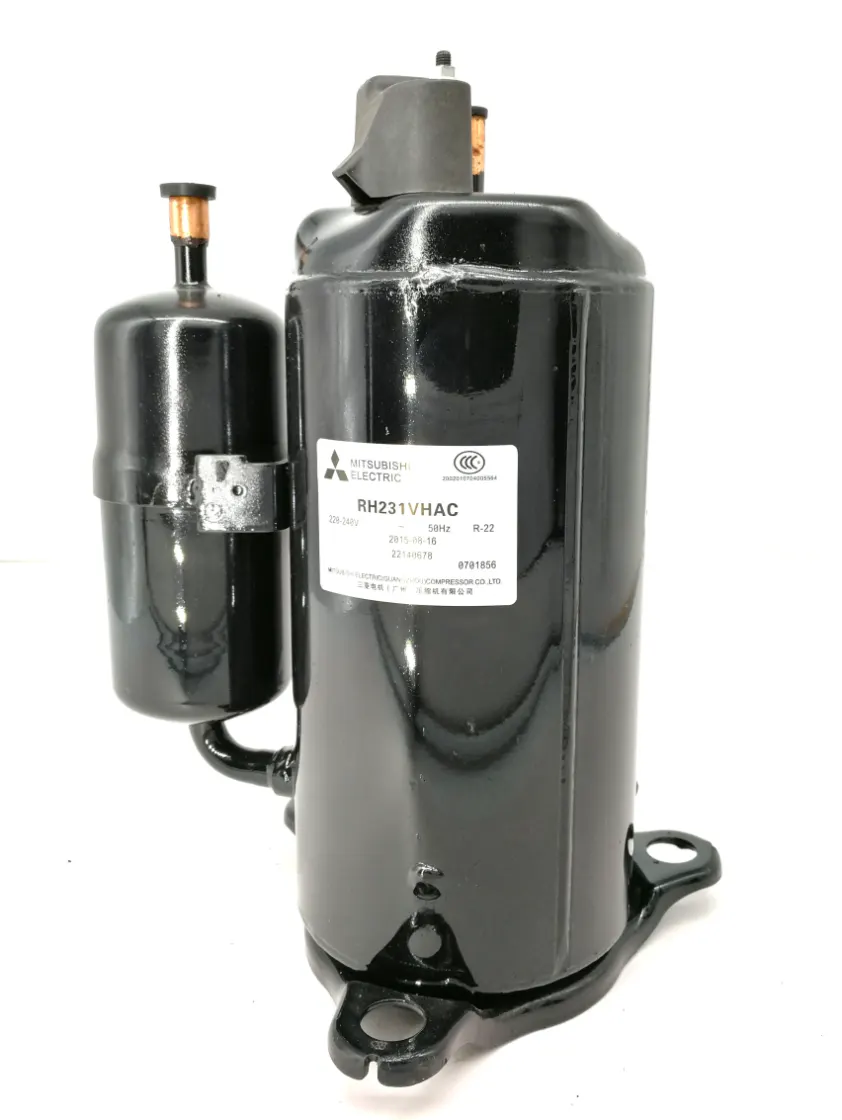
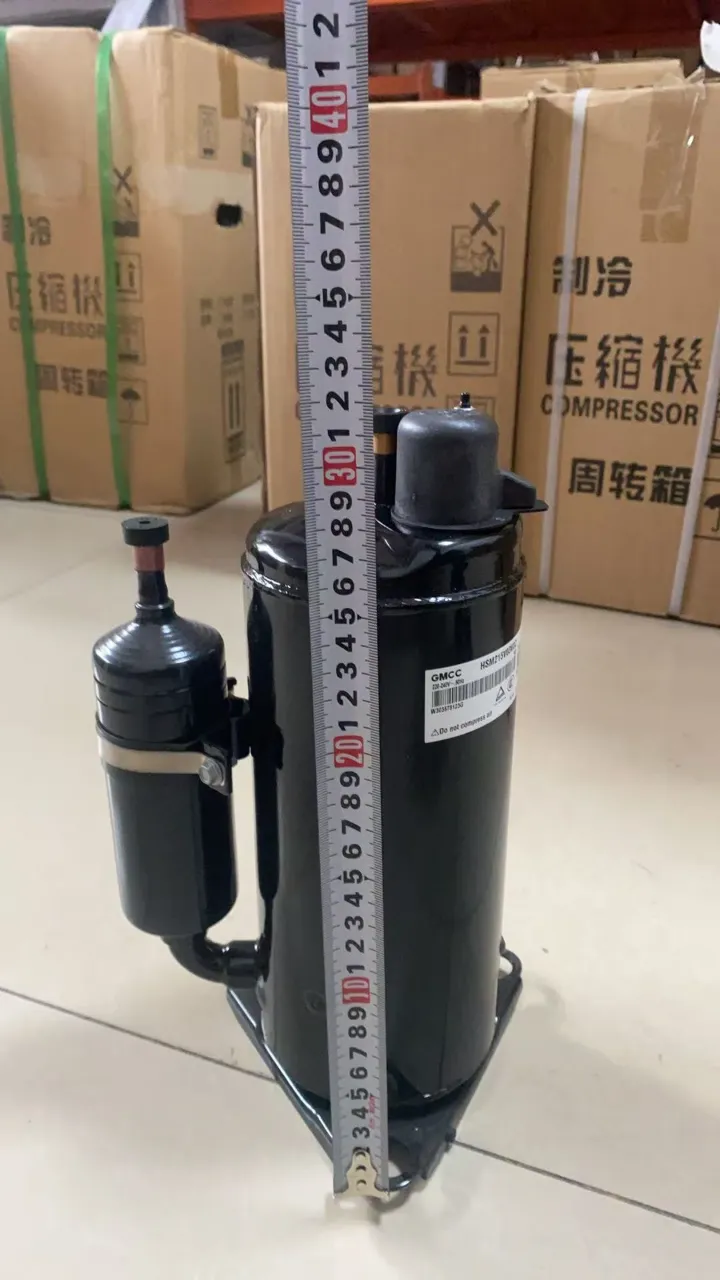
Rotary compressors are common in small to medium capacity air conditioners, especially room ACs, split systems, and compact units. Their compression mechanism usually relies on a rotating element inside a cylinder to compress refrigerant continuously.
How they work
A rotary compressor compresses refrigerant through rotational motion rather than the back-and-forth piston movement seen in reciprocating designs. This helps create smoother operation and a relatively compact form factor.
Typical strengths
- Compact size
- Lower vibration than many piston-based designs
- Common in residential split AC and smaller systems
- Often cost-effective for OEM and replacement markets
Common limitations
- Application range can be narrower than some larger compressor designs
- Internal damage may make field repair impractical
- Exact matching is important when replacing due to mounting, electrical, and refrigerant requirements
Where rotary compressors are often used
- Wall-mounted split air conditioners
- Window AC units
- Small packaged units
- Light-duty cooling applications
For repair companies, rotary compressors are frequently encountered in routine residential service. In many cases, the decision is not whether to rebuild the compressor but whether the replacement cost makes sense relative to the age and condition of the entire unit.
Scroll compressors
Scroll compressors are widely used in residential central AC, commercial split systems, rooftop units, and heat pump applications. They are known for smooth compression, strong efficiency performance, and broad acceptance across many HVAC platforms.
How they work
A scroll compressor uses two spiral-shaped elements. One remains fixed while the other orbits, gradually compressing refrigerant toward the center. This design reduces the pulsing action found in piston compressors.
Typical strengths
- Good efficiency, especially in modern AC systems
- Smooth and relatively quiet operation
- Common in higher-capacity and commercial comfort cooling applications
- Strong replacement demand in the HVAC aftermarket
Common limitations
- Usually more expensive than smaller rotary models
- Sensitive to incorrect application conditions such as contamination or severe liquid floodback
- Internal failures generally lead to replacement rather than on-site rebuild
Where scroll compressors are often used
- Central air conditioning systems
- Commercial split systems
- Rooftop packaged units
- Heat pumps
- Some ducted and multi-zone systems
For distributors, scroll compressors are often a key category because they cover a broad range of replacement needs. For installers, correct matching of refrigerant, displacement or capacity class, electrical data, and piping arrangement is critical.
Reciprocating compressors
Reciprocating compressors use pistons and have long been a standard compressor design in both refrigeration and air conditioning. In AC, they are still relevant in certain installed bases, legacy systems, and some application-specific replacements.
How they work
A motor drives one or more pistons inside cylinders. The pistons draw in refrigerant vapor and compress it through repeated suction and discharge strokes.
Typical strengths
- Well understood by many service technicians
- Historically common in older AC systems
- Can be robust in the right application
- Some technicians value their familiarity and service history
Common limitations
- Often noisier and less smooth than scroll designs
- More moving parts can mean more wear points
- Newer high-efficiency AC systems often favor scroll or inverter-based solutions instead
Where reciprocating compressors are often used
- Older air conditioning installations
- Certain packaged systems
- Legacy replacement applications
- Some commercial and special-duty systems
For replacement buyers, reciprocating compressors often raise a practical question: should the contractor replace like-for-like, or move to an alternative compressor technology if the system design allows it? In many field cases, the safest route is still a compatible like-for-like replacement unless the manufacturer or system engineering clearly supports another option.
Inverter compressors
Inverter compressors are not a separate compression mechanism in the same sense as rotary or scroll. Instead, the term usually refers to a compressor driven by an inverter-controlled variable-speed system. In practice, many inverter air conditioners use rotary or scroll compressors designed for variable-speed operation.
How they work
An inverter drive adjusts motor speed to match cooling demand. Instead of running only at full speed and stopping repeatedly, the compressor can speed up or slow down as needed.
Typical strengths
- Better part-load efficiency
- More stable room temperature control
- Lower starting stress compared with traditional fixed-speed starts
- Often quieter during normal operation
Common limitations
- More complex electronics and controls
- Replacement requires close attention to compatibility between compressor, drive, and system controls
- Diagnosis can be more involved than with fixed-speed systems
Where inverter compressors are often used
- Modern split air conditioners
- Multi-split systems
- Premium residential AC units
- Light commercial variable-capacity systems
For service companies, inverter systems require stronger diagnostic discipline. A compressor-related complaint may originate from the control board, drive module, sensor faults, wiring issues, or system contamination rather than the mechanical compressor alone.
Rotary compressor vs scroll compressor vs reciprocating vs inverter
Structure and operating style
The clearest distinction is between mechanical compression type and speed control method.
- Rotary: compact rotational compression
- Scroll: orbiting scroll elements with smooth continuous compression
- Reciprocating: piston-driven compression with suction and discharge strokes
- Inverter: variable-speed control method, usually paired with rotary or scroll hardware
This matters because many buyers compare inverter compressor vs fixed speed as if they are two completely separate compressor families. In reality, fixed-speed and inverter systems can both use rotary or scroll compressors. The real difference is how the compressor motor is controlled in operation.
Efficiency and part-load performance
For modern comfort cooling, efficiency is no longer judged only at full load. Many air conditioners spend much of their operating time at partial load.
- Inverter systems typically perform best at part load because they modulate output
- Scroll compressors are widely favored for efficient and smooth AC performance
- Rotary compressors can offer strong efficiency in smaller split AC applications
- Reciprocating compressors are often less competitive in newer high-efficiency AC designs
Efficiency in the field still depends on correct refrigerant charge, clean heat exchangers, proper airflow, and electrical stability. Compressor type helps set the ceiling, but system condition determines real-world results.
Noise and vibration
For end users, compressor noise is one of the most noticeable differences.
- Scroll and inverter-driven systems are often associated with smoother, quieter operation
- Rotary compressors are generally compact and can run quietly in many residential applications
- Reciprocating compressors often produce more noticeable vibration and sound
This is useful for service companies handling complaints where the unit still cools but no longer sounds normal. Understanding the installed compressor type helps distinguish normal operating characteristics from signs of damage.
Repairability and field service
In most AC service scenarios, hermetic compressors are replaced, not rebuilt. Even so, compressor type influences diagnosis and replacement planning.
- Rotary and scroll compressors are commonly replaced as sealed units when internally damaged
- Reciprocating designs may be more familiar to technicians, but practical field repair still depends on the exact compressor construction and application
- Inverter systems require more electrical and control-side checks before condemning the compressor
For repair teams, the most expensive mistake is replacing a compressor when the root cause is elsewhere, such as:
- Incorrect voltage
- Failed capacitor or contactor in fixed-speed systems
- Inverter board faults
- Refrigerant circuit blockage
- Fan motor failure causing abnormal pressures
- Acid contamination after burnout
What to check before replacing an AC compressor
Confirm the compressor type and system design
Before ordering a replacement, identify:
- Compressor type: rotary, scroll, reciprocating, or inverter-compatible model
- Refrigerant used by the system
- Voltage, phase, and frequency
- Capacity range or model match
- Mounting style and connection orientation
- Application: split AC, packaged unit, rooftop, heat pump, or ducted system
This is especially important in the split AC compressor types category, where similar-looking compressors may have meaningful internal and electrical differences.
Investigate the reason for failure
A compressor rarely fails in isolation. If the cause is not corrected, the replacement may fail as well.
Common reasons include:
- Overheating due to dirty coils or poor airflow
- Low refrigerant returning inadequate cooling to the compressor
- Floodback or liquid slugging
- Electrical imbalance or unstable supply
- Contamination, moisture, or acid in the system
- Incorrect expansion device operation
For distributors supporting service customers, this is where technical guidance adds real value. The correct replacement is not only the right model. It is the right model installed into a healthy system.
Decide whether repair or full replacement is the better option
For many service companies, the decision depends on five practical questions:
- Is the compressor electrically and mechanically failed, or is the problem external?
- Is a direct replacement available within a reasonable lead time?
- Does the age of the unit justify compressor replacement?
- Has the system suffered contamination that increases risk after change-out?
- Will the customer accept the repair cost compared with replacing the full condensing unit or AC system?
This is the real-world side of hvac compressor replacement. Technical compatibility is only one part of the decision. Time, risk, and total installed cost matter just as much.
What parts distributors and wholesale buyers should pay attention to
For overseas buyers, sourcing compressors is not only about brand preference. It is about application fit, documentation quality, and consistent supply.
Focus on exact application data
When buying air conditioner compressor brands across multiple manufacturers, check that each option is matched on:
- Refrigerant compatibility
- Electrical specification
- Capacity class
- Compressor technology
- Physical dimensions and piping layout
- Intended AC application
A broad cross-reference can be useful, but it should never replace full technical verification.
Separate fixed-speed and inverter demand clearly
Fixed-speed compressors and inverter-compatible compressors should be managed differently in stock planning. Inverter models often require closer control matching and more detailed model verification.
Stock around common failure and replacement patterns
Distributors serving repair companies usually benefit from stocking around common installed bases rather than chasing every niche model. In practice, the strongest demand often comes from:
- Residential split AC replacement compressors
- Scroll compressors for central and light commercial AC
- Common rotary models for room and split systems
- Legacy reciprocating replacements where local installed base remains active
Support the buyer with clear technical communication
A strong compressor supply program should help customers answer four essential questions quickly:
- Is this the correct replacement?
- What else should be changed during installation?
- What checks should be completed before startup?
- Are there contamination or warranty-risk concerns?
That level of clarity helps reduce returns, avoid misapplication, and improve field success rates.
Choosing the right compressor type for the job
There is no single best compressor for every AC application.
- Rotary compressors are widely used where compact size and cost-effective performance matter.
- Scroll compressors are a leading choice for smooth, efficient residential and commercial air conditioning.
- Reciprocating compressors remain relevant in older systems and specific replacement cases.
- Inverter compressors offer variable-speed efficiency and control benefits, but they demand more careful diagnosis and compatibility checks.
For repair teams, the priority is accurate diagnosis before replacement. For distributors, the priority is verified application matching and reliable supply. For contractors and installers, the priority is a replacement that restores performance without creating new system risk.
When buyers understand the real differences between compressor types, they make better decisions on inventory, service, and replacement planning. In a market where lead time, compatibility, and field reliability all matter, that knowledge has direct commercial value.
FAQ
What are the main air conditioning compressor types?
The main air conditioning compressor types are rotary, scroll, and reciprocating compressors. Inverter models are variable-speed compressors, usually built on rotary or scroll designs, and are controlled by an inverter drive rather than running only at fixed speed.
What is the difference between a rotary compressor and a scroll compressor?
A rotary compressor uses a rotating compression mechanism in a compact shell and is common in smaller split and room AC systems. A scroll compressor uses two spiral elements and is widely used in residential central AC and commercial systems because it offers smooth operation and strong efficiency.
Is an inverter compressor better than a fixed-speed compressor?
An inverter compressor is often better for part-load efficiency, temperature stability, and noise control because it can adjust speed to match cooling demand. However, it also involves more complex electronics and stricter replacement compatibility requirements than a fixed-speed system.
Can a reciprocating compressor be replaced with a scroll compressor?
Not automatically. Compressor replacement must match the system's refrigerant, capacity, electrical data, piping arrangement, and design requirements. In many cases, a like-for-like replacement is the safest option unless the equipment manufacturer or system engineering clearly supports an alternative compressor type.
What should technicians check before replacing an AC compressor?
Technicians should confirm the compressor type, refrigerant, voltage, frequency, capacity range, and application. They should also identify the root cause of failure, inspect for contamination or acid, verify airflow and system pressures, and check electrical and control components before installing a replacement.
Buyer Next Step
Move from research to sourcing with a category shortlist, relevant product examples, and a quote request channel.