Wholesale Air Conditioning Compressors: What Importers Should Check Before Buying
A practical procurement checklist for importers buying wholesale air conditioning compressors, from model matching to export documents.
Air conditioning compressor wholesale purchasing is not only a price comparison exercise. For importers, distributors, repair companies, and HVAC contractors, the real cost of a compressor order is decided by model accuracy, electrical compatibility, refrigerant suitability, packaging strength, warranty clarity, and the completeness of export documents.
A wrong-model shipment can tie up capital, delay service jobs, and create disputes with end customers. A well-checked order, on the other hand, gives spare parts distributors a more reliable inventory position and helps service teams replace compressors with fewer installation risks.
This guide covers the practical checks overseas buyers should make before placing a wholesale order for air conditioning compressors, including rotary, scroll, and other common AC compressor types used in residential, light commercial, and commercial systems.
1. Confirm Brand Availability and Model Matching Before Discussing Price
Many buyers start by asking for a price list. In compressor procurement, that can be premature. The first question is whether the AC compressor supplier can provide the correct brand, model series, application range, and replacement option for the market you serve.
Check the exact compressor model
Air conditioning compressors are commonly identified by model codes that indicate capacity range, refrigerant, voltage, phase, motor type, and sometimes application conditions. Similar-looking model numbers are not always interchangeable.
Before confirming an order, send the supplier clear details such as:
- Full compressor model number from the nameplate
- Air conditioner brand and outdoor unit model, if available
- Refrigerant type used by the system
- Rated voltage, frequency, and phase
- Cooling capacity or BTU range
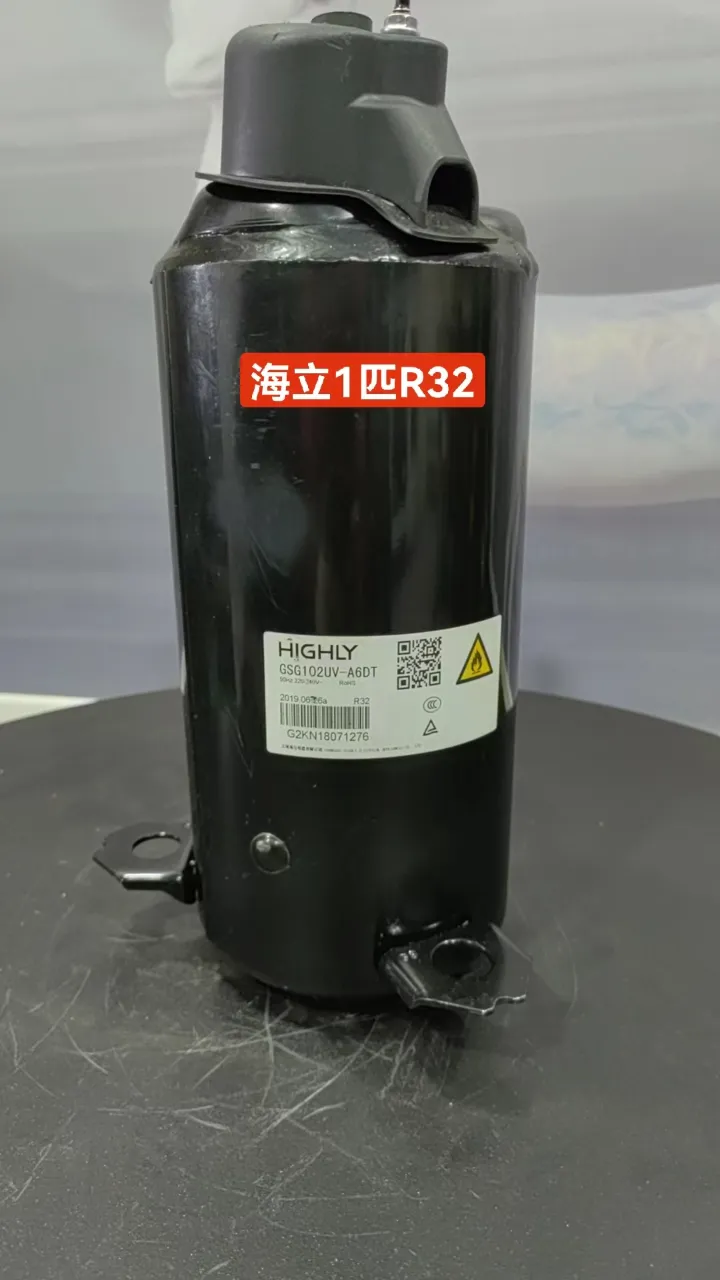
- Photos of the compressor label, terminals, mounting feet, and pipe connections
For replacement buyers, the best practice is to confirm both the original compressor code and the recommended replacement model. An air conditioner compressor distributor should be able to tell you whether the offered unit is an exact match, a compatible alternative, or only a general replacement that requires technical confirmation.
Evaluate brand coverage for your local market
Importers often need a mixed compressor portfolio rather than one single brand. A refrigeration parts distributor may need compressors for mainstream residential split units, commercial packaged AC units, and repair jobs involving older equipment.
When reviewing brand availability, check whether the supplier can support:
- Domestic and international compressor brands commonly used in your market
- Rotary compressors for residential and light commercial air conditioners
- Scroll compressor for air conditioning applications in larger systems
- Models suitable for R410A, R32, and other refrigerants used locally
- Standard replacement models with stable availability
A wholesale supplier with broader brand access can reduce sourcing time, especially when you are consolidating spare parts for multiple customers. However, brand availability should still be checked model by model, because stock and lead time can differ significantly across compressor series.
Separate genuine demand from speculative lists
For large inquiries, buyers sometimes send long lists of compressor codes collected from different service teams. This is understandable, but it can slow down quotation accuracy. Grouping the inquiry by refrigerant, voltage, capacity, and urgency helps the supplier respond with more useful options.
A practical format is to mark each item as one of the following:
- Regular stock item for distribution
- Urgent repair replacement
- Project-based purchase
- Sample order for market testing
- Alternative model request
This helps avoid quoting unsuitable compressors simply because the model number looks close.
2. Verify Voltage, Frequency, Phase, and Refrigerant Compatibility
Electrical and refrigerant compatibility are two of the most important technical checks in HVAC compressor wholesale. Importers selling into multiple countries must pay special attention because local power supply conditions and refrigerant regulations are not the same in every market.
Voltage and frequency must match the installation market
A compressor designed for one electrical system may not be suitable for another. Common air conditioning compressor requirements may include different combinations of voltage, frequency, and phase, depending on the system design and region.
Before ordering, confirm:
- Rated voltage shown on the compressor nameplate
- Frequency, such as 50 Hz or 60 Hz
- Single-phase or three-phase configuration
- Starting components required for the compressor
- Whether the compressor is intended for inverter or fixed-speed operation
This is especially important for importers who distribute to several countries. A compressor that works for one market may not be correct for another, even when the cooling capacity appears similar. Wrong voltage or frequency can lead to poor performance, starting problems, overheating, or early failure.
Do not treat R410A and R32 compressors as interchangeable
R410A compressor and R32 compressor demand remains common in the air conditioning replacement market. Buyers should not assume that compressors for different refrigerants can be exchanged without engineering confirmation.
Refrigerant compatibility affects compressor design, oil type, working pressure, safety considerations, and system performance. The compressor must match the refrigerant specified for the air conditioning system. If a service team is retrofitting a system, that decision should be made by qualified technicians following local codes and manufacturer guidance.
For wholesale buying, the safest procurement rule is simple: purchase compressors according to the original refrigerant and system specification unless a verified replacement path is available.
Check oil type and application range
Compressors are designed for specific operating envelopes. Even within the same refrigerant family, the compressor must be suitable for the intended air conditioning application.
Ask the supplier to confirm:
- Refrigerant compatibility
- Oil type, where relevant to installation and service practice
- Operating application, such as air conditioning rather than refrigeration
- Fixed-speed or inverter application
- Suitable evaporating and condensing condition range, when project conditions are known
This matters for repair companies and engineering installers because field failures are often blamed on the compressor, even when the root cause is incorrect selection, system contamination, poor evacuation, or application outside the intended operating range.
3. Review Packaging, MOQ, Lead Time, and Order Consolidation
A technically correct compressor still needs to arrive in sellable and installable condition. Packaging and order structure are commercial details, but they have direct operational impact for importers.
Packaging should protect heavy mechanical products
Compressors are dense, heavy, and vulnerable to damage if packed poorly. Bent terminals, damaged mounting feet, oil leakage, dented shells, and broken accessories can turn a profitable order into a claims problem.
Before placing a wholesale order, confirm the packaging method for each shipment type:
- Individual carton or branded carton, where available
- Inner protection against vibration and impact
- Pallet packing for sea freight or larger orders
- Moisture protection for long-distance transport
- Clear model labeling on cartons
- Handling marks and export-ready packaging
For distributors, carton labeling is not a small detail. Clear labels help warehouse teams identify stock faster, reduce picking errors, and support after-sales traceability.
Understand MOQ by model, brand, and shipment method
MOQ can vary by compressor brand, model, stock status, and whether the order is factory-direct or assembled through available inventory. Importers should clarify whether MOQ applies per model, per shipment, per brand, or per mixed container.
Useful questions include:
- What is the MOQ for each compressor model?
- Can different models be mixed in one order?
- Is there a sample order option for new models?
- Does the quoted price depend on order quantity?
- Are accessories, terminals, or mounting parts included?
- Can compressors be consolidated with other refrigeration spare parts?
For a refrigeration spare parts distributor, mixed-model purchasing may be more practical than buying a large quantity of a single compressor. For an engineering installer, the priority may be project timing and model accuracy rather than lowest unit price.
Lead time should be checked before accepting customer orders
Lead time is not only the time required to prepare goods. It may include model confirmation, stock reservation, payment processing, packing, export handling, and freight arrangement. If the supplier needs to source from multiple brands, each model may have a different availability window.
Importers should separate products into urgent and non-urgent lines. Regular stock models can be planned for inventory replenishment, while urgent replacement compressors should be handled with tighter communication around availability, dispatch date, and freight method.
4. Clarify Warranty Terms and After-Sales Responsibilities
Warranty terms are often discussed too late. In wholesale compressor purchasing, the buyer and supplier should agree on warranty scope before shipment, especially when compressors will be resold to distributors, repair companies, or contractors in another country.
Define what the warranty covers
A compressor warranty normally depends on correct application, correct installation, and proper system service practice. Importers should ask for clear terms that explain what is covered, what is excluded, and what evidence is required for a claim.
Important warranty points include:
- Warranty period and starting point
- Whether warranty applies to replacement only, credit, or another remedy
- Required proof, such as nameplate photos, installation details, and failure report
- Exclusions related to incorrect voltage, wrong refrigerant, contamination, poor oil return, or improper installation
- Claim process and expected response time
This protects both sides. A distributor needs enough clarity to support its customers, while the supplier needs enough technical evidence to evaluate whether the compressor itself failed or the system caused the failure.
Keep installation records for high-value compressors
Repair companies and contractors should keep basic installation records when replacing compressors. For higher-value scroll compressors and commercial AC systems, this is especially important.
Useful records may include:
- Original compressor model and replacement model
- Refrigerant type and charge practice
- Electrical readings during commissioning
- Vacuum and leak test confirmation
- Filter drier replacement, where applicable
- Photos before and after installation
These records help reduce warranty disputes and improve service quality. They also give distributors better information when deciding which compressor models to keep in stock.
Align warranty language with your resale channel
Importers selling to local service companies should avoid making warranty promises that are broader than the supplier's terms. If your local market expects specific after-sales support, discuss it before buying. A clear warranty policy is easier to manage than a vague promise after a failed installation.
5. Check Export Documentation and Compliance Requirements
Export paperwork can decide whether a shipment clears smoothly or sits at the port while documents are corrected. Air conditioning compressor wholesale orders should be checked for documentation requirements before payment and shipment.
Confirm standard export documents
Typical documents may vary by country, shipment method, and customer requirements. Importers should confirm what documents are needed for customs clearance and internal receiving.
Common export documents may include:
- Commercial invoice
- Packing list
- Bill of lading or airway bill
- Certificate of origin, if required
- Product model list and quantity breakdown
- HS code information for customs declaration
- Insurance documents, where applicable under the trade term
The buyer should also confirm consignee details, shipping marks, destination port, and trade terms. Small document errors can create clearance delays, storage charges, or disputes between buyer, freight forwarder, and supplier.
Ask about market-specific compliance needs
Some markets may require additional product certificates, labeling, energy-related information, or import compliance checks. Requirements differ by country and product category, so importers should verify local rules with customs brokers or compliance advisors before ordering.
Suppliers can provide available product documents, but the importer is usually closest to the destination market's import rules. When in doubt, clarify requirements before shipment rather than after the cargo arrives.
Match documents to the physical shipment
For mixed compressor orders, the packing list should be accurate and easy to check. Model numbers, quantities, carton counts, gross weight, and net weight should match the actual shipment. Clear documentation helps warehouse receiving, customs clearance, and customer delivery.
For distributors managing multiple brands, it is also useful to request a model summary sheet for internal inventory setup. This does not replace customs documents, but it helps local teams create SKU records and reduce receiving errors.
Practical Procurement Checklist for Importers
Before buying wholesale air conditioning compressors, importers should run through a structured checklist:
- Confirm the exact compressor model or approved replacement model.
- Match voltage, frequency, phase, and starting method to the destination market.
- Verify refrigerant compatibility, especially for R410A compressor and R32 compressor orders.
- Check whether the compressor is suitable for air conditioning, inverter, fixed-speed, residential, or commercial use.
- Review brand availability, stock status, and lead time by model.
- Confirm packaging strength, carton labeling, and pallet requirements.
- Clarify MOQ, mixed-order options, and whether accessories are included.
- Agree on warranty period, claim process, and required evidence.
- Prepare export documents and destination-market compliance requirements.
- Keep all model confirmations in writing before payment and shipment.
For importers, the strongest purchasing process combines technical verification with commercial discipline. Price matters, but it should come after the compressor has been confirmed as correct for the system, the market, and the resale channel.
What Different Buyers Should Pay Attention To
Refrigeration spare parts distributors
Distributors should focus on fast-moving models, clear carton labeling, brand mix, and replacement demand in their region. A balanced inventory can support residential service work, light commercial repairs, and urgent customer requests without tying up too much capital in slow-moving compressors.
Service and repair companies
Repair teams should prioritize exact model matching, refrigerant compatibility, electrical data, and installation documentation. A lower-priced compressor is not a good purchase if it creates installation uncertainty or weakens warranty support.
Engineering installers and project buyers
Installers should check compressor application range, project schedule, freight timing, and documentation. For project-based purchasing, the cost of delay can be higher than the difference between two compressor quotations.
Replacement buyers
Replacement buyers should provide clear nameplate photos and system information. If the original model is unavailable, the replacement should be confirmed carefully before shipment. Pipe connection position, mounting dimensions, electrical requirements, and refrigerant type all matter.
Air conditioning compressor wholesale purchasing works best when the buyer treats the supplier as a technical sourcing partner, not only a price source. The more accurate the inquiry, the easier it is to receive the right compressor, reduce after-sales risk, and build a more dependable supply chain.
FAQ
What should importers check before buying wholesale air conditioning compressors?
Importers should confirm the exact compressor model, voltage, frequency, phase, refrigerant compatibility, application type, packaging method, MOQ, warranty terms, lead time, and export documentation. Model photos and nameplate data are especially useful for avoiding wrong-model orders.
Can an R410A compressor be replaced with an R32 compressor?
R410A and R32 compressors should not be treated as interchangeable. The compressor must match the refrigerant and system design unless a qualified technician or manufacturer-approved replacement path confirms otherwise. Refrigerant affects pressure, oil, safety, and performance requirements.
Why are voltage and frequency important in AC compressor wholesale orders?
A compressor must match the destination market's electrical supply and the air conditioning system design. Incorrect voltage, frequency, or phase can cause starting failure, overheating, poor performance, or early compressor damage.
What documents are usually needed for importing air conditioning compressors?
Common documents include a commercial invoice, packing list, bill of lading or airway bill, model and quantity list, and certificate of origin if required. Importers should also verify HS code information and any market-specific compliance requirements with their local broker.
How can distributors reduce warranty disputes on compressor sales?
Distributors can reduce disputes by confirming model compatibility before shipment, explaining warranty exclusions clearly, keeping nameplate and installation records, and requiring basic failure evidence such as photos, electrical readings, refrigerant information, and service reports.
Buyer Next Step
Move from research to sourcing with a category shortlist, relevant product examples, and a quote request channel.