How to Choose an Air Conditioning Compressor by Voltage, Refrigerant, and Capacity
A practical air conditioning compressor replacement guide for overseas buyers comparing voltage, refrigerant, capacity, and application fit.
Why Compressor Selection Matters in AC Replacement
Air conditioning compressor replacement is rarely a simple like-for-like purchase unless the original model number is still available and the system has not been modified. For overseas buyers, the challenge is often broader: different power supplies, regional refrigerant regulations, brand substitutions, and mixed residential or light commercial applications can all affect whether a replacement compressor will run safely and deliver the required cooling performance.
For distributors, repair companies, service technicians, and HVAC installers, the right compressor choice reduces repeat failures, warranty disputes, and installation delays. The wrong compressor can lead to poor cooling, high current draw, oil return problems, nuisance tripping, or mechanical damage. In many cases, failure is not caused by the replacement compressor itself but by a mismatch in voltage, refrigerant, capacity, start components, or system conditions.
A reliable replacement decision should confirm three essentials before price or availability: electrical compatibility, refrigerant compatibility, and capacity match. These factors determine whether the compressor can operate within the design range of the air conditioning system.
Match the Compressor Voltage and Electrical Requirements
Voltage is one of the first details to confirm in any AC compressor replacement. A compressor designed for the wrong electrical supply may fail to start, overheat, trip protection devices, or suffer winding damage. Overseas buyers should never assume that compressors from similar capacity ranges use the same voltage.
Common voltage considerations
Residential and light commercial air conditioning systems may use different electrical configurations depending on the country, building type, and equipment design. Buyers should check:
- Rated voltage on the original compressor nameplate
- Phase type, such as single-phase or three-phase
- Frequency, commonly 50 Hz or 60 Hz depending on the market
- Allowable voltage range, if shown on the compressor data plate or technical sheet
- Starting method and required electrical accessories
A compressor marked for one voltage and frequency should not be selected only because its cooling capacity appears similar. Frequency affects motor speed and performance in many compressor designs. A compressor intended for 60 Hz operation may not perform the same on a 50 Hz supply, and vice versa, unless the manufacturer documentation allows it.
Single-phase and three-phase differences
Small residential AC compressors are commonly single-phase, while larger residential units, packaged systems, and light commercial equipment may use three-phase compressors. Replacing a three-phase compressor with a single-phase model, or the reverse, is not a standard substitution. It changes the electrical design and may require different contactors, protection devices, wiring, and controls.
For single-phase compressors, buyers should also confirm the start and run capacitor requirements. Even when voltage and capacity match, the wrong capacitor rating can cause hard starting, overheating, or poor efficiency. Some systems use potential relays, start capacitors, PTC devices, or factory-specified start kits. Replacement planning should include these accessories when required.
What distributors should verify before quoting
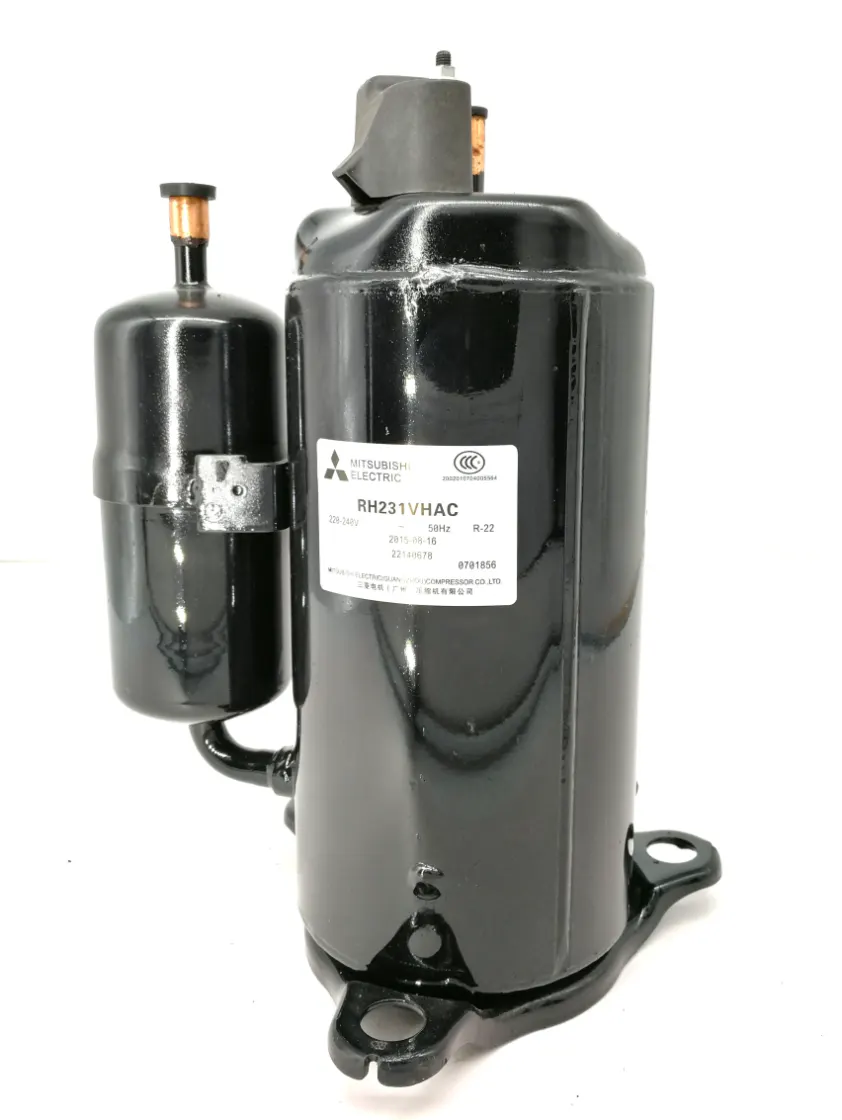
When responding to an overseas inquiry, distributors should request a clear photo of the compressor nameplate and, if possible, the outdoor unit label. Essential electrical details include voltage, phase, frequency, locked rotor current, rated load current, and connection type. If the original model is unavailable, these details help identify a technically suitable cross-reference rather than a risky approximate substitute.
A good quotation should make the electrical assumptions visible. For example, it should state whether the compressor is for 220–240 V single-phase 50 Hz, 208–230 V single-phase 60 Hz, or a specific three-phase supply. This avoids confusion when customers operate across multiple regional markets.
Confirm Refrigerant Compatibility Before Selecting a Compressor
Refrigerant compatibility is just as important as compressor voltage. A compressor is designed for specific refrigerants, pressure ranges, oils, and operating envelopes. Using an incompatible refrigerant can cause poor lubrication, abnormal discharge temperature, capacity loss, and premature compressor failure.
Identify the refrigerant in the existing system
Before selecting a replacement, confirm the refrigerant listed on the equipment nameplate or service documentation. Common air conditioning refrigerants vary by market and equipment age. The replacement compressor must be suitable for the refrigerant used in the system, not simply for the general application category.
Technicians should also check whether the system has already been retrofitted to another refrigerant. In some service markets, older equipment may have been converted during previous repairs. The refrigerant label on the outdoor unit may not always reflect the actual field condition if documentation is poor. When in doubt, service teams should inspect service records and verify refrigerant handling procedures before replacing the compressor.
Oil compatibility matters
Compressor refrigerant compatibility is closely linked to compressor oil. Different refrigerants require different lubricant types and oil return characteristics. A compressor built for one refrigerant-oil combination should not be assumed compatible with another refrigerant unless the manufacturer or supplier documentation supports that use.
In replacement work, oil issues can become serious when the system is contaminated after burnout or when mixed refrigerants have been used. Acid, moisture, and debris left in the system can damage the new compressor quickly. Proper evacuation, filter drier replacement, leak repair, and system cleaning are part of a successful compressor replacement, especially after electrical burnout.
Do not select by refrigerant alone
Matching refrigerant is necessary, but it is not enough. Two compressors for the same refrigerant can have different capacities, motor types, mounting patterns, displacement, operating envelopes, and application limits. A compressor used in a high-efficiency split AC may not be interchangeable with one used in a light commercial packaged unit, even if the refrigerant is the same.
Buyers should treat refrigerant as a gatekeeper: if it does not match, the model should be rejected. If it does match, the next step is to compare capacity, voltage, application type, and mechanical fit.
Select the Right Capacity, Horsepower, and Application Range
Capacity selection is where many replacement mistakes occur. Buyers often ask for a compressor by horsepower, but horsepower alone does not define cooling capacity. It is a useful commercial reference, not a complete engineering specification.
Capacity is more important than horsepower alone
Air conditioning compressor capacity may be expressed in Btu/h, watts, kilowatts, refrigeration tons, displacement, or nominal horsepower depending on the brand and market. For replacement purposes, cooling capacity under comparable rating conditions is more meaningful than a simple horsepower label.
A compressor with the same nominal horsepower may deliver different cooling performance depending on refrigerant, evaporating temperature, condensing temperature, motor design, and compressor technology. This is especially important when comparing compressors across brands.
For residential and light commercial air conditioning, buyers should confirm:
- Nominal cooling capacity of the original system
- Compressor model and performance data if available
- Refrigerant type
- Power supply and frequency
- Application range for air conditioning duty
- Whether the system uses fixed-speed or inverter operation
Avoid oversizing and undersizing
Choosing a larger compressor may appear safer, but oversizing can create operating problems. An oversized compressor may short-cycle, increase current draw, create refrigerant control issues, or operate outside the intended system balance. It can also overload existing electrical components or create poor humidity control in comfort cooling applications.
Undersizing creates a different set of problems. The system may run continuously, fail to reach target temperature, operate with abnormal suction conditions, and disappoint the end user. In hot climates or commercial spaces with high internal load, undersizing can lead to repeated service calls.
The best replacement is usually one that closely matches the original compressor’s rated capacity and operating envelope. When an exact model is not available, a cross-reference should be based on technical data, not only on approximate horsepower.
Residential versus light commercial selection
Residential AC compressors are typically selected for split systems, window units, portable systems, or small packaged equipment. Priorities include quiet operation, compact size, single-phase power compatibility, and correct match with the system’s capillary tube or expansion device.
Light commercial AC compressors may be used in rooftop units, packaged air conditioners, small shops, offices, restaurants, and similar applications. These systems may run longer hours and may use larger capacities, three-phase power, and more demanding controls. Replacement selection should consider duty cycle, ambient conditions, service access, and whether the compressor is part of a multi-compressor circuit.
Installers should also pay attention to mounting configuration, suction and discharge connection sizes, terminal layout, and overall dimensions. A technically correct compressor still needs to fit into the existing unit without unsafe piping stress or electrical modification.
Check Compressor Type, Controls, and Mechanical Fit
Voltage, refrigerant, and capacity narrow the selection, but they do not complete it. Compressor type and system design also affect whether the replacement is practical.
Fixed-speed and inverter compressors are not interchangeable
A major distinction is fixed-speed versus inverter-driven compressors. Many modern air conditioners use inverter compressors controlled by an electronic drive board. These compressors are not normally replaced with standard fixed-speed compressors unless the entire control architecture is redesigned, which is not a typical service repair.
For inverter AC compressor replacement, buyers should match the original technology and confirm compatibility with the drive module and control system. Model number matching is especially important because the compressor and inverter board are designed to operate together within specific parameters.
Fixed-speed compressors, by contrast, operate on direct line power through contactors, relays, capacitors, and overload protection. Cross-reference options may be broader, but electrical and mechanical details still need careful checking.
Rotary, scroll, and reciprocating compressors
Residential and light commercial air conditioners may use rotary, scroll, or reciprocating compressors depending on capacity and equipment design. Replacing one type with another is not automatically acceptable. Compressor type influences vibration, mounting, oil return, start behavior, efficiency, and piping design.
Rotary compressors are common in many smaller air conditioning systems. Scroll compressors are widely used in larger residential and light commercial units. Reciprocating compressors may still be found in certain systems, especially older equipment or specific regional designs. The replacement should normally follow the original equipment type unless technical support confirms a valid alternative.
Mechanical and piping details
Even when specifications look correct, mechanical fit can delay installation. Buyers should confirm:
- Mounting foot pattern and base dimensions
- Compressor height and shell diameter
- Suction and discharge tube location
- Connection diameter and connection type
- Terminal cover position and wiring access
- Service valve or piping arrangement in the outdoor unit
For distributors shipping internationally, dimensional confirmation reduces returns and site modifications. For service teams, it reduces time spent adapting piping in cramped outdoor units. If a direct replacement is not available, installers should evaluate whether piping changes can be made without creating vibration stress or oil return problems.
Practical Buying Checklist for Overseas Replacement Orders
A structured checklist helps overseas buyers avoid incomplete inquiries and incorrect shipments. The most useful compressor replacement request includes both nameplate data and application details.
Information to collect before ordering
Before purchasing an AC compressor replacement, collect the following:
- Original compressor brand and model number
- Clear photo of compressor nameplate
- Outdoor unit model and nameplate photo
- Refrigerant type used in the system
- Supply voltage, phase, and frequency
- Cooling capacity or system tonnage
- Compressor type: rotary, scroll, reciprocating, fixed-speed, or inverter
- Suction and discharge connection details
- Mounting dimensions if the original model is unavailable
- Reason for failure, such as burnout, mechanical lock, floodback, or external damage
The reason for failure is important because a new compressor may fail if the original fault remains. For example, liquid floodback, poor airflow, blocked coils, incorrect charge, voltage imbalance, or contamination can damage the replacement compressor. A compressor replacement should be treated as a system repair, not only a component swap.
What buyers should compare in a quotation
When comparing compressor offers from different suppliers, buyers should look beyond unit price. A lower-cost compressor may not be economical if it requires major modifications or carries unclear compatibility.
Useful quotation details include:
- Confirmed voltage, phase, and frequency
- Compatible refrigerant
- Nominal capacity and rating condition, where available
- Compressor type and application range
- Oil type, if specified
- Electrical accessory requirements
- Packing method for export shipment
- Availability of matching capacitors, relays, overloads, or accessories
- Clear model cross-reference notes when replacing another brand
Distributors and repair companies should also consider stocking strategy. Fast-moving residential compressor models may be stocked by voltage and refrigerant family, while light commercial units may require more model-specific confirmation. In mixed export markets, the same nominal capacity may require different voltage versions for different countries.
Installation practices that protect the new compressor
Even the correct compressor can fail early if installed into a dirty or unresolved system. Service teams should follow standard refrigeration practice, including leak repair, nitrogen pressure testing where appropriate, evacuation to a suitable vacuum level, correct refrigerant charging, and replacement of filter driers when required.
After installation, technicians should verify operating current, suction and discharge pressures, superheat or subcooling as applicable, discharge temperature, voltage under load, and airflow across coils. These readings confirm whether the compressor is operating inside a reasonable range.
For light commercial systems, additional checks may include phase rotation, voltage imbalance, contactor condition, crankcase heater operation if used, and control safeties. These details are especially important in sites with long operating hours or unstable power supply.
Key Takeaways for Compressor Replacement Buyers
Air conditioning compressor replacement should start with technical compatibility, not brand preference alone. The three most important selection points are voltage, refrigerant, and capacity. Once these are confirmed, buyers should check compressor type, control method, mounting, piping, and accessory requirements.
For overseas distributors and service companies, clear information exchange is the best way to reduce replacement risk. A photo of the nameplate, the system voltage, refrigerant, capacity, and application type can prevent most common selection errors. When an exact model is unavailable, a cross-reference should be made carefully using technical data and installation constraints.
A well-chosen replacement compressor restores cooling performance, protects the customer relationship, and reduces avoidable warranty claims. A rushed selection based only on horsepower or price can create more cost than it saves.
FAQ
What information is needed before ordering an air conditioning compressor replacement?
Buyers should provide the original compressor model, nameplate photo, outdoor unit model, refrigerant type, voltage, phase, frequency, system capacity, compressor type, and connection details. If the original model is unavailable, mounting dimensions and application details help identify a suitable substitute.
Can I replace an AC compressor with one that has the same horsepower?
Horsepower alone is not enough for compressor selection. The replacement must also match the refrigerant, voltage, frequency, phase, cooling capacity, operating range, compressor type, and mechanical fit. Compressors with the same horsepower can deliver different cooling performance.
Why is refrigerant compatibility important in compressor replacement?
Compressors are designed for specific refrigerants, pressure ranges, oils, and operating conditions. Using an incompatible refrigerant can cause poor lubrication, abnormal temperatures, reduced capacity, and early compressor failure.
Are fixed-speed and inverter AC compressors interchangeable?
In most cases, no. Inverter compressors are designed to work with a specific electronic drive and control system. A fixed-speed compressor cannot normally replace an inverter compressor without major system redesign, which is not a standard repair.
What causes a new replacement compressor to fail early?
Early failure is often caused by unresolved system problems such as contamination, moisture, acid after burnout, incorrect refrigerant charge, poor airflow, liquid floodback, voltage issues, incorrect capacitors, or unsuitable replacement selection.
Buyer Next Step
Move from research to sourcing with a category shortlist, relevant product examples, and a quote request channel.