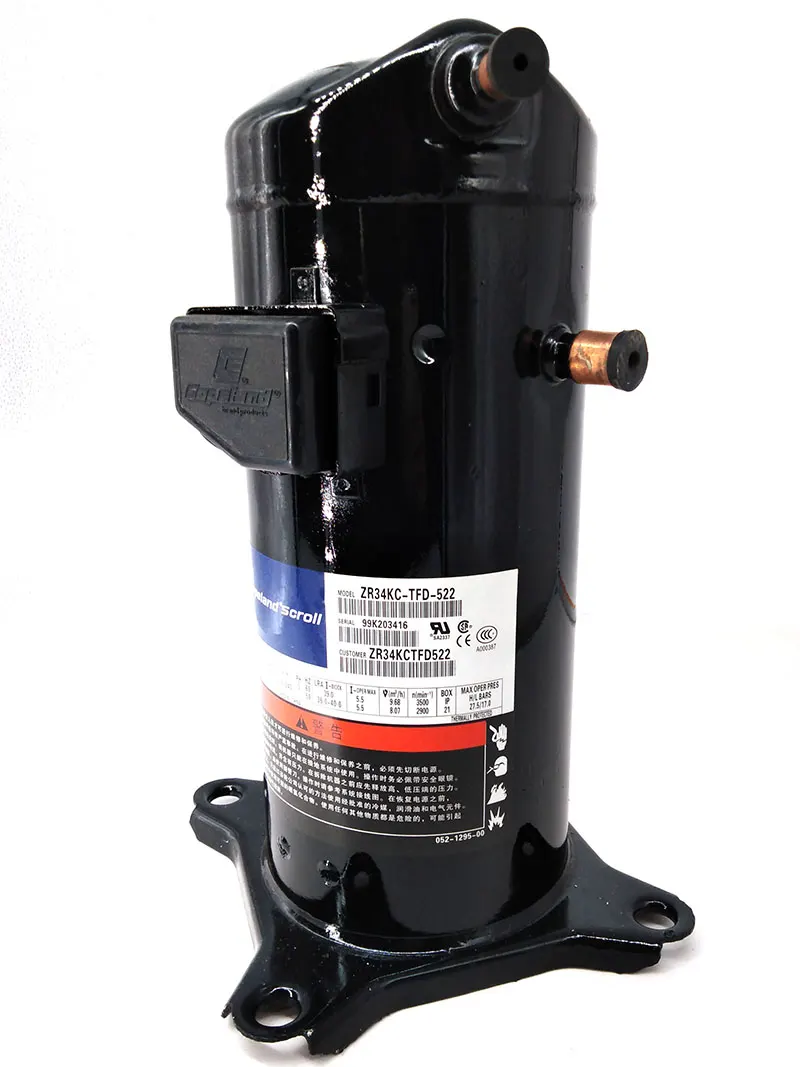
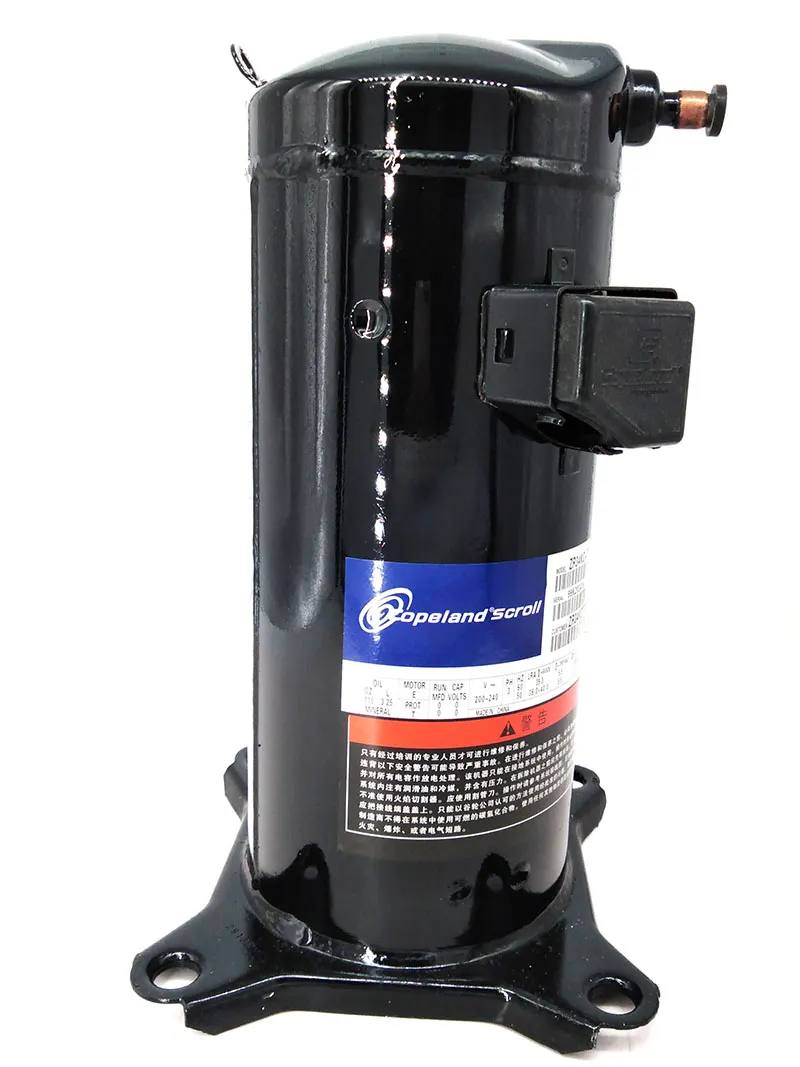
50Hz vs 60Hz Compressors: Voltage and Frequency Checklist for Global Buyers
A practical guide to choosing 50Hz and 60Hz compressors by voltage, phase, region, and site power supply for global refrigeration buyers.
50Hz vs 60Hz Compressors: Voltage and Frequency Checklist for Global Buyers
Selecting a replacement compressor for an overseas project is not only a matter of matching horsepower or refrigerant. For importers, spare parts distributors, repair companies, and cold-room installers, electrical compatibility is often the difference between a successful replacement and an expensive field problem.
A 50Hz 60Hz compressor inquiry usually involves several linked questions: What voltage is used at the job site? Is the supply single phase or three phase? Does the compressor model support the local frequency? Are the starting components, contactor, overload protector, and wiring suitable for that region? These details are especially important when buying compressors for Africa, the Middle East, Latin America, Europe, and Southeast Asia, where power standards vary by country and sometimes by application.
This guide explains how frequency, voltage, phase, and regional power supply affect compressor selection, with a practical checklist for buyers who need export-ready refrigeration and air-conditioning compressor replacements.
Why Frequency Matters in Compressor Selection
Electrical frequency refers to how many times per second alternating current changes direction. The two most common utility frequencies are 50Hz and 60Hz. Many countries in Europe, Africa, the Middle East, and Asia use 50Hz power, while some markets in North America, parts of Latin America, and selected other regions use 60Hz power.
For compressors, frequency affects the motor speed. In simple terms, a compressor motor designed for 60Hz operation generally runs faster on 60Hz power than a comparable 50Hz motor on 50Hz power. This can influence several operating characteristics:
- Cooling capacity
- Input power and current
- Compressor speed and load
- Discharge temperature
- Starting behavior
- Oil return and lubrication conditions
- Noise and vibration
- Motor protection requirements
Some compressors are rated for both 50Hz and 60Hz operation, while others are designed for one frequency only. A dual-frequency listing does not automatically mean the compressor can be used anywhere; the voltage and phase must also match.
For example, a compressor may be listed for 220V 50Hz operation, while another version may be designed for 208–230V 60Hz. These are not always interchangeable without checking the nameplate and technical data. A buyer should avoid assuming that a 220V compressor is suitable simply because the local voltage appears similar.
Voltage, Phase, and Frequency: The Three-Part Compatibility Check
When evaluating compressor voltage compatibility, always check voltage, phase, and frequency together. Looking at only one of them can lead to the wrong selection.
Voltage: Match the Real Site Supply, Not Only the Country Standard
Voltage tells you the electrical pressure supplied to the motor. Common compressor voltage categories include:
- 115V 60Hz compressor for certain light commercial and domestic refrigeration applications
- 220V 50Hz compressor for many international single phase markets
- 220–240V 50Hz compressor for common single phase applications in Europe, Africa, the Middle East, and Asia
- 208–230V 60Hz compressor for many 60Hz single phase and three phase applications
- 380–415V 50Hz three phase compressor for commercial refrigeration and cold-room systems
- 460V 60Hz three phase compressor for some industrial and commercial applications
Country standards are useful, but they are not enough. A cold room in a remote area, an older building, a generator-powered site, or an industrial facility may have a different supply from a standard city installation. Buyers should confirm the actual voltage measured or specified at the installation site.
Voltage tolerance also matters. Compressor nameplates and technical documents usually specify an acceptable voltage range. If the supply is consistently too low, the compressor may draw higher current and trip overload protection. If the voltage is too high, motor insulation and electrical components may be stressed.
Phase: Single Phase vs Three Phase Refrigeration Compressor
Phase describes the type of AC power supply. Small refrigeration equipment often uses single phase power, while larger cold rooms, supermarket systems, and commercial refrigeration units frequently use three phase power.
A single phase compressor commonly requires additional starting components, such as a relay, start capacitor, run capacitor, or PTC device, depending on the motor design. Using incorrect starting components can cause hard starting, high current, short cycling, or compressor failure.
A three phase refrigeration compressor does not use the same starting arrangement as a single phase unit, but it introduces other checks:
- Correct voltage range
- Correct frequency
- Proper contactor and overload setting
- Phase sequence where rotation direction matters
- Protection against phase loss or voltage imbalance
- Suitable cable size and breaker rating
For distributors and installers, phase mismatch is one of the easiest mistakes to avoid and one of the most serious if missed. A single phase compressor cannot be directly installed on a three phase system without proper design changes, and a three phase compressor cannot operate on single phase power without specialized conversion equipment that must be carefully engineered.
Frequency: Confirm 50Hz, 60Hz, or Dual-Rated Operation
Frequency should be checked directly from the compressor nameplate or manufacturer data, not assumed from the voltage. Some compressors are clearly marked for 50Hz only or 60Hz only. Others show dual ratings, such as 50/60Hz, often with different capacities and electrical values for each frequency.
When a compressor is dual-rated, compare both sets of data:
- Rated voltage at 50Hz and 60Hz
- Cooling capacity at each frequency
- Rated current or running current
- Locked rotor current
- Approved refrigerant and application range
- Starting component specifications
- Motor protection requirements
A compressor that operates safely at both frequencies may still deliver different performance. A replacement buyer should confirm that the capacity at the local frequency is suitable for the evaporator, condenser, expansion device, and room temperature requirement.
Regional Power Supply Considerations for Export Buyers
Global compressor buyers often serve multiple countries. A distributor may stock compressors for Africa and the Middle East; a contractor may source units for Latin America and the Caribbean; a service company may handle imported equipment from Europe or Southeast Asia. Regional power knowledge helps reduce wrong orders and warranty disputes.
Europe
Many European markets commonly use 230V 50Hz single phase power and 400V 50Hz three phase power. For refrigeration replacement, buyers often look for compressors compatible with 220–240V 50Hz or 380–415V 50Hz, depending on equipment size.
Important checks for Europe include matching refrigerant type, confirming CE-related compliance requirements where applicable, and ensuring the compressor electrical data matches the original equipment. For plug-in commercial refrigeration, single phase compatibility and starting components are especially important.
Africa
Africa includes many markets where 220–240V 50Hz single phase and 380–415V 50Hz three phase supplies are common, but site conditions can vary widely. Voltage fluctuation, generator use, long cable runs, and unstable supply may be more relevant in some installations.
For African distributors and service teams, it is useful to ask whether the compressor will be installed in a city shop, a remote cold room, a supermarket, a farm storage facility, or a generator-supported site. In areas with unstable voltage, proper protection devices and correct motor ratings are essential.
Middle East
Many Middle East markets use 50Hz power, with both single phase and three phase refrigeration applications. High ambient temperature is often a major system design concern, especially for condensing units and cold rooms installed outdoors or in poorly ventilated spaces.
Electrical compatibility should be checked together with application conditions. A compressor may match the voltage and frequency but still be unsuitable if the condensing temperature, ventilation, refrigerant, or duty condition is outside the recommended operating envelope.
Latin America
Latin America is not a single electrical standard market. Some countries and applications use 60Hz, while others may use 50Hz or have voltage variations by area and equipment type. Buyers should be particularly cautious with assumptions such as “Latin America means 60Hz” or “220V means compatible.”
A 115V 60Hz compressor may be required for some light commercial equipment, while other systems may use 220V, 230V, or three phase power. Importers serving multiple countries should confirm the destination market before ordering and should keep technical data sheets available for both 50Hz and 60Hz compressor models.
Southeast Asia
Southeast Asia contains a mix of power supply practices, though many markets use 50Hz supplies. Voltage levels, site wiring quality, and equipment origin can vary. Imported refrigeration equipment may have compressors from different global standards, so replacement buyers should always inspect the existing compressor nameplate.
For repair companies, the safest approach is to record the old compressor model, voltage, phase, frequency, refrigerant, application type, and starting components before selecting a replacement.
What Happens If the Wrong Compressor Is Installed?
A compressor may physically fit into a system but still be electrically unsuitable. The risk is not limited to immediate failure; some problems appear after several days or weeks of operation.
Common issues from voltage or frequency mismatch include:
- Compressor does not start
- Breaker trips or fuse blows during starting
- Overload protector trips repeatedly
- Higher-than-normal running current
- Reduced cooling capacity
- Excessive discharge temperature
- Motor overheating
- Abnormal vibration or noise
- Short compressor service life
- Damage to capacitors, relays, contactors, or wiring
Frequency mismatch can also change the balance of the refrigeration system. If compressor capacity increases or decreases compared with the original design, the evaporator, condenser, capillary tube, expansion valve, and refrigerant charge may no longer operate as intended.
Voltage mismatch can be equally serious. A compressor intended for 115V must not be connected to a 220–240V supply. A 220V 50Hz compressor should not be selected for a 60Hz market unless the technical data confirms the exact voltage and frequency combination is approved. Three phase units must also be checked for proper overload settings and protection against supply imbalance.
Practical Buying Checklist for 50Hz and 60Hz Compressors
For B2B buyers, the best way to prevent wrong selection is to collect complete information before requesting a quotation. The following checklist is useful for distributors, repair technicians, cold-room contractors, and replacement buyers.
1. Confirm the Installation Country and Site Power
Ask for the destination country and the actual site electrical supply. Do not rely only on the buyer’s country name.
Key questions:
- Is the site power 50Hz or 60Hz?
- What is the measured or specified voltage?
- Is the supply single phase or three phase?
- Is the compressor connected to grid power, generator power, or both?
- Are there known voltage fluctuation problems?
2. Read the Existing Compressor Nameplate
For replacement projects, the old compressor nameplate is often the most valuable reference. A clear photo can prevent many errors.
Important nameplate items include:
- Brand and model number
- Voltage range
- Frequency
- Phase
- Refrigerant
- Rated current or power input
- Locked rotor current, if shown
- Application range, if indicated
- Oil type, where relevant
If the original model is obsolete, the replacement should still match the electrical and refrigeration application requirements as closely as possible.
3. Check Refrigerant and Application Temperature
Electrical compatibility does not guarantee refrigeration compatibility. A compressor must also match the refrigerant and operating temperature range.
For example, a compressor may be designed for low-temperature freezing, medium-temperature refrigeration, or air-conditioning duty. Using the wrong application type can cause poor performance, overheating, or reliability problems even when voltage and frequency are correct.
Confirm:
- Refrigerant type
- Evaporating temperature range
- Condensing conditions
- Cooling capacity requirement
- Oil type compatibility
- Expansion device type
4. Verify Starting and Protection Components
Single phase compressors often require specific starting devices. Three phase compressors require suitable electrical protection. Replacement buyers should avoid reusing old components without checking compatibility.
For single phase units, confirm:
- Start relay or PTC type
- Run capacitor rating
- Start capacitor rating, if used
- Overload protector type
- Wiring diagram
For three phase units, confirm:
- Contactor rating
- Thermal overload setting
- Breaker or fuse selection
- Phase protection requirements
- Cable size and terminal connection
5. Compare Capacity at the Correct Frequency
When a model is offered in both 50Hz and 60Hz versions, capacity data may differ. A compressor that is suitable at 60Hz may not provide the same performance at 50Hz, and the reverse may also be true.
For cold-room projects, this matters because room pull-down time, product load, door openings, ambient temperature, and condenser performance all influence system capacity. Contractors should size the compressor using data for the actual operating frequency.
6. Ask for Complete Technical Confirmation Before Shipment
For export orders, the purchase order should specify more than a model number. Include the electrical requirements clearly to avoid packing and shipping the wrong version.
A good compressor inquiry should include:
- Compressor model or required replacement model
- Voltage
- Frequency
- Phase
- Refrigerant
- Application temperature
- Quantity
- Destination country
- Any special requirements for packaging, accessories, or documentation
This level of detail helps suppliers confirm availability and compatibility before shipment, reducing installation delays and return costs.
Commercial Tips for Distributors and Service Companies
Distributors serving multiple regions should organize compressor inventory by electrical family as well as by brand and refrigerant. A shelf label that only shows horsepower is not enough. Stock records should include voltage, frequency, phase, refrigerant, and application range.
Service companies can reduce callbacks by training technicians to photograph compressor nameplates before ordering parts. A simple field form with voltage, frequency, phase, and refrigerant can prevent a 50Hz compressor from being ordered for a 60Hz site or a single phase unit from being selected for a three phase system.
Cold-room contractors should confirm power supply during the project design stage, not after the equipment arrives. This is especially important for export projects where compressors, condensing units, panels, and controls may be sourced separately.
For importers, the most reliable procurement process is to treat every compressor order as an electrical and refrigeration match, not a price-only item. The correct compressor is the one that fits the local power supply, the system design, and the service conditions.
Key Takeaway
A 50Hz 60Hz compressor selection should always start with the real job-site power supply. Voltage, phase, and frequency must match the compressor nameplate and technical data. Region is a useful clue, but it is not a substitute for confirmation.
For buyers in Africa, the Middle East, Latin America, Europe, and Southeast Asia, the safest approach is simple: verify the country, site voltage, phase, frequency, refrigerant, and application range before ordering. This helps distributors reduce wrong shipments, service companies avoid repeat failures, and installers deliver refrigeration systems that operate reliably in local conditions.
FAQ
Can a 50Hz compressor run on 60Hz power?
Only if the compressor nameplate or technical data confirms that the exact model is approved for 60Hz operation at the available voltage. Frequency changes can affect motor speed, capacity, current, and operating temperature, so buyers should not assume compatibility.
Is a 220V 50Hz compressor the same as a 220V 60Hz compressor?
Not always. The voltage may look similar, but the motor design, rated current, cooling capacity, and starting components may differ. Always check the approved voltage and frequency combination for the specific compressor model.
What information should I provide when buying a replacement compressor for export?
Provide the old compressor model, voltage, frequency, phase, refrigerant, application temperature, destination country, and photos of the nameplate and wiring if possible. For single phase compressors, include capacitor and relay information when available.
Why is phase important when selecting a refrigeration compressor?
Single phase and three phase compressors use different motor designs and electrical components. A single phase compressor usually needs starting devices, while a three phase refrigeration compressor requires correct contactor, overload, and phase protection. They are not directly interchangeable.
Which regions commonly need 50Hz compressor models?
Many markets in Europe, Africa, the Middle East, and Southeast Asia commonly use 50Hz power, but buyers should still confirm the actual site supply. Some countries and facilities may have different voltages, phases, or equipment standards.
Buyer Next Step
Move from research to sourcing with a category shortlist, relevant product examples, and a quote request channel.