Refrigeration Compressor Spare Parts Checklist for Distributors and Repair Technicians
A practical spare-parts checklist for refrigeration compressor buyers, covering common components, verification steps, and export shipment checks.
Why a Refrigeration Compressor Spare Parts Checklist Matters
Refrigeration compressor spare parts are not just small replacement items. For distributors, service companies, and cold-room installers, the right part can decide whether a supermarket freezer, processing room, hotel chiller, or walk-in cold room returns to operation quickly or remains offline.
Aftermarket demand is broad because compressors operate under heat, vibration, pressure, oil circulation, electrical load, and frequent start-stop conditions. Some parts are replaced during scheduled service. Others are needed during emergency repair after electrical failure, refrigerant leakage, oil problems, or mechanical wear. For overseas buyers, the challenge is greater: a wrong part number or missing accessory can delay repair by weeks once goods have already shipped internationally.
A practical checklist helps purchasing teams and technicians speak the same language. It also helps distributors prepare faster quotations, reduce mismatch risk, and build a useful inventory around fast-moving compressor repair parts. The key is not only knowing which parts are commonly requested, but also verifying model numbers, compressor series, electrical specifications, and accessory compatibility before export shipment.
Commonly Requested Refrigeration Compressor Spare Parts
Spare-parts demand varies by compressor type, brand, application, refrigerant, and service history. However, several categories appear repeatedly in repair orders for hermetic, semi-hermetic, and commercial refrigeration compressors.
Valves and Valve-Related Components
Valves are among the most important semi hermetic compressor parts because they directly affect compression efficiency, pressure behavior, and compressor performance. When valves are damaged, worn, or contaminated, symptoms may include poor cooling, high discharge temperature, abnormal noise, low compression, or repeated protection trips.
Common valve-related items include:
- Suction valves
- Discharge valves
- Valve plates
- Valve reeds
- Valve gaskets
- Service valves
- Shut-off valves
- Valve plate assemblies
For semi-hermetic compressors, valve plates and valve assemblies are frequently ordered for overhaul work. Buyers should confirm whether the required item is a single component or a complete kit. Some repair technicians prefer complete valve plate kits to avoid reusing aged gaskets or fasteners. Distributors should also check whether the compressor is used in low-temperature, medium-temperature, or air-conditioning duty, because operating conditions can influence the correct part selection.
Gaskets, Seals, and O-Rings
Gaskets and sealing components are small but critical. Once a compressor is opened for inspection or repair, many sealing parts should not be reused. Old gaskets may harden, crack, compress unevenly, or fail after reassembly.
Frequently requested sealing parts include:
- Cylinder head gaskets
- Valve plate gaskets
- Oil pump gaskets
- Terminal box gaskets
- Sight glass gaskets
- Shaft seals for open-type compressors
- O-rings for service connections
- Cover plate gaskets
For export orders, gasket material and dimensional accuracy matter. A part that looks similar may not seal correctly under refrigerant pressure and oil exposure. When quoting original compressor parts or compatible alternatives, distributors should ask for compressor model, serial number, and if possible a photo of the old gasket or the parts diagram reference number.
Relays, Capacitors, Contactors, and Electrical Starting Parts
Electrical accessories are fast-moving compressor accessories, especially for smaller commercial refrigeration systems and hermetic compressors. Starting problems are often linked to relays, capacitors, wiring terminals, overload protectors, or contactors rather than the compressor body itself.
Common electrical parts include:
- Start relays
- Potential relays
- Current relays
- Start capacitors
- Run capacitors
- Contactors
- Overload relays
- Phase protection devices
- Motor protection modules
- Terminal blocks
- Terminal covers
- Wiring harnesses
Electrical parts must be selected with care. Voltage, frequency, phase, capacitance rating, duty type, and connection method should match the compressor and system design. A capacitor with the wrong microfarad rating or voltage class can cause poor starting, overheating, or premature failure. A contactor with insufficient current rating may weld contacts or fail under repeated cycling.
For overseas shipments, buyers should state whether the market uses 50 Hz or 60 Hz power and confirm single-phase or three-phase supply. Repair teams should also check whether the original part is built into the compressor terminal box, supplied as an external accessory, or part of the control panel.
Fan Motors and Cooling Accessories
Although a fan motor may not be inside the compressor, it is often ordered together with compressor spare parts because compressor reliability depends on correct heat rejection and airflow. Condensing unit fan motors, compressor cooling fans, and related guards or brackets are common replacement items.
Typical cooling-related components include:
- Condenser fan motors
- Compressor cooling fan motors
- Fan blades
- Fan guards
- Motor brackets
- Air guide parts
- Fan capacitors
When ordering fan motors, the main specifications include voltage, frequency, power, rotation direction, frame size, shaft diameter, mounting pattern, and blade size. If the fan is used near a compressor or condensing unit, temperature resistance and protection level may also be important. A similar-looking motor may not deliver the required airflow or may not fit the mounting position.
Compressor Oil and Oil System Parts
Compressor oil is a routine service item, but it must be matched carefully to compressor type, refrigerant, and application. Incorrect oil selection can cause lubrication problems, oil return issues, chemical incompatibility, or shortened compressor life.
Common oil-related parts and accessories include:
- Refrigeration compressor oil
- Oil filters
- Oil strainers
- Oil pumps
- Oil pressure switches
- Oil level regulators
- Sight glasses
- Crankcase heaters
- Oil separators and related fittings
Before ordering oil, buyers should confirm the required oil type and viscosity recommended for the compressor and refrigerant. Mineral oil, alkylbenzene oil, and POE oil are not interchangeable in all systems. Service technicians should also consider whether the system has had a refrigerant retrofit or previous oil change, because mixed oil conditions can complicate maintenance.
Protection Devices and Safety Components
Protection devices reduce the risk of compressor damage from abnormal system conditions. In many service cases, replacing the compressor without checking protections can lead to repeat failure.
Common protection-related items include:
- Internal and external overload protectors
- Motor protection modules
- Temperature sensors
- Discharge temperature protection devices
- Oil pressure safety controls
- Phase sequence protectors
- High and low pressure controls
- Crankcase heaters
- Pressure relief components where applicable
Protection devices should be matched to compressor design and operating range. For three-phase compressors, phase loss and phase sequence protection can be especially important. For low-temperature applications, crankcase heaters help reduce refrigerant migration during off cycles. Repair technicians should test the control circuit and safety devices before restarting a repaired compressor.
Terminals, Covers, and Mounting Components
Terminals and mounting parts are sometimes overlooked until installation begins. Missing or incorrect small components can delay commissioning even when the main compressor part is correct.
Common small parts include:
- Terminal plates
- Terminal pins
- Terminal nuts and washers
- Terminal box covers
- Cable glands
- Rubber mounting feet
- Mounting springs
- Compressor base plates
- Bolts and spacers
- Vibration absorbers
These parts matter for electrical safety, vibration control, and mechanical stability. For hermetic compressor parts, terminal components must be handled carefully because terminal damage may compromise the compressor shell connection. For semi-hermetic compressors, terminal box parts should match the compressor series and motor configuration.
Spare Parts by Compressor Type
A useful inventory plan separates parts by compressor type. Hermetic, semi-hermetic, scroll, reciprocating, and open-type compressors do not require the same spare-parts strategy.
Hermetic Compressor Parts
Hermetic compressors are sealed units, so internal mechanical repair is limited. Commonly requested hermetic compressor parts are usually external electrical and mounting items rather than internal valve or piston parts.
Fast-moving hermetic compressor items include:
- Start relays
- Overload protectors
- Start and run capacitors
- Terminal covers
- Mounting rubber kits
- Fan motors for condensing units
- Wiring accessories
For distributors serving commercial refrigeration repair companies, it is practical to stock electrical starting components by compressor model range and voltage. However, many hermetic compressor failures still require full compressor replacement rather than internal repair. Buyers should confirm whether the requested part is serviceable before ordering.
Semi-Hermetic Compressor Parts
Semi-hermetic compressors are more repairable, so parts demand is wider. They are common in cold rooms, food processing refrigeration, supermarkets, and commercial systems where field repair or workshop overhaul is possible.
Common semi hermetic compressor parts include:
- Valve plates and valve reeds
- Gaskets and overhaul kits
- Pistons, rings, and connecting rods where serviceable
- Bearings and bushings where applicable
- Oil pumps and oil pressure components
- Sight glasses
- Terminal plates and motor protection modules
- Service valves
- Crankcase heaters
For these compressors, the exact model and serial number are especially important. One compressor family may have several design revisions, motor versions, capacity steps, or accessory options. A distributor should avoid confirming shipment from the model name alone if the part is internal or safety-related.
Scroll and Rotary Compressor Accessories
Scroll and rotary compressors are often replaced as complete units, but accessories are still commonly ordered for service and installation.
Typical items include:
- Crankcase heaters
- Rubber mounting kits
- Terminal covers
- Contactors and protection modules
- External overload devices where applicable
- Oil management accessories for parallel systems
- Liquid line and suction line protection components in the wider system
For scroll compressors, rotation direction, phase protection, and proper electrical matching are important. A three-phase scroll compressor running in reverse may produce abnormal noise and poor pumping performance. Service teams should confirm wiring and protection before assuming the compressor itself is defective.
How to Verify Part Numbers Before Export Shipment
International spare-parts orders leave little room for assumption. Air freight, customs clearance, and remote installation schedules make verification essential. The safest process is to combine nameplate data, parts catalog information, and visual confirmation.
1. Capture the Complete Compressor Nameplate
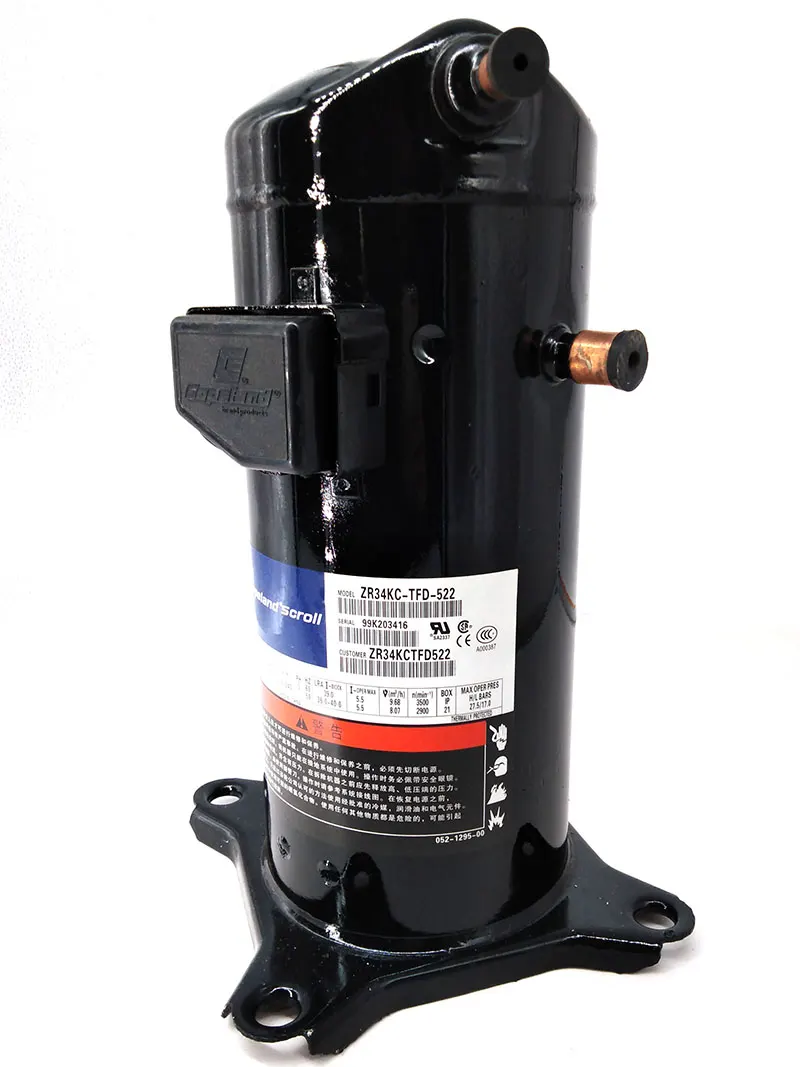
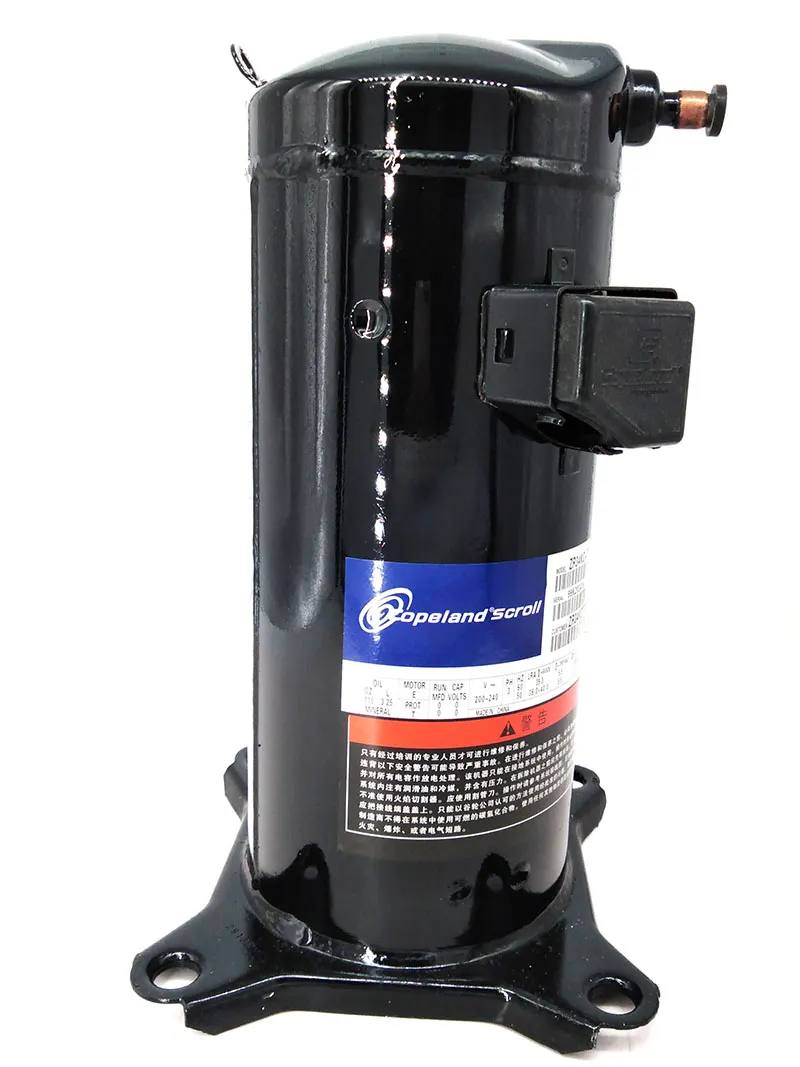
A clear nameplate photo is the starting point for every compressor spare parts order. Buyers should provide the full model number, serial number, voltage, phase, frequency, refrigerant information if shown, and any bill of material or variant code.
A partial model can be misleading. Similar model names may have different motor versions, electrical boxes, valve plates, or service valves. If the nameplate is damaged, the buyer should provide photos of the entire compressor, terminal box, mounting base, and failed component.
2. Match the Part Number to the Compressor Series
The part number should be checked against the compressor series, not only against a general description. For example, a “valve plate,” “gasket kit,” or “oil pump” may exist in several versions for compressors with different cylinder counts, capacity stages, or production designs.
Distributors should ask:
- Is the part number original, superseded, or replaced by a newer reference?
- Does the part fit the exact compressor model and serial range?
- Is the item sold individually or only as part of a kit?
- Are gaskets, seals, screws, or washers included?
- Is there a left-hand, right-hand, suction, or discharge version?
If a part has been replaced by an updated number, the quotation should clearly show the supplied number and its relationship to the requested number.
3. Confirm Electrical Specifications
Electrical mismatch is one of the most common causes of wrong spare-parts supply. Before shipping relays, capacitors, contactors, protectors, fan motors, or terminal assemblies, confirm the following:
- Voltage range
- Single-phase or three-phase supply
- Frequency, especially 50 Hz or 60 Hz
- Current rating
- Capacitance rating for capacitors
- Coil voltage for contactors
- Wiring connection type
- Protection class or control module type where relevant
A compressor may be sold in different electrical versions for different countries. Export buyers should never rely only on the country of installation; they should confirm actual site power and compressor nameplate data.
4. Use Photos to Confirm Shape, Ports, and Connections
Photos are valuable when part numbers are missing or uncertain. For service valves, terminal plates, gaskets, fan motors, and mounting parts, shape and connection details often reveal whether a part will fit.
Useful photo angles include:
- Front and back of the failed part
- Close-up of labels or stamped markings
- Connector or terminal layout
- Mounting hole positions
- Port size and direction
- Overall compressor installation view
Photos should not replace part-number verification, but they help catch obvious mismatches before packing.
5. Confirm Quantity, Kit Content, and Packaging
Export shipment errors often involve quantity and kit content rather than the main part number. A technician may request “one gasket kit,” but the repair may require multiple gaskets for several compressor heads. A distributor may quote a valve plate without the related gasket. A buyer may expect mounting screws to be included when they are not.
Before shipment, confirm:
- Number of compressors being repaired
- Number of cylinders or heads involved
- Quantity per compressor
- Kit contents
- Whether consumables are included
- Whether fragile items need reinforced packing
- Labeling requirements for warehouse receiving
For distributors, a clear packing list with part numbers, descriptions, and quantities reduces disputes and helps the receiving team allocate parts quickly.
Practical Stocking Tips for Distributors and Service Teams
A good refrigeration compressor spare parts inventory is built around local service demand, compressor population, and lead time. Stocking every possible internal part is rarely efficient. Stocking the right fast-moving parts can improve response time and customer trust.
Build Inventory Around Installed Compressor Families
Distributors should review which compressor brands and series are common among their customers. A cold-room contractor may need semi-hermetic compressor gaskets, valves, oil accessories, and service valves. A repair company handling small display cases may need hermetic compressor starting components, capacitors, relays, and mounting kits.
A practical inventory can be grouped by:
- Compressor brand and series
- Application temperature range
- Electrical specification
- Common failure pattern
- Routine service interval
- Emergency repair demand
This structure is more useful than a general shelf of random compressor accessories.
Keep Critical Consumables Available
Gaskets, O-rings, oil, terminals, capacitors, and protection devices are often low-cost compared with downtime. These items are good candidates for regular stocking if they match active compressor models in the market.
Service teams should also maintain installation consumables such as cable glands, mounting rubbers, vibration absorbers, fasteners, and suitable oil. These small items often determine whether a repair can be completed in one visit.
Separate Original and Replacement Options Clearly
Some buyers require original compressor parts for warranty, reliability policy, or customer specification. Others may accept qualified replacement compressor repair parts for non-critical or out-of-warranty systems. The quotation should clearly identify whether the item is original, compatible, or alternative.
Avoid vague descriptions such as “same as original” without technical confirmation. For international buyers, clarity protects both sides. It also helps repair companies explain options to end users.
Prepare a Standard Spare-Parts Request Form
A simple request form can prevent most ordering errors. It should include:
- Compressor brand
- Full model number
- Serial number
- Voltage, phase, and frequency
- Refrigerant and application if known
- Required part name
- Requested part number if available
- Quantity
- Photos of nameplate and failed part
- Urgency and preferred shipping method
For distributors and export suppliers, using the same checklist on every order improves quotation speed and reduces costly rework.
Key Takeaways for Overseas Spare-Parts Buyers
Refrigeration compressor spare parts cover much more than internal mechanical components. A complete purchasing checklist should include valves, gaskets, relays, capacitors, contactors, fan motors, oil, protection devices, terminals, and mounting components. The correct selection depends on compressor type, exact model, serial data, electrical specification, and application.
For repair technicians, the priority is to identify the failed part accurately and check related components that may have caused the failure. For distributors, the priority is to confirm compatibility before export shipment and communicate clearly about original parts, replacement options, kit contents, and delivery scope.
The most reliable spare-parts orders are supported by full nameplate photos, part-number references, electrical data, and visual confirmation. In international refrigeration service, these checks are not paperwork; they are the difference between a fast repair and another round of downtime.
FAQ
What are the most commonly requested refrigeration compressor spare parts?
Commonly requested parts include valves, valve plates, gaskets, O-rings, relays, start and run capacitors, contactors, overload protectors, fan motors, compressor oil, oil system parts, terminal components, crankcase heaters, service valves, and mounting kits.
How can buyers verify compressor spare parts before export shipment?
Buyers should provide a clear compressor nameplate photo, full model and serial number, electrical data, requested part number, quantity, and photos of the failed component. The supplier should confirm compatibility, kit contents, and any replacement or superseded part number before packing.
Are hermetic compressor parts and semi-hermetic compressor parts the same?
No. Hermetic compressors are sealed, so most service parts are external items such as relays, capacitors, overloads, terminals, and mounting parts. Semi-hermetic compressors are more repairable and may require valve plates, gaskets, oil pumps, service valves, terminal plates, and other internal or overhaul parts.
Why is electrical specification important when ordering compressor repair parts?
Relays, capacitors, contactors, protection modules, and fan motors must match voltage, phase, frequency, current rating, and wiring method. A wrong electrical part can cause starting failure, overheating, nuisance trips, or damage to the compressor and control system.
Should distributors stock original compressor parts or compatible replacement parts?
Many distributors stock both, depending on customer requirements and local demand. Original compressor parts are often preferred for warranty-sensitive or critical repairs, while compatible parts may be considered for out-of-warranty systems. The quotation should clearly state whether the item is original, compatible, or an alternative.
Buyer Next Step
Move from research to sourcing with a category shortlist, relevant product examples, and a quote request channel.