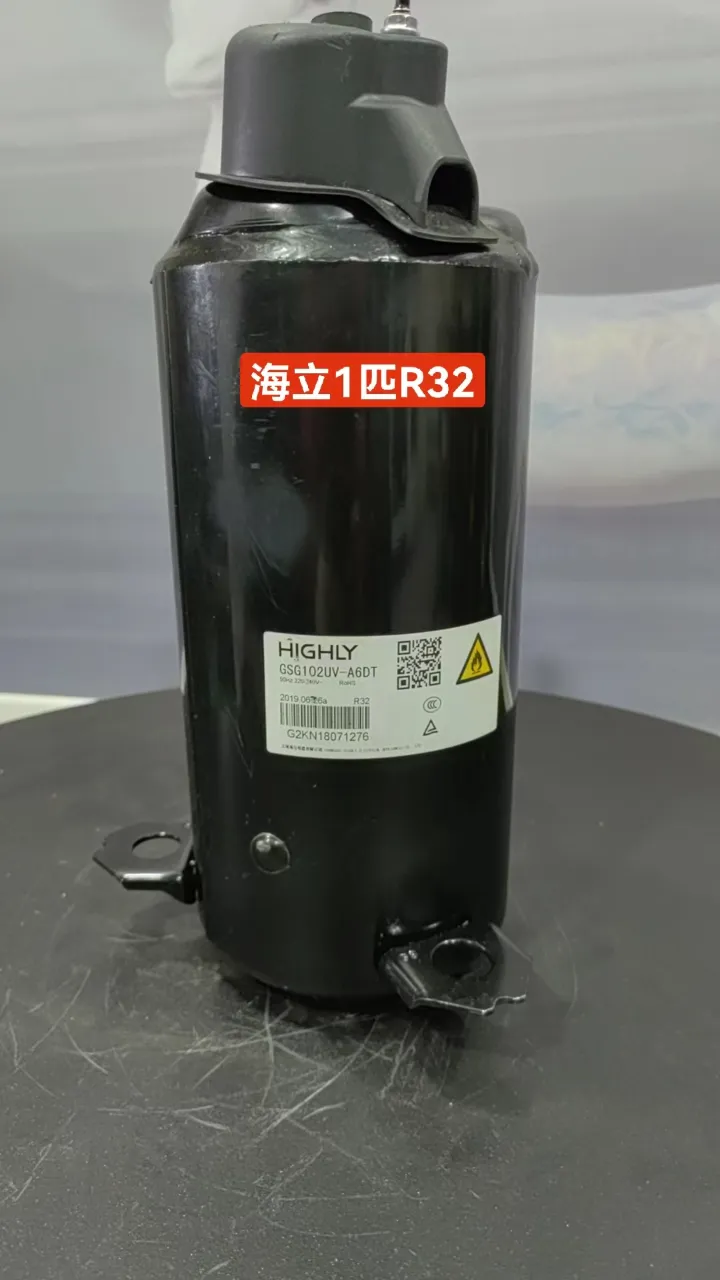
R454B and R32 Air Conditioning Compressors: What Importers Need to Know
A practical guide for overseas compressor buyers on R454B and R32, A2L compatibility, and why R410A systems need more than a simple compressor swap.
The shift from high-GWP HFC refrigerants is changing how air-conditioning compressors are specified, purchased, stocked, and serviced. For importers, distributors, repair companies, and HVAC contractors, two refrigerants now appear frequently in new equipment discussions: R454B and R32.
Both are used as lower-GWP alternatives in air-conditioning applications, and both belong to the A2L safety class, meaning they have lower flammability compared with A3 refrigerants but still require specific design, handling, and safety considerations. This transition is creating new demand for the R454B compressor, the R32 compressor, and other A2L refrigerant compressor models.
The most important point for buyers is simple: R454B and R32 compressors are not universal drop-in replacements for R410A compressors. A compressor must match the refrigerant, oil, electrical specification, application range, safety requirements, and original equipment design. Ordering by horsepower or cooling capacity alone can lead to incorrect replacements, warranty problems, system failures, or safety risks.
For overseas buyers who source compressors across multiple brands and markets, the A2L transition makes technical confirmation more important than ever.
Why R454B and R32 Are Becoming Important in Air Conditioning
R410A has been widely used in residential and light commercial air-conditioning systems for many years. As refrigerant regulations and equipment standards move toward lower-global-warming-potential options, manufacturers are introducing new systems designed for refrigerants such as R454B and R32.
R454B and R32 are both used in air-conditioning applications, but they are not the same refrigerant and they are not automatically interchangeable. Each refrigerant has its own pressure characteristics, mass flow behavior, discharge temperature profile, lubricant compatibility requirements, and safety considerations. Compressor manufacturers design and approve models for specific refrigerants and operating envelopes.
For importers, the market impact is practical:
- New air-conditioning systems may use R454B or R32 instead of R410A.
- Service companies will increasingly request replacement compressors for A2L refrigerant systems.
- Distributors may need to stock separate compressor models for R410A, R454B, and R32 applications.
- Replacement buyers must identify the original refrigerant before ordering.
- Installers and repair teams must follow A2L safety requirements when handling equipment.
This creates opportunities for well-prepared spare parts distributors, but it also increases the risk of mismatched procurement.
R454B Compressor vs R32 Compressor: Compatibility Is Not Optional
A compressor is not selected only by size. Refrigerant compatibility is one of the first checks in any replacement order.
What is an R454B compressor?
An R454B compressor is a compressor approved by the manufacturer for use with R454B refrigerant within a defined application range. It may be used in air-conditioning equipment designed around R454B, subject to the system design and the compressor manufacturer’s specifications.
When sourcing an R454B compressor replacement, buyers should confirm the exact compressor model, voltage, phase, frequency, cooling capacity range, oil type, connection design, and approved operating envelope. Even if two compressors look similar, one may be approved for R410A while another is approved for R454B.
What is an R32 compressor?
An R32 compressor is designed and approved for R32 systems. R32 is a single-component refrigerant used in many air-conditioning units. It is also classified as A2L, so systems using R32 require components and installation practices suitable for mildly flammable refrigerants.
R32 compressors are not automatically suitable for R454B systems, and R454B compressors are not automatically suitable for R32 systems. The refrigerant name on the compressor data plate, technical sheet, or manufacturer documentation must match the system requirement.
Why the A2L classification matters
A2L refrigerants have lower flammability, but they are still flammable under certain conditions. This affects equipment design, servicing, transportation, storage, labeling, leak management, electrical component selection, and installation practices. A compressor approved for A2L refrigerant use is part of a larger system safety design; it does not make an existing system automatically compliant.
For distributors and importers, this means product labeling, documentation, and customer communication are important. Selling an A2L refrigerant compressor without confirming the system application can expose the buyer and installer to technical and safety issues.
Why R454B and R32 Are Not Drop-In Replacements for R410A Systems
One of the most common procurement risks is the belief that a lower-GWP refrigerant compressor can simply replace an R410A compressor in an existing R410A system. In most real service situations, this is not correct.
A drop-in replacement would mean the compressor can be installed without changing the refrigerant, system design, controls, safety requirements, or service procedure. R454B and R32 do not meet that simple definition for R410A equipment.
Refrigerant properties are different
R410A, R454B, and R32 have different thermodynamic properties. These differences affect system pressure, capacity, efficiency, discharge temperature, refrigerant charge, and operating limits. A compressor designed for one refrigerant may not operate correctly or safely with another.
Even when a replacement compressor has a similar displacement or capacity rating, the performance can change significantly if the refrigerant is different. That is why manufacturer-approved compatibility is essential.
Oil and material compatibility must be confirmed
Compressor oil selection is tied to the refrigerant and compressor design. Using the wrong refrigerant-oil combination can affect lubrication, oil return, wear, and long-term reliability. Internal materials, seals, motor insulation, and valves must also be compatible with the refrigerant and operating conditions.
Importers should avoid assuming that the oil used in an R410A compressor is suitable for an A2L refrigerant compressor. The correct oil type and factory charge should be confirmed through the compressor model documentation.
Safety systems may be different
R410A is classified as A1, while R454B and R32 are A2L. This difference matters because A2L systems may require specific safety measures, including leak detection strategies, airflow requirements, charge limits, installation space considerations, labeling, and service procedures depending on local standards and equipment design.
Replacing only the compressor does not convert an R410A system into an approved R454B or R32 system. The entire unit must be designed, tested, labeled, and installed for the intended refrigerant.
Controls and operating envelope may not match
Compressors have operating envelopes that define acceptable evaporating temperature, condensing temperature, superheat, return gas temperature, discharge temperature, voltage range, and other conditions. R454B and R32 systems may use different expansion devices, control logic, pressure settings, and protection devices compared with R410A systems.
A compressor outside its approved envelope can trip on protection, run inefficiently, overheat, or fail prematurely. This is especially important for installers servicing split air conditioners, packaged units, rooftop units, heat pumps, and light commercial systems.
What Importers Should Confirm Before Ordering an A2L Refrigerant Compressor
The safest and most efficient way to purchase replacement compressors is to gather complete technical information before quoting or ordering. This reduces wrong shipments, customer disputes, and installation delays.
1. Original compressor model and brand
Start with the original compressor nameplate. The complete model number is more useful than a general description such as “3 HP R410A compressor” or “air conditioner compressor.” Compressor model numbers often indicate series, displacement, motor type, voltage, application, and refrigerant approval.
If the original model is discontinued, ask for an approved cross-reference or replacement model from a reliable supplier. Do not rely on visual similarity alone.
2. Refrigerant used in the system
Confirm the refrigerant listed on the system nameplate, not only on the compressor. The system refrigerant must match the compressor approval. If the unit is designed for R410A, an R454B compressor replacement is not automatically correct. If the system is designed for R32, the replacement compressor must be approved for R32.
For A2L systems, make sure the buyer understands that service must follow local codes, safety standards, and manufacturer instructions.
3. Application type and operating condition
Air-conditioning compressors may be used in different applications, including residential split systems, commercial air conditioners, heat pumps, chillers, and packaged units. The same nominal capacity can require different compressor characteristics depending on the application.
Confirm details such as:
- Cooling-only or heat pump operation
- Fixed-speed or inverter system
- Single-phase or three-phase power supply
- 50 Hz or 60 Hz market requirement
- Evaporating and condensing temperature range
- Ambient temperature conditions
- Expansion device type
- Required capacity and efficiency range
This information helps prevent a replacement that fits mechanically but does not operate correctly.
4. Electrical specification
Voltage, phase, and frequency are critical for export orders. A compressor designed for one electrical supply may not be suitable for another market. Importers should check whether the requested model is 220–240V single phase, 380–415V three phase, 460V three phase, or another specification. Frequency differences between 50 Hz and 60 Hz can also affect performance and suitability.
For inverter compressors, the drive and compressor must be matched. A compressor cannot be selected independently of the inverter control system unless the manufacturer confirms compatibility.
5. Mechanical dimensions and connections
Replacement work often depends on installation fit. Confirm suction and discharge connection sizes, mounting dimensions, oil equalization requirements if applicable, terminal box position, shell size, and service access. Minor differences can create installation problems for repair teams and contractors.
For distributors, keeping dimensional drawings and technical datasheets available can reduce customer uncertainty and improve order accuracy.
6. Documentation, labeling, and compliance needs
Overseas buyers may require documentation for customs clearance, project approval, resale, or service support. Depending on the product and market, useful documents may include datasheets, product labels, packing details, safety information, and manufacturer compatibility notes.
A2L refrigerant compressors may require clearer handling and labeling communication than traditional A1 refrigerant compressors. Importers should also check local regulations for storage, transport, installation, and technician certification.
Procurement Risks for Distributors and Service Companies
The refrigerant transition is not only a technical issue; it also changes inventory strategy and customer support.
Stocking by refrigerant category
Distributors that previously stocked mainly R22 and R410A air-conditioning compressors may now need separate lines for R454B and R32 equipment. Since demand varies by country, brand, and equipment generation, it is risky to build inventory only around old purchasing habits.
A practical stocking approach is to classify compressor inventory by:
- Refrigerant: R410A, R454B, R32, and other refrigerants
- Application: air conditioning, heat pump, refrigeration, or cold-room use
- Compressor type: rotary, scroll, reciprocating, or inverter
- Power supply: voltage, phase, and frequency
- Brand and replacement cross-reference
This structure helps sales teams answer inquiries faster and reduces the chance of shipping the wrong compressor.
Replacement confusion in mixed markets
Many overseas markets contain equipment from different generations. One service company may work on older R22 units, R410A systems, and new A2L refrigerant air conditioners in the same week. If technicians send only a photo or partial model number, the distributor must ask for more information before confirming the replacement.
For repair companies, a good habit is to photograph both the compressor nameplate and the unit nameplate. The system label normally confirms the refrigerant, charge amount, voltage, and equipment model.
Brand substitution must be handled carefully
Importers often request equivalent compressors when the original brand is unavailable, expensive, or discontinued. Brand substitution can be acceptable only when refrigerant approval, capacity range, electrical specification, oil type, mounting, connections, and operating envelope are confirmed.
A replacement compressor does not need to be the same brand in every case, but it must be technically suitable for the system. For A2L refrigerants, this confirmation becomes more important because safety classification and system approval are involved.
Practical Buying Checklist for R454B and R32 Compressor Orders
Before placing an order for an R454B compressor, R32 compressor, or R410A replacement compressor, importers should prepare a complete inquiry. A clear inquiry saves time and reduces the risk of an unsuitable part.
Key information to provide:
- Original compressor brand and complete model number
- System brand and unit model number
- Refrigerant shown on the system nameplate
- Cooling capacity or compressor displacement if available
- Voltage, phase, and frequency
- Application: air conditioner, heat pump, chiller, or other equipment
- Fixed-speed or inverter operation
- Required quantity and destination market
- Photos of compressor label, unit label, and connections
- Any special requirements for certificates, packing, or documentation
For emergency replacement orders, do not skip refrigerant confirmation. A fast shipment of the wrong compressor can cost more than a short technical check before dispatch.
Key Takeaway for Overseas Compressor Buyers
The move toward R454B and R32 is changing compressor procurement for the air-conditioning market. Buyers can no longer treat refrigerant as a secondary detail. An A2L refrigerant compressor must be matched to the system design, refrigerant, electrical supply, oil, application, and safety requirements.
R454B and R32 are important options for new air-conditioning equipment, but they are not simple drop-in replacements for R410A systems. For distributors, repair companies, and installers, the best protection is disciplined specification control: confirm the original model, confirm the system refrigerant, check the operating envelope, and request technical documentation before ordering.
In a market where old and new refrigerants will coexist for some time, the most reliable suppliers and buyers will be the ones who treat compressor selection as a technical decision, not just a price comparison.
FAQ
Can an R454B compressor replace an R410A compressor?
Not as a simple drop-in replacement. The compressor must be approved for the system refrigerant and application. R454B and R410A have different properties and safety classifications, so the full system design, oil, controls, operating envelope, and safety requirements must be confirmed.
Are R454B and R32 compressors interchangeable?
No. R454B and R32 are different refrigerants, even though both are classified as A2L. A compressor approved for R454B should not be used in an R32 system unless the compressor manufacturer specifically approves that model for R32 operation, and vice versa.
What does A2L mean for air-conditioning compressor buyers?
A2L indicates a refrigerant with lower flammability. For buyers, it means the compressor and system must be designed and approved for A2L refrigerant use. Handling, labeling, installation, leak management, and service procedures may also be subject to local safety rules.
What information should importers provide when ordering an R454B compressor replacement?
Importers should provide the original compressor model, system model, refrigerant on the unit nameplate, voltage, phase, frequency, application type, fixed-speed or inverter operation, photos of labels and connections, and any documentation requirements for the destination market.
Can a distributor offer an equivalent compressor from another brand?
Yes, but only after technical confirmation. The alternative compressor must match the required refrigerant approval, capacity range, electrical specification, oil type, mounting, connection sizes, and operating envelope. For A2L refrigerants, compatibility and safety approval are especially important.
Buyer Next Step
Move from research to sourcing with a category shortlist, relevant product examples, and a quote request channel.