Compressor Cross Reference: How to Find Equivalent Models Across Brands
A practical compressor cross reference guide for comparing capacity, refrigerant, electrical data, oil, connections, dimensions, and application limits.
Compressor Cross Reference: How to Find Equivalent Models Across Brands
Replacing a refrigeration compressor is rarely a matter of matching the brand name or horsepower rating. A reliable compressor cross reference compares the operating conditions and physical requirements of the complete system. A model from another manufacturer may provide similar capacity, but still be unsuitable because it uses a different refrigerant, electrical configuration, oil type, connection arrangement, or operating envelope.
For distributors, service companies, repair technicians, and cold-room installers, the goal is to identify a compressor equivalent model that performs correctly in the intended application and can be installed without creating avoidable service problems. This requires more than searching for a similar-looking product number.
A cross reference should be treated as a technical screening process. The replacement must match the system's cooling duty, refrigerant, power supply, application range, and installation requirements. Where the data does not align, the proposed substitute needs further approval from the manufacturer, engineer, or qualified refrigeration professional.
What a Compressor Cross Reference Actually Means
A compressor cross reference is a comparison between an existing compressor and one or more models from another brand or product family. The comparison is used to identify a technically suitable replacement, such as a Copeland to Bitzer replacement, a Danfoss compressor equivalent, a Tecumseh compressor replacement, or an Embraco compressor equivalent.
The term "equivalent" does not always mean identical. Two compressors may have similar cooling capacity while differing in:
- Refrigerant approval
- Rated voltage and phase
- Operating frequency
- Displacement
- Oil type and oil charge
- Suction and discharge connection size
- Overall height, width, and mounting pattern
- Sound, vibration, or starting characteristics
- Approved evaporating and condensing temperature range
A replacement is usually acceptable only when the important technical and installation conditions are compatible. A compressor with a higher nominal horsepower rating is not automatically a better substitute, and a model with the same capacity at one test condition may perform very differently at another condition.
Product nomenclature also varies between brands. A code may contain information about compressor type, motor design, refrigerant, voltage, displacement, or application. However, codes should not be interpreted without checking the relevant manufacturer data sheet. The same letter or number can have a different meaning across product families.
The Main Data Points to Compare
A useful compressor interchange guide starts with the system requirements and then compares the candidate compressor against those requirements. The following specifications have the greatest effect on whether a substitution is technically appropriate.
Cooling capacity and operating conditions
Cooling capacity is one of the most important comparison points, but it must be assessed at matching conditions. Capacity can change significantly with evaporating temperature, condensing temperature, superheat, subcooling, refrigerant, and operating frequency.
When comparing capacity, record the conditions used by the original compressor, such as:
- Refrigerant
- Evaporating temperature or saturated suction temperature
- Condensing temperature or saturated discharge temperature
- Return-gas or suction superheat
- Liquid subcooling
- Power frequency
A replacement should provide suitable capacity at the actual design condition, not merely at a headline rating. A compressor that is too small may struggle to reach the required temperature or run for excessive periods. A compressor that is too large can create control, cycling, oil return, and system balance issues, particularly in smaller systems.
Capacity data from different manufacturers may also use different rating standards or presentation formats. Check whether the published figure refers to refrigeration capacity, compressor power input, or another performance value. Comparing like with like is essential.
Refrigerant compatibility
The refrigerant must be approved for the replacement compressor and suitable for the existing system design. Refrigerant compatibility affects motor cooling, discharge temperature, pressure levels, lubricant behavior, seals, and control requirements.
Do not select a compressor solely because its capacity appears close to the original. Confirm the approved refrigerant list and check whether the compressor is intended for the system's pressure range and temperature application. A model designed for one refrigerant family may not be an acceptable substitute for a model using another, even when the compressor bodies look similar.
Refrigerant changes can also affect expansion devices, pressure controls, safety settings, piping, and charging procedures. A compressor cross reference can identify a possible model, but it does not replace a complete refrigerant conversion assessment.
Application range
The compressor's application range must cover the intended duty. Common categories include low-temperature, medium-temperature, high-temperature, air-conditioning, and commercial refrigeration applications. The boundaries are not interchangeable.
Check the approved evaporating and condensing temperature range, discharge temperature limits, maximum pressure, return-gas conditions, and any requirements for liquid injection or additional cooling. A compressor used in a cold room may have a different duty from one used in a comfort air-conditioning system, even when both are described by similar capacity figures.
The application range is especially important for low-temperature work. Low suction temperatures can increase the compression ratio and discharge temperature, placing greater demands on the compressor and lubricant. A model suitable for medium-temperature refrigeration should not be assumed to work safely in a freezer application.
Electrical specifications
Electrical data must match the available power supply and the system controls. Compare:
- Rated voltage and voltage range
- Single-phase or three-phase operation
- Operating frequency, such as 50 Hz or 60 Hz
- Motor protection requirements
- Starting method
- Locked-rotor or starting current
- Full-load current
- Terminal arrangement
Voltage markings can differ in format between brands. A compressor marked for a voltage range may not be equivalent to one designed for a different phase arrangement or frequency. Starting current is also important because the contactor, relay, capacitor, wiring, generator, and protective device must be suitable for the replacement motor.
For single-phase compressors, check the required start and run components rather than reusing the original components automatically. A different motor design may require different capacitors, relays, or electronic protection. For three-phase compressors, verify phase sequence and protection arrangements during commissioning.
Displacement and compressor type
Displacement describes the swept volume moved by the compressor and can help identify whether a candidate model belongs to a similar performance range. It is useful in cross referencing, but displacement alone does not prove equivalence.
Efficiency, motor design, valve arrangement, rotational speed, refrigerant, and operating conditions all influence capacity. A hermetic reciprocating compressor, scroll compressor, and semi-hermetic compressor may have overlapping capacity ranges but cannot normally be substituted without considering their different installation and control requirements.
Use displacement as a supporting data point alongside capacity at matched conditions. Also confirm compressor type, lubrication method, cooling method, and whether the compressor is intended for the same system architecture.
Oil type and oil charge
The oil must be compatible with the refrigerant, compressor design, and system conditions. Common lubricant categories include mineral oil, alkylbenzene, and polyol ester, but the correct choice depends on the specific compressor and refrigerant combination.
Compare the specified oil type and the factory oil charge. A replacement may require oil management during installation, especially where the system has a long pipe run, an oil separator, multiple evaporators, or a history of compressor failure. Excess oil, insufficient oil, or incompatible lubricant can affect lubrication and system reliability.
Do not assume that oil can be identified by brand or appearance. Use the compressor documentation and the system's refrigerant requirements. When a compressor has failed electrically or mechanically, investigate possible contamination before installing a new unit.
Connections, mounting, and dimensions
Physical compatibility determines whether a technically suitable compressor can be installed efficiently. Compare suction and discharge connection sizes, connection locations, mounting dimensions, terminal-box position, overall height, and service access.
A candidate may have the correct capacity but require piping changes, adapters, a different mounting plate, or altered electrical wiring. Connection size also matters for pressure drop, brazing work, vibration control, and the risk of introducing debris into the system.
Record the following before ordering:
- Compressor body dimensions
- Mounting-hole spacing and rubber grommet requirements
- Suction and discharge tube diameter
- Tube orientation and location
- Electrical terminal position
- Oil sight glass or service port position, where applicable
- Required clearance for pipework and servicing
Dimension drawings are more reliable than product photographs. Small differences in height or terminal-box location can create clearance problems inside a condensing unit or equipment cabinet.
A Practical Compressor Cross Reference Workflow
A repeatable process helps avoid incorrect substitutions, particularly when the original model is discontinued or the equipment nameplate is damaged.
Capture the original compressor data
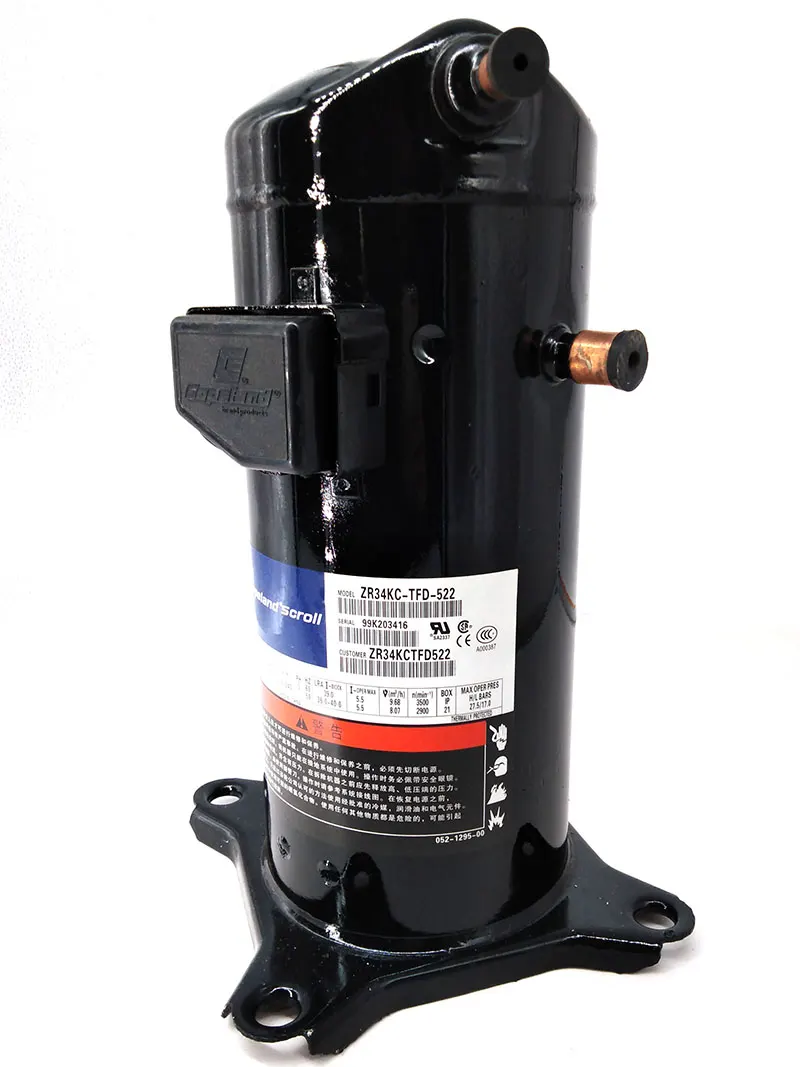
Start with the nameplate and installation records. Photograph the model number, electrical markings, refrigerant label, terminals, connections, and mounting arrangement. Record the equipment type and operating temperature range.
Useful information includes:
- Original manufacturer and full model number
- Refrigerant currently in the system
- Equipment application and target temperature
- Voltage, phase, and frequency
- Compressor type
- Rated or measured current
- Connection and mounting details
- Any available capacity or performance data
A partial model number can lead to the wrong motor version, refrigerant version, or voltage variant. Confirm every character that can be read from the nameplate.
Define the application duty
Identify whether the equipment is a freezer, cold room, display case, process chiller, split air-conditioning unit, or another system type. Establish the expected evaporating and condensing conditions when those values are available.
Field measurements can help, but pressure readings should be interpreted with the correct pressure-temperature relationship for the refrigerant. A single suction-pressure reading is not enough to establish compressor capacity or application suitability.
Build a comparison table
List the original compressor and candidate models in the same table. Include capacity at matching conditions, refrigerant approval, application range, electrical data, displacement, oil, connections, dimensions, and mounting details.
Mark each item as matched, different, or requiring confirmation. This makes hidden mismatches visible and creates a useful record for purchasing and future service work.
Check the installation impact
After identifying a technically suitable model, review the practical installation work. Determine whether the replacement needs new electrical components, pipe modifications, a mounting adapter, a different protection device, or changes to the control logic.
The compressor may be an acceptable replacement even when it is not a direct drop-in. However, the additional work should be known before the unit is ordered so the technician has the correct parts and the customer receives an accurate repair estimate.
Verify before commissioning
Before startup, confirm wiring, refrigerant charge, oil requirements, pressure controls, overload protection, and system cleanliness. Evacuate the system using an appropriate procedure, check for leaks, and verify operating pressures and temperatures after the system reaches stable conditions.
Commissioning data should include suction and discharge pressure, suction-line and discharge-line temperature, current, voltage, superheat, subcooling, and ambient or room conditions where relevant. These readings help show whether the selected compressor is working within its intended range.
Common Replacement Errors to Avoid
Several shortcuts regularly create problems in cross-brand compressor replacement.
Matching only horsepower
Horsepower is a broad motor reference, not a complete capacity specification. Two compressors with the same nominal horsepower can have different displacement, refrigerant approvals, capacity, and application ranges.
Matching only the model family
A model family may include multiple voltage, frequency, refrigerant, and application variants. The family name alone is not enough to confirm a substitute.
Ignoring starting requirements
A replacement with different starting current or start-component requirements can cause nuisance trips, contactor damage, failed starts, or voltage drop. Check the electrical data and required accessories before installation.
Reusing oil and contaminated components
A compressor replacement does not automatically correct the cause of the original failure. Burnout products, moisture, acid, metal debris, or blocked strainers can damage the new compressor unless the system is properly assessed and cleaned.
Treating a dimension mismatch as minor
A small difference in connection location or compressor height can affect vibration, pipe stress, service access, and cabinet clearance. Confirm the dimensional drawing before purchasing.
What Buyers and Distributors Should Request
A compressor cross reference becomes more useful when the inquiry includes complete technical information. When requesting an equivalent model from a supplier, provide the original model number and ask for a comparison covering:
- Capacity at the required operating conditions
- Approved refrigerant and oil
- Voltage, phase, and frequency
- Application range
- Displacement and compressor type
- Connection sizes and locations
- Mounting dimensions and overall size
- Required start components and protection
- Availability of technical documentation
A supplier-neutral comparison is valuable when several brands are available. It allows distributors to offer a suitable option without presenting every similarly rated compressor as interchangeable. For repair companies and installers, a clear comparison reduces return risk and helps technicians prepare for installation.
Key Takeaway
The best compressor equivalent model is the one that matches the system's real operating requirements and installation constraints, not simply the one with the closest brand code or horsepower rating. Capacity, refrigerant, application range, electrical data, displacement, oil, connections, dimensions, and mounting details should be reviewed together.
A careful compressor cross reference can support replacements such as Copeland to Bitzer, Danfoss equivalents, Tecumseh replacements, or Embraco alternatives, but every substitution still requires technical verification. When critical data is missing, treat the model as a candidate rather than a confirmed replacement and obtain the necessary documentation before ordering or commissioning.
FAQ
What is a compressor cross reference?
A compressor cross reference compares an existing compressor with models from other brands to identify a technically suitable replacement. It should cover capacity at matching conditions, refrigerant, application range, electrical data, oil, connections, dimensions, and mounting.
Can compressors from different brands be used as direct replacements?
Sometimes, but brand-to-brand replacement is not automatically a direct swap. The candidate must match the refrigerant, operating duty, electrical supply, starting requirements, oil, capacity, connections, dimensions, and system controls. Installation changes may still be required.
Is horsepower enough to find an equivalent compressor?
No. Horsepower is only a general motor reference. Compressors with the same nominal horsepower can differ in displacement, capacity, refrigerant approval, electrical configuration, and application range.
What information should I provide when requesting a compressor equivalent model?
Provide the full original model number, refrigerant, voltage, phase, frequency, equipment type, target temperature, capacity data if available, connection sizes, mounting dimensions, and photographs of the compressor and nameplate.
Buyer Next Step
Move from research to sourcing with a category shortlist, relevant product examples, and a quote request channel.